







In the specialty coffee wave, single-origin beans are highly sought after, but the value of blend beans should not be underestimated either. From the perspective of Front Street Coffee, this article systematically sorts out the five major steps of espresso blending, explores why blending can create flavors that single-origin beans cannot achieve, and emphasizes the importance of stable output for roasters. It then demonstrates in detail how to extract espresso using Front Street Sunflower · Warm Sun espresso blend beans, and extends to ideas for making Americano and latte. Whether you are a coffee enthusiast or a professional, you can gain practical reference on blending logic and extraction practice from it.
In the world of specialty coffee, more and more people prefer drinking single-origin beans, which is understandable. Coffee roasters can use the roasting method most suitable for a certain bean to bring it to its best flavor. In addition, when selling single-origin coffee, they can also introduce to customers the growing environment of that coffee and the story behind it.
However, the importance of blend beans still cannot be ignored. Coffee roasters can tailor a blend for customers, which can be regarded as a test of the roaster's skill.
As for the reason for making blend beans, Front Street Coffee believes that selling coffee beans with a flavor that remains unchanged all year round is the roaster's goal. After all, some customers hope to drink the flavor they like throughout the year, but unfortunately, coffee is an agricultural crop, and each season's harvest differs. Therefore, how to adjust the types and proportions in the blend is a way to make fresh and stable coffee.
Another more important reason for making blend beans is that it can create a flavor that a single coffee bean cannot achieve. So making a blend is like an art, not merely a tool. Interestingly, you can find that after coffees with different characteristics interact, they form a completely new flavor, and it is not just 1+1=2.
When different coffees are combined, in some blends the characteristics of each coffee can still be detected, and cuppers may even be able to distinguish which kinds of beans are contained in it. But some combinations cause one side to become stronger and suppress the characteristics of the other beans.
Another advantage of making blend beans is that a good blend can have a very long sales cycle, meaning it can satisfy most people's tastes. Even after ten years, this blend can still remain popular. In addition, a good blend bean should taste good whether used for espresso or brewed by filter method.
Does blend coffee use poor-quality coffee beans? Of course not!
Five steps to blend a delicious espresso coffee bean!
First, plan a process for making the blend. At this time, you need to think about some basic questions, such as: for which customers is your blend made? Home consumers, or cafes, or a multi-purpose blend? These questions determine what kind of flavor the blend should have, and how dark it should be roasted. The roaster must know what kind of taste he wants to roast. All of this must be decided in advance.
Second, the various coffee beans used in the blend must each have their own characteristics, and when made into single-origin coffee on their own, they should also perform well. Some coffee roasters use inferior beans in their blends and try to hide their bad flavors through roasting. Personally, I think this is doing twice the work for half the result, and customers will not be satisfied either.
Third, decide the roasting degree of each bean so that the coffee beans can express their respective characteristics, and use their different characteristics to form your blend. It is recommended to roast first and then blend the beans. You must try various roasting degrees for each coffee. This process is very crucial, so be sure to try more! It is often seen that many roasters neglect this step and decide the roasting degree of each coffee too early. Please remember that the optimal roasting degree for each coffee bean is different. In addition, each coffee often has more than one optimal roasting degree. In this way, countless kinds of coffee plus so many roasting degrees will make the work of formulating a blend an endless nightmare.
Many coffee roasters copy some well-known blends, but in order to obtain so-called full caramelization, they spare no effort in roasting dark until the original flavor is lost. The result presented is a large pile of black and burnt products. Through lighter roasting, you can obtain the coffee's original flavor, complexity, refreshing characteristics, and its own sweetness. You are encouraged to try using lighter roasting to express your blend. Here, if a lighter roast is adopted, attention must be paid to the roaster's roasting skills. A fully automatic roasting machine cannot roast medium-light roast coffee well!
Fourth, you must personally choose the types of green coffee beans you want, and their respective roasting degrees. Please remember that you must keep detailed records of the green beans you use, the roasting methods, and the blend proportions. If you create a good blend, you can refer to the information in the records and continue to improve it.
There will be some differences in coffee beans harvested each season. It is recommended that you re-evaluate your blend every season. The key to the craft of formulating a blend is to confirm that every bean in the blend has been roasted to perfection. To create a perfect blend, you also need to rely on your tasting ability. Even if you think you have made the best blend, the final judgment lies with the customer.
The following are some common espresso coffee bean blending schemes:
Whether blended or single-origin, as long as it can express coffee that is recognized by people, it is a good coffee bean. But this also gives rise to a problem. Front Street is not boasting that the blending method is good. If you blend for the sake of blending, then it becomes meaningless. Therefore, from the perspective of the blender, the blended coffee beans must make up for the shortcomings of single-origin coffee beans. In this regard, Front Street shares several delicious blended coffee bean recipes.
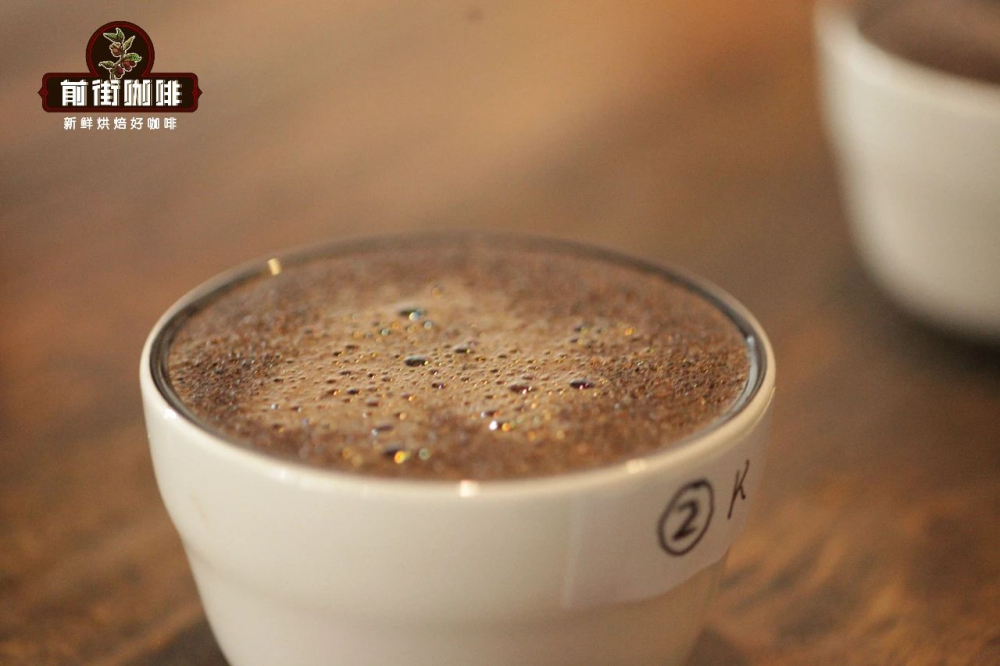
Steps for making espresso
The coffee machine used by Front Street has a double shot basket capacity, and 20 grams of coffee powder is needed each time. The extraction ratio of powder to liquid is 1:2, that is, 40 grams of coffee liquid is produced within a reasonable time. The extraction time is related to the flow rate of the coffee powder. Generally, a single extraction time is controlled between 20 and 35 seconds. If it is less than 20 seconds, the coffee taste tends to be thin and bland, while if it exceeds 35 seconds, it is easy to over-extract and cause the coffee to have a burnt bitter taste. Therefore, when Front Street produces it, the espresso time is controlled within the range of 26 to 32 seconds.
Coffee beans: Front Street Sunflower · Warm Sun espresso blend beans
Coffee powder amount: 20g
Coffee liquid amount: 40g
Powder-to-liquid ratio: 1:2
Extraction time: 26~32 seconds
Grinding setting: Galileo 2.0
Before extraction, we need to first wipe the basket dry, turn on the grinder, grind a double shot of coffee powder, place it on an electronic scale to measure and adjust until it reaches 20 grams. Then use a distribution tool to level the coffee powder, and use a tamper to press vertically downward with force to tamp the coffee puck firmly, ensuring more stable coffee extraction.
Then turn on the extraction switch and let water run for 1 to 2 seconds to wet the brew head, while also removing the coffee grounds stuck on it. Place an electronic scale under the cup that will catch the Espresso, and reset the weight to 0. During extraction, place it together under the brew head.
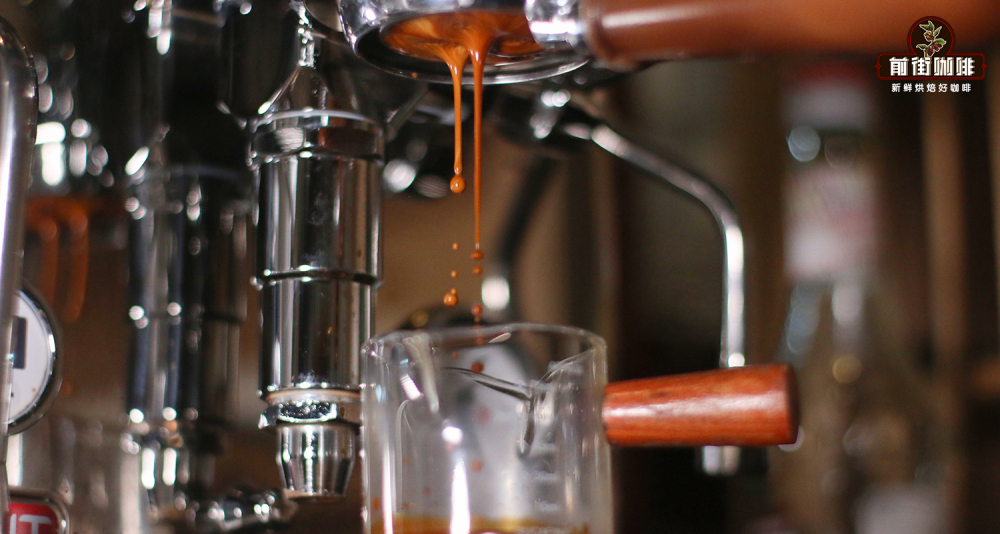
Gently lock the portafilter onto the brew head and start turning on the extraction switch. Observe the changes in the extracted liquid. When the electronic scale shows that 40 grams of coffee liquid has been extracted, at about 30 seconds, turn off the extraction switch. The brewing parameters will produce subtle changes according to the daily air humidity and the condition of the coffee beans, so it is necessary to adjust the amount of coffee powder, the setting, and the extraction amount of coffee liquid up or down.
The extracted espresso can be drunk directly. Paired with a glass of ice water for rinsing the mouth, you can taste the dense crema and the mellow mouthfeel of the coffee liquid underneath. The espresso extracted with Warm Sun has rich aromas of vanilla, cream, cookies, and whisky, and after swallowing, a toffee-like aroma remains in the mouth.

If you cannot accept the strong bitterness, you can also add water according to your preference to make a refreshing Americano, or add a certain proportion of milk to soften the mouthfeel, making it a delicious latte.
The above content is compiled by CoffeeHunters, a coffee news website.


