







Mandheling coffee is renowned for its rich, smooth body and low acidity, making it a favorite among coffee lovers who dislike sourness. It originates from Sumatra, Indonesia, and its unique wet-hulling process gives it a thick mouthfeel and distinctive flavor. This article will guide you through the cultivation history of Sumatran coffee, the origin of the name Mandheling, the connection between PWN Company and Golden Mandheling, and the brewing parameters and flavor profile of Front Street Coffee's recommended PWN Golden Mandheling, presenting the complete journey of this classic coffee from origin to cup.
For more specialty coffee knowledge, please follow our WeChat official account: Front Street Coffee (FrontStreet Coffee)
Mandheling coffee has a rich taste, smooth texture, and inconspicuous acidity, so many coffee lovers sensitive to acidity will prioritize it. This coffee originates from the island of Sumatra, Indonesia.
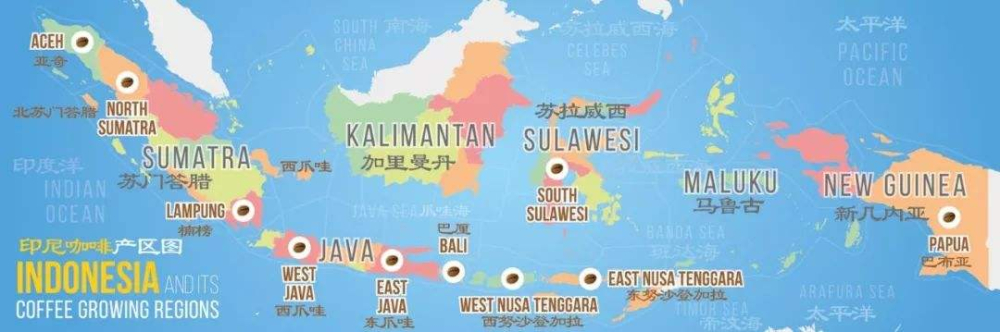
Sumatra is the sixth-largest island in the world. Although it is an island, it also has towering mountain ranges. The Barisan Mountains stretch over 3,800 meters, splitting the island in two. In the middle of the range stands the highest peak, Mount Kerinci, at 3,800 meters, an active volcano. Most Arabica coffee trees on the island are planted at higher elevations than Robusta, and the growers are mainly smallholder farmers.
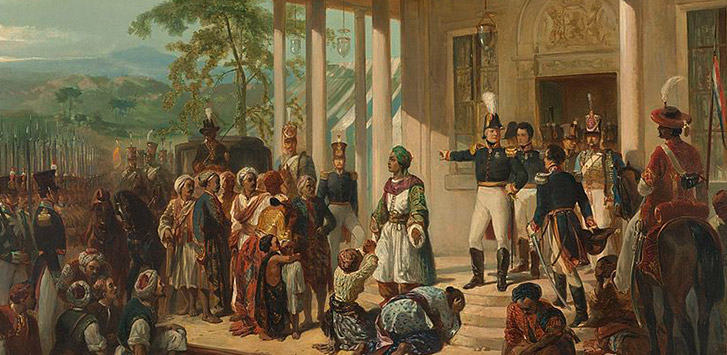
Coffee cultivation in Indonesia can be traced back to 1696, when the Dutch brought coffee saplings from the Malabar region of India. After successful trial planting in 1699, coffee was introduced to other islands, including Sumatra. However, coffee in this region did not truly begin to be exported until the early 19th century. As production climbed, exports grew in tandem, surpassing 12 million pounds by 1840. Production peaked in 1860 at 21 million pounds, after which coffee leaf rust destroyed most Arabica coffee trees. By 1900, rust-resistant Robusta coffee trees had replaced most Arabica growing areas. Currently, Sumatra is the region with the highest coffee production in Indonesia.
Robusta almost completely replaced Arabica on the island of Java, so by the early 20th century, Sumatra coffee, which still retained some Arabica production, gradually surpassed Java coffee in reputation. At the same time, the name "Mandheling" also gained fame. Interestingly, Mandheling is not a person's name, but the name of an ethnic tribe.
How did a tribal name become a coffee name? There is an amusing story behind this. The Japanese love drinking coffee, especially favoring styles with a high body. During World War II, a Japanese soldier drank a cup of rich coffee in Sumatra and liked it very much, so he asked the owner who provided the coffee what kind of coffee it was. The owner mistakenly thought the other was asking about his background and gave his place of origin. Because "Mandailing" sounds extremely close to "Mandheling" in Japanese, the soldier remembered "Mandheling." After the war, back in Japan, he could not forget that cup of coffee, so he asked a Japanese merchant friend to find a local Indonesian trader to import "Mandheling" coffee beans. Later, Mandheling coffee quickly became popular in the Japanese market due to its high body, and from then on became world-famous.
That local Indonesian trader back then was none other than the now-famous PAWANI Company (PWN). PWN registered "Golden Mandheling" as a trademark very early on; the Japanese side was not to be outdone and registered "Dingshang Golden Mandheling." Therefore, only Golden Mandheling coffee beans produced by PWN are truly Golden Mandheling in the strict sense. However, the two beans have different product names, different brands, and different marketing strategies, so which one is better depends on the individual.
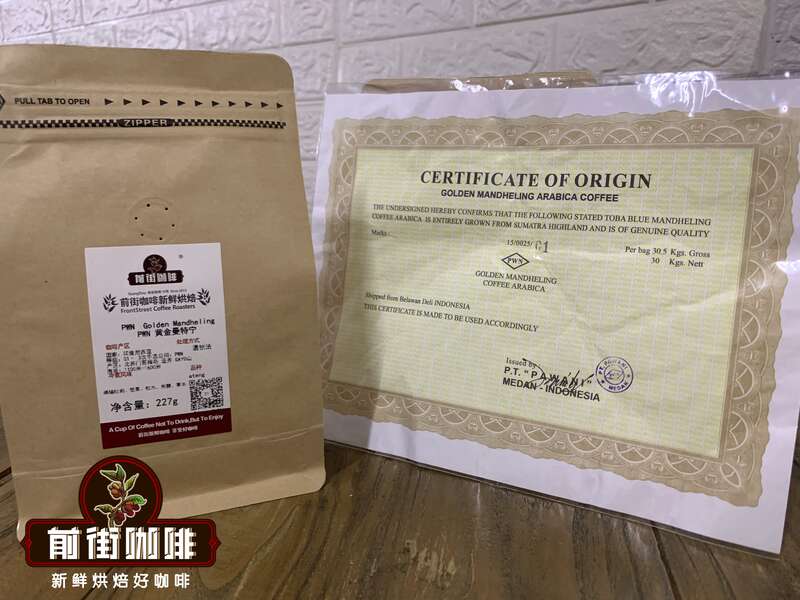
On Front Street Coffee's bean list, there is only one Golden Mandheling, and it comes from Indonesia's PWN Company. This Front Street PWN Golden Mandheling green bean has large, uniform particles and an extremely low defect rate—fewer than 3 defects per 300 grams of sample beans—reaching the highest grade, G1. PWN has very strict production requirements for Golden Mandheling: first, machines screen out high-quality green beans with large particles and high density, then they undergo three rounds of manual hand sorting to ensure defective beans are thoroughly removed, thereby improving the cleanliness and sweetness of the final product.
After cupping multiple Golden Mandheling coffees, Front Street found that Front Street PWN Golden Mandheling has a clean mouthfeel and prominent sweetness that other Golden Mandheling coffees find hard to replicate. So how can you ensure that the Golden Mandheling you buy really comes from PWN? Usually, when PWN's Golden Mandheling is sold, the jute bags holding the green beans are printed with a clear PWN company logo; in addition, PWN also provides buyers with a factory certificate. The jute bags and certificates for the Front Street PWN Golden Mandheling sold by Front Street can all be seen in Front Street Coffee's stores.
Front Street Coffee (FrontStreet Coffee): Front Street PWN Golden Mandheling coffee beans
Region: Sumatra, Indonesia
Altitude: 1,100 meters—1,600 meters
Variety: Ateng
Processing method: Wet-hulled
The reason Mandheling coffee's flavor is so unique lies in its equally unique post-harvest green bean processing method. Indonesia has frequent rainfall, short sunshine hours, and limited local economic conditions, making the washed processing method impossible, so Sumatra's local unique semi-washed processing method—wet-hulling—came into being.
After farmers pick coffee cherries at just the right ripeness, they first use a depulper to remove the skin and pulp, place the parchment beans with mucilage into a water tank to ferment, then wash off the mucilage with clean water, and then spread the wet parchment beans under the sun to dry until they reach a half-dry, half-wet state.
At this stage, farmers collect the parchment beans and sell them to the local green coffee processing station. After receiving these half-wet, half-dry green beans, the processing station first removes the parchment layer in order to greatly shorten the drying time, then carries out sun drying. The drying process takes about 3 to 4 days, and the moisture content can drop to around 13%.
Sumatra's unique wet-hulling method is the reason Mandheling coffee has a thick, smooth mouthfeel and a distinctive flavor. Mandheling coffee's unique flavor also made wet-hulling widely known. It can be said that Mandheling coffee and the wet-hulling method bring out the best in each other.
After Front Street Coffee's roaster received PWN's Golden Mandheling, in order to highlight Mandheling coffee's rich body, a medium-dark roast was used. For brewing, Front Street recommends using a lower water temperature, a coarser grind, a slower-flow dripper, and a three-pour pouring method.
Dripper: KONO dripper
Water temperature: 88°C
Coffee dose: 15 grams
Coffee-to-water ratio: 1:15
Grind size: 70% passing through a No. 20 sieve
First rinse the KONO dripper to make the filter paper fit the dripper better, pour away the water in the server, and at the same time add 15 g of coffee grounds. After blooming with 30 g of water for 30 s, start pouring in a circular motion from the center with a small stream until 125 g, then begin dividing into stages. When the coffee bed drops to half the height of the dripper, pour the second stage using the same technique until 225 g. After all dripping is complete, remove the dripper.
After brewing is complete, Front Street's Front Street PWN Golden Mandheling presents a rich nutty flavor. As the temperature drops slightly, notes of herbs and spices can be sensed, with a noticeable caramel sweetness in the finish, and a clean yet gentle mouthfeel.
The above content is compiled by CoffeeHunters, a coffee news website.


