







Kenyan coffee is renowned for its vibrant fruity acidity and full body, with flavor layers spanning blackberry, grapefruit, and smoked plum. This article systematically analyzes what makes Kenyan coffee unique, from regional grading and smallholder cooperative models to the K72-hour washed processing method, and introduces the "Little Tomato" coffee beans from the Asali processing plant in the Thika region, now available at Front Street Coffee, including their origin, varieties, and flavor description. Finally, for brewing light-roasted Kenyan coffee, it shares dripper selection, water temperature control, grind size assessment, and a three-pour pouring scheme to help coffee enthusiasts brew a clean, bright, perfectly balanced cup with sweetness and acidity.
For more specialty coffee knowledge, please follow our WeChat official account: Front Street Coffee (FrontStreet Coffee)
Kenyan coffee's acidity is very prominent, with distinct fruity notes. High-quality Kenyan beans have a rich aroma, full body, and complete layering. On the palate, one often detects notes of blackberry and grapefruit, which is also why many seasoned coffee enthusiasts hold it in high regard. It has a quite pleasant medium body, a refreshing mouthfeel, and clean flavors, making it especially suitable for iced coffee in summer. When drinking it, pairing with acidic fruits like pomelo or cocoa products are both good choices.
However, Kenya's smallholders should never be underestimated. They are like ant workers—though individually small in scale, their overall production exceeds that of large estates, at a ratio of roughly six to four, which is quite rare among coffee-producing countries. In addition, Kenyan beans have a strict grading system. Coffee beans from washed processing plants are classified into seven grades based on size, shape, and density, with the highest being AA or AA+, followed by AB, PB, C, E, TT, and T. This grading method is similar to Colombia's, mainly based on bean size and appearance, but good looks do not equal good flavor—this is something coffee lovers should understand.
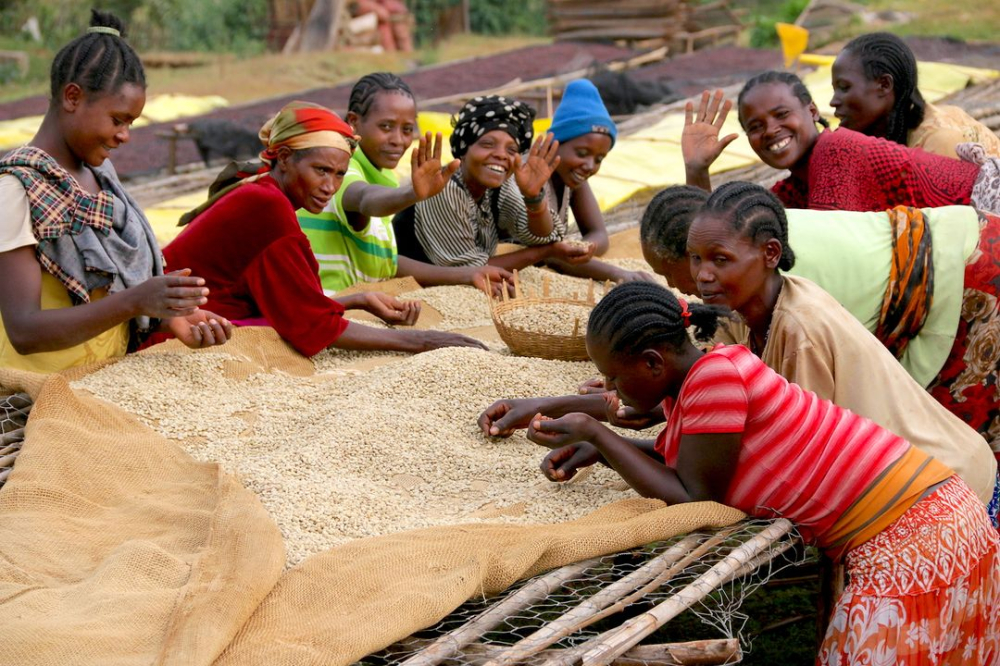
Kenyan coffee farms fall into two categories. One is large plantations, covering about five acres, but their altitude is usually lower, and as far as Kenyan coffee is concerned, the beans from large estates are only mediocre in quality. Higher-quality Kenyan beans often come from small farms, mostly located on volcanic slopes above five thousand to six thousand feet. Each smallholder produces only about twenty to seventy bags per season and cannot afford to invest in an expensive washed processing plant alone. But smallholders are very united, gathering hundreds or even thousands of households to form cooperative farms, with the government funding the construction of washed processing plants. The coffee cherries picked by smallholders are sent to the cooperative farm for unified processing: first removing unripe or rotten cherries, then pulping, fermenting, breaking down the mucilage, extracting the beans, and finally drying and polishing. The entire process is supervised by the official coffee authority and is quite rigorous, thus ensuring the quality of Kenyan coffee.
Of course, another key factor creating Kenya's excellent acidic, fruity flavors is the double washed processing method commonly used locally, also known as the K72-hour washed processing method.
Generally speaking, washed coffee processing involves first removing the skin and pulp, leaving only a thin layer of mucilage for washed fermentation of 24 to 48 hours, and finally drying by machine or sun. Kenyan-style washed processing is different—the entire fermentation process reaches 72 hours.
Kenyan-style washed processing uses a cyclic repeated method of fermenting and then washing. On the day of harvest, the finest cherries are selected, pulped, and fermented for 24 hours, then washed with clean river water. Next, they are fermented again with clean river water for 24 hours, then washed again, repeating this cycle three times to reach 72 hours. Hence it is called the Kenyan-style 72-hour fermentation washed processing method, or K72 for short. Front Street believes that this processing method allows the coffee beans to ferment for a long time at low temperatures, giving the beans a brighter, cleaner, and fuller flavor.
The Kenyan coffee beans launched by Front Street come from the Asali processing plant in the Thika region, possessing very bright smoked plum acidity, a solid mouthfeel, and the fruity sweet-tartness of small tomatoes and cherry tomatoes, hence the name "Little Tomato."
Front Street Coffee (FrontStreet Coffee): Kenya · Little Tomato Coffee Beans
Origin: Asali Processing Plant, Thika Region, Kenya
Altitude: 1550m—1750m
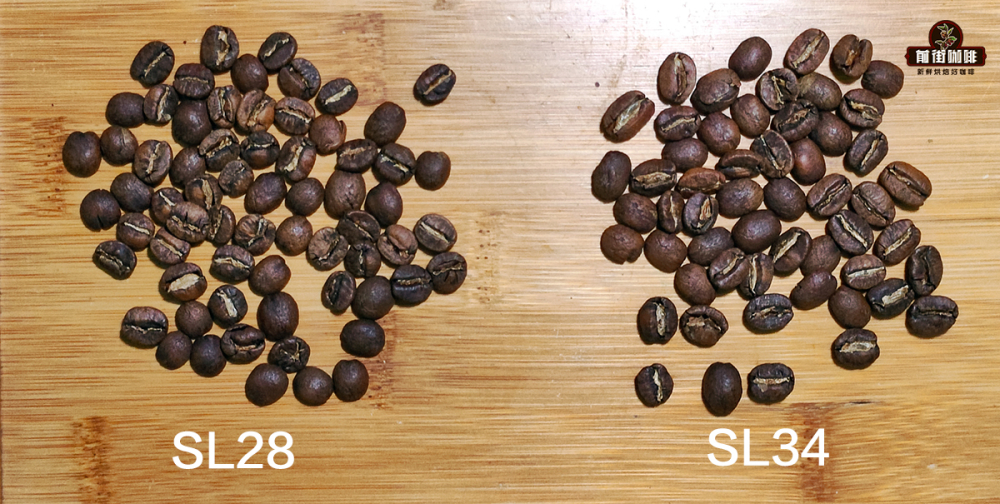
Varieties: SL28, SL34
Processing Method: K72 Washed Processing
Flavor Description: Smoked Plum, Cherry Tomato, Snow Pear, Yellow Sugar, Plum
Kenya's acidity is bright, gorgeous, and outstandingly full, making it hard to forget for anyone who has tried it. The exquisite flavors of Kenyan beans cover almost 29 taste notes in the "SCA Flavor Wheel." Its acidity includes blackcurrant, the smoked plum we are familiar with, lime, grapefruit or pineapple, green apple, passion fruit, and numerous berry flavors; its sweetness includes honey, black sugar, and sweet fresh orange juice.
For brewing light-roasted coffee like Kenya · Little Tomato, Front Street believes there are three details to note:
1. Prioritize a dripper with fast flow. Since lighter-roasted coffee beans expand less and have a harder texture, they tend to release extremely fine particles during grinding, and during pouring they also sink to the bottom first, causing clogging in the final stage. Coffee brewed this way often has flat aroma and a muddy mouthfeel. Therefore, it is best to pair with a fast-flow dripper, such as the V60 that Front Street uses most often. Its spiral rib design allows coffee grounds to degas better while maximizing the activation of aromatic volatiles and dissolution, and the large hole at the bottom further speeds up the water flow.
2. Water temperature should not exceed 93°C or fall below 90°C. According to Front Street's brewing experience, to make the coffee's acidity bright and uplifting with a tea-like finish, you can brew at 90°C-91°C; to make the coffee's fruity acidity full and solid while enhancing body, you can use a water temperature of 92°C-93°C.
3. Since the grind size parameter affects total time, Front Street typically judges whether the grind setting is right by combining extraction time and the coffee's taste. It is actually quite simple: if you brew 15 grams of coffee grounds using a three-pour method and the time is less than 1 minute 40 seconds with a sharp, thin taste, it means the particles are too coarse and the coffee is under-extracted; if the time exceeds 2 minutes 20 seconds and the coffee is bitter, astringent, heavy, and dull, it may be ground too fine and over-extracted.
As for the coffee-to-water ratio, Front Street believes 1:15 to 1:16 are both acceptable. If you want the coffee to lean toward a rich oolong tea, berry-like intensity, use 1:15; if you want to more clearly perceive white floral notes and citrus acidity, use 1:16 to spread the flavors out more.
For the first pour, inject 30g of water for a 30-second bloom. Start timing as you pour, using a slow stream at the center point and then spiraling outward, making sure to saturate the entire coffee bed. After 30 seconds, begin the second pour with a slightly stronger steady stream, adding 95g of water to lift the entire coffee bed. The water column should be poured vertically and evenly. At this point the scale reads 125g, and the pour should be completed in about 55 seconds.
When the water level drops to the halfway point, begin the third pour using a slow stream in a small spiral, adding 100g. Try to control the stream so it does not spiral too widely, as this can easily disturb the coffee bed and cause under-extraction. The total water added is 225g, and the drip should finish in about 2 minutes.
For the first pour, inject 30g of water for a 30-second bloom, then for the second pour add water up to 125g to create a stage. When the water level drops to the point where the coffee bed is about to be exposed, proceed with the third pour until reaching 225g, then stop pouring. Wait for the water in the dripper to fully drip into the server, then remove the dripper. Total extraction time is 2'00".
The above content is compiled by CoffeeHunters, a coffee news website.


