







How Coffee Was Made and How Drip Bags Differ
Drip bag coffee holds ground roasted beans that steep in water, while instant coffee is already brewed and dried into soluble granules or powder. That difference in how coffee was made shapes everything in the cup: the drip bag gives a fuller body and a clearer aroma, whereas instant coffee dissolves straight into hot water and is cheaper and faster, though it often carries non-dairy creamer and sugar.
Freshness favors the drip bag. Its coffee material is pre-ground, so aromatics escape sooner and the optimal tasting window runs about 20 to 25 days, compared with 30 to 45 days for whole beans. Freshly ground pour-over still leads on aroma. Brewing a drip bag takes a steady pour and a few minutes, roughly the effort of a small pour-over.
Drip bag coffee or instant coffee—which is actually more worth drinking? Both may seem like convenient options, but from the form of the raw material to the brewing method and finally the flavor in the cup, the differences are actually quite significant. A drip bag contains ground coffee bean particles, which do not dissolve in water and need to be extracted by pouring water over them; instant coffee, on the other hand, has been extracted and dried, so it can dissolve directly. Drip bag coffee has a richer aroma and a fuller body, while instant coffee wins on being cheap and quick but often contains non-dairy creamer and sugar. This article will also break down in detail the flavor gap between drip bag coffee and freshly ground pour-over, and include several classic drip bag recommendations from Front Street Coffee along with complete brewing steps, to help you find the cup that suits you best.
The core difference between drip bag coffee and freshly ground pour-over coffee is that the former uses pre-ground coffee powder. How big is the difference in effect between pre-ground and freshly ground? There will still be some impact, more or less.
After coffee beans complete roasting, they accumulate a large amount of carbon dioxide inside, and these gases play an important role in preserving the aroma and flavor of the coffee. Once the coffee beans are ground into particles, the cut surface area increases substantially, and the speed at which flavor and aroma escape also accelerates. During the production of drip bag coffee, the coffee beans must be ground in advance to a suitable coarseness, then placed into special filter bags and sealed one by one.
Even when sealed, the loss rate of coffee flavor and aroma is still faster than that of whole coffee beans, so the optimal tasting period for drip bag coffee is about 20 to 25 days.
Freshly ground coffee is different: it is ground into powder only at the moment you are preparing to brew. Before that, the coffee beans remain whole, so they can lock in aromatic substances more fully and effectively. Freshly roasted coffee beans stored in sealed packaging usually have an optimal tasting period of 30 to 45 days.
All products sold by Front Street Coffee, whether drip bag coffee or whole bean coffee, are freshly roasted, and shipping is guaranteed within 5 days after roasting is completed. The reason is simple—only freshly roasted coffee beans can present a fuller coffee aroma and flavor.
In order to help drip bag coffee retain as much flavor and aroma as possible, Front Street Coffee performs suitable grinding immediately after the coffee beans are roasted and cooled, and then packages them into individually sealed drip bags as quickly as possible, 10 grams per bag.
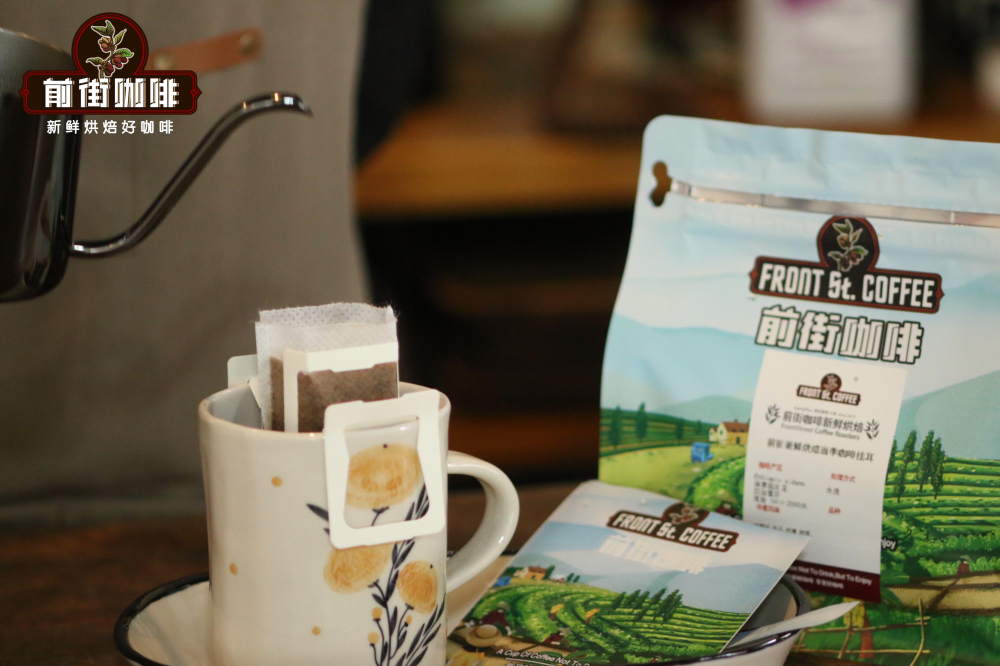
Drip bag coffee is fundamentally different from instant coffee. A drip bag contains coffee bean fragments, whose main component is wood fiber, and they cannot dissolve directly in water. Instant coffee is made by grinding roasted coffee beans under specific temperature and pressure conditions, extracting the effective components of the coffee into water, and then drying it—this is exactly why instant coffee can dissolve directly in water.
Drip bag coffee and instant coffee each have their own advantages. Coffee brewed from drip bags has a richer aroma and a fuller, more intense body, and is a black coffee with no milk or sugar added; you can add them yourself if desired. The strength of instant coffee lies in being convenient, quick, and affordable, but it often contains quite a bit of non-dairy creamer and sugar, so Front Street does not recommend drinking it over the long term.
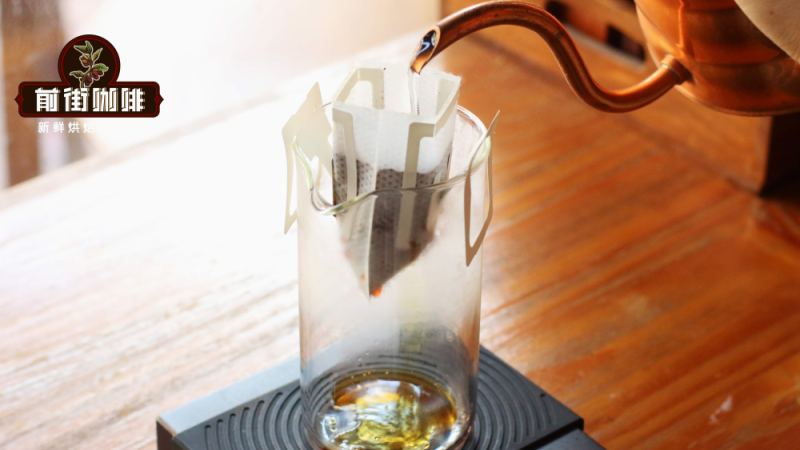
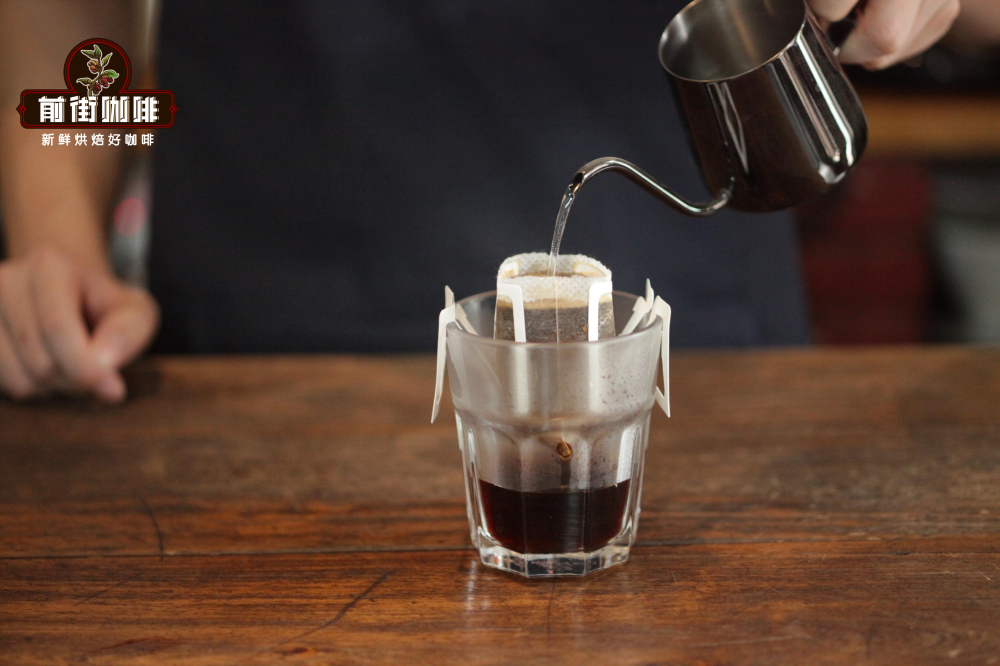
The specific brewing steps for drip bag coffee are as follows:
1. First find a straight-sided cup, pour in hot water to warm the cup, then pour the water out and set the cup aside.
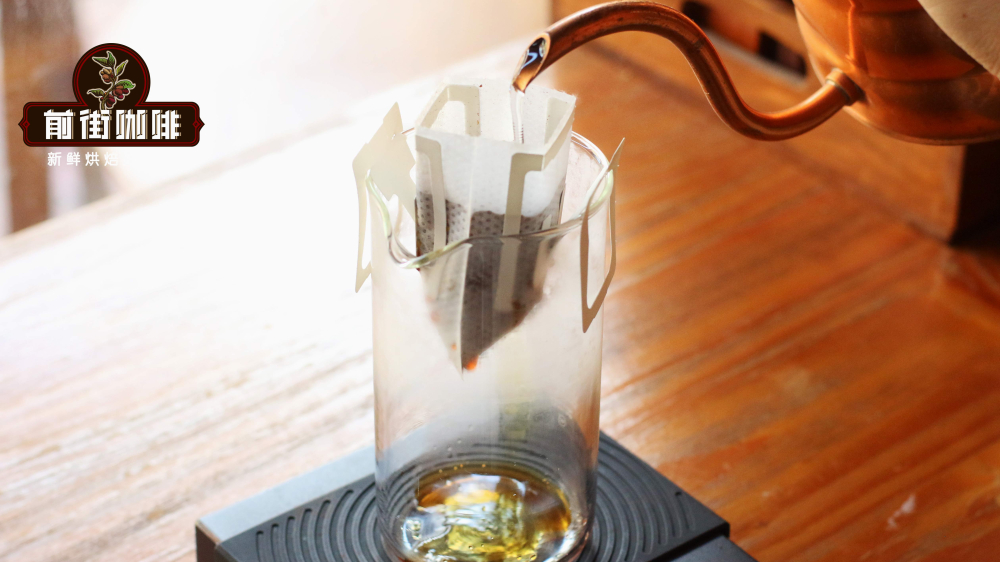
2. Open the packaging, take out the drip bag, tear it open along the dotted line at the top, then pull the small tabs on both sides outward and hang them on the rim of the cup.
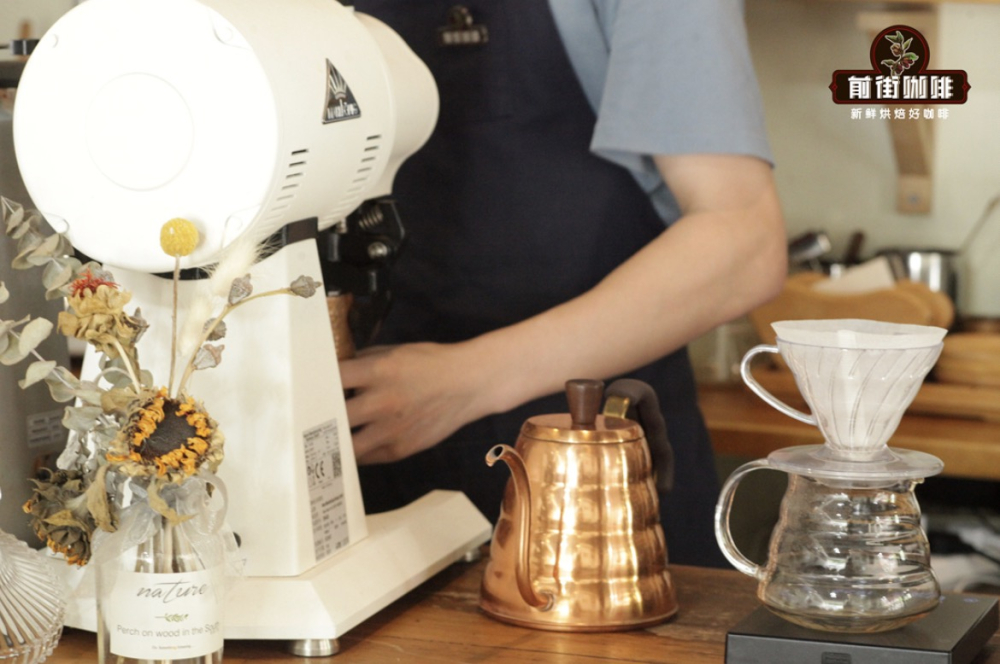
3. Control the water temperature at around 92°C (if you do not have a thermometer on hand, bring water to a boil, remove the lid, and let it sit for 2 to 3 minutes).
4. Use a thin stream of water to wet all the coffee grounds, pouring in about 20 ml of hot water, and let it bloom for 30 seconds.
5. Then pour in another 130 ml of hot water (if you do not have a scale, this is the amount of water used to fill the drip bag twice).
A gooseneck pour-over kettle is best; if you do not have one, an ordinary electric kettle will also work. The key is to control the water flow and keep pouring steadily and slowly in circles from the inside outward.
Specialty coffee drip bag recommendations
Many office workers ask Front Street to recommend coffee beans suitable for making into drip bags. All of the more than fifty single-origin coffee beans from different producing regions on Front Street’s bean list can be made into drip bag coffee. Below, Front Street has selected a few drip bag coffees with relatively classic flavors to recommend to everyone.
1. Front Street · Washed Yirgacheffe Gedeo Cooperative Drip Bag
This Front Street Gedeo Cooperative coffee bean comes from Ethiopia’s famous Yirgacheffe producing region, and the harvested coffee cherries are processed by the washed method. In 1972, Ethiopia introduced washed processing technology from Central and South America in order to improve coffee quality, making the jasmine floral notes and bright citrus-lemon acidity of Yirgacheffe coffee clearer and more transparent, instantly placing it among the representatives of the world’s specialty coffee.
Front Street · Yirgacheffe Gedeo Cooperative Coffee Region: Yirgacheffe Gedeo Zone Producer: Gedeo Cooperative Altitude: 1900-2300m Variety: Local heirloom varieties (Heirloom) Processing method: Washed
Grade: G1
Flavor: Citrus, berries, lemon, cane sugar, green tea
2. Front Street · Brazil Queen Estate Drip Bag
Queen Estate is located in the Mogiana region of São Paulo State, Brazil. Unlike many large-scale producing regions in Brazil that win on yield, this area has a higher altitude, forming a relatively unique microclimate. In addition, the estate insists on hand-picking coffee cherries that have reached proper ripeness, and each batch is processed in small quantities with care, so most of the coffee beans produced reach specialty grade. Queen Estate is most proud of its Yellow Bourbon variety, which has won awards multiple times in Brazil’s COE competition thanks to its refined and delicate flavor. This Front Street Queen Estate coffee bean uses a medium-dark roast, which both highlights the classic rich aroma of Brazilian coffee and showcases the sweetness of the Bourbon variety itself. On the palate you can feel a rich coffee aroma, with a clean sweet aftertaste in the body.
Front Street · Brazil Queen Estate Coffee Beans
Region: Brazil Mogiana Region
Estate: Queen Estate
Altitude: 1400–1950m
Variety: Yellow Bourbon
Processing method: Natural process
Flavor: Dark chocolate, cream, peanut, sugarcane, nuts
3. Front Street · Natural Process Huakui Drip Bag
This Huakui coffee bean introduced by Front Street Coffee was the champion of the natural process group in Ethiopia’s 2017 TOH coffee competition. It made a stunning debut with its unique strawberry-cream flavor and shot to fame overnight. That year this batch of green beans was brought into China by Beijing green bean trader Hongshun, and in the same year Li Jianfei used this bean to win second place in the China region of the 2017 World Brewers Cup. This Ethiopian bean stood out remarkably among many Geisha competition beans, and thus earned the name “Huakui.”
Front Street · Ethiopia Natural Process Huakui Coffee
Country: Ethiopia
Region: Sidamo
Altitude: 2250-2350m
Variety: Local heirloom varieties
Processing method: Natural process
Flavor: Berries, floral tea, honey, lemon, black tea
The above content is compiled by CoffeeHunters, a coffee news website.


