







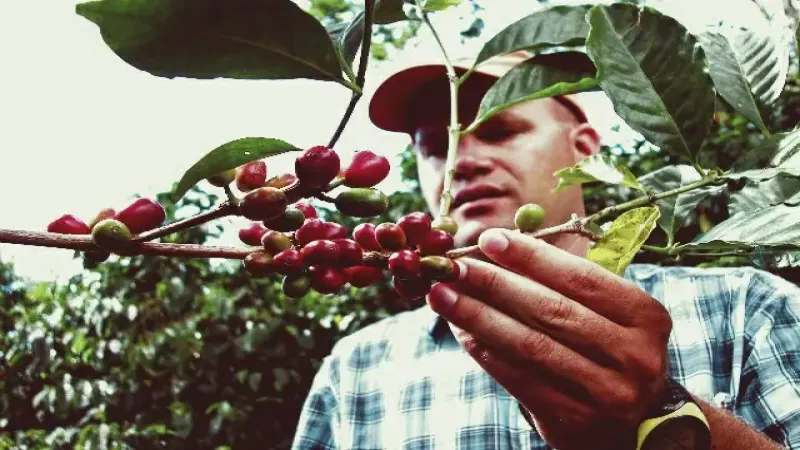
Geisha coffee originated in Ethiopia but rose to prominence in Panama, becoming one of the most sought-after specialty coffee varieties in the world. Starting from Panama's unique geographical and climatic conditions, this article traces the history of Geisha's spread as a variety and analyzes the growing characteristics of the Boquete region along with Hacienda La Esmeralda and Elida Estate. At the same time, drawing on Front Street Coffee's roasting and brewing practices, it focuses on the layers of flavor—nuts, cream, citrus, and floral tea—that Panamanian Geisha presents under a light roast, as well as the flavor differences among Red Label, Green Label, and other lots, offering coffee lovers a systematic reference for Geisha tasting.
For professional coffee knowledge exchange and more coffee bean information, please follow Coffee Workshop (WeChat public account: cafe_style)
It's often said in coffee circles that each region's coffee has a distinct flavor, and that this is inseparable from the local climate and environment. But this isn't an ironclad rule either. There's a saying circulating in the industry: for a cup of coffee's flavor, green beans contribute about sixty percent, roasting thirty percent, and brewing only ten percent. Clearly, there are quite a few variables that shape coffee's flavor.
Geisha originally came from Ethiopia, yet it ultimately made its name in Panama. The most critical reason for this comes down to Panama's unique microclimatic conditions.
After Geisha became famous, countries around the world rushed to plant it, but the results varied greatly. Affected by weather, soil, and altitude, the same variety grown in different places often performs very differently in the cup. Still, in the Acatenango area, we can observe typical Geisha characteristics: elongated beans, dramatic changes during roasting, and a refined, elegant flavor on the palate.
Front Street has noticed a phenomenon: the harsher the environment, the more outstanding Geisha coffee's flavor becomes. It is precisely for this reason that Hacienda La Esmeralda's Geisha in Panama performs so distinctively, beyond the reach of other regions—ultimately, it is Panama's climatic conditions that made it what it is.
Panama's Coffee Growing Environment
Panama sits on the Central American isthmus, bordered by Colombia to the east, the Pacific Ocean to the south, Costa Rica to the west, and the Caribbean Sea to the north. The country is S-shaped, connecting North America and South America, with the Panama Canal running north to south to link the Atlantic and Pacific Oceans, earning it the name "Bridge of the World."
Panama's coffee-growing regions are concentrated in the western part of the country, including Boquete, Volcán, Santa Clara, and Piedra de Candela, among which Boquete and Volcán are the most frequently mentioned specialty coffee regions. Both are located in Chiriquí Province, right in the core of the coffee belt, with fertile volcanic soil and pristine forests. Panama's terrain is undulating throughout, crisscrossed by valleys and ravines, and aside from the northern and southern coastal plains, it is mostly mountainous. Because it lies near the equator, it has a tropical maritime climate, humid by day and cool at night, with an average annual temperature of 23–27°C. The year is divided into dry and rainy seasons, with average annual rainfall of 1,500–2,500 mm.
Panama Geisha's flavor characteristics are very distinct: pronounced floral aromas, full-bodied juiciness, and rich layers on the palate—something Geisha grown in other regions can hardly match. Panama's coffee-growing areas are distributed around the Barú Volcano, whose highest peak reaches nearly 3,500 meters. Warm, moist air currents from the Pacific and Atlantic converge here, bringing abundant rainfall to the surrounding area; the rich mineral deposits around the volcano also provide ample nutrients for the soil. These exceptional natural conditions, combined with the high-altitude terrain, together create a heavenly coffee flavor.
Geisha Coffee
Geisha coffee is in fact a way of referring to the Geisha variety—in other words, it is named after the variety itself. In 1931, botanical experts collected samples in Ethiopia's Kafa forest for study, aiming to select superior varieties from among the disease-resistant species that had been collected from the Kafa forest after the leaf rust outbreak of 1860 (the tree species collected at the time were subsequently selected and screened in Kenya). French biologist Jean-Pierre Labouisse later verified this trail and found that the coffee beans originally labeled as from Geisha Mountain actually came from different trees—meaning it was not a single Geisha variety.
These seeds labeled as Geisha were shipped in batches to Kenya in 1931 and 1932 for selection and sample investigation, and in 1936 were sent to Uganda and Tanzania. In 1953, Costa Rica's Tropical Agricultural Research and Higher Education Center introduced the Geisha experimental variety grown in Tanzania into the country and registered it under the number "T2722." In 2004, Panama's Hacienda La Esmeralda entered Geisha in the national coffee competition (BOP) and took first place, defeating usually dominant varieties such as Bourbon, Caturra, Catuai, and Typica, and went on to win gold at the Best of Panama cupping competition for four consecutive years in 2005, 2006, and 2007.
Panama's Boquete Region
Coffee in the Boquete region is grown at altitudes between 1,400 and 1,900 meters. It is a town in Chiriquí Province, located near the border between Panama and Costa Rica, close to the famous Barú Volcano, with beautiful scenery and fertile, rich soil—its climate and soil are both very well suited to producing high-quality coffee. The Boquete region is also home to many excellent estates; besides Hacienda La Esmeralda, there are also Elida Estate and Kotowa Duncan Estate, among others, all producing high-quality specialty coffee.
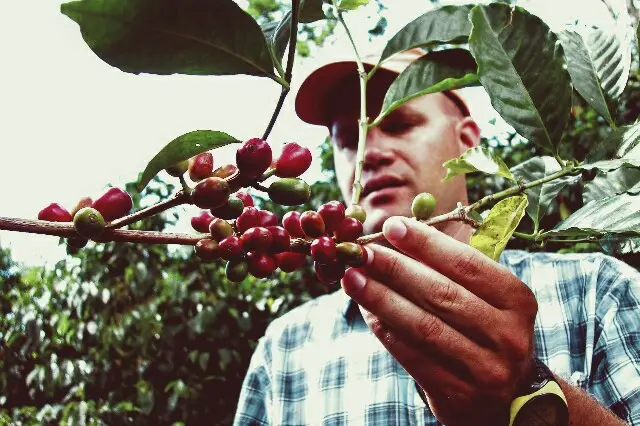
This is due not only to the mild climatic conditions of Panama's Boquete area and the fertile volcanic ash soil of Barú Volcano, but also to an important factor: the variable microclimates of the Boquete highlands. Panama's east-to-west configuration causes cold air currents to pass through the central mountain range and converge between 1,200 and 2,000 meters in altitude. The misty rain and shifting winds of the mountains create a variety of microclimates in the Boquete area, making its temperature and rainfall very suitable for plant growth. As a result, the coffee trees planted here grow extremely well.
Geisha coffee is one of the most expensive coffees in the world, so friends who want to taste Geisha's flavor may find it a bit pricey. To let more coffee lovers enjoy the deliciousness of Geisha coffee, Front Street has specially listed the washed Boquete Geisha coffee from the Boquete region as one of its everyday drinking beans—great news for those who love Geisha and want to taste it!
Panama Hacienda La Esmeralda Estate
Hacienda La Esmeralda is where Geisha coffee became famous. Located on one corner of Barú Volcano, the Panamanian coffee beans produced in this area were mostly named after Barú Mountain before the estate became famous. The area around Boquete is beautifully scenic, with many leisure hotels and resort estates, some even built along the important Rio Caldera. In 1964, American banker Rudolph Peterson retired, moved to Panama, and bought Hacienda La Esmeralda in Boquete, initially focusing on dairy farming.
After Price took over, the estate's growing areas were divided into five brands for sale based on altitude, microclimate, cupping performance, and planted variety. There are three Geisha brands: Esmeralda Special, Private Collection, and Geisha 1500. There are two Catuai brands: Diamond Mountain grows and Palmyra.
Esmeralda Red Label Geisha (Special)
This is a group of high-altitude Geisha, grown at altitudes between 1,600 and 1,800 meters, with cupping scores above 90 points. The coffee in this lot comes mainly from the Jaramillo and Cañas Verdes blocks, including both natural and washed processed coffee, with characteristics of jasmine, fruit, and bergamot. Red Label Geisha is further divided into auction Geisha and non-auction Geisha.
Esmeralda Green Label Geisha
Private Collection, commonly known as Green Label, is not an independently competed lot—a Geisha variety that does not participate in auctions but still offers excellent quality. It is a blend of micro-lots from different plots, including Jaramillo and Cañas Verdes, grown at altitudes of 1,600–1,800 meters.
Someone asked Front Street: what's the difference between Green Label and Red Label? Front Street believes: although Green Label Geisha coffee beans are not graded as highly as Red Label Geisha coffee beans, they have high clarity and an overall lean toward jasmine tea flavors, with high acidity, while the naturally processed Green Label Geisha has good sweetness—pleasantly sweet and tart, reminiscent of passion fruit and floral tea. Green Label Geisha lots are likewise available in washed or natural processing.
However, starting in 2021, Hacienda La Esmeralda adjusted its Geisha coffee grading, and from the 2021 harvest season, the estate discontinued the Blue Label lot (Geisha 1500).
Elida Estate
Elida is a famous Panamanian coffee estate with a century of history and superb coffee quality, located in Panama's renowned specialty coffee region—Boquete. Last year, an Elida Geisha coffee bean won the championship in the Geisha processing category of the BOP competition, and Front Street Coffee selected Elida Geisha from the same plot and same altitude for tasting. Compared with Hacienda La Esmeralda's Geisha coffee beans, it was found that because of the different processing methods chosen, Elida Geisha's layers are somewhat more complex than Panama Geisha's.
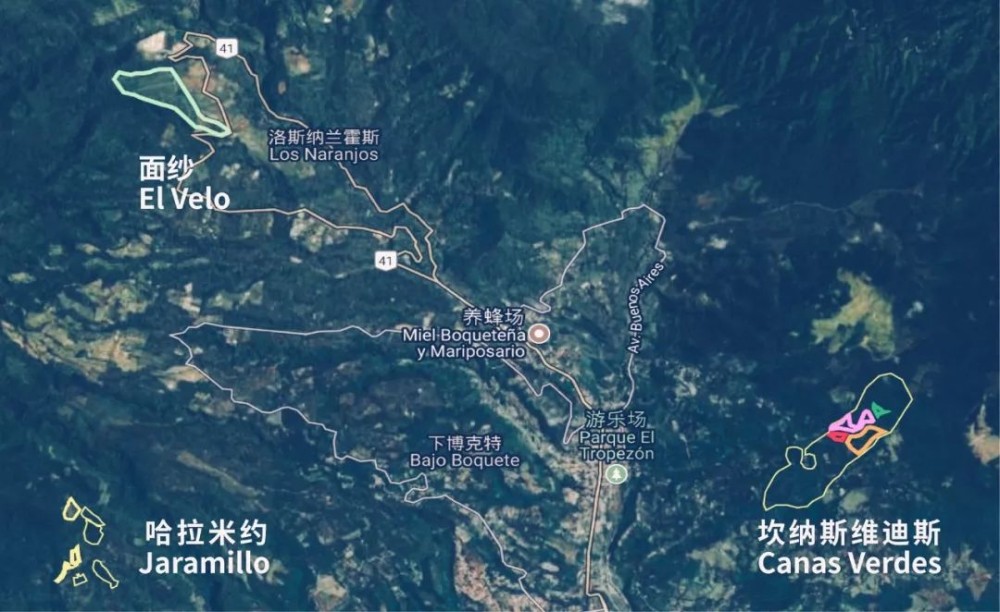
Elida Estate covers a total area of 65 hectares, more than half of which lies within Barú Volcano National Park. Only 30 hectares of the estate are used to grow coffee trees, while the rest remains primary forest. The coffee is grown at altitudes from 1,670 to 1,850 meters, making it one of the two highest-altitude coffee estates in Panama (the other estate with such an altitude is Carmen Estate in the Volcán Valley.)
In such a high-altitude environment, low temperatures delay the ripening period of the coffee cherries by about a full month compared with normal ripening. The fertile volcanic soil provides ample nutrients for the coffee, and together with the excellent microclimate brought by Barú Volcano and the estate owner's original ASD slow anaerobic natural processing technique, Elida Estate is able to achieve outstanding results in cupping competitions time and again.
Front Street's Roasting Recommendations
To highlight this bean's characteristics and aroma, Front Street uses a light roast, as this roast level can better bring out the bean's own qualities; too dark a roast would diminish the floral aroma and fruit acidity. Of course, this should also be adjusted according to the characteristics of the coffee beans and the roaster's own understanding of them. Through cupping, Front Street found that Panamanian Geisha coffee beans have very rich layers, so it is recommended to slightly lower the coffee concentration when brewing, so that each layer of Geisha coffee flavor comes through more clearly. A recommended brewing ratio is 1:15, brewed at 90–91°C, with a medium-fine grind (80% passing through a Chinese standard No. 20 sieve).
How to Brew Panamanian Geisha Coffee Beans?
Front Street recommends drip brewing, that is, pour-over coffee. If you want rich layers, you can brew with a V60 dripper, while if you want a full-bodied coffee flavor, you can brew with a cake dripper. Front Street's daily offerings mostly use the V60 dripper, because its 60-degree angle design and spiral rib design allow you to fully extract the essence of Geisha coffee by controlling the water flow and the number of pours, while the large outlet hole design prevents over-extraction.
The V60 dripper's body has guiding ribs connecting the top and bottom and a large central circular hole, which speeds up the flow rate of water falling through, while the spiral-shaped exhaust grooves lengthen the water path, increasing the contact time between coffee grounds and hot water. Each stream of water converges along the grooves toward the center point of the dripper, concentrating the pressure on the coffee grounds and producing a brew with richer layers.
Dripper: Hario V60, water temperature: 91°C, dose: 15 g, coffee-to-water ratio: 1:15, grind size: 80% passing through a Chinese standard No. 20 sieve.
Front Street Panama Elida Coffee Flavor Notes: fermentation aroma, rose, berries, citrus, green tea, cream, nuts.
Front Street Panama Washed Boquete Geisha Coffee Flavor Notes: a clear acidity of citrus, lemon, and bergamot, with a creamy, smooth mouthfeel when swallowed, and a finish of green tea and honey sweetness.
Front Street's Coffee Brewing Recommendations:
When it comes to brewing coffee, Front Street has always believed that the freshness of coffee beans has a great deal to do with coffee's flavor. Therefore, the coffee beans shipped by Front Street Coffee are all within 5 days of their roast date. Front Street's roasting philosophy is "freshly roasted good coffee," so that every customer who places an order receives the freshest coffee possible. Coffee beans need about 4–7 days of resting, so by the time customers receive them, they are at their best flavor.
For friends who need ground coffee, Front Street offers a friendly reminder: once coffee beans are ground in advance, they no longer need resting, because during transport the pressure from carbon dioxide inside the packaging also mellow the coffee's flavor, so you can brew a cup right away upon receiving the ground coffee. However, ground coffee needs to be brewed promptly, because ground coffee oxidizes relatively quickly after contact with air—that is, its flavor dissipates fairly quickly, and the coffee won't taste as good. Therefore, Front Street recommends buying whole beans and grinding fresh for each brew, so you can better enjoy the coffee's flavor.
Besides Panamanian Geisha coffee, Front Street also offers Geisha coffee from other producing countries and regions, such as: Colombia's Hanami Geisha coffee, Costa Rica's Mirazu Geisha blend coffee, Ethiopia's Gesha Village Red Label and Gold Label Geisha coffee, and so on. Of course, Front Street also carries more than fifty single-origin coffees from different regions—for coffee lovers, this is more than enough to satisfy everyone's exploration and love of coffee!
For more specialty coffee beans, please add the private WeChat of Front Street Coffee (FrontStreet Coffee), WeChat ID: qjcoffeex
The above content is compiled by CoffeeHunters, a coffee news website.


