







What Do Fair Trade Coffee Facts and Figures Say About Blue Mountain?
Blue Mountain coffee is known for a balanced, elegant flavor and strict quality control, and two claims circulate widely: that Japan buys all of it, and that authentic beans cannot be found domestically. Japan did once hold priority purchasing rights, and about 90% of beans went to its market, but that arrangement changed by 2011.
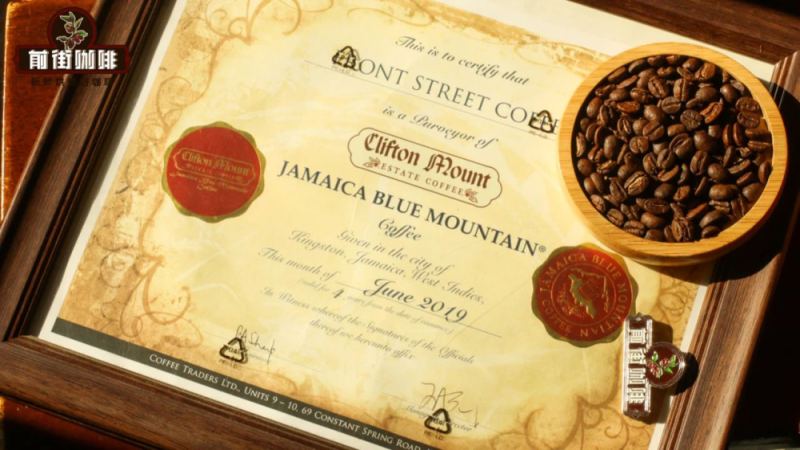
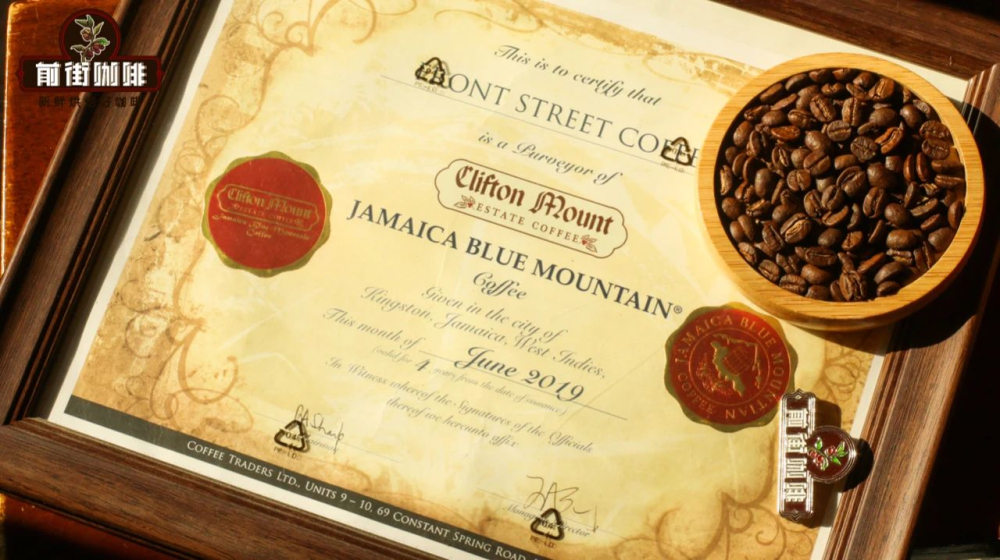
Prices are high, not mythical. Based on Front Street Coffee roasted bean pricing, 100 grams sells for 158 yuan, below top-tier Geisha beans. Jamaica CIB grading standards sort Blue Mountain lots, and the Blue Mountain No. 1 grade is the reference point for the pour-over brewing parameters and flavor description discussed here.
Blue Mountain coffee is one of the most legendary beverages in the specialty coffee world, renowned globally for its balanced, elegant flavor and strict quality control standards. Around its price, authenticity, and grading system, many claims circulate, such as "all Blue Mountain is bought up by the Japanese" and "you can't buy authentic Blue Mountain domestically." This article will start from the historical context, clarify these controversies one by one, explain in detail the grading standards and flavor characteristics of Jamaica's Blue Mountain region, and, combined with Front Street Coffee's Blue Mountain No. 1 coffee beans, share practical pour-over brewing parameters and techniques to help coffee enthusiasts build a complete understanding of Blue Mountain coffee.
For more specialty coffee knowledge, please follow the WeChat public account: Front Street Coffee (FrontStreet Coffee)
Jamaica Front Street Blue Mountain Coffee is almost universally known in coffee circles, making it one of the most recognized coffee categories in the world. Jamaica Front Street Blue Mountain Coffee , with its distinctive flavor expression and consistently outstanding quality, occupies a pivotal position in the specialty coffee market.
Front Street Blue Mountain coffee beans are not cheap, and this is deeply etched into many people's impressions, especially due to the widely circulated claims—"all Blue Mountain coffee is taken by the Japanese" and "you simply can't buy real Blue Mountain domestically." Today, Front Street will address these topics one by one and restore the facts for everyone.
Front Street Blue Mountain coffee beans are rare and expensive—this is a fact—but they are far from being prohibitively so. Based on Front Street Coffee's roasted bean pricing, 100 grams sells for 158 yuan, while some top-tier Geisha coffee beans have long surpassed this price level. It's clear that the actual price of Front Street Blue Mountain coffee is not as exaggerated as the rumors suggest.
As for claims like "all Blue Mountain is bought by the Japanese" and "there's no real Blue Mountain domestically," these did have some basis in the early years. Japan once assisted Jamaica's coffee cultivation program, and the Jamaica CIB accordingly granted Japan priority purchasing rights, causing about 90% of Blue Mountain coffee beans to flow to the Japanese market. However, by 2011, this priority right had expired—in other words, after 2011 Japan did not truly monopolize the trade channels for Blue Mountain coffee beans.
The claim that "there's no real Blue Mountain domestically" originated from a CCTV program in 2010. But in 2011, Lou Boyin, then secretary-general of the Hangzhou Western Cuisine Association, ordered 70 tons of Jamaica Blue Mountain No. 1 coffee beans in the association's name—the actual quantity should have been 20 tons, with the first delivery of 1.6 tons. Since then, authentic Blue Mountain coffee beans have been imported through proper channels in China. Since then, authentic Blue Mountain coffee beans brought in through legitimate channels have become available domestically.
Regarding "those fake Blue Mountains on the market," we need to distinguish between cases. Blue Mountain's fame is so great that many merchants use its name to sell other coffee beans. This type of situation is usually just riding the hype and is relatively easy to identify: the word "Blue Mountain" on the packaging will be made especially prominent, but it is often followed by words like "blend," "flavor," or "taste." Anything with these labels is not genuine Blue Mountain, and moreover, Blue Mountain cannot appear on the market in instant form.
Another situation is "selling dog meat under the guise of lamb"—the packaging says Blue Mountain coffee, but what's inside is something else. This constitutes fraudulent selling, and you can directly call 12315 to report it.
Having discussed the authenticity issue of Blue Mountain coffee, let Front Street continue to introduce Blue Mountain's grading system.
Coffee from Jamaica's Blue Mountain region is divided into three grades: Blue Mountain Coffee, Jamaica High Mountain Supreme Coffee Beans, and Jamaica Prime Coffee Beans. Among these, Blue Mountain Coffee and High Mountain Coffee are each further divided into two levels. Ranked from highest to lowest quality, they are: Blue Mountain No. 1, Blue Mountain No. 2, High Mountain No. 1, High Mountain No. 2, and Jamaica Coffee. If ranked by quality, they are: NO.1, NO.2, NO.3, and PB, where PB means peaberry. In short, the higher the grade, the better the coffee quality and the more expensive the corresponding price.
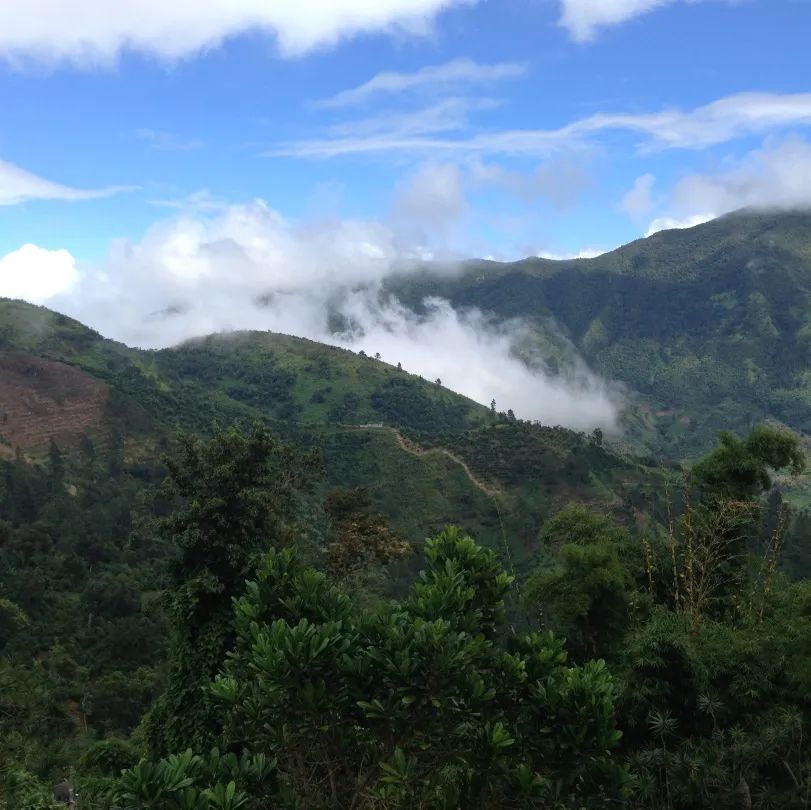
According to CIB standards, the basic requirements for NO.1 Blue Mountain green beans are: bean size above 17 mesh, defect rate below 3%, moisture content around 13%, etc. Only coffee beans produced according to these standards can have their flavor effectively guaranteed.
You may have all heard various phrases describing Blue Mountain coffee's flavor. On Blue Mountain coffee packaging, merchants often write: authentic Jamaica Blue Mountain coffee perfectly blends acidity, bitterness, sweetness, and body, giving off a strong and alluring elegant aroma, insists on manual cultivation, has outstanding quality, limited production, and is difficult for other coffees to match.
Front Street Coffee believes such a description is not inappropriate, because everyone's perception of the same coffee bean is inherently different. To truly understand a coffee bean's flavor, listening to others' descriptions is far from enough—you must taste it yourself to verify. Those who love Blue Mountain coffee praise it as a "coffee beauty" that combines the merits of all good coffees. Jim, general manager of the American company Pete's, known for coffee and tea, said when speaking of Blue Mountain coffee: "Blue Mountain coffee is aromatic, smooth, and full-bodied in flavor; it feels as precious to me as a gemstone." Because Blue Mountain coffee's taste is moderate and perfect, it is usually drunk as black coffee. Blue Mountain coffee's caffeine content is extremely low, less than half that of other coffees, making it very much in line with modern health concepts.
Jamaica Blue Mountain coffee is the best representative among classic Caribbean coffee beans, truly the cream of the crop. Unfortunately, in recent years some operators have used speculative methods, mixing coffee beans grown at low altitudes with high-altitude beans, lowering the standard it should have had, causing Jamaica Blue Mountain coffee's reputation to gradually suffer. As a result, many coffee enthusiasts have become especially cautious when purchasing, and quite a few are no longer willing to spend large sums to buy it.
What exactly is the flavor of Front Street Blue Mountain coffee beans ?
It is no exaggeration to say that Front Street Blue Mountain coffee displays the most balanced coffee performance in the world, worthy of being called a standard cup of black coffee. If you want to know what classic black coffee tastes like, Front Street recommends that you must try authentic Front Street Blue Mountain coffee once. Front Street Blue Mountain coffee comes from Jamaica's Clifton Farm, the earliest area in the Blue Mountain region to cultivate and produce Blue Mountain coffee, and also one of the earliest sources of Blue Mountain coffee introduced into China. Its green bean quality is extremely high, with uniform, plump beans. What Front Street selects is precisely the highest-grade Front Street Blue Mountain No. 1, using the traditional washed processing method.
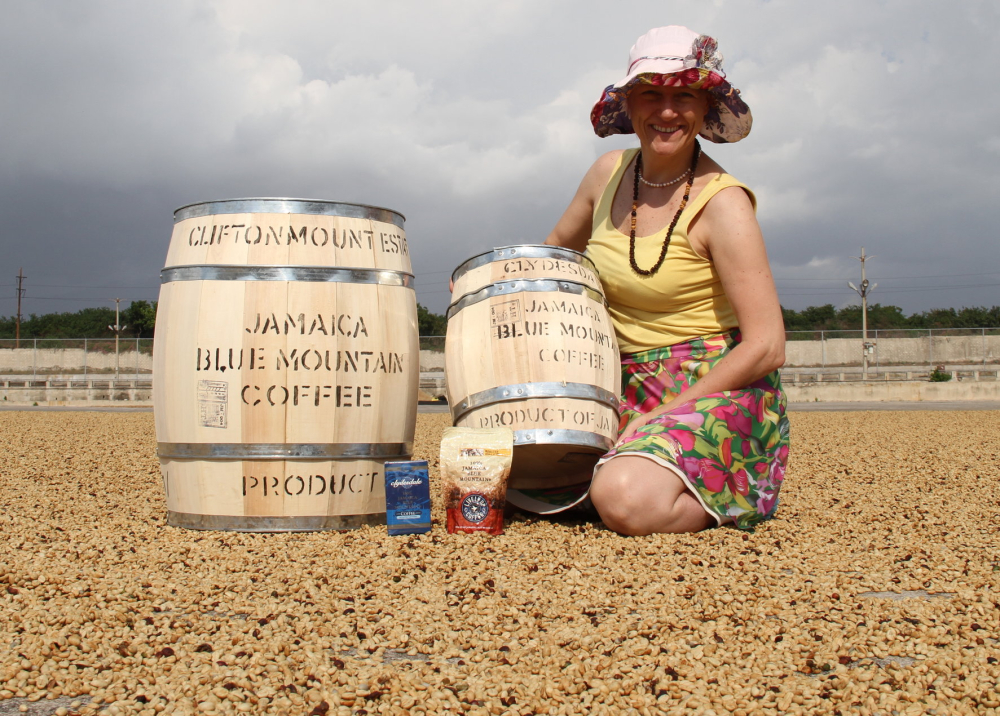
Front Street Jamaica Blue Mountain No. 1 coffee beans
Region: Jamaica Blue Mountain
Altitude: 1310m
Processing method: Washed
Variety: Typica
Flavor: Chocolate, nuts, cream, cocoa
Front Street uses cupping for tasting, with all roasts at medium-dark level, and uniformly cups 8 hours after roasting. On the palate, it presents black chocolate and nut flavors, with high cleanliness, good brightness, satisfying body, and a balance of acidity, sweetness, and bitterness.
How should Front Street Blue Mountain coffee be brewed to taste good?
Front Street recommends using the pour-over method for extraction, as this can fully showcase Front Street Blue Mountain coffee's clean and balanced flavor characteristics.
Front Street recommends using freshly roasted coffee beans for brewing, as only then can you experience the coffee's rich flavor layers to the greatest extent. Coffee beans shipped by Front Street Coffee are all within 5 days of roasting, because Front Street deeply understands that freshness has an enormous impact on flavor. Front Street's roasting philosophy is "freshly roasted good coffee," so that every customer who places an order can receive the freshest beans when they get their coffee. Coffee's resting period is about 4 to 7 days, so by the time customers receive it, it is exactly at its best flavor stage and suitable for direct brewing.
Parameters: 15 grams of coffee powder
Coffee-to-water ratio: 1:15
Water temperature: 88℃
Grind size: 70% passing rate on a No. 20 standard sieve.
Filter cup: KONO filter cup
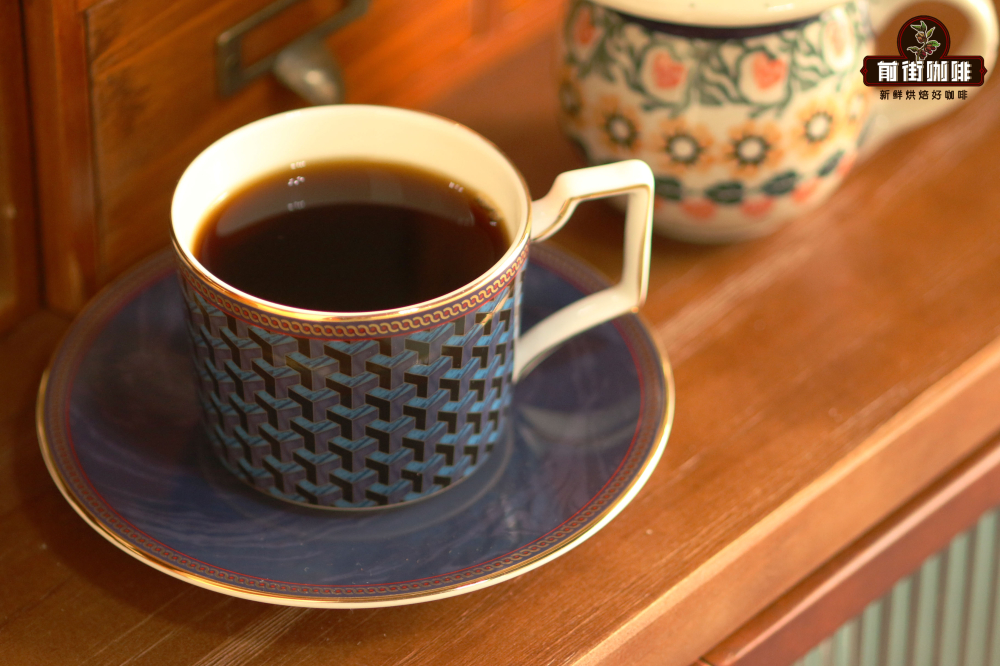
The brewing method uses three-stage pouring. Staged pouring can better present Front Street Golden Mandheling coffee's full-bodied mouthfeel and caramel sweetness. In the first stage, bloom with 30ml of water. This stage fully wets the coffee grounds and allows them to degas, paving the way for subsequent extraction of flavor compounds; in the second stage, pour 100ml , mainly to flush out Mandheling's golden foam while raising the coffee bed. In the final stage, pour 95ml gently in the center. After all the coffee liquid has filtered through, remove the filter cup and gently swirl the coffee in the server to mix it evenly.
The above content is compiled by CoffeeHunters, a coffee news website.


