







On the coffee map of Africa, Ethiopia and Kenya have long been renowned, while Tanzania is likewise a origin worth paying attention to. When mentioning this East African country, the first name that comes to most coffee lovers' minds is Kilimanjaro. It has a rich body, soft and moderate acidity, and a lasting aroma, earning it the title of "Coffee Gentleman." This article will start from a Tanzania Kilimanjaro coffee that Front Street Coffee once offered, systematically sorting out the country's coffee-growing regions, variety composition, grading system, and washed processing flow, and attaching Front Street's roasting and brewing plans, to give you a comprehensive understanding of this low-key yet quite capable East African producing country.
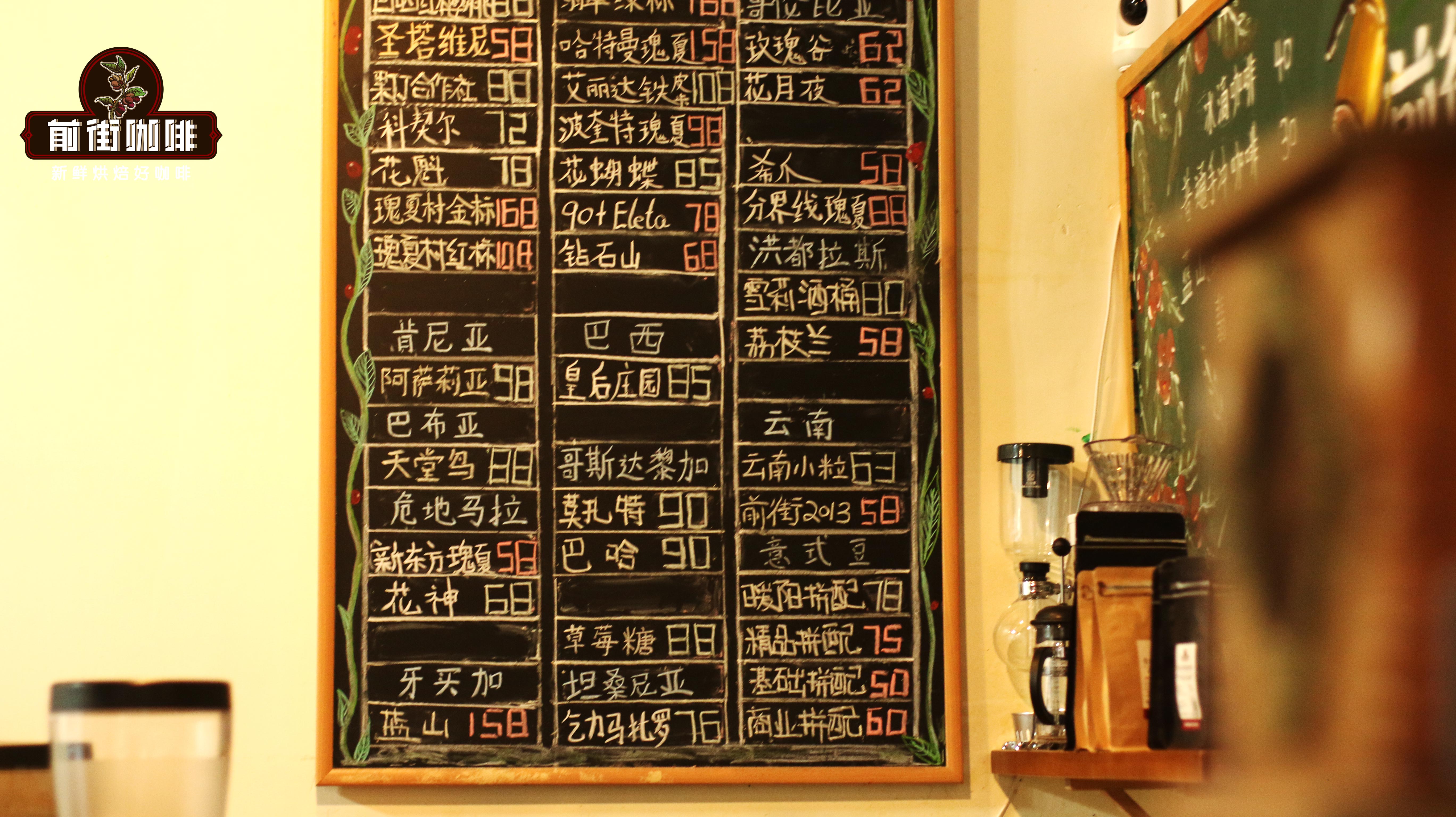
Have you ever visited Front Street's physical stores? Have you looked through Front Street's coffee bean list?
See that! It lists densely packed origins and varieties, roughly counting more than 50 items, almost collecting coffee origins from around the world (a slight exaggeration). But even Front Street, which claims to be a "coffee bean encyclopedia," still has corners it has not touched. Here's a hint: Africa. When talking about the flavor of African coffee, people easily think of Ethiopia and Kenya. However, on the vast African continent, there are still many high-quality coffees worth trying. For example, today Front Street Coffee (FrontStreet Coffee) is going to talk about Tanzanian coffee.
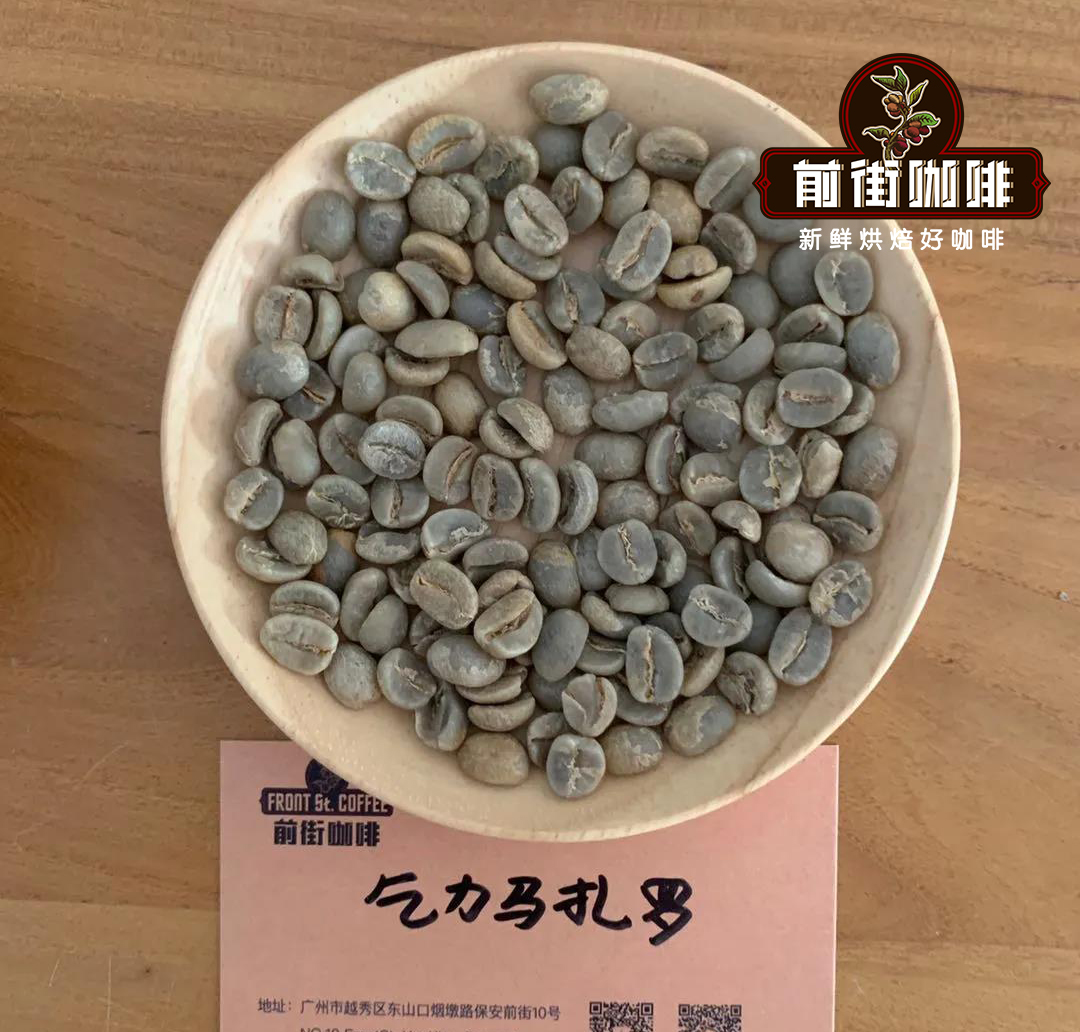
When Tanzania is mentioned, many coffee professionals immediately think of Kilimanjaro coffee. Indeed, it represents a unique "Kilimanjaro flavor"—mellow mouthfeel, pleasant acidity, and rich aroma, enjoying the reputation of "Coffee Gentleman." A long time ago, Front Street also once offered a Kilimanjaro coffee. Below is its green bean profile:
Front Street Coffee (FrontStreet Coffee): Tanzania Kilimanjaro Coffee Region: Northern Highlands, Kilimanjaro volcanic area
Variety: Bourbon
Processing Method: Washed
Grade: AA
Altitude: 1300-2000m
This bean presents an extremely typical African profile: citrus and berry flavor direction, honey-like sweetness, and a faint tea note in the finish. It does have characteristics, yet it is also hard to find fault with it for not being prominent enough. Front Street Coffee (FrontStreet Coffee) once compared Tanzanian coffee with neighboring Kenya. Compared with the bright and uplifting acidity of high-quality Kenyan beans, Tanzanian coffee's acidity is softer and gentler, with a more prominent sweet aroma. Although a rich red-wine-like flavor is also one of Tanzania's signatures, when placed together with other beans of similar attributes, this coffee lacks a memorable point. Because of this, now when you go to Front Street for coffee, this bean is no longer on the menu.
That said, many regular customers still fondly remember the taste of Kilimanjaro and try to understand Tanzanian coffee from the perspective of its producing regions. Tanzania is a typical East African country, bordering Kenya and Uganda to the north, Malawi, Mozambique, and Zambia to the south, and Rwanda and Burundi to the west. Although less well-known than other African coffee-producing countries, its annual output is actually on par with Kenya's, at about 50,000 tons. The earliest Arabica seeds were introduced from Réunion Island (formerly known as Réunion), and were first planted in the two producing regions of Bayamoyo and Mogoro.
Today, Tanzania's coffee cultivation is mainly concentrated in two major areas: Kilimanjaro and the south:
Southern Coffee-Growing Region
The southern region covers RUVUMA and MBEYA. The altitude range is between 1200-2000m. The southern region is considered to have the potential to produce high-quality coffee. In the past, development was constrained by a shortage of funds. In recent years, it has attracted attention from many certification bodies and non-governmental organizations, and efforts are currently being made to improve the situation of the southern region's coffee being rated as low quality. The harvest season in the southern producing region is from June to October each year, and the main planted varieties are Bourbon, Typica, and Kent.
Kilimanjaro Coffee Growing Region
Mount Kilimanjaro is the highest peak on the African continent, with an altitude of 1050-2500m. Sufficient altitude, volcanic soil, and pure snowmelt water sources constitute the most suitable conditions for growing coffee. Some coffee trees growing here are already over a hundred years old. Coffee was first introduced and planted by missionaries from Kenya. Coffee trees require careful care. In addition to weeding and fertilizing, old branches must also be pruned to stimulate new growth, thereby maintaining coffee bean quality.
The harvest period in the Kilimanjaro producing region is from July to December each year, and the main planted varieties are Bourbon, Typica, and Kent. Kilimanjaro is Tanzania's largest coffee-producing region, and Kilimanjaro coffee is also an important pillar of the country's economy. Kilimanjaro coffee comes from Mount Kilimanjaro, the highest mountain in Africa, in northeastern Tanzania. Local smallholders grow coffee at altitudes between 1300-2000m. The volcanic-ash-enriched soil plus the high-altitude environment give the produced coffee beans excellent quality.
With a bit of personal bias, because this Front Street coffee belongs to the Bourbon variety, let me introduce Bourbon separately here: Bourbon originated in Yemen and is a natural mutation. Its name comes from the original planting place, Bourbon Island, which is today's Réunion Island. Bourbon coffee cherries are short and round, with relatively high density in the pulp and seeds. Bourbon coffee usually has prominent sweetness, bright acidity, and a red-wine-like flavor. Bourbon yields 20-30% more than Typica, but is still classified as a low-yield bean variety and is also susceptible to coffee leaf rust.
From the green bean information provided by Front Street, it can be seen that this coffee uses the most basic washed processing method. In fact, most Tanzanian coffee is processed by the washed method. After picking, coffee farmers send the cherries to nearby processing stations as soon as possible for processing.
Steps of the washed processing method: 1. Screen and remove impurities mixed in with the coffee cherries, 2. Remove the coffee pulp and outer skin, 3. Send to a fermentation tank, and remove the pectin layer adhering to the parchment through fermentation, 4. After cleaning thoroughly, carry out drying.
Choosing washed processed coffee beans is actually also a bit of Front Street's "little trick." Coffee enthusiasts who have already gotten started should understand that washed processing does not destroy the coffee beans' original flavor and can preserve the most classic regional characteristics. Of course, besides washed processing appealing to veteran players, the AA grade is even more likely to catch the eye of connoisseurs. In their view, AA is synonymous with excellent quality. Tanzania's coffee grading method is the same as Kenya's, both using coffee bean size as the grading basis. Friends who are interested can continue reading:
Because these coffee beans are all large beans of uniform size, Front Street also specially designed a roasting plan for them:
Charge at a drum temperature of 175°C, heat power 120, damper set to 3; turning point at 1'33", when the drum temperature is 115°C open the damper to 4, heat power unchanged; when the drum temperature is 151.6°C the bean surface turns yellow, the grassy smell completely disappears, entering the dehydration stage; at 9'30" ugly wrinkles and dark streaks appear on the bean surface, and the toast smell clearly turns into coffee aroma, which can be defined as the prelude to first crack. At this time, listen clearly for the sound of the first crack. First crack begins at 10'16", open the damper to 5, develop for 1'48" after first crack, and drop at 192°C.
The purpose of light roasting is to highlight this coffee's sweetness and refreshing acidity. Front Street amplified its advantages, making the coffee taste more acidic, with a sweet and moist aroma, reaching the best flavor state.
So how should this coffee be brewed? Don't worry, Front Street also has a set of brewing parameters suitable for it:
Dripper: V60 dripper
Water temperature: 90°C
Coffee dose: 15 grams
Coffee-to-water ratio: 1:15
Grind size: medium-fine grind (78% passing through a No. 20 standard sieve)
Staged extraction: Use 30 grams of water for blooming for 30 seconds, pour in a small stream in circles until 125 grams for the stage break, and when the water level is about to expose the coffee bed continue pouring until 225 grams and stop pouring. When the water level is about to expose the coffee bed, remove the dripper. (Start timing from the beginning of blooming.) The extraction time is 2'00".
Professional coffee knowledge exchange. For more coffee bean information, please follow Coffee Workshop (WeChat public account: cafe_style)
For more specialty coffee beans, please add the private WeChat of Front Street Coffee (FrontStreet Coffee), WeChat ID: kaixinguoguo0925
The above content is compiled by CoffeeHunters, a coffee news website.


