







How Do Asian Coffee Origins Compare With Central American Coffee?
Asian coffee tends to be heavy and low in acidity, with rounded sweetness rather than the brighter fruit often found in Central American coffee. Indonesia's Mandheling, Yunnan Arabica, Vietnam Robusta, India's Monsooned Malabar, and Papua New Guinea's Bird of Paradise all share that weight, which suits espresso blends and single-origin pour-over alike.
Indonesia shows the pattern clearly: the Dutch planted coffee on Java in 1696, leaf rust destroyed most Arabica trees by 1877, and robusta coffee beans were brought in from Africa afterward. Today robusta dominates southern Sumatra while Arabica grows in the north, and Arabica makes up only about 10 percent of national output yet still draws global attention.
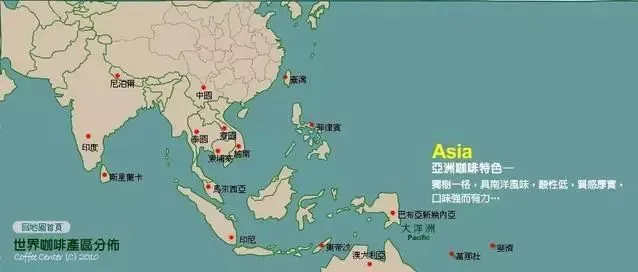
Although the coffee-producing regions of Asia are not as renowned for famous estates as those in Africa or Central and South America, they occupy an important place in the world coffee map thanks to their rich, full-bodied, and low-acidity flavors. Indonesia's Mandheling, China's Yunnan Arabica, Vietnam's Robusta, India's Monsooned Malabar, and Papua New Guinea's Bird of Paradise all showcase the distinctive heaviness and sweetness of Asian beans. Front Street Coffee takes you through the variety characteristics, processing methods, and brewing suggestions of these regions one by one—whether used as an espresso blend base or a single-origin pour-over, you can experience the unique charm of Asian coffee.
FrontStreet Coffee has always held that although Asia has relatively few well-known producing countries among the world's three major coffee regions, its production scale should not be underestimated, and its flavors are highly distinctive. Overall, Asian coffee is characterized by a full-bodied profile with prominent, rounded sweetness. It is precisely because of this heavy base that FrontStreet Coffee believes Asian beans are well-suited as a base for espresso blends, and are equally worth trying as single-origin pour-overs. The more representative producing countries in the Asian segment include Indonesia, China, Vietnam, India, and Papua New Guinea. The following content is listed in no particular order.
【Indonesia】
Indonesia is located in Southeast Asia. In 1696, the Dutch found this land while expanding their coffee cultivation territory, introducing coffee beans first to the island of Java and planting them on a large scale. However, in 1877, an outbreak of leaf rust infected nearly all coffee trees in the country, dealing a devastating blow to Arabica beans.
Afterward, Indonesia introduced Robusta from Africa. This variety has outstanding disease resistance, compensating for the economic losses caused by Arabica's poor disease resistance. Today, Indonesia is the world's most important Robusta producing country. Robusta is mainly concentrated in southern Sumatra, while Arabica is distributed in northern Sumatra. Although Arabica accounts for only about 10% of the country's total coffee, it is enough to win world attention, including the familiar Front Street Indonesian Mandheling coffee.
【Coffee Bean Processing Methods】
Indonesian coffee beans are mainly processed in three ways: natural, washed, and wet-hulled. Due to the local humid climate and frequent rainfall, the washed and wet-hulled methods are used more often to complete drying more efficiently.
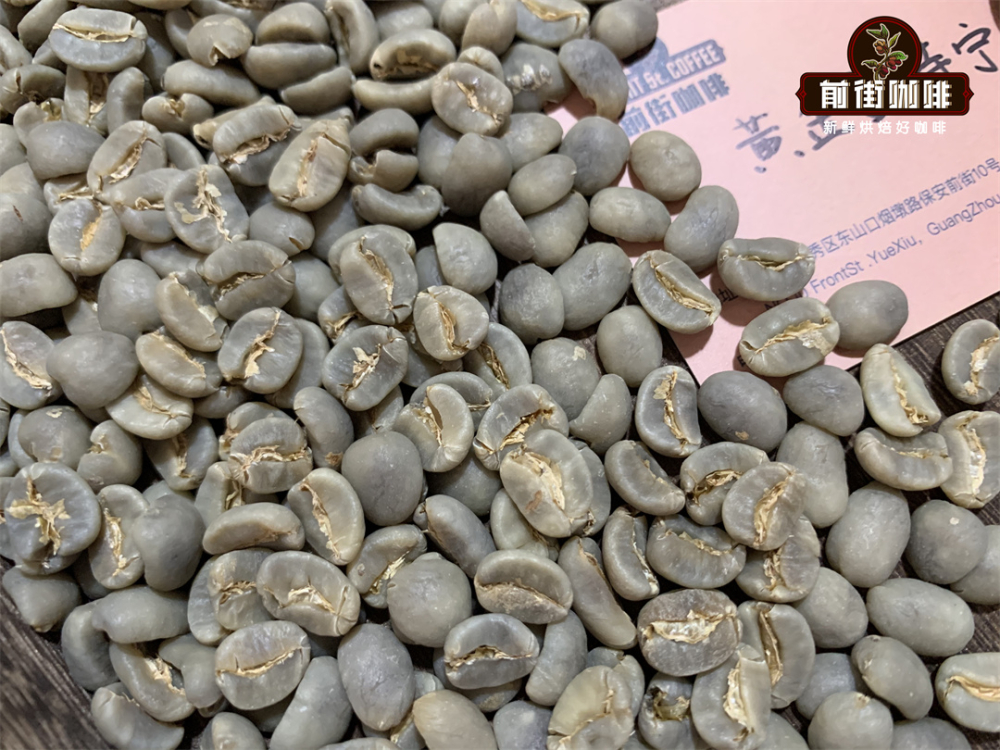
Indonesia's most representative processing method is wet-hulling. The areas using this method are concentrated in western Indonesia's Sumatra, which produces the richly flavored Front Street Mandheling coffee. Wet-hulling roughly has two stages: first, the skin and pulp are removed, followed by a brief fermentation and then spreading out to dry until the moisture content drops to 12-13%. This rapid processing causes the coffee beans to be squeezed and develop cracks, commonly known as sheep-hoof beans, which is a characteristic of Mandheling rather than a defect.
In addition to the conventional wet-hulled method, there is also aged wet-hulling. After ordinary wet-hulling, the coffee beans are sealed in warehouses for 2-3 years, during which acidity gradually diminishes and converts into sugars. Mandheling processed this way is also called aged Mandheling coffee beans.
【Types of Mandheling Coffee】
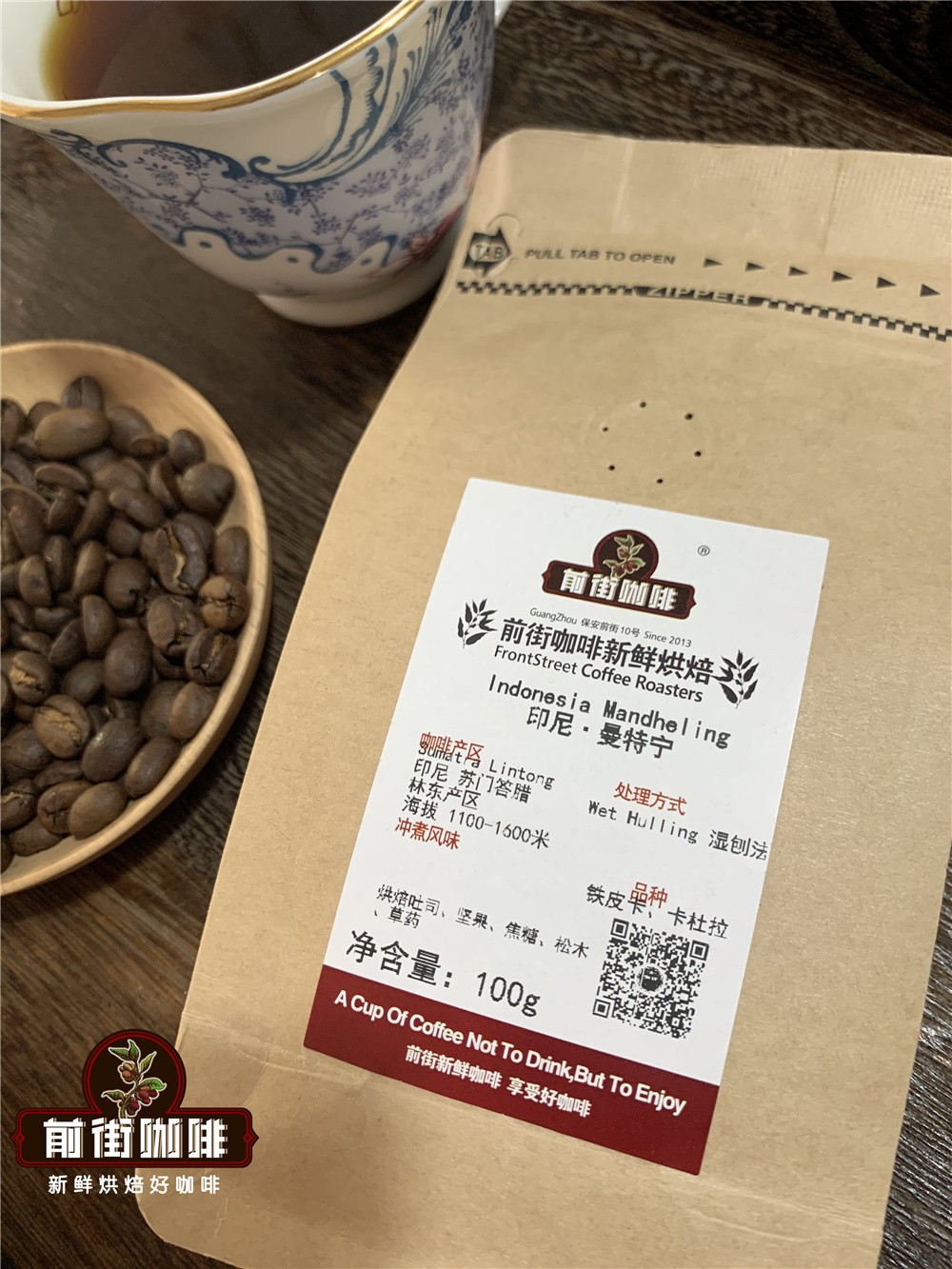
The main producing area for Mandheling coffee beans is around Lake Toba at the northern tip of Sumatra, Indonesia. Common varieties include Front Street PWN Golden Mandheling, Front Street Sumatra Lintong Mandheling coffee beans, Front Street Tiger Mandheling coffee beans, and Front Street Aged Mandheling coffee beans. The difference among these is that Front Street Lintong Mandheling represents the most typical Mandheling flavor, with a strong herbal note.
Front Street PWN Golden Mandheling is a select-grade PWN (a local Indonesian Mandheling company) product, with beans of uniform size all above 18 mesh, hand-sorted more than four times, offering a clean and bright taste with equally outstanding richness. Front Street Aged Mandheling, as mentioned earlier, uses a different wet-hulling process, resulting in a more intense flavor that not everyone can appreciate.
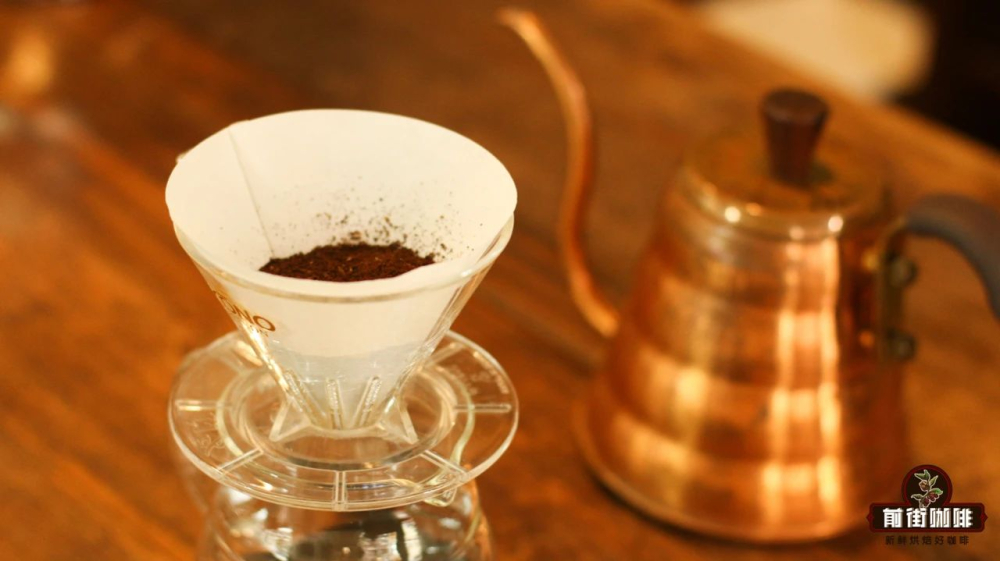
Brewing parameter suggestions: Kono dripper, 88°C water temperature, 15g coffee grounds, 1:15 water-to-coffee ratio, medium-fine grind (BG#6W)
Brewing technique suggestions: FrontStreet Coffee recommends a staged pouring technique: 30g water for 30-second blooming, pour with a small stream to 125g and pause, then when the water level is about to expose the coffee bed, pour to 225g and stop. Extraction time is 2 minutes.
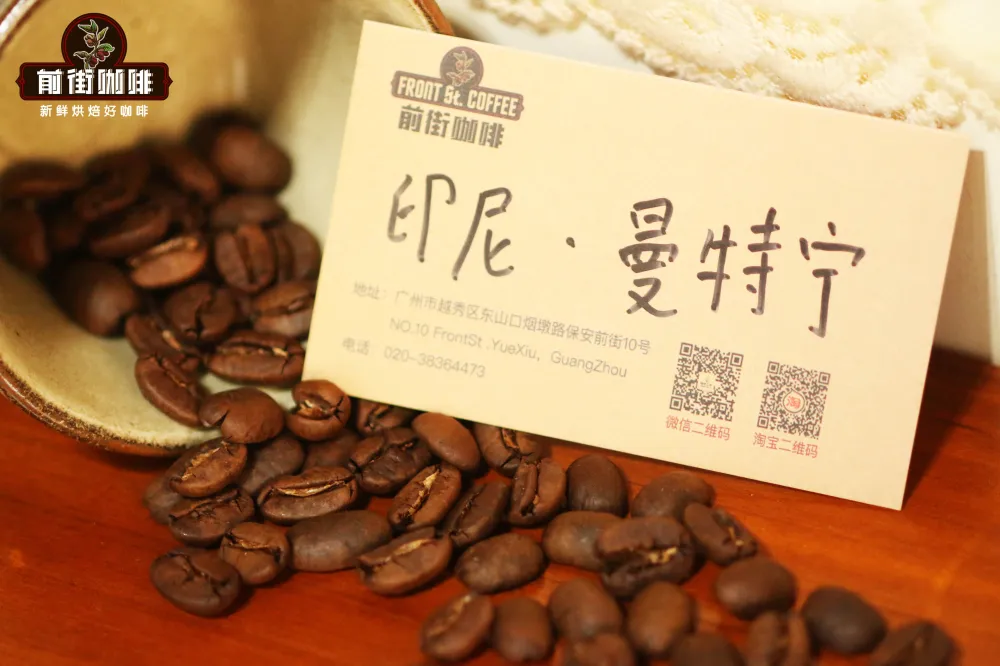
Flavor description: Nuts, spices, herbs, licorice, chocolate, caramel; clean and gentle flavor. 【Front Street Indonesian Lintong Mandheling】 Front Street Indonesian Lintong Mandheling comes from the Lintong highlands in north-central Sumatra, near Lake Toba. The Front Street daily beans series includes Front Street Lintong Mandheling as one of its daily beans, expressing the flavor of Indonesian Mandheling. Although Front Street daily beans are not as perfect as estate beans, they showcase the main flavors of that region with extremely high value for money.
Brewing parameter suggestions: Kono dripper, 88°C water temperature, 15g coffee grounds, 1:15 water-to-coffee ratio, medium-fine grind (BG#6W)
Brewing technique suggestions: FrontStreet Coffee recommends a staged pouring technique: 30g water for 30-second blooming, pour with a small stream to 125g and pause, then when the water level is about to expose the coffee bed, pour to 225g and stop. Extraction time is 2 minutes.
Flavor description: Herbs, chocolate, caramel; overall fairly balanced
【Front Street Tiger Mandheling】
The requirement for Tiger Mandheling is a taste with the aroma of traditional Chinese herbal medicine, and only Mandheling above 17 mesh with a defect rate below 4% can be authentic Front Street Tiger Mandheling. Many people may ask about the difference between Front Street Tiger Mandheling and Front Street PWN Golden Mandheling. Front Street believes that Front Street Tiger Mandheling is relatively niche, while Front Street PWN Golden Mandheling is more familiar to the public. In terms of coffee aroma, Front Street Tiger Mandheling is much better than Front Street PWN Golden Mandheling.
Brewing parameter suggestions: Kono dripper, 88°C water temperature, 15g coffee grounds, 1:15 water-to-coffee ratio, medium-fine grind (BG#6W)
Brewing technique suggestions: FrontStreet Coffee recommends a staged pouring technique: 30g water for 30-second blooming, pour with a small stream to 125g and pause, then when the water level is about to expose the coffee bed, pour to 225g and stop. Extraction time is 2 minutes.
Flavor description: Nuts, cream, dark chocolate, caramel, traditional Chinese herbal medicine; prominent sweetness, relatively clean and clear flavor;
【Front Street Aged Mandheling】
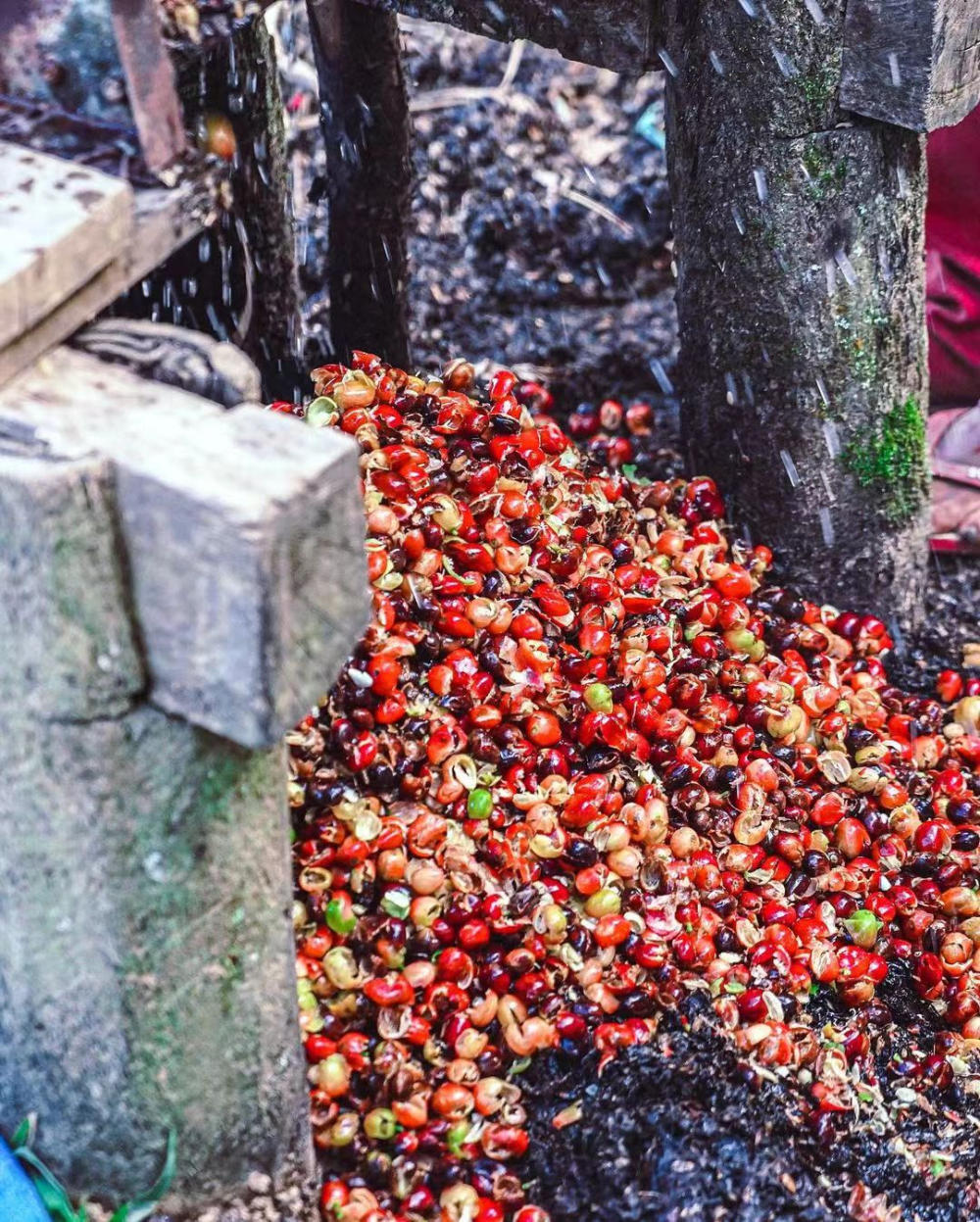
Front Street Aged Mandheling looks a bit ugly. Properly stored coffee beans will change their taste and appearance—for example, reduced acidity, dark color lacking moisture, thicker and more viscous mouthfeel, sweetness with a honey aroma, and some original defects of the green beans becoming less noticeable.
Brewing parameter suggestions: Kono dripper, 88°C water temperature, 15g coffee grounds, 1:15 water-to-coffee ratio, medium-fine grind (BG#6W)
Brewing technique suggestions: FrontStreet Coffee recommends a staged pouring technique: 30g water for 30-second blooming, pour with a small stream to 125g and pause, then when the water level is about to expose the coffee bed, pour to 225g and stop. Extraction time is 2 minutes.
Flavor description: Ripe pu-erh, caramel, herbs, chocolate; relatively low acidity.
【Front Street Indonesian Natural Mandheling】
This Indonesian Mandheling does not use Indonesia's most famous processing method, but instead uses the natural method. Due to local climate constraints, the natural method in Indonesia can be said to be a very difficult coffee processing method.
Brewing parameter suggestions: KONO, Kono dripper, 88°C water temperature, 15g coffee grounds, 1:15 water-to-coffee ratio, medium-fine grind (BG#6F)
Brewing technique suggestions: FrontStreet Coffee recommends a staged pouring technique: 30g water for 30-second blooming, pour with a small stream to 125g and pause, then when the water level is about to expose the coffee bed, pour to 225g and stop. Extraction time is 2 minutes 10 seconds.
Flavor description: Tropical fruit, fermented notes, moderate acidity, smooth mouthfeel, prominent sweetness
【China】
China's coffee-growing areas are mainly distributed in Yunnan, Hainan, and Taiwan. Hainan mainly grows Robusta coffee beans, while Yunnan and Taiwan mainly grow Arabica coffee beans. Currently, China's most eye-catching coffee-producing region is undoubtedly Yunnan.
Yunnan is located south of the Tropic of Cancer, in a subtropical mountainous climate zone. Its unique plateau red soil is fertile and loose, and the climate is mild, making it especially suitable for growing Arabica coffee. Arabica is what we call small-seed coffee; when it was first introduced to China, the name "small-seed" was chosen instead for ease of promotion and memorability. The representative coffee bean of small-seed in Yunnan is Catimor coffee beans.
Yunnan's unique natural conditions have shaped the special flavor of Front Street Yunnan Arabica coffee: rich but not bitter, fragrant but not harsh, with a slight fruity note. As early as the 1950s, Yunnan Arabica coffee was highly popular in the international coffee market and was rated as a premium coffee. The growing areas are mainly distributed in Lincang, Baoshan, Simao, Xishuangbanna, Dehong, and other regions. Baoshan has an average temperature of 21.5°C, with a maximum of 40.4°C, and essentially no frost year-round, making it recognized as the best Arabica coffee producing area.
Currently, Yunnan Province's coffee bean planting area accounts for 70% of the national total, and its output accounts for 83% of the national total. Whether judged by planting area or coffee bean output, Yunnan coffee has established its dominant position within China.
【Coffee Bean Processing Methods】
Yunnan coffee bean processing methods are now trending toward diversification—natural, washed, anaerobic, and other methods—presenting a state of contending schools of thought. China's coffee market is still in a rising phase with enormous room for development. Not being limited to a particular coffee bean processing method is actually an inevitable path in the exploration process; determining public preferences is what matters most.
【Coffee Bean Varieties】
Yunnan's current main coffee bean varieties are Typica and Catimor. Typica is Ethiopia's oldest native variety, and one of its characteristics is that its top leaves are bronze-colored, which is why some call it "red-top coffee." The beans are relatively large, forming a pointed oval or slender pointed shape. Typica coffee has its own uniquely clear and clean flavor, along with balanced characteristics and a high degree of cleanliness in the cup. However, its shortcoming is insufficient yield, requirements for altitude, susceptibility to leaf rust, and weak resistance to pests and diseases.
In 1959, the Portuguese crossed the Brazilian Bourbon mutation Caturra with Timor, which carries Robusta bloodlines, in East Timor, and unexpectedly succeeded in developing Catimor with super-strong disease resistance and productivity. As leaf rust affected coffee-producing countries worldwide, with the assistance of international organizations, producing countries vigorously promoted Catimor to resist leaf rust and increase productivity. 【Front Street Yunnan Arabica Coffee】
Brewing parameters: Kono dripper, 1:15 coffee-to-water ratio, 15g coffee grounds, medium-fine grind
Brewing technique: A staged extraction is used: 30g water for 30-second blooming, pour with a small stream to 125g and stop, then pour to 225g and finish. Total extraction time is 2 minutes.
Taste: Nutty aroma, with herbs, chocolate, and caramel on entry, and a slight fruity acidity in the aftertaste.
【Vietnam】 Vietnam is Asia's largest coffee-producing country. Perhaps influenced by French colonial rule, the coffee grown in Vietnam has a French character. In the mid-19th century, Arabica coffee beans were brought to Vietnam by French missionaries and planted near the Gulf of Tonkin, mostly Java or Bourbon varieties. Currently, Vietnam's coffee production is continuously growing. FrontStreet Coffee has learned that the main exported coffee bean variety is Robusta, with 96% of Robusta coffee beans coming from small farms, and a small portion from large state-owned farms.
【India】 FrontStreet Coffee has learned that India's coffee bean processing method shares a similar ingenuity with Indonesia's aged Mandheling processing. India's method is commonly called monsoon processing or monsooning. In the past, when passengers or goods traveled by sailing ship between India and Europe, it took about several months to arrive. During the journey, due to high air humidity, the taste and color of the green coffee beans changed. By the time they reached their destination, the coffee beans had turned from their original green to a peculiar yellow.
However, consumers gradually became accustomed to this, so when steamships shortened the journey time, coffee producers found that consumers still wanted coffee beans with the color and taste changes caused by the voyage. In order to recreate that special coffee flavor, taking advantage of its maritime location, monsoon phenomena occur in southwestern India every May and June. Therefore, during the monsoon season, people spread the coffee in specially built houses open on all sides, at a thickness of about 12-20 centimeters, and leave it there for 5 days, constantly turning the coffee beans so they are evenly exposed to the highly humid monsoon air. Finally, these coffee beans are packed into bags and piled up, continuing to let the monsoon air penetrate through the bags.
These bags are repacked once a week for a total of 7 weeks, until the coffee beans have changed color and taste. Finally, these coffee beans are hand-sorted to remove those not affected by the monsoon, and then bagged for export. 【Front Street Indian Monsooned Malabar Coffee Beans】
Brewing parameters: Kono dripper, 1:15 coffee-to-water ratio, 15g coffee grounds, medium-fine grind
Brewing technique: A staged extraction is used: 30g water for 30-second blooming, pour with a small stream to 125g and stop, then pour to 225g and finish. Total extraction time is 2 minutes.
Taste: Rich caramel, raisins, herbal notes; mouthfeel like genmaicha, with a berry aftertaste. 【Papua New Guinea】
The people of Papua New Guinea regard the bird of paradise as a symbol of freedom and happiness. PNG AA Sigri Estate Arabica coffee is named Bird of Paradise coffee, and its flavor is just like its name: a distinctive spiciness and rich sweet-and-sour notes. For example, this Front Street Papua New Guinea Bird of Paradise coffee bean was cultivated in Papua New Guinea by Jamaican Blue Mountain Typica that traveled a long way there, carrying the same root lineage as Jamaican Blue Mountain.
【Coffee Bean Processing Methods】
In Papua New Guinea, coffee is a national-level crop, with 90% grown by smallholder farmers, supporting one-third of national income. Small estates mostly use the washed processing method for coffee beans, resulting in a strong taste without earthiness. In addition, a small amount of natural processing is also used, which offers better richness compared to the washed method; large estate coffee has a relatively clean and refined taste.
【Coffee Bean Varieties】
Basically, Papua New Guinea coffee beans have a lighter body than Indonesian Java coffee beans, somewhat similar to good-quality Central American coffee beans. Most coffee trees in Papua New Guinea come from Jamaican Typica coffee tree varieties, hence the reputation of "Little Blue Mountain."
【Front Street Papua New Guinea Bird of Paradise Coffee】
Brewing parameters: Kono dripper, 1:15 coffee-to-water ratio, 15g coffee grounds, medium-fine grind
Brewing technique: A staged extraction is used: 30g water for 30-second blooming, pour with a small stream to 125g and stop, then pour to 225g and finish. Total extraction time is 2 minutes.
Taste: Rich layers, with sweetness and bright acidity; the spicy note in the aftertaste is quite distinctive, and the mouthfeel is rich yet balanced.
The above content is compiled by CoffeeHunters, a coffee news website.


