







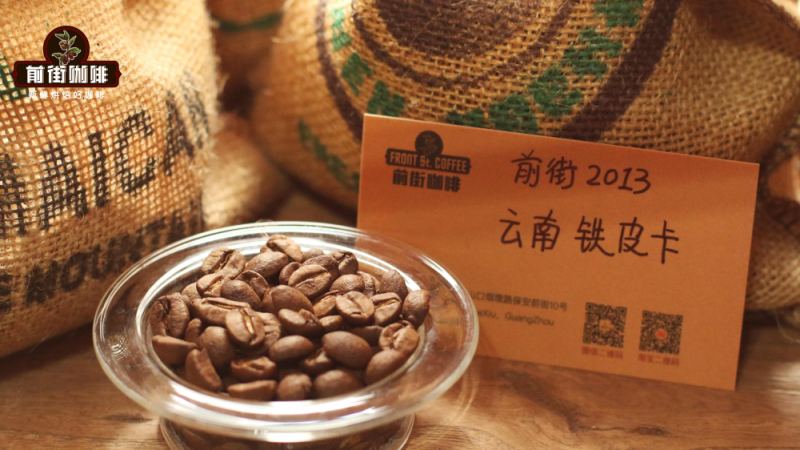
Yunnan is the province with the largest coffee-growing scale in China, producing about 26,000 tons annually, accounting for 90% of the country's total output, and has long been known as "fragrant coffee." Counting from 1904, when a missionary planted the first coffee seedling in Zhugula Village, Binchuan, Yunnan coffee has gone through more than a century. The four major producing regions—Pu'er, Lincang, Baoshan, and Dehong—each have their own characteristics. The main varieties are Catimor and Typica, and the processing methods are mostly washed and natural. Front Street Coffee has its own estate in Lincang, where it has grown Typica since 2013 and launched the "Front Street 2013" natural bean. This article will give you a comprehensive understanding of the true character of Yunnan high-altitude coffee beans from the perspectives of origin, variety, processing method, and brewing suggestions.
In China, both Hainan and Yunnan have the conditions for growing coffee, and Yunnan is the largest producing region. Coffee produced in Yunnan is usually called Yunnan small-bean coffee, and some also call it "fragrant coffee." In recent years, Yunnan's annual coffee output has remained at around 26,000 tons, accounting for 90% of the country's total output.
As a beverage crop with fairly high economic value, coffee ranks alongside cocoa and tea as one of the world's three major beverages, and it ranks first in both output and consumption. Coffee beans contain protein, fat, sucrose, starch, glucose, caffeine, and many other components. After brewing, they have a full aroma and a palatable taste. From a botanical perspective, coffee belongs to the perennial evergreen shrub or small tree of the genus Coffea in the family Rubiaceae. It has many family members, and the most widely cultivated are Arabica, Robusta, and Liberica.
However, affected by various factors, the growth rate of Yunnan's coffee industry has never been particularly fast. For a long time, it was mainly exported in the form of raw materials, with export volume at about 15,000 tons in 2006. More than 60% of the raw materials were purchased each year by Nestlé and Maxwell, and later Starbucks, Amway, and other companies also gradually joined the purchasing ranks.
China not only has a long history of tea, but Yunnan's history of coffee cultivation is also not short. In 1904, when the missionary Tian Deneng went to Dali to preach, he brought some coffee seedlings with him and planted them in Zhugula Village, Binchuan, thus opening the prelude to coffee cultivation in Yunnan. However, due to various reasons, the advancement of Yunnan's coffee industry was slow. With the rise of the specialty coffee wave and the trend of domestic products, Yunnan coffee has now entered the public eye, and it can be seen in many coffee shops.
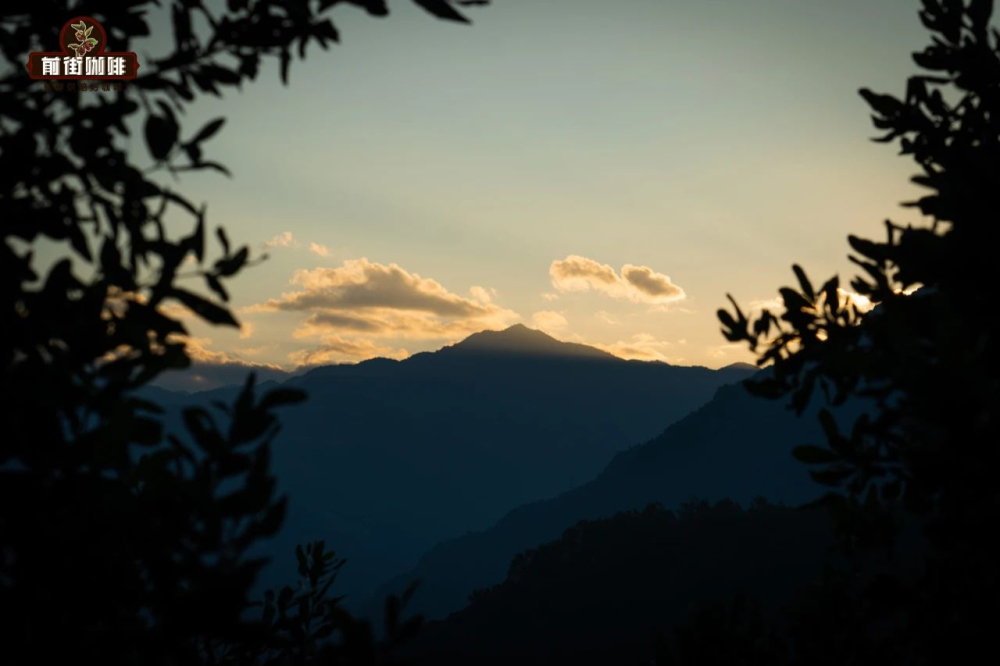
Although coffee is an agricultural crop, its requirements for growing conditions are much stricter than those of ordinary crops. Yunnan's natural environment is very close to that of Colombia—low latitude, high altitude, and a marked temperature difference between day and night. The small-bean coffee produced there, after cup quality analysis, is classified as full-bodied and aromatic, and its quality and taste are similar to Colombian coffee. Western and southern Yunnan lie between 15°N and the Tropic of Cancer, and this is also an important producing area for Chinese specialty coffee. Most areas are 1,000 to 2,000 meters above sea level, with terrain mainly consisting of mountains and slopes, obvious undulation, fertile soil, abundant sunshine, sufficient rainfall, and a large temperature difference between day and night. It is precisely these unique natural conditions that create the special flavor of Yunnan small-bean coffee—strong but not bitter, fragrant but not harsh, with a slight fruity note—making it an indispensable producing region in the minds of coffee lovers.
Main Producing Areas of Yunnan Coffee
Yunnan's coffee-growing areas are mainly concentrated in Lincang, Baoshan, Dehong, and Pu'er. The coffee beans produced in these places have long been exported to major coffee-consuming countries such as South Korea, Japan, the United States, and Europe.
Pu'er
Pu'er City is famous for tea, but Pu'er coffee also has a century-long history. Cultivation began at the end of the 19th century, and it moved toward industrialization in 1988. The coffee planting area has reached 789,000 mu, coffee bean output is 58,600 tons, and total output value is 2.469 billion yuan, making it Yunnan's largest coffee planting base. The local climate, geography, and soil conditions are truly ideal for coffee cultivation. Pu'er is China's main coffee-producing region with the largest planting area, the highest output, and the best quality, as well as a coffee trading distribution center. At present, Pu'er's coffee planting area has reached 680,000 mu, output is 54,000 tons, and comprehensive output value is 3.9 billion yuan, benefiting more than 250,000 coffee farmers, with an average income increase of 3,836 yuan per coffee farmer. In 2021, Pu'er coffee was approved for protection as a national geographical indication product.
Pu'er City enjoys the title of "Coffee Capital of China." In addition to being China's main coffee-producing area, Pu'er coffee is also exported to more than 30 countries and regions in the Americas, Europe, and Asia, opening up a new "black gold" market.
Lincang
Lincang City is located in the southwestern part of Yunnan Province, with the Tropic of Cancer running through its south. It borders Pu'er to the east, Dali to the north, Baoshan to the west, and Myanmar to the southwest. It is named because it is close to the Lancang River and is a pearl on the southwestern border of the motherland. Lincang's average annual temperature is between 16.8°C and 17.2°C, with distinct dry and wet seasons and good sunshine conditions. The local climate type is similar to that of Jamaica and Colombia, the world's famous high-quality coffee-producing regions. This fertile land has nurtured the unique Wa culture and also produced Lincang coffee's unique regional flavor—acidic, fragrant, sweet, and mellow, with rich layers.
Lincang has therefore earned two honors: "China Specialty Coffee Bean Demonstration Area" and "China Specialty Coffee Core Producing Area." Of its 24,000 square kilometers, only one-third is below 1,300 meters above sea level, and these areas are relatively more suitable for growing high-altitude specialty coffee. In 2015, the coffee planting area was 36,000 hectares, and it has leaped to become the country's second-largest coffee-producing region. In 2020, the plan was to develop it to 41,700 hectares. It is mainly distributed in Linxiang, Gengma, Cangyuan, Fengqing, Yongde, Yunxian, Zhenkang, Shuangjiang, and other counties (cities). Lincang's coffee development momentum is rapid. Now its planting area has exceeded 550,000 mu, making it Yunnan's second-largest coffee-producing region, with output rising to second place in the province, accounting for 20%, second only to Pu'er City. It can be called a rising star of Yunnan coffee.
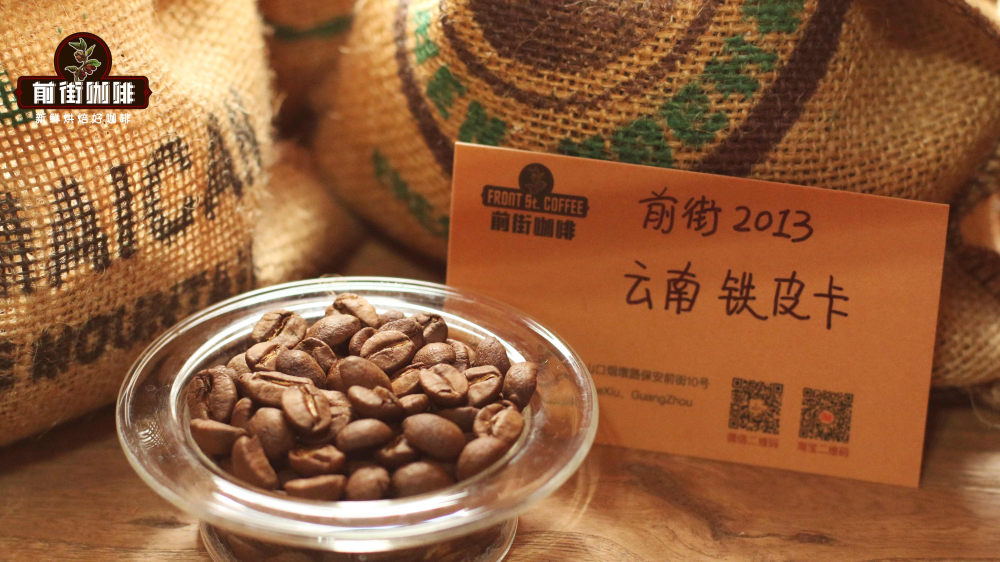
Front Street's coffee estate is located in Lincang, near the Myanmar border. There are few people around, with only a small village of a few dozen people nearby. Because of this, it still maintains a pristine environment and is very suitable for growing high-quality coffee.
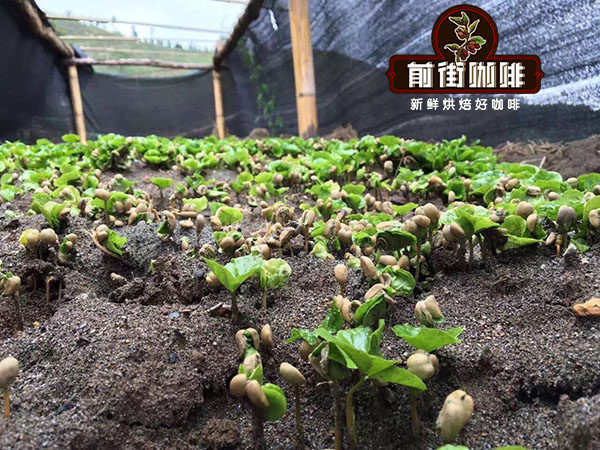
Front Street's Yunnan natural Typica is called "Front Street 2013." This is a Yunnan bean grown by Front Street itself. Front Street began growing coffee in Yunnan in 2013. The original intention of planting coffee at that time was to verify a conjecture—whether "good land, good variety, good cultivation" could really change the criticized taste of Yunnan coffee. With this question in mind, Front Street visited the Institute of Tropical Bioscience and Biotechnology and senior coffee-growing predecessors, found a piece of undeveloped forest, and started growing coffee from scratch. Front Street deeply understands the importance of variety and deliberately chose Typica, which has been rooted in Yunnan for many years. Typica is rather delicate and needs careful care. The Front Street employees responsible for planting built a simple house at the foot of the mountain and lived a life of working at sunrise and resting at sunset.
In 2020, the first batch of Yunnan Typica coffee beans grown by Front Street itself was launched, named "Front Street 2013." It uses fully red cherry natural processing to highlight sweetness. The flavors Front Street perceived during cupping were dried apricot, Sanhua plum, caramel chocolate, with very high sweetness.
Baoshan
Baoshan has an average temperature of 21.5°C, with a maximum of 40.4°C, and basically no frost all year round. It is recognized as the best small-bean coffee producing area. The small-bean coffee cultivated here is famous at home and abroad for being strong but not bitter, fragrant but not harsh, small and uniform in bean size, rich and mellow, and with fruity notes. Front Street's washed Yunnan small-bean coffee comes from the Baoshan producing area.
Yunnan Baoshan small-bean coffee has a long history of cultivation. Baoshan small-bean coffee is a national geographical indication product and is one of the coffees with relatively good quality in the country and even the world. Baoshan coffee became famous very early and was a pioneer in China's small-bean coffee cultivation and processing. The first coffee seedling was introduced from Southeast Asia by the late patriotic overseas Chinese Mr. Liang Jinshan. Lujiangba in Baoshan is the earliest area in Yunnan for large-scale and commercial coffee cultivation, with a long planting history and rich cultivation experience. In 1952, in order to meet the coffee market demand of Eastern European countries and the Soviet Union, scientific and technical personnel from the Mangshi branch of the Yunnan Agricultural Experiment Station introduced coffee for trial planting in Lujiangba, Baoshan, and succeeded, making Lujiangba the country's first small-bean coffee production base and research center. In Lujiangba, 60-year-old coffee trees still survive and remain full of vitality.
Dehong—Hometown of Chinese Coffee
As one of Yunnan's main coffee-producing regions, Dehong is also one of the earliest areas in Yunnan to grow coffee. According to historical records, Nongxian Village in Dehong Prefecture introduced small-bean coffee cultivation as early as 1914, and its coffee-growing history has lasted more than a century. As early as 1963, at the international exposition in Hamburg, Germany, Dehong small-bean coffee was rated as a high-quality product with "rich aroma and pleasant slight acidity," gaining a reputation comparable to Blue Mountain coffee. In addition, Dehong Prefecture also has China's largest coffee seed gene bank—the Ruili Coffee Germplasm Resources Nursery of the Ministry of Agriculture—one of the first nine tropical crop germplasm resource nurseries authorized by the Ministry of Agriculture.
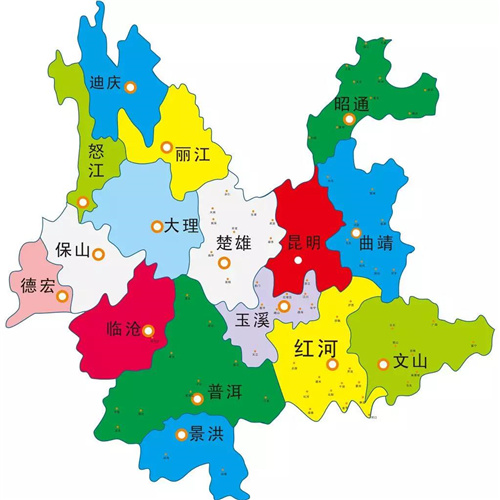
Dehong is also the permanent venue of the Asian Coffee Annual Conference. In the "Three-Year Action Plan for Promoting the High-Quality Development of the Coffee Industry" released by Dehong Prefecture, it is proposed that through three years of effort, Dehong will be built into a world-class high-quality coffee bean production base, the country's largest instant coffee deep-processing base, and a China-ASEAN coffee trade center.
Yunnan Coffee Beans Processing Methods
Yunnan's weather is rainy and foggy, so washed processing has become the most commonly used method for Yunnan coffee. Of course, there is also natural processing, such as Front Street's natural Catimor coffee and Front Street 2013 natural Typica coffee.
Washed processing method: The harvested cherries are put through a depulper to separate most of the pulp from the coffee beans, and then the parchment beans are introduced into a clean tank and soaked in water for fermentation to thoroughly remove the remaining mucilage layer. After washed processing, unripe beans and defective beans are selected out due to buoyancy, and the fermentation process is easier to control. Therefore, in terms of flavor, it does not have the off-flavors of natural beans, but instead presents obvious fruit acidity, slightly stronger complexity, and a cleaner cup performance.
Yunnan Coffee Bean Varieties
Yunnan's main planted variety is Arabica, the so-called small-bean coffee, commonly known domestically as Yunnan small-bean coffee. Small-bean coffee refers to Arabica coffee beans; because the beans are relatively small, it is also called small-fruit coffee. Robusta coffee is called medium-fruit coffee, while Liberica belongs to large-fruit coffee. What is grown in Yunnan is Arabica coffee, so it is also called Yunnan small-bean coffee, among which there are Typica and Catimor. Although both belong to the Arabica family, their flavors differ noticeably. What is now generally called Yunnan small-bean coffee usually refers to the Catimor variety.
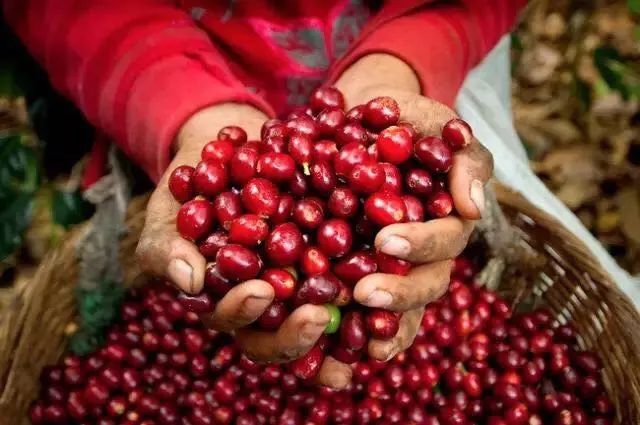
Typica Coffee
What Father Tian planted in 1904 was exactly the Typica coffee variety. Later, in the 1930s, the returned overseas Chinese Liang Jinshan also promoted Typica cultivation in Yunnan. This was the first wave of Yunnan coffee cultivation. The second wave came in the 1950s and 1960s after the founding of New China, when extensive Typica planting began in order to supply coffee beans to the Soviet Union.
Because Typica has poor disease resistance and is susceptible to leaf rust, its growth must be observed at all times, and every leaf must be carefully tended. In addition, Typica has low yield. As the planned economy gradually shifted to a market economy, coffee farmers, no longer guided by the government, became less motivated and turned to growing other high-value cash crops.
Catimor Small-Bean Coffee
In the 1980s, Nestlé entered the mainland market and at the same time helped develop Yunnan's coffee-growing industry to supplement sufficient coffee raw materials. What Nestlé introduced was precisely the Catimor variety. Catimor is a hybrid of Timor and Caturra, and Timor is a hybrid of Robusta and Arabica, so Catimor has one-quarter Robusta genes. This also makes it very tenacious, highly productive, and a sun-exposed coffee tree (not requiring shade trees), but its drawback is also obvious: its flavor is not good. Therefore, it is only used as a raw material for Nestlé's instant coffee production.
Now, almost 99% of coffee beans in Yunnan are of the Catimor variety. In terms of flavor, this is a root problem. With the vigorous development of China's specialty coffee market, Yunnan coffee has naturally entered the public eye. Many friends have come to ask Front Street: "I drank an anaerobic Yunnan bean and it was amazing. Has Yunnan bean now reached the level of specialty coffee?"
Indeed, in the past two years Yunnan has begun researching special processing methods, and we can taste Yunnan beans showing tropical fruit flavors such as jackfruit, passion fruit, and mango. It seems that the flavor of Yunnan coffee has been improved and has leaped into the ranks of specialty coffee, and of course the price has also multiplied several times. But this is like treating the symptoms rather than the root cause. Without changing from the source variety, it is difficult to truly make coffee with the good flavor of the Yunnan producing region.
Front Street believes that the current quality of Yunnan coffee has not yet reached the standard of specialty coffee. First is the variety: most of Yunnan grows Catimor, which is inferior in variety to Typica coffee beans. Second, many use anaerobic processing. Although this is a novel processing method, it masks the coffee's original flavor, so how can it be called specialty?
Front Street's Yunnan beans all use traditional processing methods such as washed and natural. On Front Street's bean list, there are 3 Yunnan coffee beans, namely washed small-bean coffee (Catimor), natural Catimor, and natural Typica coffee beans.
Front Street's brewing parameters for Yunnan coffee:
In order to preserve the sweet-and-sour sensation and tea-like characteristics of Yunnan coffee, Front Street Coffee roasts it to a medium level. When brewing, you can use a V60 dripper, a 1:15 coffee-to-water ratio, medium grind (about the size of coarse granulated sugar / 75% passing through China standard sieve No. 20), and a water temperature of 88°C.
Use staged extraction, blooming with twice the amount of water as the coffee grounds, that is, 30 grams of water for a 30-second bloom. The reason blooming is needed is to allow the coffee grounds to release internal carbon dioxide gas, thereby making the later extraction more stable. Pour in a small stream in circles until 125 grams, then pause, continue pouring until 225 grams and stop. After the water in the dripper has dripped through, remove the dripper. Start timing from the beginning of pouring; the extraction time is 2'00". Next, pick up the entire cup of coffee and swirl it to mix evenly, then pour it into a cup to taste.
[Front Street Washed Yunnan Small-Bean Coffee Flavor] Herbal, nutty aroma, chocolate, caramel.
[Front Street Yunnan Natural Catimor Coffee Flavor] Performance: nuts, chocolate, spices, caramel, plum.
Front Street's Coffee Brewing Suggestions:
Regarding coffee brewing, Front Street has always believed that the freshness of coffee beans has a great impact on flavor, so the coffee beans shipped by Front Street Coffee are all within 5 days of the roast date. Front Street's roasting purpose is "freshly roasted good coffee," so that every customer who places an order receives the freshest possible coffee. The resting period for coffee is about 4 to 7 days, so when customers receive it, it is exactly at its best flavor.
For friends who need ground coffee, Front Street warmly reminds you: after coffee beans are ground in advance, they no longer need to be rested, because during transportation the pressure generated by carbon dioxide inside the package can also make the coffee flavor rounder, so once you receive the ground coffee, you can immediately brew a cup and drink it. However, ground coffee needs to be brewed promptly, because after contact with air it oxidizes relatively quickly, the coffee flavor dissipates faster, and the quality is not as good. Therefore, Front Street recommends buying whole beans and grinding fresh before brewing, so that you can better taste the coffee's flavor.
The above content is compiled by CoffeeHunters, a coffee news website.


