







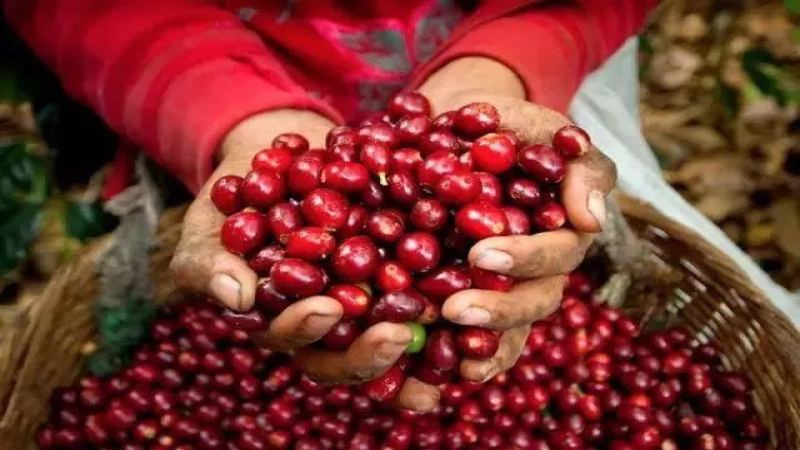
The Galapagos Islands sit isolated in the Pacific Ocean, about 1,000 kilometers from the South American mainland, formed by underwater lava accumulations. Coffee was introduced here around 1870, and to this day the islands still preserve the ancient, unhybridized Bourbon variety. Though grown at an elevation of only about 500 meters, the unique microclimate created by the convergence of the Peru Cold Current and the Equatorial Warm Current produces high-acidity, strictly hard coffee beans. Ecuador legally prohibits chemical agents, making Galapagos coffee a recognized organic specialty with a mild, rich cup that is sweet amid its acidity, carrying floral, fruity, and caramel notes. This article will walk you through the coffee estates of San Cristobal Island, their historical origins, and flavor characteristics, along with Front Street Coffee's brewing recommendations.
The Galapagos Islands span about 300 kilometers from east to west and extend about 200 kilometers from north to south (other sources say 300 kilometers north to south), lying roughly 1,000 kilometers from the South American mainland. A flight from Quito, Ecuador's capital, takes about 1 hour and 30 minutes. This archipelago is composed of lava deposits uplifted from the seabed and is a classic example of oceanic islands. The largest island, Isabela, covers 4,588 square kilometers, and there are also Santa Cruz Island, San Salvador Island, and others, with more than 60 islands of varying sizes in total (some sources record 15 large islands, 42 small islands, and 26 rocky reefs). The archipelago has a total area of 8,000 square kilometers (another figure is 7,800 square kilometers), and about 96.6% of it is currently designated as a national park, with an additional 79.9 square kilometers of marine protected area around it.
Coffee from the Galapagos Islands is quite unique. Around 1870, coffee was introduced to the islands, and more than 150 years later, what is still grown there is the original variety from that time—the ancient Bourbon—which has never undergone any artificial crossbreeding. In addition, most of the island's coffee is planted in mountainous areas at around 500 meters elevation. Friends who have followed our coffee bean series should know that the higher the elevation, the better the coffee quality generally is, and that 1,700 to 2,100 meters is usually required for quality coffee beans. Isn't 500 meters far too low? This is exactly what makes Galapagos coffee special: the archipelago's geographic location is extremely unusual, sitting right at the convergence zone of the Peru Cold Current to the south and the Equatorial Warm Current to the north. Under the combined influence of these cold and warm ocean currents, a small ecological environment has formed locally, where the climate at 500 meters is equivalent to the climate at 900 to 1,800 meters inland. Such terrain is very suitable for growing high-acidity Strictly Hard Bean (SHB) coffee, and this is the key to its superior quality.
Galapagos coffee is of excellent quality and is mainly exported to Northern European countries such as those on the Scandinavian Peninsula, which is why domestic consumers know very little about it. As coffee has become widely consumed around the world, the global coffee industry has also moved toward mass-production models. A small-scale growing model like Galapagos actually limits its own development, and without expansion, it could very well be forced to be abandoned eventually because it is not profitable. Local coffee estate owners have also recognized this problem and gradually expanded estate areas in the early 1990s, making fuller use of their exceptional natural advantages.
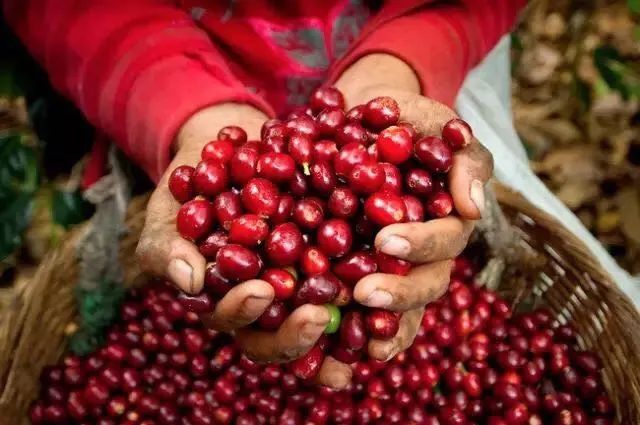
The name "Galapagos" comes from Spanish and means "giant tortoise." Because they are far from the mainland, the animals here evolved according to their own inherent characteristics. These islands stand alone in the Pacific Ocean, and apart from rainwater, there are almost no other freshwater resources on them; originally they were uninhabited islands. In 1535, a Panama-bound ship was driven off course by strong ocean currents, and the Panama bishop Berlanga on board accidentally discovered the islands and named them Las Encantadas, meaning "the enchanted ones." At that time the islands had no human population. Inca pottery shards have been found on some islands, proving that these islands had been occupied before the Spanish arrived. (Other sources say: in 1535 the Spanish came here and found that the islands were inhabited by large numbers of giant tortoises rarely seen in the world, so they named them "Galapagos Island," meaning "Tortoise Island.")
Galapagos—Organic Coffee from the Island of Giant Tortoises
Today the Galapagos Islands are designated by Ecuador as a national park and have also been listed by UNESCO as "the property of mankind." Being far from the mainland, they have largely avoided the impact of human activity on nature. To preserve the local natural ecology as much as possible, Ecuador legally prohibits the use of all kinds of artificial fertilizers, herbicides, and insecticides, so Galapagos coffee beans are all organic coffee beans, grown entirely without any chemical agents, and are recognized as naturally green specialty coffee. This naturally grown coffee has a mild, rich cup that is sweet amid its acidity, with faint floral, fruity, and caramel notes.
Front Street brewing recommendations:
When it comes to brewing coffee, Front Street has always believed that the freshness of coffee beans has a major impact on the flavor of the coffee, so the coffee beans shipped by Front Street Coffee (FrontStreet Coffee) are all within 5 days of roasting. Front Street's roasting philosophy is "freshly roasted good coffee," so that every customer who places an order receives the freshest coffee when it arrives. Coffee beans rest for about 4-7 days, so by the time customers receive them, they are at their peak flavor.
For friends who need ground coffee, Front Street offers a warm reminder: once coffee beans have been ground in advance, they no longer need to rest, because during transport the pressure produced by carbon dioxide inside the packaging also rounds out the coffee's flavor, so once you receive the ground coffee you can immediately brew a cup and start drinking. But ground coffee needs to be brewed promptly, because after ground coffee contacts air it oxidizes relatively quickly—that is, the coffee's flavor dissipates fairly quickly, and the coffee will not taste as good. Therefore, Front Street recommends buying whole beans and grinding fresh right before brewing, so you can better taste the coffee's flavor.
For professional coffee knowledge exchange and more coffee bean information, please follow Coffee Workshop (WeChat public account: cafe_style)
For more specialty coffee beans, please add the private WeChat of Front Street Coffee (FrontStreet Coffee), WeChat ID: qjcoffeex
The above content is compiled by CoffeeHunters, a coffee news website.


