







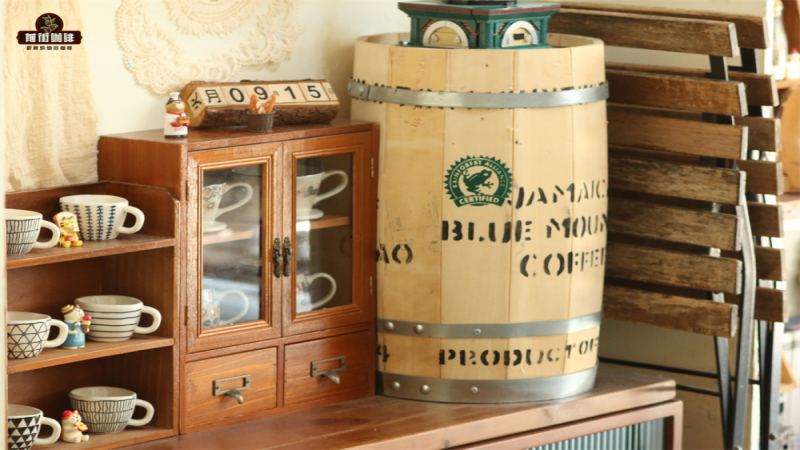
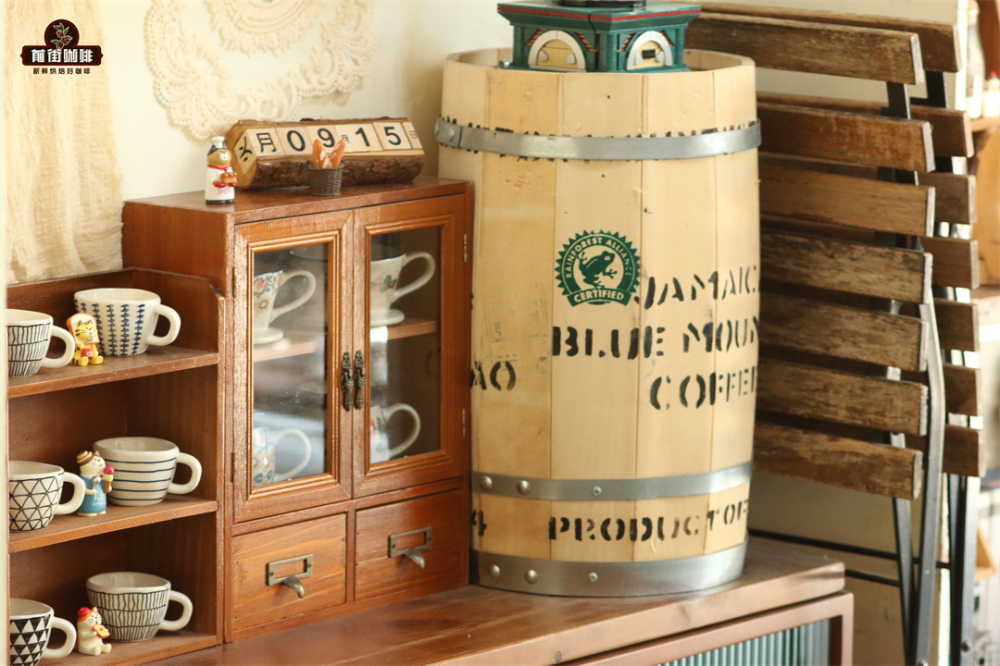
Blue Mountain Coffee is hailed as the gentleman of coffee, the most classic and legendary coffee of all. This article begins with the cultivation history of Jamaican Blue Mountain Coffee and systematically reviews its varietal characteristics, washed processing method, Jamaica's coffee grading system, the microclimate and volcanic soil advantages of the Blue Mountain region, as well as the signature flavor profile of Blue Mountain Coffee. It also draws on a hands-on pour-over example of Front Street Coffee's Blue Mountain No. 1 to share specific brewing parameters and tasting experience, helping coffee lovers fully understand the past and present of this legendary coffee.
When it comes to the most gentlemanly and quintessentially classic representative in the world of coffee, Jamaican Blue Mountain Coffee certainly holds a place. For most Chinese consumers, the name Blue Mountain Coffee is hardly unfamiliar. In many people's minds, Kopi Luwak and Blue Mountain Coffee are synonymous with expensive and top-tier. The heyday of Blue Mountain Coffee coincided with China's reform and opening-up period, when all kinds of foreign goods poured in, coffee beans among them. Back then, however, coffee was far less widespread than it is today, usually available only at hotels hosting foreign guests. It was from that era that Blue Mountain Coffee's reputation spread into China and quickly became a household name. The vast majority of people had never actually tasted it, but simply having drunk a cup of Blue Mountain Coffee was enough to become a topic of conversation over tea, and so by word of mouth, Blue Mountain Coffee gradually became mythologized.
With the rise of the third wave of specialty coffee, today's market may favor a more refined and elegant path like Geisha coffee, but it is undeniable that Blue Mountain Coffee still holds considerable influence over the entire coffee industry.
Blue Mountain Coffee comes from Jamaica, and coffee cultivation in this country dates back to the 18th century. In 1717, King Louis XV of France ordered coffee plantations to be established in Jamaica; afterward, the Governor of Jamaica introduced Arabica varieties from Martinique and promoted them vigorously, and the coffee crop thus took root in Jamaican soil.
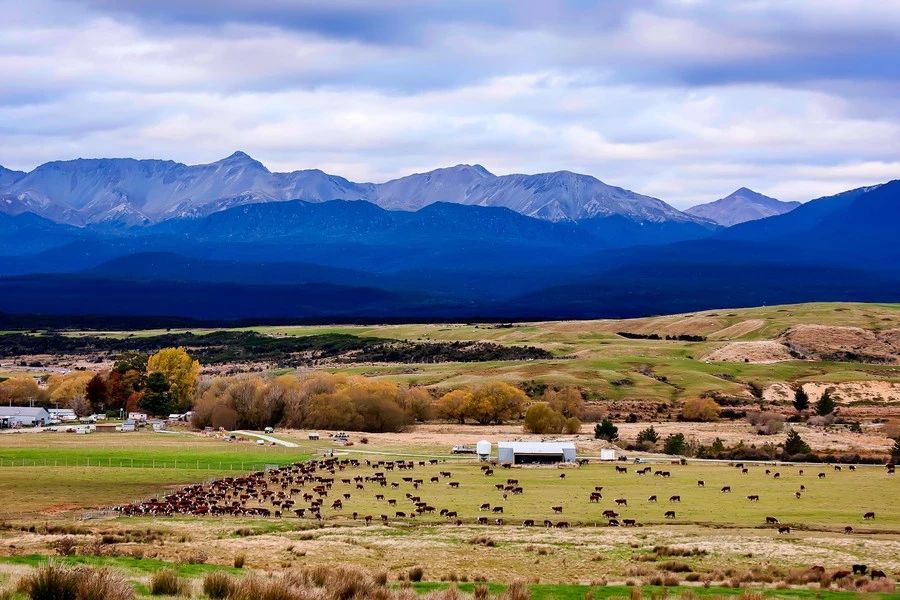
The Blue Mountain range happens to lie within what we commonly call the coffee belt. Besides its elevation, the Blue Mountains also possess fertile volcanic soil, which clearly provides excellent conditions for coffee cultivation and production. At the same time, the microclimate of the Blue Mountains is also one of the key factors behind Blue Mountain Coffee's success. The Blue Mountain region has a generally humid climate, with fog and rain throughout the year, and average rainfall can reach 1,980 millimeters.
What Variety Is Blue Mountain Coffee
Persisting in cultivating the Typica variety is one of the important reasons Blue Mountain Coffee's flavor has remained stable and consistent. Typica may well be one of the oldest Arabica varieties. Compared with other varieties, Typica's flavor is more delicate and refined, but its shortcomings are also extremely prominent—poor resistance to pests and diseases, and quite low yield. Had it been any other coffee-producing country in the Americas chasing yield, Typica would likely have long since been replaced by high-yield, disease-resistant varieties like Caturra and Catuai.
From the perspective of cultivation techniques, the earliest coffee planting adopted the technical system of the colonial power, Britain; in terms of variety selection, for three hundred years it has always grown Typica, an outstanding variety within Arabica. By that point, the region had already accumulated at least two hundred years of coffee-growing experience. As long as all cultivation indicators are strictly controlled and modern cultivation management continues to advance, it would in theory be difficult not to produce a good cup of coffee.
Blue Mountain Coffee Processing Method
The reason Blue Mountain Coffee beans have been able to maintain high quality over the long term is largely thanks to years of strict control over export standards. Until 2020, the Blue Mountain Coffee passed down through generations was in fact a Typica variety coffee processed by the washed method. Compared with other processing methods, the washed method is the most stable and efficient of the traditional methods. After harvesting, the coffee cherries are immediately floated, then machines remove the skin and pulp, and fermentation removes the mucilage layer. Once the mucilage is removed, the moisture content of the beans drops significantly, so less sun-drying time is needed and the defect rate is lower. At the same time, a mature washed process gives Blue Mountain Coffee beans a cleaner taste and higher acidity.
Types and Grading of Blue Mountain Coffee
Coffee from Jamaica's Blue Mountain region is divided into three grades: Blue Mountain Coffee, Jamaica High Mountain Supreme Coffee Beans, and Jamaica Prime Coffee Beans. Among these, Blue Mountain Coffee and High Mountain Coffee are each further subdivided into two grades. Ranked from highest to lowest quality, they are: Blue Mountain No. 1, Blue Mountain No. 2, High Mountain No. 1, High Mountain No. 2, and Jamaica Coffee.
As for the grading system, the entire Blue Mountain range stands 2,256 meters tall, of which areas above 1,700 meters are a protected ecological zone where coffee cultivation is prohibited. According to CIB classification standards, only coffee grown between 910 and 1,700 meters can bear the name "Jamaica Blue Mountain Coffee"; coffee grown between 460 and 910 meters can only be called "Jamaica High Mountain Coffee"; and coffee grown below 460 meters is called "Jamaica Prime Coffee."
It follows that Jamaican coffee is not the same as Blue Mountain Coffee. To this day, only coffee produced on those 6,000 hectares of land in the Blue Mountain range (above 910 meters) qualifies to be called Blue Mountain Coffee beans, while the remaining roughly two-thirds of the Blue Mountain range's coffee production can only be classified as High Mountain Coffee or Prime Coffee.
What Does Blue Mountain Coffee Taste Like?
Since Blue Mountain Coffee is so renowned, what exactly is unique about its flavor? The outstanding quality of Blue Mountain Coffee beans creates its clean taste. In an era when medium-dark roasting prevailed, Blue Mountain Coffee often displayed a balance among acidity, sweetness, and bitterness, accompanied by subtle nutty and chocolate notes. These flavor characteristics make Blue Mountain Coffee's aftertaste especially pleasant. It represents the highest quality of coffee of an era, a veritable king of coffee.
Jamaica · Blue Mountain No. 1
Region: Jamaica Blue Mountain
Estate: Clifton Farm
Altitude: 1,310 meters
Processing Method: Washed
Variety: Typica
Roast Level: Medium-Dark Roast
Flavor: Chocolate, nuts, cream; relatively balanced acidity, sweetness, and bitterness.
Blue Mountain Coffee Pour-Over Brewing
Blue Mountain Coffee has a smooth mouthfeel and rich aroma, and its excellent balance is one of its hallmarks. Take Front Street Coffee's Blue Mountain Coffee as an example—these beans come from Clifton Estate. Front Street Coffee's baristas use a Kono dripper to brew this Blue Mountain Coffee, with the water temperature set at 88°C and a medium-coarse grind. The first pour uses 30 grams of water for blooming, with a bloom time of 30 seconds; the second pour goes up to about 125 grams, then wait for the coffee liquid to drop, and when the liquid level falls to halfway, pour the final round up to 225 grams. That is, 15 grams of coffee grounds to 225 grams of water, a coffee-to-water ratio of 1:15.
Under this brewing plan, Blue Mountain Coffee presents a slight citrus acidity, overall balance, a smooth mouthfeel, nutty notes in the middle, and a dark chocolate sensation emerging in the finish.
Professional coffee knowledge exchange. For more coffee bean information, please follow Coffee Workshop (WeChat public account: cafe_style). For more specialty coffee beans, please add the personal WeChat of Front Street Coffee: qjcoffeex
The above content is compiled by CoffeeHunters, a coffee news website.


