







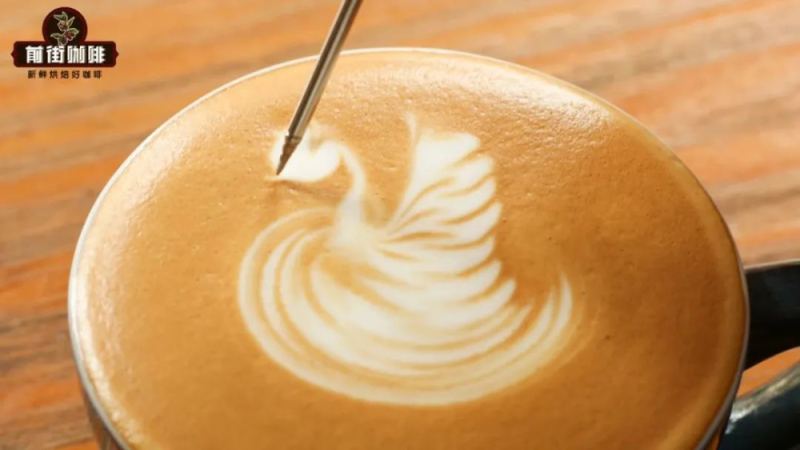
Many people, when they first drink a latte, are drawn in by the sweet aroma woven from that layer of dense milk foam and coffee crema. Yet when making a latte at home, they often run into the awkward problem of it being too bitter, too weak, or even both bitter and weak at once. In fact, the key to a good latte often lies in the roast level chosen for the espresso blend and whether the espresso extraction parameters are stable. This article, drawing on the hands-on experience of Front Street Coffee, breaks down the root causes of unbalanced latte flavor one by one—covering coffee bean roast level, coffee-to-liquid ratio, milk pairing, and extraction details—to help you find an espresso recipe suited to your own taste and reliably recreate a rich, balanced latte at home.
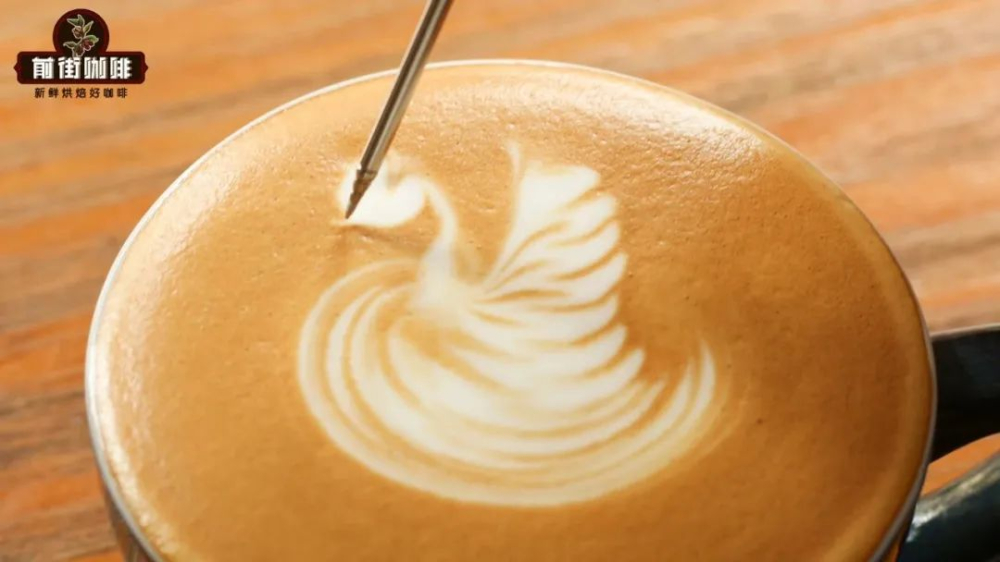
Do you remember the first time you tasted a latte? Perhaps many have long forgotten, but Front Street remembers it as clearly as yesterday. At the time, you were first drawn in by the exquisite latte art; taking a sip, the crema brought a faint, elusive sweetness with a touch of bitterness; with the second sip, the original intense bitterness quietly turned round and smooth, complementing the natural sweetness of the hot milk, striking just the right harmony in your mouth, and leaving a creamy chocolate-like finish after you swallowed.
There's an old Western saying: a thousand people see a thousand Hamlets. The same goes for coffee. Everyone has their own standard for a good latte: some prefer a generous portion that feels satisfying to drink, some value a full-bodied yet balanced aroma, and others are simply fascinated by those beautiful latte art patterns.
But conversely, when a latte is hard to swallow, everyone's feelings are surprisingly unanimous: either the coffee is so bitter you can't get it down, or the flavor is bland as water and uninspiring, or else it's both—bitter and weak. What exactly is going on here?
Recipe ideas for latte coffee
Cafés generally choose espresso beans like Front Street. Dark Cocoa, which is also an option many baristas recommend. This bean uses a medium-dark roast, pairing Brazilian Red Bourbon with Yunnan smallholder beans. Made into a latte, it presents flavors of cocoa, nuts, and caramel cookies, with an overall mild mouthfeel, a relatively friendly price, and strong versatility—making it the preferred choice for many home users when making lattes.
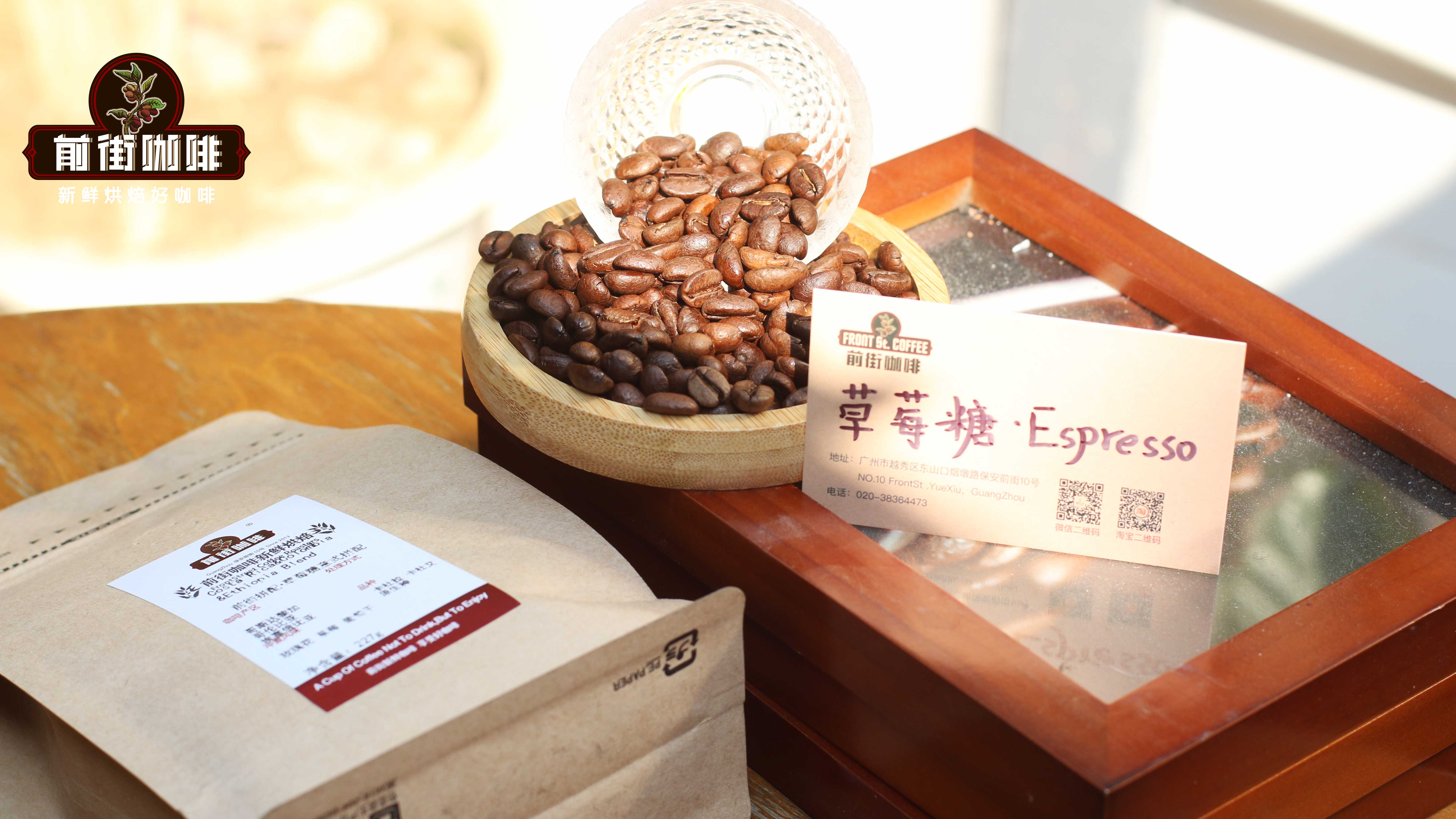
If you can't quite accept bitterness, you might want to try Front Street. Strawberry Candy espresso. This is an espresso recipe designed specifically for those who favor floral and fruity notes, blending beans from three origins—Costa Rica, Colombia, and Ethiopia. It carries aromas of rose, citrus, grape, and dried blueberry; made into an Americano, it presents a fresh sweetness reminiscent of fruit gummies.
On this basis, we first apply the general formula for espresso: a coffee-to-liquid ratio of 1:2, meaning 1g of coffee grounds corresponds to about 2g of coffee liquid, with extraction time controlled at 25 to 35 seconds, then we verify it in actual brewing. For example, Front Street uses a double basket loaded with 20g of coffee grounds, extracting 40g of espresso, with time maintained at 27 to 33 seconds, and no abnormal conditions during the entire extraction process (channeling, spraying, unstable flow rate).
If making a hot latte, Front Street will, at a ratio of 1:5.5, pour 220ml of fresh milk into the milk pitcher, steam it to 55 to 65°C while retaining 0.3 to 0.5cm of milk foam, then fully integrate it with the espresso, pour into a ceramic cup, and draw a neat pattern.
If making an iced latte, we first place 3 ice cubes at the bottom, control the coffee-to-milk ratio at 1:5, first pour in 200g of fresh milk, then drizzle on 40g of coffee liquid—this preserves a nice layered effect.
According to Front Street's experience, as long as the coffee beans and milk are reasonably paired, while stably controlling espresso extraction and getting the milk ratio right, making a good latte is not complicated. In other words, if the latte you make doesn't taste right, then the problem must lie in the above steps. Below we analyze them one by one.
First, why does a latte taste bitter?
Everyone knows that, without adding extra sugar, a latte is among the least bitter of all fancy coffees, because it contains a large proportion of milk, and the coffee itself often doesn't have a strong presence. Once you taste obvious bitterness, you can basically conclude the problem lies with the espresso: either the beans are roasted too dark, or the extraction parameters aren't dialed in correctly.
As for the former, unless you're buying those extremely dark-roasted beans so dark they're oily on the surface, common espresso recipes on the market mostly use medium-dark to dark roasts in order to retain more of the coffee's own flavor, at most pulling them right as they hit second crack. Espresso made from such beans usually has rich crema, slight acidity, and moderate bitterness-sweetness; blended with milk, it forms a mutually compatible mouthfeel without letting either side stand out too much.
Generally speaking, the "culprit" that makes a latte bitter tends to hide in the espresso extraction stage, most commonly over-extraction caused by too slow a flow rate (extraction time exceeding 35 seconds per the above formula), channeling, spraying from the liquid column, and so on.
A customer once told Front Street that the lattes they usually made were always good, but one day it suddenly turned especially bitter, with all the aroma gone. The beans were still within their peak-flavor window, and the extraction parameters and ratios were the same as usual—they just couldn't find the reason. After careful questioning, it turned out the knocked-out puck had holes in it, indicating channeling during extraction, most likely over-extraction and bitterness caused by clumping of the coffee grounds. The corresponding fix is to coarsen the grind setting, or use an external tool to break up the clumped coffee grounds.
The latte tastes too watery or too weak—how to deal with it?
From a barista's perspective, the richness of a latte is determined by two things: milk and espresso. For a latte, the milk—making up the largest proportion—is naturally a key element. If you want the coffee rich and aromatic, we recommend prioritizing whole fresh milk, because compared with shelf-stable milk or skim milk, whole milk has a higher milk fat content, and after steaming, the foam layer is finer and more stable, giving the coffee a fuller mouthfeel.
In fact, besides milk quality issues, under-extraction of espresso will likewise make a latte watery or bland, and this kind of situation usually appears with SOE. Front Street once made an SOE latte with the lighter-roasted Huakui 8.0; even after reducing the milk ratio, the finished drink still tasted unbearably weak, like a cup of hot milk with a hint of citrus and caramel aroma—clearly because the roast was too light, causing under-extraction.
So when we use single-origin beans highlighting fruity notes to make a large-volume latte, it's best to choose the corresponding SOE version, so it's less likely to "flop."
Why does a latte turn out both bitter and weak?
This situation is usually the opposite of the SOE case above; it often arises because the coffee beans are roasted on the darker side, the espresso overall showing a heavy, roasty character, with the later-stage substances mostly bitter, woody, and off-flavors. If a higher extraction yield ratio is used, the espresso is very likely to become over-extracted.
For example, some friends like to extract 40g of coffee liquid from 18g of grounds; at this point the coffee-to-liquid ratio is about 1:2.22. On one hand, this makes the coffee bitter and astringent; on the other hand, the increased liquid weight also means more water content, so the coffee's concentration drops accordingly—and the latte made from it is naturally both bitter and weak.
If you feel your own latte has this contradictory mouthfeel, try reducing the espresso extraction amount a little—for example, pulling 5g less liquid weight to bring the concentration up. This both avoids over-extraction and gives the latte a fuller body.
The above content is compiled by CoffeeHunters, a coffee news website.


