







Mandheling coffee is known for its low acidity, mellow aroma, and bitter notes, and opinions in the coffee world have always been polarized—those who love it can't get enough, while those who aren't used to it keep their distance. For Front Street Coffee, that cup of mellow, full-bodied Mandheling has always been an irreplaceable favorite. This article starts with the origin of the name Mandheling, sorts out the spread of Indonesian coffee, the connection between the Mandailing people and Japanese soldiers during World War II, and further introduces Golden Mandheling, hailed as the ceiling of Mandheling. It also covers PWN company's trademark registration, the details of wet-hulling, and Front Street's PWN Golden Mandheling roasting and brewing parameters for coffee lovers' reference.
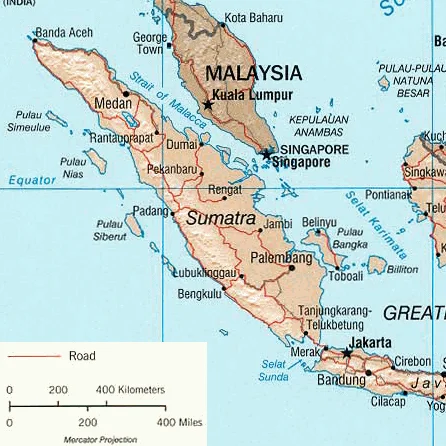
\n\nFor more specialty coffee knowledge, please follow the WeChat official account: Front Street Coffee (FrontStreet Coffee)\n\nMandheling coffee has a highly recognizable flavor—low acidity, mellow aroma, and prominent bitterness—very close to the public's existing impression of traditional coffee, so people's evaluations of it often go to two extremes: some fall in love at first sip, while others can never accept it. For Front Street Coffee (FrontStreet Coffee), that mellow, full-bodied Mandheling is an irreplaceable preference. Today let's talk about what makes Mandheling so special, and also introduce the top-tier version of Mandheling—Golden Mandheling coffee.\n\nThose who understand the spread of coffee probably know that Indonesia and coffee also share a long history. Coffee first grew in Ethiopia, and in 1699, Dutch colonists brought coffee trees to Indonesia via Yemen. Sumatra is part of Indonesia and the sixth-largest island in the world, home to more than fifty million people, and together with Borneo and Java it forms one of the three main islands of the country.\n\n
\n\nAfterward, coffee spread rapidly in Indonesia, and Indonesia became one of the world's largest coffee-producing countries. At the time, Indonesian coffee was mostly exported from Jakarta on Java, which also made Java be regarded in a certain historical period as the place producing the world's best coffee. Therefore, it is not surprising that coffee packaging bags and export sacks are printed with the word "Java."\n\nCoffee legends and stories have always been plentiful, especially in ancient and traditional producing regions. Take Sumatra coffee as an example—most of it is sold under the name "Mandheling." In fact, "Mandheling" does not refer to a coffee-producing region, but to an indigenous tribe living on the island of Sumatra.\n\n
\n\nLegend has it that during World War II, a Japanese soldier drank a mellow, rich coffee and asked the coffee shop owner for the name of the coffee. The owner mistakenly thought the man was asking about his own background, so he gave his own name, "Mandailing." Because in Japanese pronunciation "Mandailing" and "Mandheling" are extremely close, the soldier remembered the name "Mandheling." The appeal of delicious coffee is irresistible; after returning to Japan, he entrusted a friend in business to go to Indonesia to find a merchant to buy Mandheling coffee, and eventually shipped several tons of Mandheling coffee beans back to Japan for sale. In the early years, the criteria for judging top coffee mostly followed the Japanese market, and Mandheling became very popular in Japan and thus became widely known.\n\n
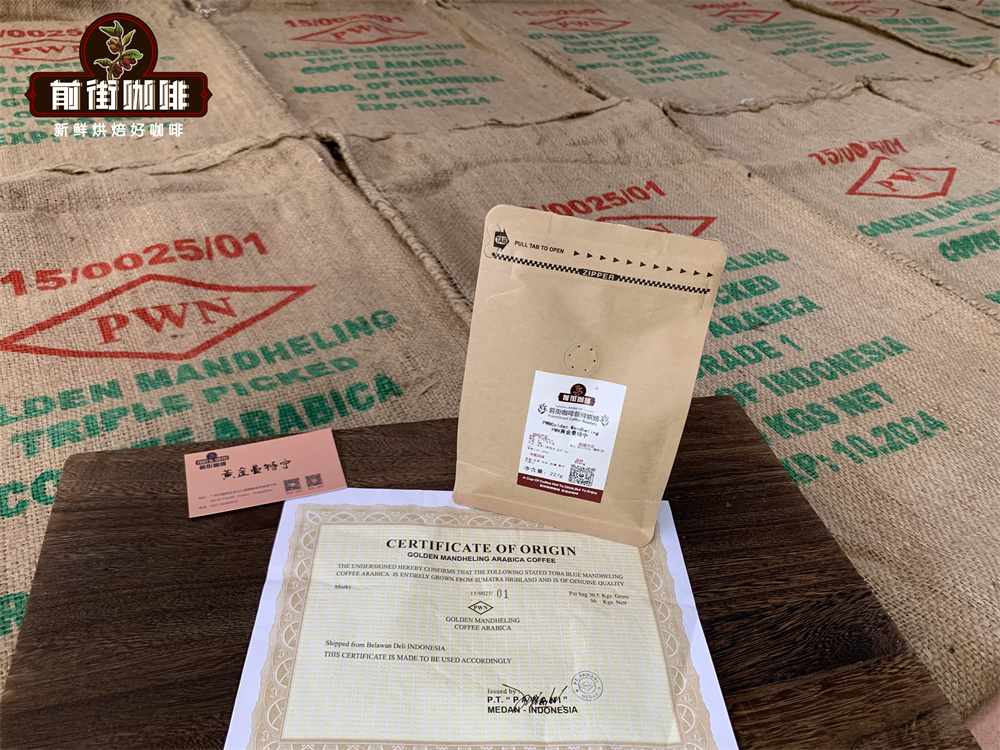
\n\nThat Indonesian local merchant back then was none other than the now well-known PWN company. PWN registered "Golden Mandheling" as a trademark in the early days, and Japanese merchants were not to be outdone, registering "Ding Shang Golden Mandheling." The two have different brands, different companies, and different marketing approaches; as for which one tastes better or is more high-end, that is inherently a subjective matter.\n\nSince "Golden Mandheling" is a registered trademark of PWN, only Golden Mandheling from PWN is truly Golden Mandheling in the strict sense. Many merchants on the market also label their roasted beans as Golden Mandheling; if consumers want to confirm whether the Golden Mandheling they are about to buy or have already received comes from PWN, they can ask the merchant to show the green bean sack and certificate for Front Street PWN Golden Mandheling coffee, thereby proving whether it is authentic Front Street PWN Golden Mandheling.\n\n
\n\nFront Street Coffee (FrontStreet Coffee): PWN Golden\nMandheling coffee beans\n\nRegion: Sumatra, Indonesia\n\nAltitude: 1,100 m—1,600 m\n\nVariety: Ateng\n\nProcessing method: Wet-hulled\n\nFront Street's Front Street PWN Golden Mandheling green coffee beans are graded at the highest G1 level, with bean size above 18 mesh, and fewer than 3 defective beans per 300 g sample. PWN company is strict in producing Golden Mandheling coffee beans; after machine screening, they also undergo 3 rounds of manual hand sorting to ensure defective beans are removed as completely as possible, thereby improving the coffee's cleanliness and sweetness.\n\nSumatra coffee is famous for its low acidity. There are several reasons for this. Among them, the local farmers' post-processing method for green coffee beans is the most important reason. Compared with the washed processing method popular in Latin America, this method of processing coffee cherries is more primitive and more casual.\n\n
\n\nAfter the coffee cherries are picked, the skin and pulp are removed by machine the same day. Then people pile the parchment beans, which still feel slippery on the surface, in water tanks or bags to ferment. After that, the mucilage layer is washed off with clean water, and the parchment beans are spread out in the yard to dry.\n\nWhen the parchment beans are in a semi-dry, semi-wet state, farmers bag them and sell them to nearby coffee processing plants. After the processing plant receives the parchment beans, it hulls off the parchment layer, leaving the green coffee beans directly exposed to continue drying.\n\n
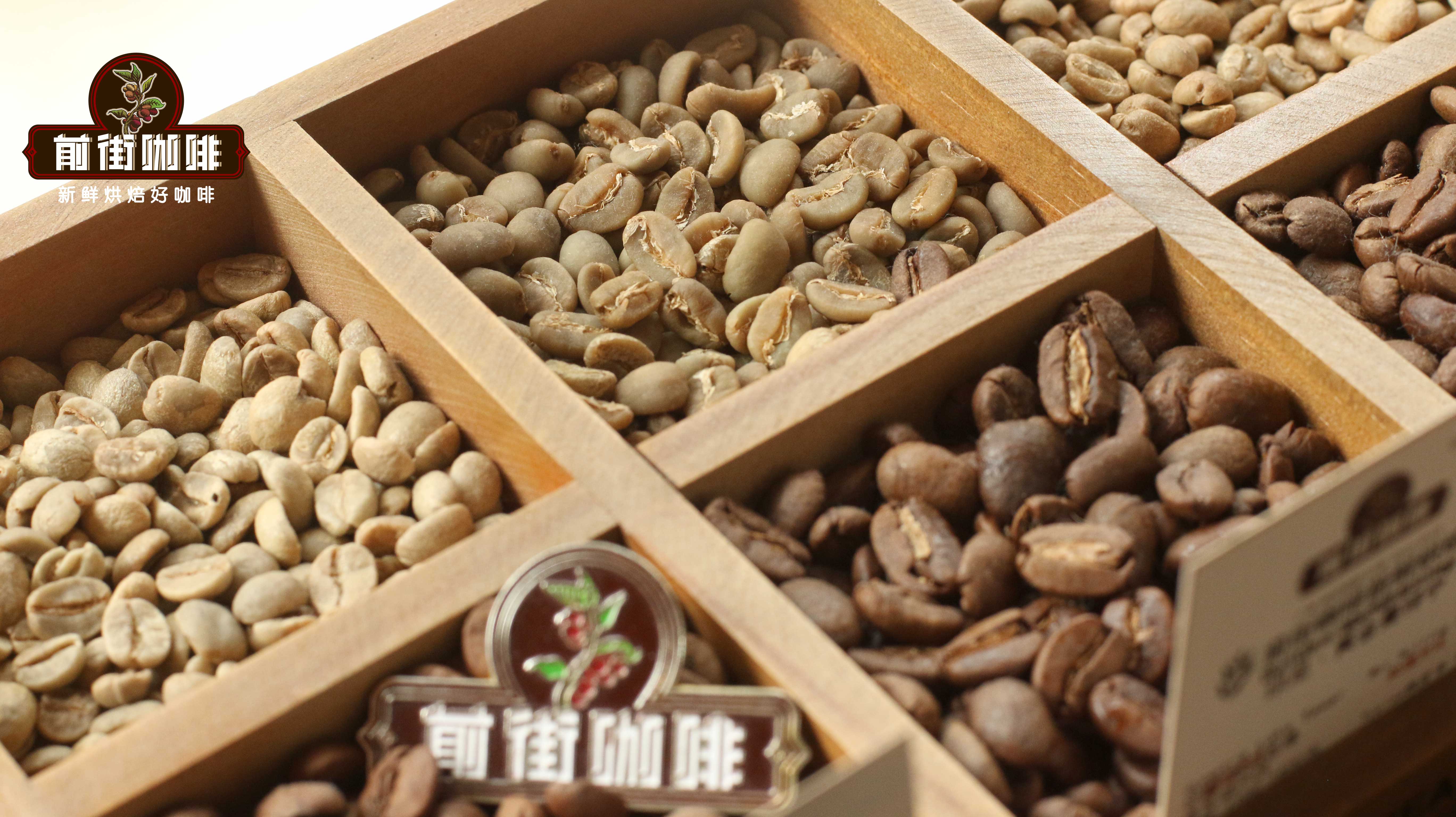
\n\nMandheling coffee processed by the wet-hulling method has flavors with notes of spices and herbs, weak fruit acidity, and a viscous, smooth mouthfeel. With its deep aroma and full-bodied taste, Mandheling coffee is widely known around the world. After Mandheling became popular, its unique wet-hulling process also became famous. It can be said that wet-hulling and Mandheling coffee have a relationship of mutual achievement.\n\nWhen Front Street Coffee's (FrontStreet Coffee) roaster received Front Street PWN Golden Mandheling green coffee beans, they observed that the bean size was very uniform and the color was blue-green. During roasting, in order to highlight Mandheling coffee's full-bodied mouthfeel, a medium-dark roast level was used.\n\n
\n\nWhen brewing, in order to bring out the full-bodied mouthfeel of Front Street PWN Golden Mandheling, Front Street Coffee (FrontStreet Coffee) recommends using a dripper with a slower flow rate, such as the KONO dripper. To avoid over-extraction caused by prolonged contact between coffee grounds and water, Front Street recommends using a medium-coarse grind and a water temperature of 88°C for brewing.\n\nDripper: KONO dripper\n\nWater temperature: 88°C\n\nDose: 15 g\n\nCoffee-to-water ratio: 1:15\n\nGrind: medium-coarse (China standard No. 20 sieve, 70% passing rate)\n\n
\n\nFriends who often read Front Street articles should be very familiar with Front Street Coffee's (FrontStreet Coffee) baristas using the three-pour method, because the three-pour method can give the coffee a richer sense of layering.\n\n
\n\nFirst pour 30 g of hot water to completely wet the coffee grounds and bloom for 30 seconds, then with a small stream slowly pour in circles starting from the center for the second pour up to 125 g to create a stage; when the water level in the dripper drops to the point where the coffee bed is about to be exposed, continue pouring; pour the third stage up to 225 g and stop pouring; wait until the water in the dripper has completely dripped into the server below, then remove the dripper. The total extraction time is about 2 minutes.\n\n
\n\nAfter brewing, Front Street Coffee's (FrontStreet Coffee) Front Street PWN Golden Mandheling has nutty notes; as the temperature drops slightly, aromas such as cinnamon spice and herbs begin to appear, along with the aroma of melon, a caramel-like sweetness, and a clean, full-bodied mouthfeel.
The above content is compiled by CoffeeHunters, a coffee news website.


