







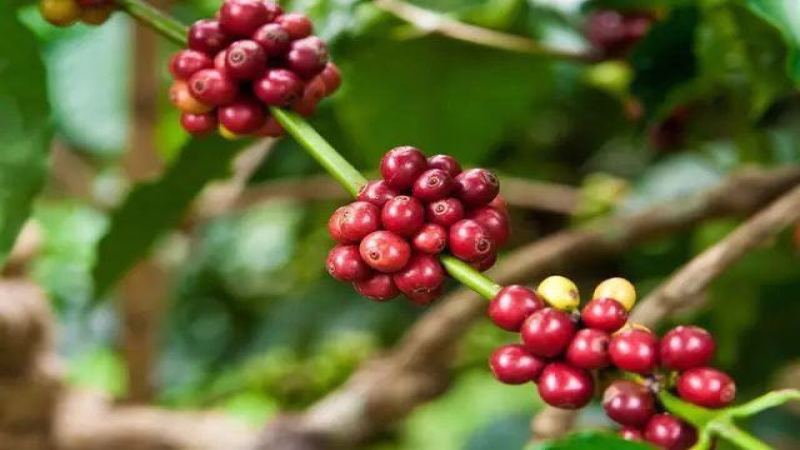
The Galapagos Islands are located in the eastern Pacific Ocean, about 1,000 kilometers from the South American mainland, and were formed by the accumulation of undersea lava. Among them, the coffee produced on San Cristobal Island is considered the highest quality coffee in Ecuador, with unique natural geographical conditions and an organic growing environment. This article will guide you through the geographical overview of the Galapagos Islands, their historical background, the coffee-growing history and flavor characteristics of the San Cristobal production area, and also share Front Street Coffee's brewing suggestions for this bean, helping coffee lovers gain a comprehensive understanding of this organic specialty coffee from the Island of Giant Tortoises.
The Galapagos Islands extend about 300 kilometers from east to west and span about 200 kilometers from north to south (some sources also record an extension of 300 kilometers from north to south), and are about 1,000 kilometers from the South American mainland (about 1 hour and 30 minutes by plane from Quito, the capital of Ecuador). This group of oceanic islands is composed of lava accumulations uplifted from the seabed. Among the islands, the largest is Isabela Island, with an area of 4,588 square kilometers, and there are also more than 60 islands of various sizes, including Santa Cruz Island and San Salvador Island (other sources indicate that the archipelago consists of 15 large islands, 42 small islands, and 26 rocky reefs). The total area of the entire archipelago is about 8,000 square kilometers (another figure is 7,800 square kilometers). At present, 96.6% of the archipelago is designated as a national park, and there is also a surrounding marine reserve of 79.9 square kilometers.
Ecuador's most outstanding coffee comes from San Cristobal Island in the Galapagos archipelago. This island possesses the unique natural geographical conditions needed to nurture top-quality coffee. Tasting a cup of Galapagos coffee is like taking in the enchanting scenery of the Galapagos Islands, and it is certain to leave an unforgettable impression.
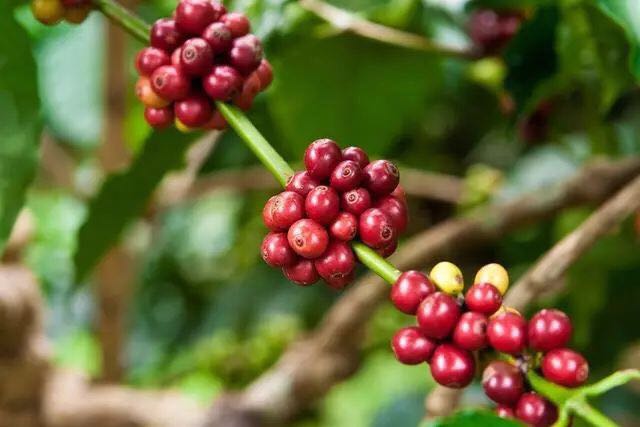
In the mid-fifteenth century, among fishermen fishing in the western Pacific waters off South America, legends circulated about mysterious islands that had been placed under a spell. It was said that these islands were sometimes clearly visible in the distance, yet when a ship approached, they vanished without a trace; sometimes they looked like a large sailing ship, and sometimes they took on the outline of a witch. The fishermen called this stretch of islands the "Enchanted Isles" and believed they might be controlled by demons like the sea sirens in the Odyssey. The place the fishermen called the "Enchanted Isles" is exactly what is now known as the Galapagos Islands.
The name of the archipelago, "Galapagos," comes from Spanish and means "giant tortoise." Because they were isolated from the mainland for a long time, the animals here evolved in their own unique way.
These islands stand alone in the Pacific Ocean. Apart from rainwater, there are almost no other freshwater resources on the islands, and they were originally uninhabited places. In 1535, a Panama-bound ship was blown off course by strong ocean currents, and aboard it the Bishop of Panama, Berlanga, accidentally discovered the archipelago and named it Las Encantadas, meaning "the enchanted ones." At that time, no humans lived on the islands. Later, fragments of Inca pottery were found on some islands, indicating that people had occupied these islands before the arrival of the Spanish. (Other sources record: in 1535 the Spanish arrived here and found large numbers of rare giant tortoises inhabiting the islands, so they named them "Galapagos Islands," meaning "Islands of Tortoises.")
Galapagos coffee is of excellent quality and is mainly sold to Northern European countries such as those in Scandinavia, so domestic consumers know very little about it. As coffee came to be widely consumed around the world, the global coffee industry gradually moved toward mass production, and Galapagos's small-scale cultivation model actually limited its own development. Without expansion of scale, it could very likely become unprofitable and ultimately be forced to be abandoned. Local coffee estate owners were also aware of this problem and gradually expanded their estate areas in the early 1990s, making fuller use of their own uniquely advantageous conditions.
Galapagos — Organic Coffee from the Island of Giant Tortoises
Today the Galapagos Islands are designated by Ecuador as a national park and have also been listed by UNESCO as "the heritage of humanity." Far from the mainland, this place has largely avoided disturbances to nature caused by human activity. In order to preserve the local natural ecology as much as possible, Ecuador legally prohibits the use of all kinds of artificial fertilizers, herbicides, and pesticides. Therefore, Galapagos coffee beans are all organic coffee beans, with no chemical agents used at all during cultivation, and are widely recognized as naturally green specialty coffee. This naturally grown coffee has a mild yet rich taste, with acidity accompanied by sweetness, and exudes elegant floral, fruity, and caramel aromas.

As coffee became a global beverage, the world coffee industry developed in the direction of mass production, and San Cristobal's coffee industry, which was relatively small in scale and difficult to guarantee in quality, fell into difficulty and in the end was very likely to be forced to be abandoned because it was unprofitable. It was not until the early 1990s that the Gonzalez family acquired the Hacienda coffee farm. The local microclimate formed by the Humboldt Current, intense equatorial sunlight, and sharp temperature variations (sea-level temperature 43°C, temperature at 275 meters above sea level 10°C–16°C) together provided uniquely favorable conditions that prompted the Gonzalez family to expand the coffee plantation. Through clearing and cultivating the earlier land, the family doubled the size of the coffee plantation again. Because the Galapagos Islands hold a unique place in history, the Ecuadorian government has designated the archipelago as a national park, no longer permits land to be cleared for new agricultural use, and strictly prohibits the introduction and use of chemical fertilizers, pesticides, herbicides, and other chemical agents. Therefore, coffee produced in the Galapagos Islands is widely recognized as a natural product.
Front Street brewing suggestions:
When it comes to coffee brewing, Front Street has always believed that the freshness of coffee beans has a great impact on flavor expression, so the coffee beans sent out by FrontStreet Coffee are all within 5 days of roasting. Front Street's roasting principle is "freshly roasted good coffee," so that every customer who places an order can receive the freshest possible condition when the coffee arrives. The resting period for coffee is about 4-7 days, so by the time customers receive it, it is exactly at its best flavor.
For friends who need ground coffee, Front Street warmly reminds you: once coffee beans are ground in advance, there is no need to rest them anymore, because during transportation the pressure produced by carbon dioxide inside the package can also make the coffee flavor rounder, so after receiving the ground coffee you can immediately brew a cup and enjoy it. However, ground coffee needs to be brewed as soon as possible, because after ground coffee contacts air it oxidizes relatively quickly, meaning the flavor will dissipate relatively quickly and the coffee will not perform as well. Therefore, Front Street recommends buying whole beans and grinding fresh before brewing, so that you can better taste the coffee's flavor.
For professional coffee knowledge exchange and more coffee bean information, please follow Coffee Workshop (WeChat public account: cafe_style)
For more specialty coffee beans, please add the private WeChat of FrontStreet Coffee. WeChat ID: qjcoffeex
The above content is compiled by CoffeeHunters, a coffee news website.


