







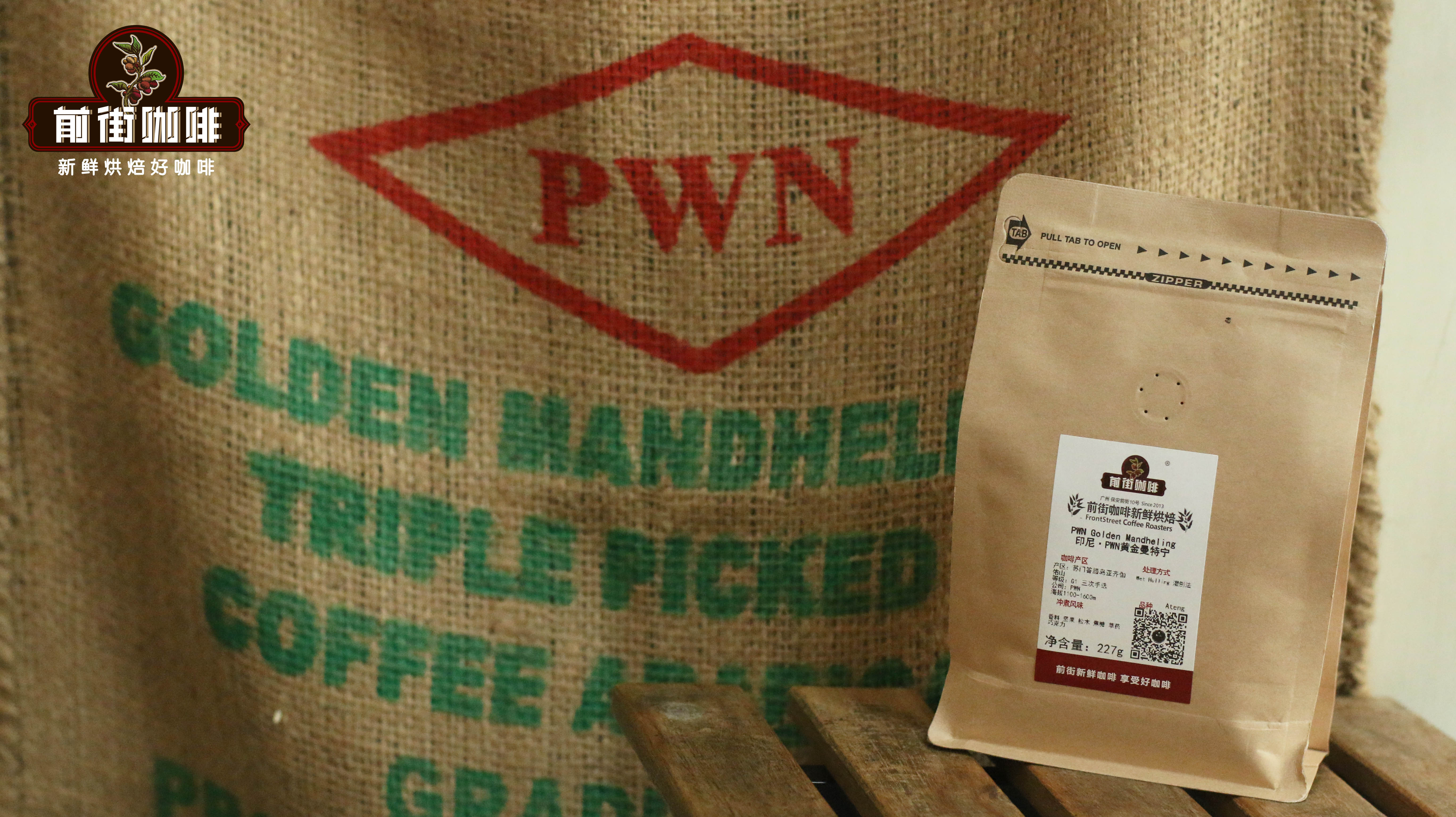
Mandheling coffee is one of the most recognizable representatives in Asia's coffee landscape, captivating many coffee lovers with its herbal, spicy notes and full-bodied mouthfeel. From the perspective of Front Street Coffee, this article systematically covers Mandheling's growing regions and terroir, the origin of its name, the principles and steps of the wet-hulling process, Indonesia's coffee grading standards, and introduces one by one the origin information and cupping flavors of four representative Mandheling coffees available at Front Street: PWN Golden Mandheling, Lintong Mandheling, Tiger Mandheling, and Aged Mandheling, followed by a unified set of brewing parameters and technique sharing, to help readers fully understand the unique charm of Mandheling coffee.
For more specialty coffee knowledge, welcome to follow our WeChat official account: Front Street Coffee (FrontStreet Coffee).
When it comes to the epitome of Asian coffee, Indonesia's Mandheling is a name that cannot be avoided. Its signature spice and herbal character, combined with a thick mouthfeel, has fascinated many coffee lovers at Front Street Coffee (FrontStreet Coffee) stores. The Mandheling family has many members, so let Front Street walk you coffee fans through the relevant knowledge about Mandheling coffee.
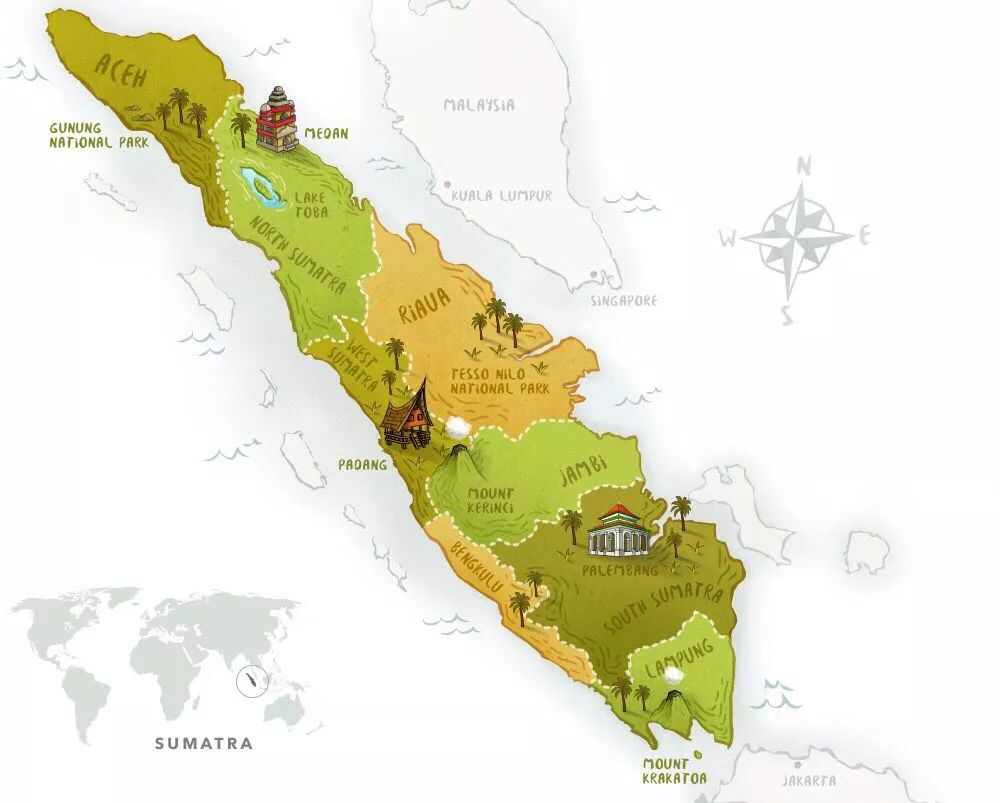
Indonesian Mandheling Coffee Growing Regions
Mandheling's homeland is mainly on the Indonesian island of Sumatra. This island is the largest in Indonesia, located near the equator with a typical tropical rainforest climate, consistently hot and humid with abundant rainfall, providing ideal growing conditions for high-quality Arabica coffee.
However, Indonesia's growing regions overall have limited elevation, and plots capable of growing high-quality Arabica are not plentiful. Arabica only shows its best flavor when grown at high elevations, so only about one-quarter of the coffee beans produced in Indonesia are Arabica, while the remaining three-quarters are Robusta, which can be planted at lower elevations. Sumatra happens to be Indonesia's highest-elevation region.
The Origin of the Name "Indonesian Mandheling Coffee Bean"
Most people familiar with coffee know that coffee beans are usually named after their growing region or estate, such as the Costa Rica Monster Estate coffee beans recently launched by Front Street Coffee (FrontStreet Coffee), or Ethiopia's Yirgacheffe. But the origin of the name Mandheling hides an interesting anecdote.
According to Front Street, this story starts after World War II. Japanese soldiers once stationed in Indonesia returned home but kept thinking about the taste of the local coffee, so they asked locals through trading partners to help purchase high-quality coffee beans, including this one. The Japanese liked it very much and asked for its name, but the locals mistakenly thought they were being asked where they were from and blurted out "Mandailing," which the Japanese then misheard as "Mandehling." It was precisely this double misunderstanding that led to this coffee bean being muddled into the name Mandheling.
Indonesian Mandheling Coffee Processing Method
As Front Street Coffee (FrontStreet Coffee) mentioned earlier, Mandheling's unique flavor is largely thanks to Indonesia's distinctive processing method—wet hulling. It is this step that gives Mandheling its signature earthy, herbal, and spicy notes.
One thing to note: during wet-hulling, the green beans are in a half-hard, half-soft moist state, and are prone to being squeezed during the removal of the mucilage and parchment layer, causing the beans to crack in a shape resembling a sheep's hoof, commonly known as sheep-hoof beans. Front Street Coffee (FrontStreet Coffee) considers this a very typical appearance characteristic of Mandheling and does not classify it as a defective bean.
The Origin of Indonesia's Wet-Hulling Method
According to Front Street Coffee (FrontStreet Coffee), Indonesia's use of the wet-hulling method to process coffee cherries is closely related to the local climate and economic conditions. Frequent rain and constant typhoons here make it difficult to meet the long hours of sunny weather required for natural (dry) processing; meanwhile, the local economic level is limited and cannot afford the higher cost of the washed method, so the wet-hulling method emerged under these circumstances.
Of course, today's Indonesian coffee industry is no longer as impoverished as it once was, and there are no shortage of estates and companies capable of using the washed method, but the wet-hulling method has still been retained. Front Street Coffee (FrontStreetCoffee) believes that it is precisely the wet-hulling method that made Mandheling known to the world—mention Mandheling and one thinks of wet-hulling, and the two have long been mutually fulfilling.
The specific steps of the wet-hulling method can be divided into two stages:
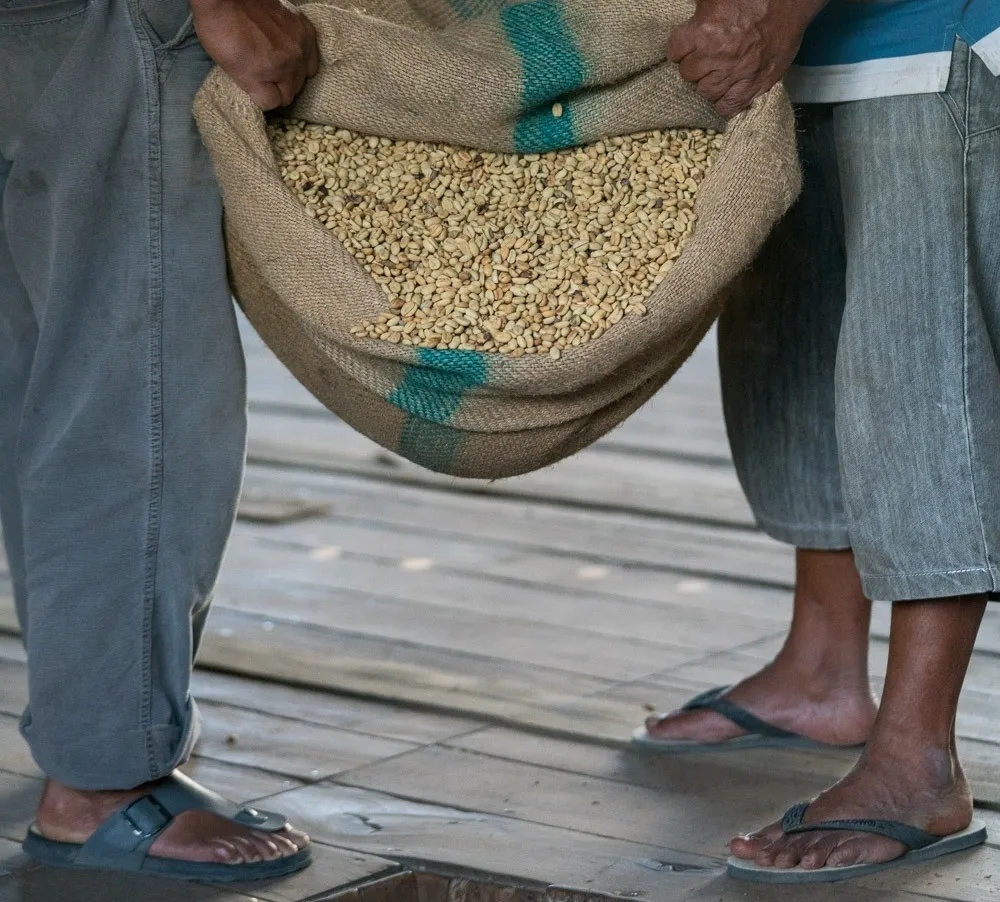
Stage One: Use a wooden depulper to remove the skin and fruit flesh, ferment for about 3 hours, then dry to reduce the moisture content to a semi-dry, semi-moist state of 30%-50%. Stage Two: Remove the mucilage and parchment layer, and continue with the latter stage of drying. The entire drying process takes 2-4 days, with the final moisture content reduced to 12%-13%.
Besides the regular wet-hulling method, there is also aged wet-hulling. The coffee beans first undergo ordinary wet-hulling, then are sealed and stored in a warehouse for 2~3 years. The warehouse needs to be kept cool and ventilated, and the beans must be turned regularly to prevent mold and spoilage. During this period, the coffee's acidity gradually weakens and converts into sugars, and the color deepens accordingly, mostly to yellowish-brown or dark brown. The product on Front Street Coffee (FrontStreetCoffee)'s bean list that uses this processing method is simply called Aged Mandheling coffee beans.
Indonesian Mandheling Coffee Bean Grading
Coffee fans who have visited Front Street Coffee (FrontStreetCoffee) stores should remember that Indonesian Mandheling beans are exceptionally large and quite plump. Indonesian Mandheling grading is mainly based on the number of defective beans, supplemented by bean size. According to Front Street, Indonesia's requirements for generally quality coffee beans are: no live insects, no moldy or rotten-smelling beans, maximum moisture content of 12.5%, and impurity rate below 0.5%.
Below are the standards for grading Indonesian Mandheling coffee beans by defects (based on 300g):
Grade Standard G1 Grade 1: Total defects fewer than 11 G2 Grade 2: Total defects greater than 12 and fewer than 25 G3 Grade 3
: Total defects greater than 26 and fewer than 44 G4a Grade 4a: Total defects greater than 45 and fewer than 60 G4b Grade 4b
: Total defects greater than 61 and fewer than 80 G5 Grade 5
: Total defects greater than 81 and fewer than 150 G6 Grade 6
: Total defects greater than 151 and fewer than 225
Among these, Front Street's Indonesian Golden Mandheling is Grade G1, and G1 is an extremely rare grade, originally a standard tailor-made specifically for Japanese trading companies, requiring no more than 3 defect points within 300 grams.
The above is some relevant content about the Indonesian Mandheling coffee bean growing regions. Next, Front Street Coffee (FrontStreetCoffee) will share an introduction and flavor characteristics of all the Indonesian Mandheling coffees currently available at Front Street.
Front Street Coffee (FrontStreetCoffee) PWN Golden Mandheling Coffee Beans
Country: Indonesia
Region: Sumatra, Aceh, Mount Gayo
Elevation: 1100-1600m
Variety: Ateng
Processing Method: Wet-hulled
Flavor: Baked toast, nuts, pine, caramel, herbs
This Golden Mandheling from Front Street is the latest batch recently released by PWN. Unlike the previous PWN Golden Mandheling , this newest batch comes from Mount Gayo in Aceh, Sumatra, whereas earlier batches came from Lake Tawar in Sumatra. According to Front Street's cupping and brewing of this latest Golden Mandheling, it has a more pronounced baked toast flavor compared to the previous Golden Mandheling, and a fuller mouthfeel as well.
In addition, PWN Golden Mandheling's specification standard is 18 screen and above, with fewer than 3 defective beans (per 300g green bean sample), belonging to the highest grade G1, darker green in color, and uniform flat beans in shape. After strict screening, Front Street Coffee (FrontStreetCoffee) finds that Golden Mandheling no longer carries the earthy off-flavors common in ordinary Mandheling, and is cleaner and brighter on the palate.
Front Street Coffee (FrontStreetCoffee) Indonesian Lintong Mandheling Coffee Beans
Country: Indonesia
Region: Sumatra (Lintong)
Elevation: 1100-1600m
Variety: Typica, Caturra
Processing Method: Wet-hulled
Flavor: Baked toast, nuts, caramel, pine, herbs
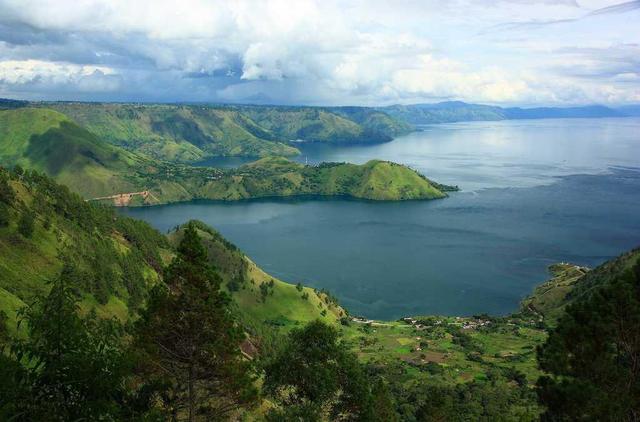
Lintong Mandheling comes from the Lintong hills of north-central Sumatra, near Lake Toba. Front Street Coffee (FrontStreetCoffee)'s entry-level everyday Indonesian Mandheling is precisely from here. Lintong Mandheling also uses the unique wet-hulling method, and thus has the characteristics of low acidity and high body.
Front Street Coffee (FrontStreetCoffee) Indonesian Tiger Mandheling Coffee Beans
Country: Indonesia
Region: Sumatra
Elevation: 1500m
Variety: Caturra, Typica, Sidikalong
Processing Method: Wet-hulled
Flavor: Cream, dark chocolate, nuts, balanced taste
Only Mandheling that is 17 screen and above with a defect rate below 4% can be called Tiger Mandheling. Since Tiger Mandheling's main varieties are Caturra and Typica—Caturra bringing a citrus- and lemon-like acidity to the mouthfeel, and Typica offering a long-lasting sweet aftertaste—Tiger Mandheling has a relatively balanced mouthfeel and high cleanliness.
The Tiger Mandheling selected by Front Street Coffee (FrontStreetCoffee) is produced at the Tiger Estate in Sumatra, Indonesia, and is therefore also known as "Mandheling Tiger" or "Sumatran Tiger Mandheling." Northern Sumatra has relatively higher terrain, and Aceh Province, where Lake Tawar is located, along with North Sumatra, where Lake Toba sits, are the main Arabica growing regions. Mandheling Tiger is required to have an aroma reminiscent of traditional Chinese herbal medicine, and only Mandheling that is 17 screen and above with a defect rate below 4% can bear the name Tiger.
Front Street Coffee (FrontStreetCoffee) Indonesian Aged Mandheling Coffee Beans
Country: Indonesia
Region: Sumatra
Elevation: 1500m
Variety: Caturra, Catuai
Processing Method: Wet-hulled
Flavor: Ripe pu-erh, caramel, herbs, chocolate, relatively low acidity.
Aged Mandheling refers to Mandheling coffee beans that have undergone aging treatment, allowing the green beans to naturally age by extending their storage time (usually 2~3 years). This process weakens the coffee's acidity and changes the color of the green beans.
At the same time, aged Mandheling coffee beans have high requirements for the storage environment, which must be kept cool and ventilated to prevent mold and moisture. Because the storage environment is dark and the time is long, improperly handled aged coffee often struggles to shake off a moldy smell, or what is commonly called complex odors like burlap sack or leather.
The above are some of the more representative Mandheling coffee beans using the wet-hulling method available at Front Street Coffee (FrontStreetCoffee). In addition, Front Street also has an Indonesian sun-dried Mandheling, which will not be introduced further here. Next, Front Street Coffee (FrontStreetCoffee) will share some cupping flavor comparisons of these four Indonesian Mandheling coffees.
Front Street Coffee (FrontStreetCoffee) Brewing Sharing
When brewing Mandheling coffee beans, Front Street Coffee (FrontStreetCoffee) tries to keep the brewing parameters as uniform as possible to ensure fairness. There are some differences.
Brewing Parameters for the Four Mandheling Coffees
Kono dripper, 1:15 coffee-to-water ratio, 15g dose, 88℃ water temperature, grind size (70-75% passing rate on a No. 20 standard sieve)
Brewing Technique:
Using staged extraction: first bloom with 30g of water for 30 seconds, then pour in a slow circular stream to 125g for the first stage, and when the water level drops and is about to expose the coffee bed, continue pouring to 225g and stop, then when the water level drops again and is about to expose the coffee bed, remove the dripper. (Start timing from the beginning of the bloom.) The V60 dripper extraction time is 2'00", while the Kono dripper takes slightly longer at 2'10".
Golden Mandheling: Layered and complex, full-bodied and clean, highly balanced, with rich nut and caramel aromas, a chocolate note, and a long-lasting finish.
Lintong Mandheling: Herbal and medicinal on entry, dark chocolate, caramel, with a sweet aftertaste.
Tiger Mandheling: Pine and spice aromas, a relatively balanced mouthfeel, with distinct cream, dark chocolate, and nut flavors.
Aged Mandheling: Woody, malt, and caramel aromas rush forth; on the palate it lacks the wildness of traditional Mandheling and gains more fullness and finesse, with a sense of mature steadiness, relatively low acidity, and on entry the flavors of ripe pu-erh, caramel, herbs, and chocolate, with abundant sweetness.
For more specialty coffee knowledge, please follow our WeChat official account: Front Street Coffee (FrontStreet Coffee)
The above content is compiled by CoffeeHunters, a coffee news website.


