







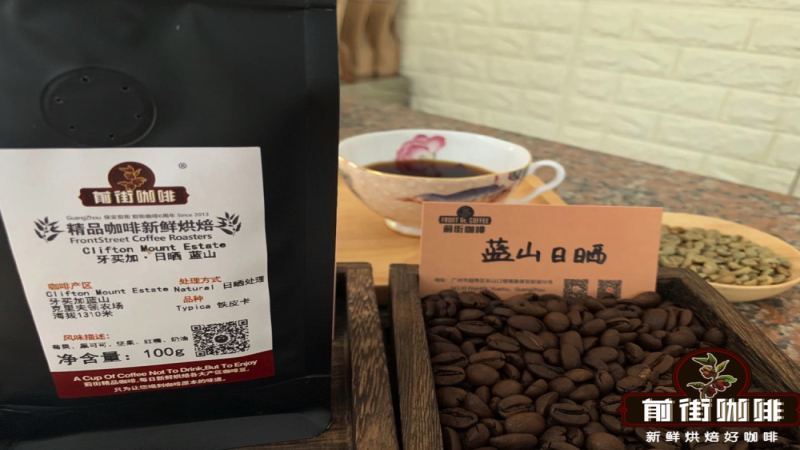
Blue Mountain coffee has always held a special place in the specialty coffee world—what exactly makes it worthy of being called one of the most balanced coffees in the world? This article starts from the geographic environment and climatic conditions of Jamaica Blue Mountain, systematically sorting out Blue Mountain coffee's varietal classification, grading system (No.1 to PB peaberry), the differences between washed and natural processing methods, and the certification background of Clifton Mount Estate. At the same time, Front Street Coffee will share specific brewing recipes for both washed and natural Blue Mountain, including dripper selection, water temperature control, and staged pouring techniques, helping you fully understand every key step of Blue Mountain coffee from origin to cup, and truly appreciate this classic work hailed as the "perfect original coffee."
Blue Mountain coffee is known to everyone in coffee circles. It is both one of the highest-priced coffee categories in the world and widely recognized as the representative of the richest aroma and fullest flavor. These praises are not unfounded. How so? Any enthusiast who has tasted Blue Mountain coffee will exclaim to Front Street: the feeling this cup gives goes beyond people's conventional understanding of coffee. In the public imagination, coffee is simply bitter or sour—how could it present such harmonious flavors? Yet Blue Mountain coffee does exactly that—it integrates acidity, bitterness, sweetness, and body into one, shaping an extremely balanced original coffee experience that other origins find hard to match. Some wine lovers have even said that the lingering aftertaste is unforgettable!
Is Blue Mountain coffee really that outstanding? Could it be exaggerated? In fact, it is not an overstatement. Front Street has said many times that coffee is essentially an agricultural crop, and its flavor is inseparable from its growing environment. The reason Blue Mountain coffee is so unique is precisely because it is deeply tied to the local terroir. Even if Blue Mountain's varietals were transplanted to Hawaii, the same taste could not be replicated. This precisely shows how special Blue Mountain's growing conditions are.
Blue Mountain Coffee Growing Environment
Blue Mountain lies within the coffee-growing belt between 25 degrees north and south latitude, enjoying truly exceptional locational conditions. Jamaica has a tropical rainforest climate, with abundant rainfall year-round, high air humidity, and clouds and mist lingering among the mountains all year. Blue Mountain's average altitude is relatively high, and coffee trees are suitable for planting on slopes, where the terrain favors drainage. Daytime sunlight is plentiful, and together with the nutrient-rich volcanic soil, the coffee grown here can fully absorb nutrients and convert them into rich aromatic substances.
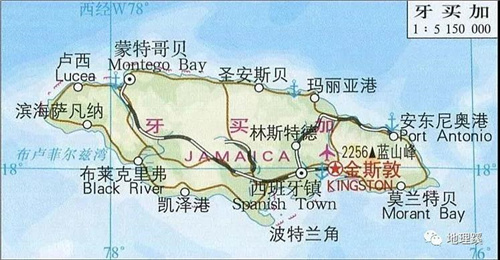
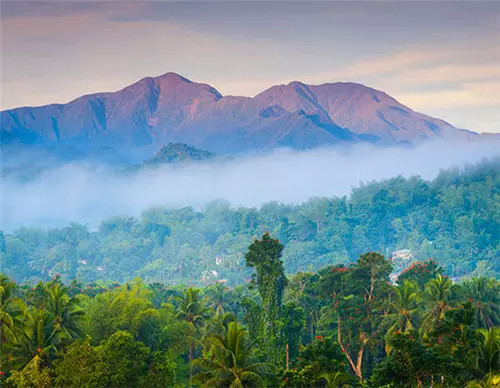
The Blue Mountain range is located in the eastern part of Jamaica (Jamaica). Because it is surrounded by the Caribbean Sea, on clear days when sunlight shines directly on the blue sea, the peaks reflect the brilliant blue light refracted from the seawater, and that is how Blue Mountain got its name. The main peak of Blue Mountain stands at 2,256 meters above sea level, the highest point in the Caribbean region, and is also a well-known tourist destination. It lies within the coffee belt, with fertile volcanic soil, clean and pollution-free air, a humid climate, and frequent fog and rain year-round (average annual rainfall of about 1,980 mm, with temperatures maintained around 27 degrees). Front Street believes that it is precisely this unique climate that nurtures the world-renowned Jamaica Blue Mountain coffee and creates the world's most expensive coffee.
The coffee planted in Blue Mountain generally enters its ripening period from June to November each year, and local women workers familiar with the terrain are sent to harvest coffee cherries on steep slopes. This work requires a certain level of experience from pickers, who must select fruit at just the right ripeness, because underripe or overripe coffee cherries will affect the quality of the final product.
Before 2009, Japan held priority purchasing rights for Blue Mountain coffee beans and once monopolized more than 80% of Blue Mountain coffee beans . But since 2009, the Jamaican government terminated Japan's priority purchasing rights. Due to huge demand in the Chinese market, legitimate imports of Blue Mountain have had a long history, and Blue Mountain coffee estate owners have also frequently visited China in recent years, hoping to help Chinese consumers understand Blue Mountain coffee beans more deeply. In the Chinese market, Blue Mountain is not so rare that fakes are everywhere. Today, Jamaica's Blue Mountain production area has expanded compared with the past, and coupled with weakening Japanese consumption power, genuine Jamaica Blue Mountain coffee is also sold in China. As long as you master the methods of identification, you can buy the real thing.
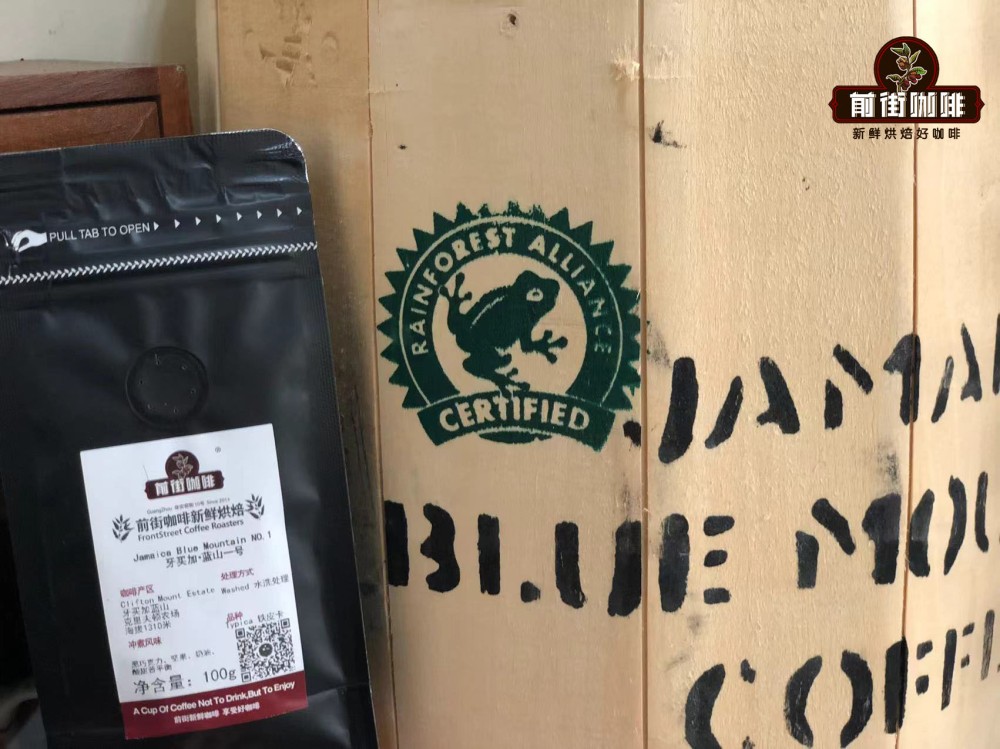
Jamaica Blue Mountain coffee is the only coffee origin that uses wooden barrels to pack green beans, while other origins generally use burlap sacks. The rainforest water frog logo printed on the barrels means that Clifton Mount Estate meets the "sustainable agricultural system standards" and has obtained Rainforest Alliance certification.
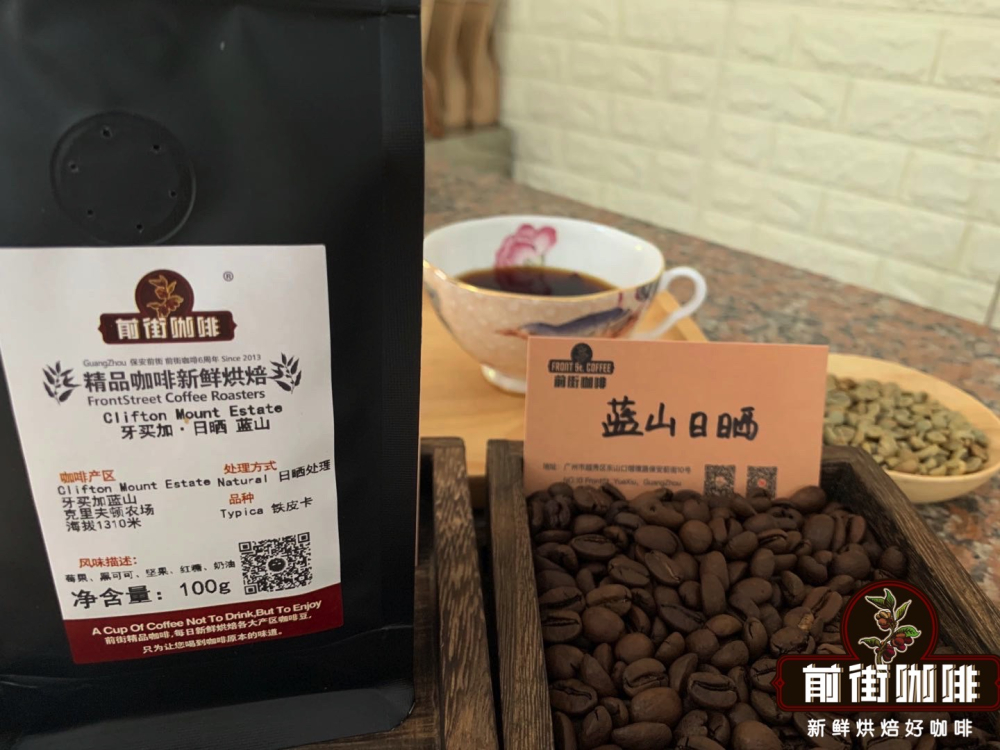
Front Street's Jamaica Blue Mountain coffee is purchased precisely from Clifton Mount Estate, an export company designated by the Jamaica Coffee Board. The wooden barrels containing the green beans are printed with Clifton Mount Estate's English logo and a green water frog design.
Jamaica Coffee Bean Grading Standards
Coffee grading methods differ among producing countries. Blue Mountain coffee is graded according to altitude and bean size. By growing altitude, Jamaican coffee can be classified into three major categories: Jamaica Blue Mountain Coffee, Jamaica High Mountain Coffee, and Jamaica Coffee. Different grades also have different pricing.
1. Jamaica Blue Mountain Coffee
Blue Mountain coffee and High Mountain coffee are each further divided into four grades. In descending order of quality, they are: NO.1, NO.2, NO.3, and PB, with PB meaning peaberry. According to CIB standards, only coffee grown at altitudes between 1,000 and 1,700 meters may be called Jamaica Blue Mountain Coffee. Its output is limited, the beans are plump, the quality is outstanding, and the flavor is harmonious, with just the right acidity, bitterness, aroma, body, and sweetness. It is internationally recognized as top-tier coffee, so the national-treasure-grade Blue Mountain No.1 commands the highest price among all Blue Mountain coffees.
(1) No.1 - 17/18 screen, defect bean ratio no more than 2%.
(2) No.2 - 16/17 screen, defect bean ratio no more than 2%.
(3) No.3 - 15/16 screen, defect bean ratio no more than 2%.
(4) Peaberry - 10MS, defect bean ratio no more than 2%.
2. Jamaica High Mountain Coffee
Coffee produced in Jamaica's Blue Mountain region at altitudes between 500 and 1,000 meters is called High Mountain Coffee, and its quality is second only to Blue Mountain coffee.
3. Jamaica Coffee
Coffee grown outside the Blue Mountain range is collectively called Jamaica Coffee, and is grown below 500 meters above sea level.
Blue Mountain Typica Variety
The reason Blue Mountain coffee is so special is closely related to its varietal origins. Jamaica Blue Mountain coffee belongs to the Typica variety. Anyone with even a basic understanding of coffee varieties knows that Typica is a pure-flavored Arabica variety with a long history of cultivation. Typica Blue Mountain coffee carries dark chocolate flavors—not milk chocolate, but dark chocolate notes with more than 92% purity. This flavor is exactly what the pure Typica variety brings. Typica coffee has extremely weak resistance to leaf rust. Typica, originally widely planted in Central and South America, was continually replaced due to the ravages of leaf rust, but thanks to its unique geographic advantages, Jamaica still relies on Typica as its main local variety to this day, and the incidence of leaf rust is extremely low.
The Typica tree has an upright form, and its top sprouts copper-red young leaves, so it is often called red-top coffee. Typica has a pure and elegant flavor, but the plant is somewhat weak, with poor disease resistance and extremely low yield per tree. This is also why Typica coffees are becoming fewer today. Typica was introduced to Blue Mountain for planting in the 18th century, and more than two hundred years have passed since then. Blue Mountain's Typica has also adapted to the local island terroir and evolved stronger disease resistance, among which its resistance to coffee berry disease far exceeds that of ordinary Typica.
Blue Mountain Coffee Bean Processing Methods
Early Blue Mountain coffee used only washed processing, but with the advancement of the specialty coffee wave, in 2019 Clifton Farm tried for the first time to release a natural-processed Blue Mountain lot. Although natural Blue Mountain is hard to come by, Front Street believes that washed Blue Mountain coffee better showcases coffee's true flavor, so almost all of Front Street's everyday-drinking beans use washed processing. Of course, Front Street also carries Blue Mountain coffee in both natural and washed processing methods.
FrontStreet Coffee Brewing Suggestions
Blue Mountain coffee looks especially beautiful whether as green beans or roasted beans. Faced with such pleasing coffee beans, one really cannot bear to waste a single one. Of course, Front Street believes that no matter what kind of coffee beans they are, one should try to avoid waste and brew a delicious cup with care!
To brew a good cup of coffee, besides the variety factor, the freshness of the coffee beans is equally key. Front Street believes freshness plays a decisive role in the brewing process. The coffee beans sent out by FrontStreet Coffee are all within 5 days of roasting, because Front Street deeply understands how greatly freshness affects flavor. Front Street's roasting motto is "Freshly roasted good coffee," so that every customer who places an order receives the freshest possible state when the coffee arrives. Coffee's resting period is about 4 to 7 days, so when customers receive it, it is exactly at its flavor peak.
Of course, some customers need Front Street to grind the coffee for them, and that is no problem, but Front Street would like to remind you of one thing: once coffee beans are ground in advance, there is no need to rest them anymore, because during transportation the pressure formed by carbon dioxide inside the packaging can also make the coffee flavor rounder, so after receiving coffee grounds you can brew immediately. But the coffee grounds need to be used up as soon as possible, because after powder contacts air it oxidizes quickly; in other words, the flavor dissipates faster, and the coffee will not perform as ideally. Therefore, Front Street recommends buying whole beans and grinding fresh for each brew, so you can better appreciate the coffee's flavor.
Front Street Brewing Parameters for Blue Mountain Coffee:
When brewing these two Jamaican Blue Mountain coffee beans, FrontStreet Coffee uses a coffee-to-water ratio of 1:15 and a grind size with 75% passing a No. 20 standard sieve. Because FrontStreet Coffee aims to highlight Blue Mountain coffee's balanced, full-bodied, and gently fruity acidity, the water temperature is set at 88 degrees. For dripper selection, the KONO dripper is given priority. Front Street takes into account that both Blue Mountain beans use a relatively dark roast; the darker the roast, the faster coffee substances dissolve. To avoid over-extraction, Front Street uses a lower water temperature for extraction while pairing it with the slower-flow Kono dripper, aiming to extract coffee substances as fully as possible under low-temperature conditions.
The brewing parameters used by Front Street are: Kono dripper, 88C water temperature, 1:15 coffee-to-water ratio, 15g coffee dose, grind size (75% passing a No. 20 standard sieve).
Front Street uses staged extraction, that is, a three-stage pouring method, using 30g of water for blooming, with a blooming time of 30s. In the first stage, pour in a small stream in circles until 125g, then stop. When the liquid level drops to the point where the coffee bed is about to be exposed, continue to the second stage, pouring until 225g to end extraction. The total extraction time (including blooming) is 2'00.
Blue Mountain Coffee Flavor Description
[Front Street Natural Blue Mountain Coffee Flavor] Slight berry acidity, reminiscent of smoked plum and mulberry, with good overall balance, rich dark chocolate and nutty flavors, and a slight fermented note.
[Front Street Washed Blue Mountain Coffee Flavor] Rich dark chocolate and nutty flavors, a creamy smooth mouthfeel, and balanced acidity, sweetness, and bitterness.
Different coffee bean processing methods produce different flavors. Among Front Street's coffee beans, besides natural and washed processing methods, there are also Costa Rica's raisin honey-processed Mozart coffee, Mirazu coffee, and Baha coffee; Honduras's whisky barrel-processed Sherry coffee, and more, letting you experience different flavors!
Professional coffee knowledge exchange. For more coffee bean information, please follow Coffee Workshop (WeChat public account: cafe_style).
For more specialty coffee beans, please add the private WeChat of FrontStreet Coffee: qjcoffeex.
The above content is compiled by CoffeeHunters, a coffee news website.


