







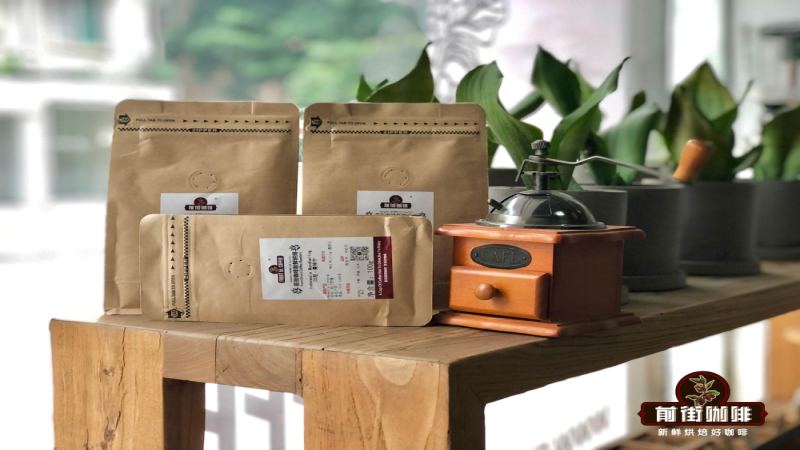
As the world's largest coffee producer, Brazil is renowned for its smooth-bodied coffee beans and soft-bean flavor profile. From the introduction of coffee seeds to Brazil in the 18th century, to the replacement of Typica by Bourbon, and the birth of the pulped natural process, this land has nurtured a rich diversity of coffee varieties and processing methods. The two Brazilian Bourbons on Front Street Coffee's bean list—Cerrado Red Bourbon and Queen Farm Yellow Bourbon—are processed using pulped natural and natural methods respectively, presenting classic flavors of nuts, chocolate, and caramel. This article takes you deep into the varietal characteristics and processing secrets of Brazilian coffee.
For more specialty coffee knowledge, please follow: Front Street Coffee ( Frontsteet Coffee )
Brazil is the world's largest coffee-producing country, offering a wide range of bean grades and varieties. Brazil's domestic coffee consumption accounts for about one-third of the global total, and it also plays an important role in international coffee trade. Although Brazil faces natural disasters far more frequently than other producing regions, its vast planting area is enough to offset these losses. However, whenever news of any natural or man-made disaster emerges from Brazil, prices on the international coffee futures market fluctuate accordingly.
Brazilian coffee beans being able to achieve their status today is the result of over three hundred years of continuous cultivation. Coffee originally originated in Ethiopia, and as Europeans' demand for coffee continued to rise and their footprints expanded, coffee trees gradually completed a full circle of dissemination around the globe.
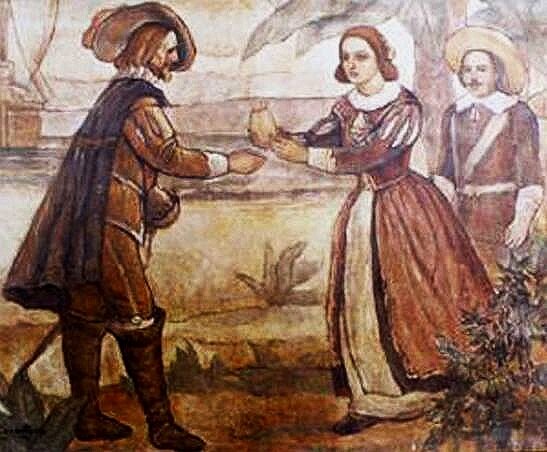
The cultivation history of Brazilian coffee beans can be traced back to the 1720s. At that time, a Portuguese naval officer was sent to Guiana Island to handle a land dispute between France and the Netherlands, but he developed romantic feelings for the wife of the local governor of Cayenne. Upon parting, the governor's wife gave him a bouquet of flowers as a token of affection, with coffee tree seeds hidden within the bouquet. After coffee arrived in Brazil, it quickly adapted to the local climate, grew vigorously, and gradually spread across most states of Brazil.
The role of the United States cannot be overlooked in the rapid rise of Brazilian coffee bean production. To break free from British royal rule, the United States dumped all the tea that the British loved and designated coffee as a patriotic beverage. As the number of American coffeehouses increased, demand for Brazilian coffee beans also surged dramatically. Coffee created considerable economic revenue for Brazil, and railways were even built directly to coffee plantations, greatly improving transportation efficiency.
Afterward, the American Civil War broke out, and coffee became a military necessity, further expanding demand for Brazilian coffee beans. However, at that time Brazil's main coffee variety was Typica, which, although elegant in flavor, had low yields. So people began searching for high-yield coffee varieties, and the Bourbon variety from Réunion Island was thus introduced to Brazil. By the 1870s, Bourbon had become the primary cultivated variety of Brazilian coffee.
On Front Street Coffee's bean list, there are two coffees from Brazil, both belonging to the Bourbon variety. Brazilian coffee is smooth on the palate with gentle acidity; this soft-bean flavor has long been widely known and is also a characteristic taste of Brazilian coffee beans. This is related to Brazil's widespread use of sun-exposed cultivation—coffee cherries need to absorb a certain amount of heat during growth, and coffee trees directly exposed to sunlight allow the cherries to acquire sufficient heat and ripen in a shorter time, resulting in softer-textured coffee beans. If you grind Brazilian coffee beans and Ethiopian coffee beans separately with a hand grinder, you can clearly feel less resistance when grinding the Brazilian beans.
On Front Street's bean list, Brazil's Red Bourbon is included in the daily staple bean series. The original intention behind Front Street's daily staple bean series was to allow many coffee novices to quickly grasp the basic flavors of each producing region at a higher cost-performance ratio, thereby discovering the flavor characteristics of each region. Front Street's Brazilian daily staple bean is sourced from Minas Gerais, Brazil's largest coffee-producing state, and its sub-region Cerrado is the first coffee-producing region in Brazil to obtain Brazilian origin coffee certification.
The daily staple bean series mostly uses the washed processing method. Through years of cupping many coffee beans, Front Street has found that washed coffee beans have flavors closer to the basic flavors of the producing region, while natural-processed beans have more fruity notes in the aroma, richer sweetness, and a heavier body.
Front Street Coffee (FrontStreet Coffee) Brazil Red Bourbon Coffee Beans
Region: Cerrado, Minas Gerais, Brazil
Altitude: 1000 meters
Variety: Red Bourbon
Processing Method: Pulped Natural
However, the Brazil Red Bourbon coffee beans in Front Street's daily staple bean series use its traditional pulped natural process. This processing method emerged because in the 1990s, Brazilian authorities wanted to export more coffee beans and intended to adopt the washed processing method, but Brazil lacked sufficient water resources and funds locally, so the pulped natural process (Pulped Natural) was derived. The skin and pulp of the coffee cherry are removed, and the sticky parchment beans with the mucilage layer still attached are sun-dried, thereby shortening the drying time needed and also improving the quality of the green beans.
Sharp-eyed readers should be able to notice that Brazil's pulped natural process is very similar to the later honey process. In fact, Costa Rica's famous honey process was also derived from borrowing Brazil's pulped natural process.
Because Front Street's Red Bourbon coffee beans use the pulped natural process, some mucilage is retained for drying, allowing more sugars to penetrate into the green coffee beans. This Brazilian Cerrado coffee bean characteristic also features a rich nutty aroma and a creamy, silky, full-bodied mouthfeel.
The other coffee on Front Street's bean list comes from one of Brazil's other oldest coffee-producing regions—São Paulo State. This coffee from São Paulo State is the Yellow Bourbon coffee bean from Queen Farm. Since the first Cup of Excellence (COE) competition in Brazil in 1999, Queen Farm has won awards many times over the years, with a record of 12 awards in 7 years.
Front Street Coffee (FrontStreet Coffee) Brazil Queen Farm Coffee Beans
Region: Mogiana, São Paulo, Brazil
Farm: Queen Farm
Altitude: 1400 meters—1950 meters
Variety: Yellow Bourbon
Processing Method: Natural
The farm has a planting area of over 280 hectares, but more than 200 hectares are planted with the lower-yield but better-flavored Yellow Bourbon variety. Yellow Bourbon is a natural mutation of Red Bourbon, discovered in São Paulo State in 1871. Later, scientific verification found that this variety has a thicker mucilage layer, and the mucilage layer is rich in sugars.
This Yellow Bourbon coffee bean from Queen Farm uses the natural processing method. Compared with Brazil's traditional pulped natural method, the natural process requires more labor and time costs, and large-scale natural processing makes it difficult to guarantee the quality of green coffee beans. Queen Farm uses small-scale natural processing, with workers frequently turning the cherries to minimize the chance of unpleasant acidity and fermented flavors, while also placing the coffee cherries on raised beds away from the ground to avoid picking up muddy flavors. Naturally processed Yellow Bourbon makes the already sweet Yellow Bourbon coffee even sweeter and more delicious.
When roasting these two Brazilian coffees, Front Street uses a medium-dark roast level to highlight the soft acidity, nutty notes, and full body of Brazilian coffee beans. When brewing, Front Street recommends using a water temperature of 88°C, a medium-coarse grind size, and a KONO dripper with a three-pour method.
Dripper: KONO Dripper
Water Temperature: 88°C
Dose: 15 grams
Coffee-to-Water Ratio: 1:15
Grind Size: 75% passing through China Standard No. 20 sieve
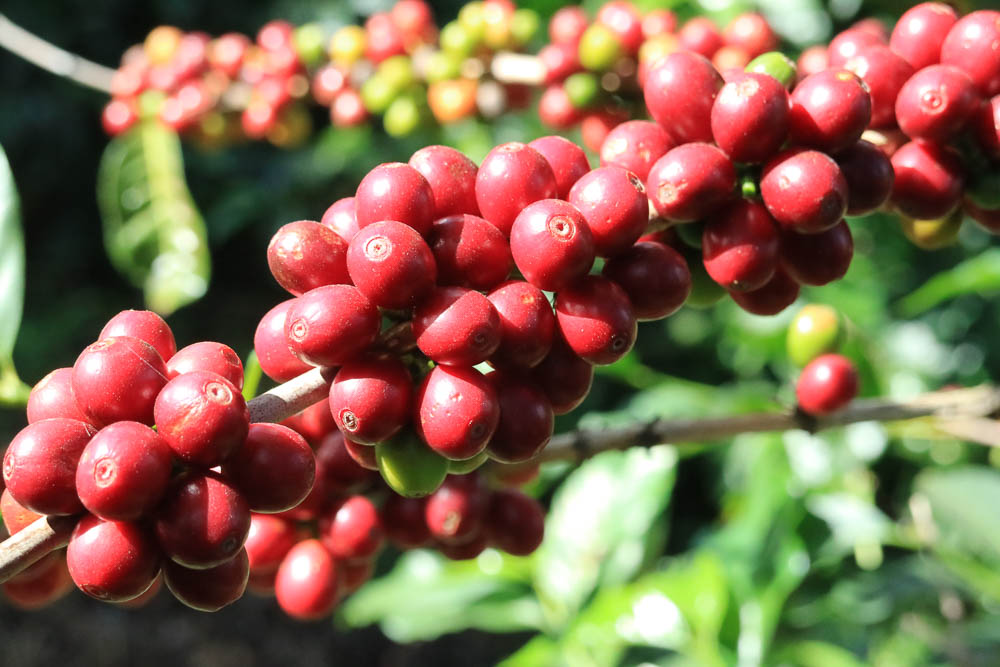
[Brazil Red Bourbon] Rich nutty and chocolate flavors, caramel sweetness, smooth and silky mouthfeel, overall balanced.
[Brazil Queen] Rich nutty flavor, with clean sugarcane sweetness, a faint lemon aroma, dark chocolate finish, rich and lively layers, smooth and rounded mouthfeel.
The above content is compiled by CoffeeHunters, a coffee news website.


