







Yirgacheffe is one of Ethiopia's most recognizable coffee regions, and its fresh, bright citrus notes and elegant floral aroma are deeply favored by coffee lovers. Starting from the origin environment of Front Street Yirgacheffe, this article sorts out how Ethiopia's unique highland terrain and climatic conditions nurture high-quality Arabica coffee, and offers an in-depth analysis of the decisive influence of the washed processing method on the flavor formation of this region. At the same time, the article also provides the complete pour-over parameters and three-stage pouring steps for Front Street washed Yirgacheffe, helping readers reliably reproduce at home that cup of clean, sweet, and lively Yirgacheffe with floral and fruity aromas.
Introduction to the Origin of Front Street Yirgacheffe
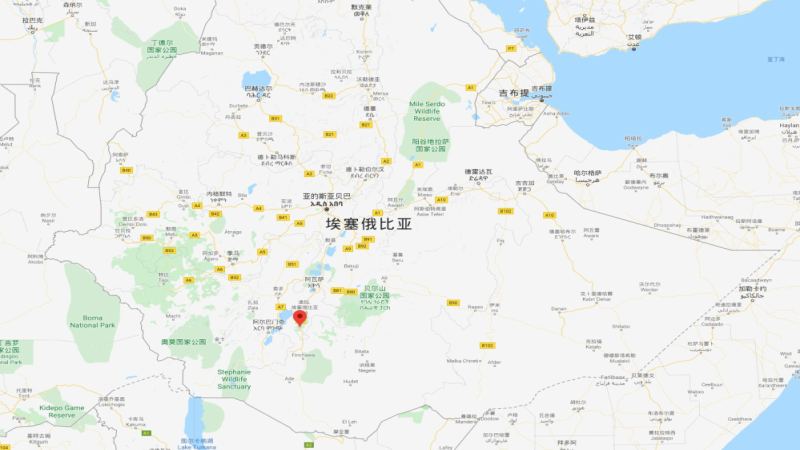
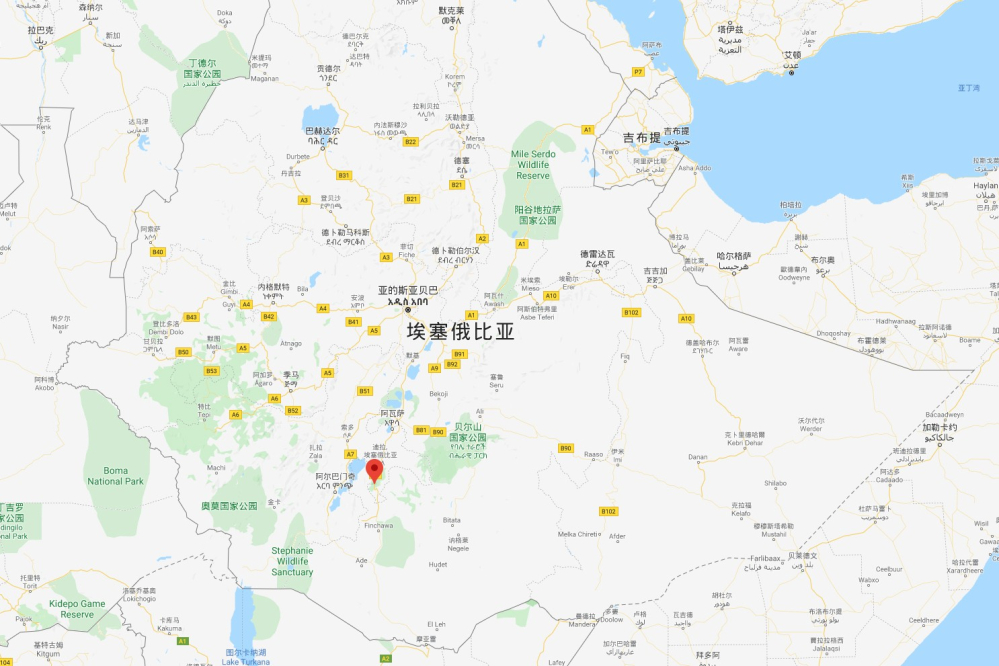
Front Street Yirgacheffe coffee beans come from Ethiopia in eastern Africa, with the specific origin located in a small town of the same name—Yirgacheffe, which is also the source of the coffee bean's name. Yirgacheffe is a renowned coffee region in Ethiopia, located in a small town in the Sidama administrative area of the Gedeo region in the south of the country.
Unlike many African countries, although Ethiopia was invaded by Italy during World War II, it was not completely swallowed by the wave of colonialism. To this day, Ethiopia remains one of the least developed countries in the world, with a relatively weak industrial base and an economy dominated by agriculture and animal husbandry, while the damage caused by human development activities to the natural environment is relatively limited. Perhaps precisely because of this, the local naturally superior ecological conditions have been well preserved, which is also an important reason why Ethiopia is regarded as the cradle and homeland of native coffee varieties. Against such a broader backdrop, it is only natural that Front Street Yirgacheffe coffee beans with a fresh and charming flavor can be produced.
As the birthplace of coffee, Ethiopia has its own unique terrain and climate. The country is mainly composed of mountains and plateaus, with most areas belonging to the Ethiopian Plateau. The East African Rift Valley runs through the entire territory from north to south, with an average elevation of nearly 3,000 meters, and it has long been known as the "Roof of Africa."
Ethiopia's climate presents diverse features due to its large span of latitude and altitude. Although it is located in the tropics, temperature differences across regions are quite obvious, with temperatures roughly ranging from 9.7°C to 25.5°C and an average annual temperature of about 16°C. High altitude provides ideal growing conditions for high-quality Arabica coffee, and the temperature range of 9.7°C to 25.5°C also happens to cover the 14°C to 24°C growing temperature required for high-quality coffee beans. In addition, the major rainy season from June to September each year and the minor rainy season from February to May bring abundant rainfall to the coffee trees. The combined effect of these gifts from nature together constitutes a very favorable growing environment for coffee trees.
Front Street Yirgacheffe grows under such exceptionally favorable conditions, and therefore accumulates abundant aroma precursors, waiting for the roasting and brewing stages to release them one by one.
Front Street Yirgacheffe Washed Processing
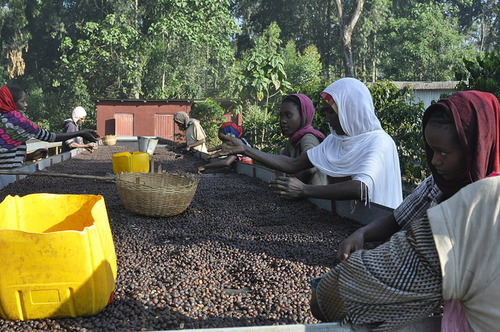
The reason Front Street Yirgacheffe can present such a distinctive style is, in addition to its innate terroir conditions, to a large extent thanks to washed processing. According to Front Street's understanding, Ethiopia generally has high elevations and abundant sunshine, which was originally very suitable for drying coffee cherries directly in the sun, and early Yirgacheffe was also mainly known for producing natural coffee. The traditional natural method usually spreads the cherries directly on the ground to dry, with neither sorting nor flotation, resulting in uneven coffee bean quality and a lengthy processing cycle, often requiring more than ten or even twenty days. It was not until the 1970s, when the first washing station in Sidama State was built in the town of Yirgacheffe, that more washed processes were gradually introduced locally.
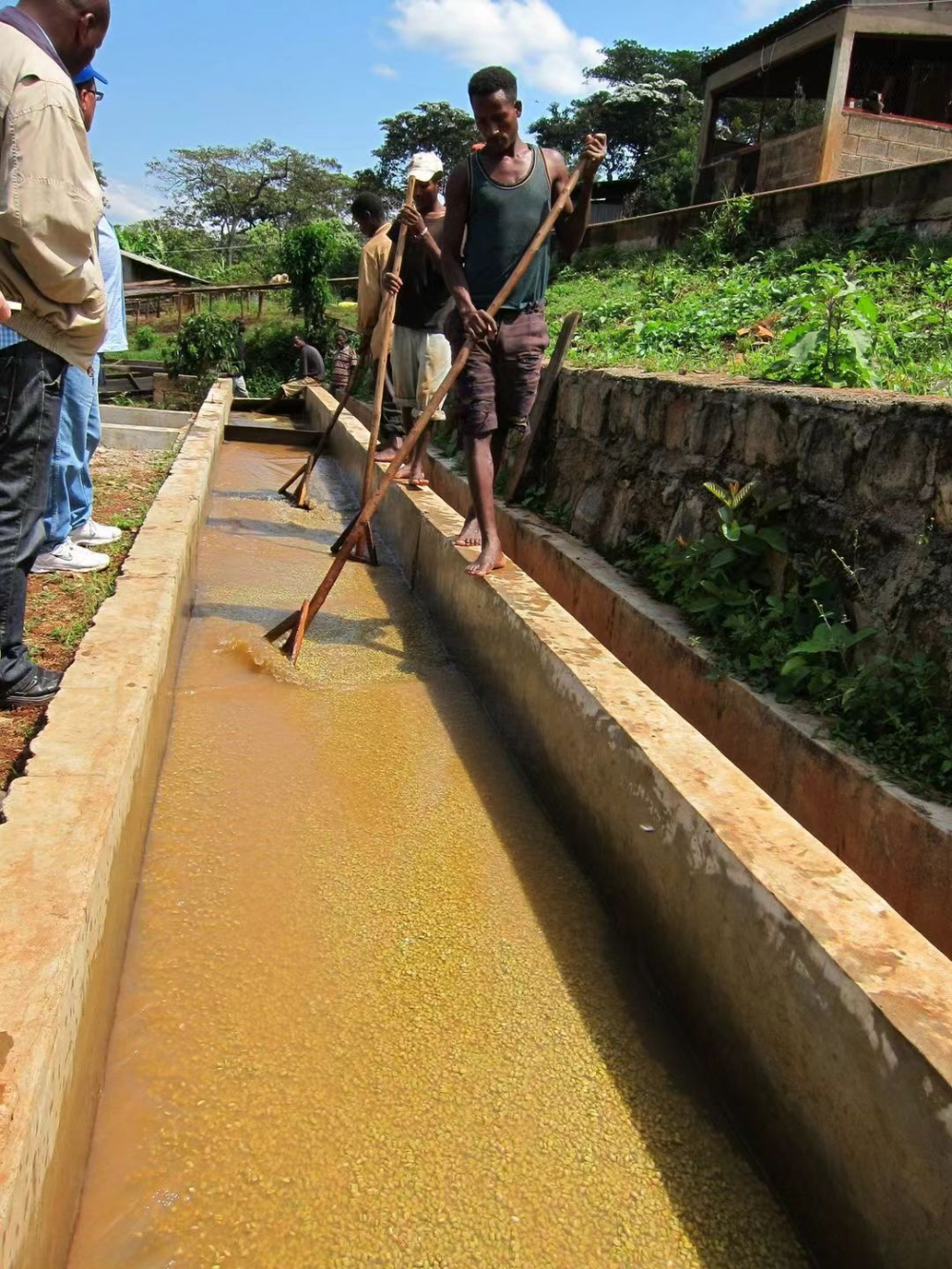
Farms using the washed method must build washing pools and be able to continuously introduce fresh water, so production costs are relatively higher. During processing, the fermented beans are placed in the pool and pushed back and forth, using the friction between the beans and the force of the water to wash the coffee beans until they are smooth and clean. Impurities and defective beans are removed at every stage, so the quality of green beans is more uniform, and the final transaction price is also higher than that of coffee processed by natural drying. Washing not only greatly reduces the defect rate of coffee, but also brings Front Street Yirgacheffe fresh citrus notes and elegant white floral aromas, with an overall flavor that is bright, delicate, and clean. Both Front Street Yirgacheffe and Front Street Gutingding use washed processing and carry the classic Yirgacheffe flavor profile, suitable for pour-over, cold brew, French press, and various other brewing methods.
After medium-light roasting, Front Street washed Yirgacheffe presents its unique citrus flavor, with a pleasant sweet-and-sour taste on the palate. With the development of cultivation techniques and the increasing maturity of processing methods, Front Street Yirgacheffe currently mainly uses two processing methods: washed and natural.
The image above shows Front Street washed Yirgacheffe, and you can see that its color is blue-green and its appearance is very clean. Through cupping comparison, Front Street Coffee (FrontStreet Coffee) found that Front Street washed Yirgacheffe coffee beans have a clean and bright mouthfeel, with a honey-like sweetness, and relatively lively floral and fruity flavors.
Yirgacheffe Pour-Over Parameters
Dripper: V60 Water temperature: 90-91°C Dose: 15g Coffee-to-water ratio: 1:15 Grind size: fine granulated sugar size (sieve to 80% with a No. 20 sieve)
Three-stage pouring: First, wet the coffee bed with twice the amount of water as the coffee grounds, forming a dome and allowing it to bloom for 30 seconds; then pour in a small stream in circles from the inside out, pausing in stages at 125g; when the coffee bed drops to half the height of the dripper, continue pouring the third stage with the same fine stream to 225g, until all the coffee liquid has finished filtering, then remove the dripper, with a total time of about 2 minutes. After the coffee in the dripper flows into the server, remove the dripper, shake the coffee liquid in the sharing server evenly, and you can begin tasting the flavor of Front Street Yirgacheffe starting from high temperature.
The above content is compiled by CoffeeHunters, a coffee news website.


