







The AeroPress was invented by a frisbee company, yet it unexpectedly became a darling of the specialty coffee world, even giving rise to its own world championship, the WAC. It uses manual pressure to quickly produce a full-bodied cup, and it's portable, easy to clean, and highly customizable. This article walks you through the AeroPress's origin story, how it differs from the French press, the growth of the WAC competition, and shares a complete inverted brewing method using Front Street Coffee's Kenya Little Tomato beans, including dose, grind size, water temperature, and timing, so you can easily recreate a cup full of juicy fruitiness at home.
For more specialty coffee knowledge, follow our WeChat official account: Front Street Coffee (FrontStreet Coffee)
The AeroPress is no flash in the pan. Its appearance is vastly different from common coffee equipment, and the company that invented it actually makes frisbees as its main business. Yet today, the AeroPress not only has a large loyal user base worldwide but has also spawned the World AeroPress Championship (WAC), and even a documentary dedicated to it.
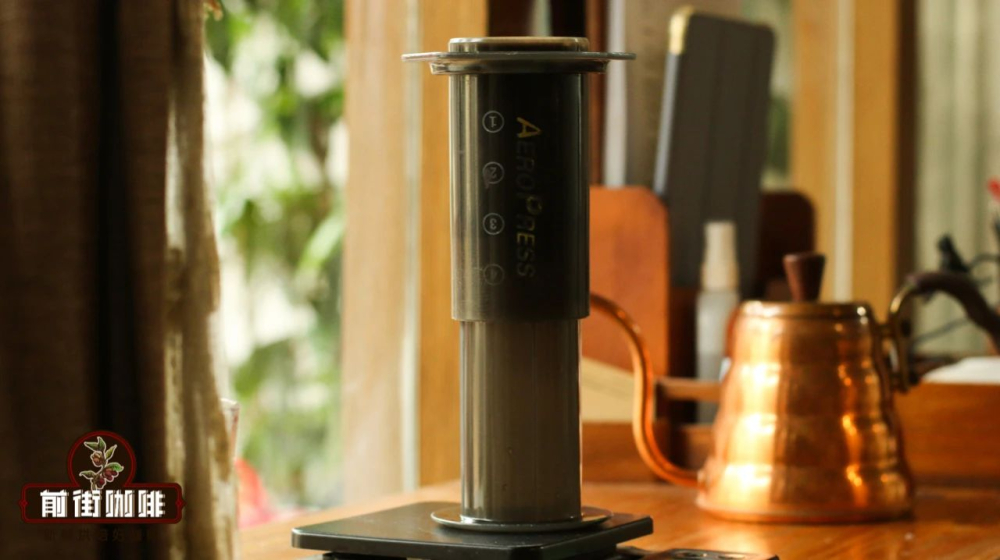
This compact device, made of just two parts, can quickly produce a rich-bodied coffee—just push hot water through the filter, and extraction is complete. Its design was inspired by the espresso machine, the difference being that it relies entirely on manual pressure rather than electricity or a lever.
The AeroPress also bears some resemblance to the French press, though the French press isn't particularly favored in specialty coffee circles. Additionally, the AeroPress's recommended brewing temperature and time are notably lower than those of the French press. In other words, although the AeroPress is now quite widespread, when it first debuted in 2005, it was truly a unique brewing device. AeroPress company owner Alan Adler initially developed the product with an engineer's mindset, and to eliminate coffee's bitterness, he decided to start by shortening extraction time.
He discovered that shortening extraction time required pressure, so he designed a sealed chamber that generates pressure through pushing, allowing users to complete brewing more quickly. (These days, though, AeroPress recipes are incredibly diverse, with some extraction times even longer than conventional methods.)
At first, many specialty coffee professionals were skeptical, viewing the AeroPress company as merely a toy manufacturer rather than a producer of revolutionary coffee equipment. But over time, this perception began to shift. Alan responded to doubts with actual coffee samples, and word gradually spread. After all, the most direct way to judge the AeroPress is to let the flavor in the cup speak for itself.
Yet with so many brewing devices on the market, why does the AeroPress stand out?
Coffee is a global movement, with brewing methods flourishing all over the world, and the AeroPress can make delicious coffee in just one minute while being easy to clean, convenient to carry, budget-friendly, and versatile. There may be other reasons for its popularity, but perhaps it's precisely its capacity for endless brewing experimentation that ultimately gave rise to its own world championship.
Brewing time, pressing speed, coffee dose, coffee-to-water ratio, water temperature, upright or inverted use, and so on... The AeroPress offers an incredibly rich range of possibilities, with different approaches producing vastly different flavor profiles.
The specialty coffee world has many professional competitions, such as the World Barista Championship (WBC), World Brewers Cup (WBrC), World Latte Art Championship (WLAC), World Roasting Championship (WRC), and various green bean evaluation competitions. But in 2008, a brand-new competition was born in Oslo, Norway—someone designed the AeroPress into a lighthearted and fun event called the WAC. Despite high expectations, only three people competed at the time, with the founders being Tim Varney and renowned barista Tim Wendelboe. (Today they still run the competition alongside Tim Williams.)
Like the AeroPress itself, this competition gradually gained fame and became widely known in specialty coffee circles. By 2018, 3,157 people from 61 countries had attended in person, and online broadcast viewership reached 68,265.
The AeroPress can be used in countless ways, and competitors constantly discover new techniques and fine-tune existing ones—a completely different path from the Barista Championship, which pursues peak espresso machine performance. The WAC is an event for everyone; anyone can participate, even without the deep pockets and green bean resources of a coffee company. It's a competition full of creativity and experimentation, and these ideas and experiments in turn inspire even more delicious coffee.
Let's brew a cup of coffee with the AeroPress
The bean chosen for this session is "Front Street Kenya Little Tomato," which when pour-over brewed presents bright acidity reminiscent of smoked plum and cherry tomato, along with the sweetness of snow pear!
Dose: 18g Grind setting: EK43s at 7 clicks / 90% pass-through rate on a No. 20 sieve (finer than a standard pour-over grind) Coffee-to-water ratio: 1:11 (about 200ml) Water temperature: 90°C Extraction method: inverted

We can place two circular filter papers on the filter cap in advance, then wet them with water to adhere. (If you don't have circular filter papers, you can cut them from regular filter paper.)
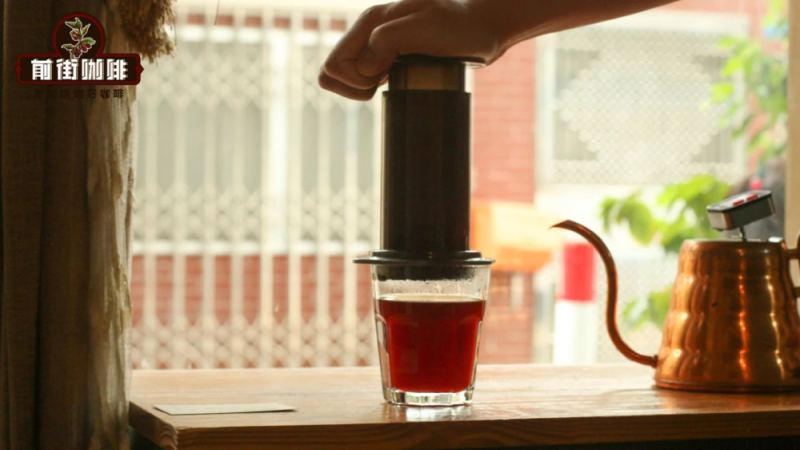
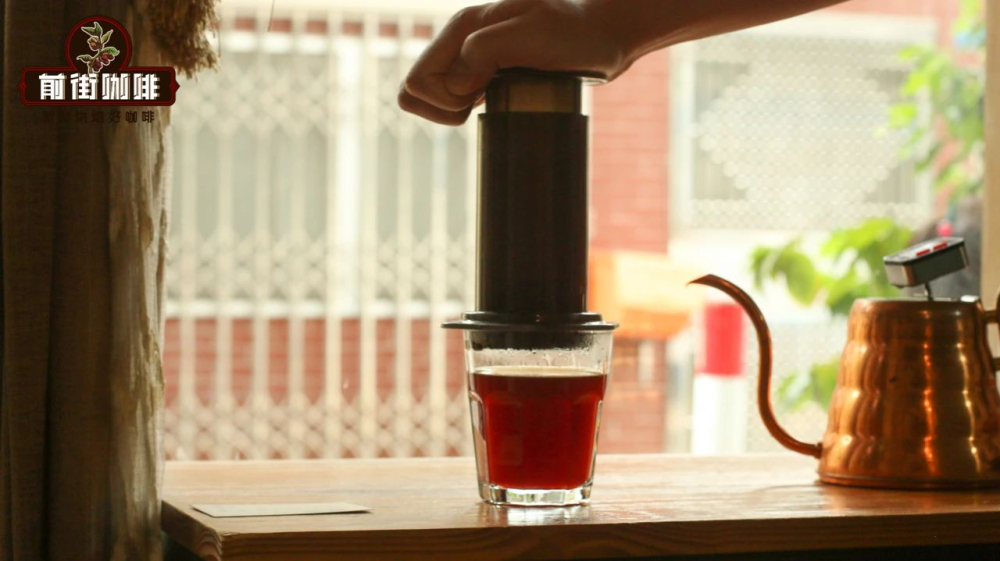
1. Assemble the plunger and the chamber, then push the plunger down to around mark ④ and flip it upside down! 2. Add the ground coffee, then pour in an equal amount of hot water and start the timer! 3. Use a stirring stick to stir the coffee grounds in the chamber for a full ten seconds. (Slowly in circles) 4. Attach the filter cap with the filter paper fitted onto the chamber. 5. Then cap it onto your prepared container. 6. When the timer hits one minute, flip it over and begin pressing down to "push out" the coffee.
And just like that, extraction is complete, taking about 1 minute and 20 seconds. The inverted method offers greater consistency compared to the upright method, greatly reducing the difficulty for beginners~ And the Kenya it extracts tastes sweet and tangy, with a wonderfully full-bodied juiciness—very nice~
The above content is compiled by CoffeeHunters, a coffee news website.


