








In the large family of espresso drinks, different ratios of milk to espresso give rise to a wide range of varieties such as latte, cappuccino, and flat white, while the piccolo latte is a miniature latte that is compact in size yet rich in content. It derives from the Italian word meaning "small," and is typically served in a 3 to 4 ounce glass, prepared at a ratio of 1 part espresso to 2 parts milk, which fully releases the coffee's flavor without being overly intense. This article will provide a detailed explanation of the piccolo latte's origins, the suitable types of coffee beans, and the extraction and steaming techniques used by Front Street in practice, helping coffee enthusiasts recreate a well-balanced piccolo latte at home or in a café.
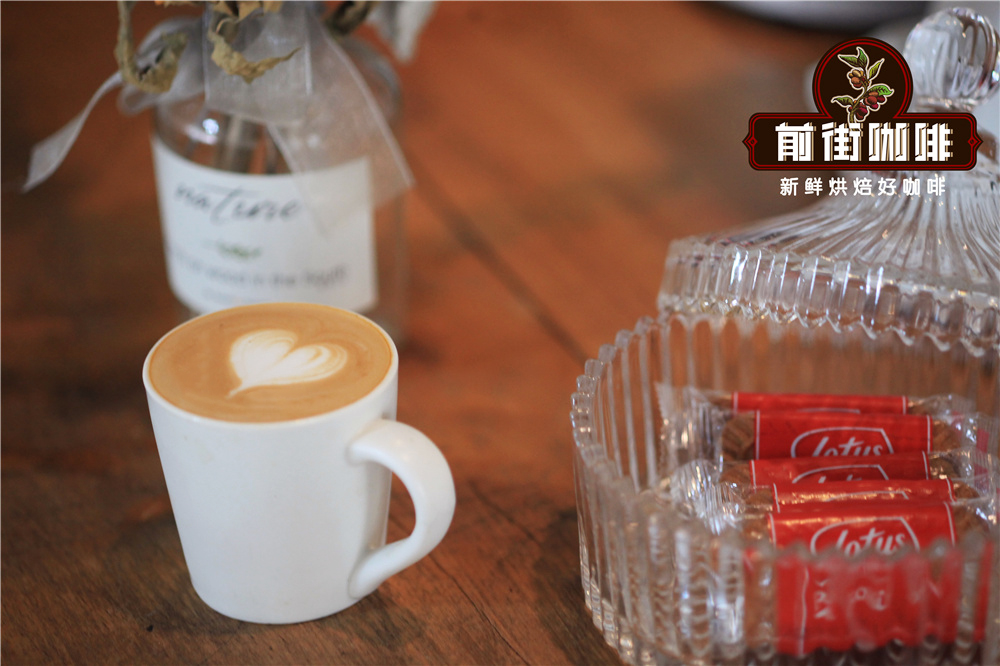
Espresso drinks encompass an extremely rich variety of categories, with milk and coffee combined in different ratios to produce distinctions such as latte, cappuccino, and flat white. The topic of this installment is the piccolo latte, a beverage that can be understood as a mini version of a latte.
What is a piccolo latte?
The English name for piccolo latte is "Piccolo Latte," in which "Piccolo" means piccolo in English, while in Italian it represents "small," so it is also affectionately called a small latte. However, if you merely treat it as a shrunken version of a latte, you would be underestimating the finer points behind the name "Piccolo Latte."
According to traditional practice, a piccolo latte is served in a glass with a capacity of 3 to 4 ounces (approximately 88 to 118 milliliters). Sasa, the 2015 World Coffee Champion, once described piccolo coffee this way: place 1 part espresso in a 3-ounce cup, then add two parts milk and a layer of fine, silky milk foam, which is a 1:2 ratio. Through the proper pairing of coffee and milk, the coffee's flavor is fully expressed while avoiding an overly heavy mouthfeel.
Why did the piccolo latte come into being?
The piccolo coffee was originally created because roasters or baristas wanted to test how well coffee beans blended with milk, but did not want to make a standard-sized latte every time (a latte is typically 300 milliliters, and extensive testing would consume a lot of milk), so this small-cup approach came into being. Later, it also became an ideal choice for customers who did not want to consume too much caffeine or did not want to drink a large latte.
How does Front Street make a piccolo latte?
Since Front Street has not included the piccolo latte on its output menu, the shop does not have 90-milliliter glasses on hand, so in actual practice a 90-milliliter ceramic cup is used instead to serve the piccolo latte.
According to the traditional definition of the piccolo latte recipe, it should be 1 part espresso (about 30 milliliters) paired with two parts milk and milk foam (about 60 milliliters). Front Street now uses weight units for measurement, because the volume of coffee crema fluctuates and the milliliter reading is not fixed, so calculating by grams is more precise.

When making piccolo coffee, it is recommended to choose medium-dark roasted espresso beans, as this type of bean has a more abundant caramel aroma and a mellow, full-bodied character that can form a sharp contrast with sweet milk, bringing a lasting sweet aftertaste. If you seek stable performance and good value, you can choose Front Street Classic Blend and Front Street Dark Cocoa Base Blend; they not only have rich crema but also give off an intense aroma like butter and roasted chestnuts;
If you prefer the unique aroma of single-origin beans, then Front Street Queen's Estate SOE and Front Street Sumatra · Front Street PWN Golden Mandheling SOE are recommended; after extraction they have a rich caramel and chocolate note, and the contrast is even more pronounced when paired with purified milk;
Front Street uses 1 part espresso (20 grams) as the base for the piccolo latte, which together with the crema comes to about 30 milliliters by volume. In the espresso-making step, Front Street uses a double coffee handle, tamping 20 grams of coffee grounds and extracting 40 grams of coffee liquid within 27 seconds, then dividing the coffee liquid evenly into two portions through the splitter.

When steaming the milk, Front Street uses a 350-milliliter milk pitcher, pours in 100 milliliters of milk (too little milk is difficult to steam), and steams it to a fine milk foam of 0.5 to 0.7 centimeters, then fully mixes the milk with the coffee and it is ready to serve. Since the cup capacity is only 90 milliliters, and there is already about 30 milliliters of coffee liquid, there is no need to worry that the ratio of coffee to milk will be thrown off.
The above content is compiled by CoffeeHunters, a coffee news website.


