







Yunnan coffee has long been in the public eye, but with so many producing regions and a confusing array of brands, which Yunnan coffee is actually worth trying? This article systematically sorts out the development of Yunnan Arabica coffee, from variety turnover and producing region distribution to grading standards and brewing details. You will learn about the origins of Typica and Catimor, the terroir differences among Yunnan's major producing regions, and Front Street Coffee's planting practices in Lincang. The article also shares in detail the brewing parameters and flavor performance of Front Street sun-dried Typica, helping you brew a balanced, sweet, and waste-free cup of Yunnan specialty coffee at home.
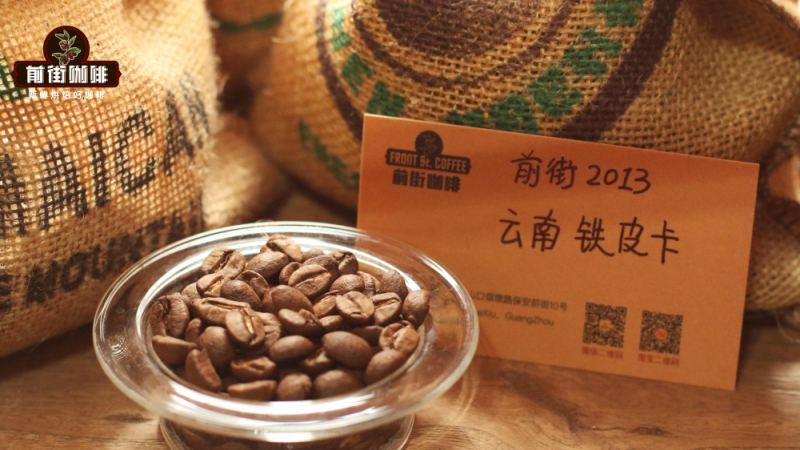
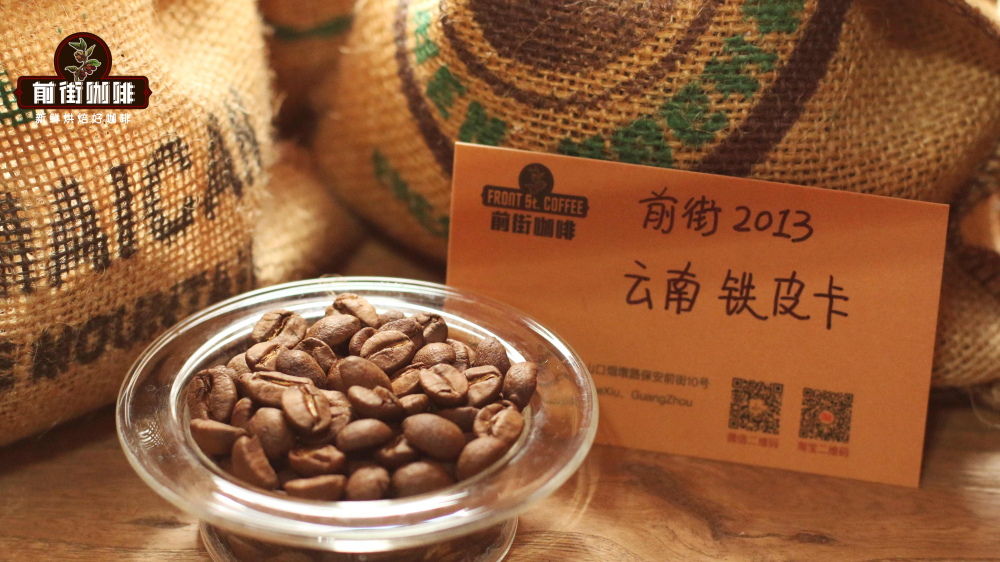
Yunnan coffee is now widely known, but with producing regions scattered and brands abundant, which brand of Yunnan coffee is more worth drinking? At Front Street, there are two representative Yunnan bean products: one is the washed Yunnan Arabica coffee of the Catimor variety, and the other is the sun-dried Cati coffee; there is also Front Street sun-dried Typica coffee.
Coffee Varieties
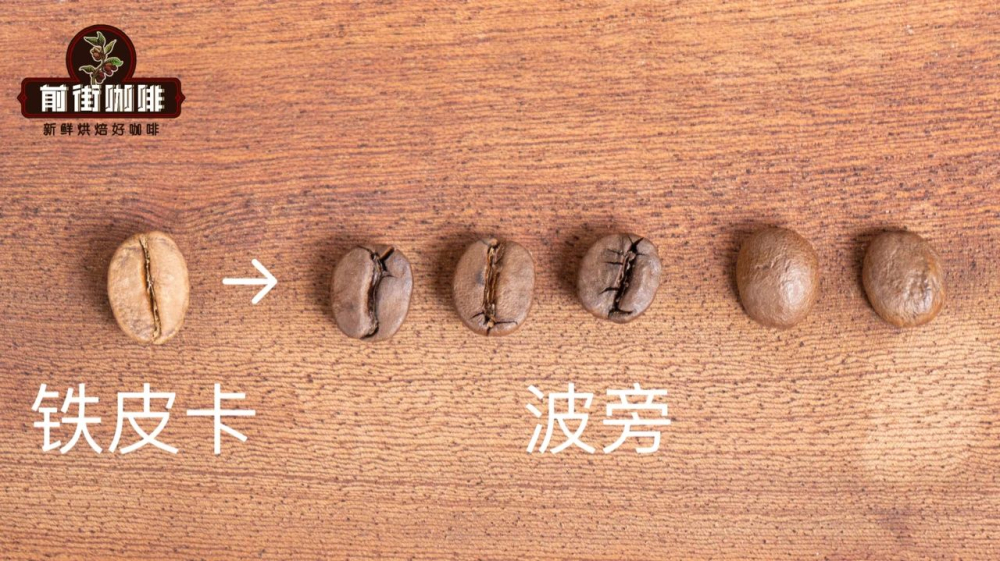
In Front Street's product system, Yunnan Typica is classified as Yunnan specialty coffee, while Yunnan Catimor is labeled as Yunnan Arabica coffee according to market convention. Most Yunnan beans currently available on the market belong to the Catimor variety. But tracing back to the roots, the earliest coffee planted in Yunnan was not Catimor, but Typica—the oldest and most primitive variety in the Arabica lineage.
The name "Yunnan Arabica" is actually related to Typica, because Typica itself belongs to the Arabica species. The oldest coffee variety in Yunnan is precisely Typica. Later, when Nestlé entered Yunnan, because Typica had weak disease resistance and there was a need to increase yields, Nestlé pushed coffee farmers to cut down Typica trees with good flavor and switch to varieties with slightly inferior flavor but stronger disease resistance and higher yields. The first introduced was S288, which is resistant to leaf rust, and later the higher-yielding Catimor was introduced. In other words, the coffee trees currently planted in Yunnan are mainly Catimor. Catimor carries Robusta genes, and besides being more resistant to leaf rust, its yield is about three times that of Typica.
Compared with Typica, Catimor does have a certain gap in flavor. However, with the spread of the specialty coffee concept, the cultivation and planting methods of Yunnan Catimor have become more scientific, and both flavor and quality have improved significantly. Robusta coffee beans usually have a bitter taste, and because Catimor contains some Robusta genes, it also carries a slight "devilish aftertaste."
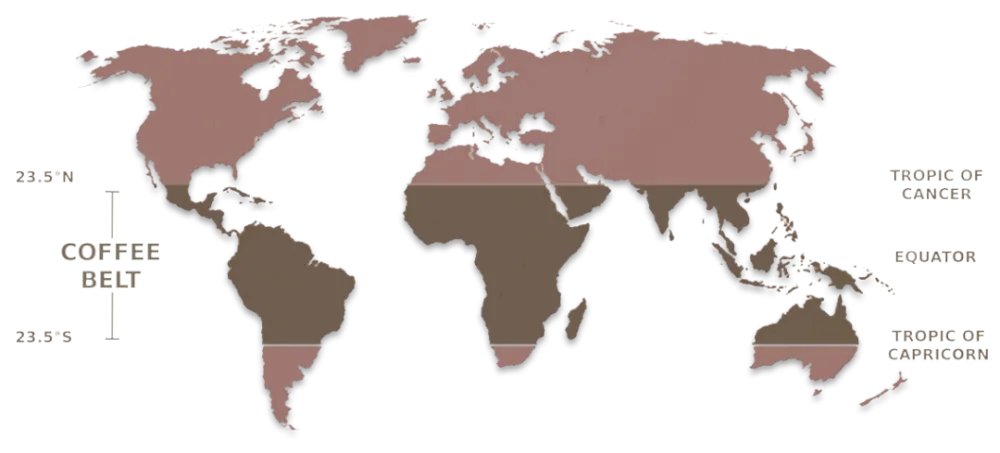
Western and southern Yunnan Province lie between 15°N and the Tropic of Cancer, with most areas at altitudes of 1,000 to 2,000 meters. The terrain is mainly mountainous and sloped, with obvious undulation, fertile soil, abundant sunshine, plentiful rainfall, and a large temperature difference between day and night. These unique natural conditions give Yunnan Arabica coffee its special flavor—strong but not bitter, fragrant but not harsh, with a slight fruity note.
Yunnan Coffee Bean Grading
At present, Yunnan coffee is usually graded by combining bean size and defect rate. Bean size refers to international standard screen sizes, while factors such as the international defect bean point standard, bean shape and color, cleanliness, odor, and moisture content are also comprehensively considered.
Common international coffee grading standards:
Beans are graded by size using round-hole grading sieves. The internationally common Arabica coffee sizes range from 10 to 20; the number represents the screen aperture, with that number as the numerator and 64 as the denominator, in inches. For example: 14 indicates green coffee beans that can pass through a screen with an aperture of 14/64 inch or larger, and 19 indicates green coffee beans that can pass through a screen with an aperture of 19/64 inch or larger. (1 inch is approximately 2.54 centimeters.)
Common domestic coffee grading standards:
They are divided into five grades according to screen openings of 6.5, 6.0, 5.5, and 5.0 millimeters.
Grade 1: above 6.5 millimeters, plump and intact beans.
Grade 2: 6.0 to 6.4 millimeters, plump and relatively uniform.
Grade 3: 5.3 to 5.9 millimeters, relatively plump and slightly less uniform.
Grade 4: 5.0 to 5.4 millimeters, with some broken beans, intact beans accounting for more than 75%.
Grade 5: below 5.0 millimeters, with some broken beans, intact beans accounting for more than 30%.
Detailed international standards for defect inspection of Arabica coffee:
Grading is based on the number of defects; it is often assessed by how many defects are contained in a certain amount of coffee beans. According to the method for identifying impurities and defective beans in coffee beans stipulated by the International Organization for Standardization, a 300-gram coffee bean sample is randomly taken, and the impurities and defective beans are counted for grading.
Coffee Producing Regions
Coffee producing regions in Yunnan Province are not limited to Pu'er and Baoshan; there are also Dehong, Lincang, and other places. Yunnan coffee from each producing region also has subtle differences in taste.
[Pu'er]
Pu'er City has nine counties and districts under its administration—Simao, Ning'er, Mojiang, Jinggu, Jingdong, Zhenyuan, Jiangcheng, Lancang, Menglian, and Ximeng—where Yunnan Arabica coffee is grown. The average annual temperature is between 17 and 20 degrees Celsius, and the planting altitude is between 700 and 1,600 meters.
[Baoshan]
Five counties and districts under Baoshan City—Longyang, Longling, Shidian, Changning, and Tengchong—grow Baoshan Arabica coffee, which has a geographical indication product designation. The planting altitude is between 1,000 and 1,500 meters, and the average annual temperature is 21 degrees Celsius. Lujiang coffee produced in Baoshan was rated first-class on the London market in the late 1950s.
[Dehong]
The Dehong producing region is one of the earliest areas in China to introduce coffee. Arabica coffee was introduced from Myanmar in 1914, but large-scale commercial planting did not begin until 1953. Dehong's average annual temperature is between 18 and 20 degrees Celsius, with no severe cold in winter and no extreme heat in summer, a large temperature difference between day and night, fertile soil, and abundant rainfall. While the coffee fruit is still in the ripening stage, such conditions are conducive to the formation of proteins, sugars, caffeine, and other substances, giving Dehong coffee a full flavor.
[Lincang]
Coffee planting has been carried out in towns such as Gengma, Zhenkang, Yunxian, Cangyuan, and Yongde in Lincang City. Lincang has a unique geographical location, bordering Myanmar to the west; the climate conditions here are very favorable, with significant day-night temperature differences, abundant rainfall, and a mild average annual temperature, making Lincang a focus of attention for many coffee companies.
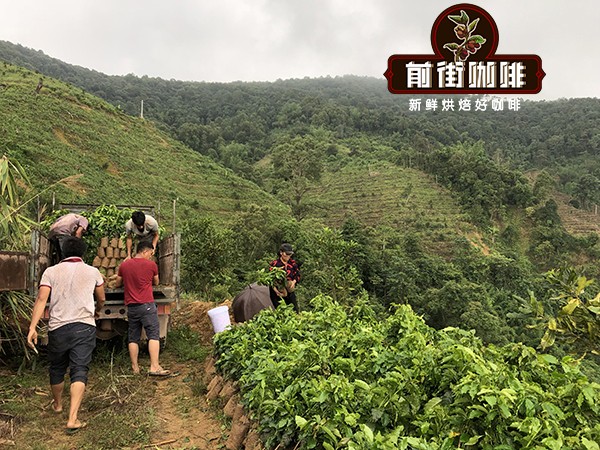
Front Street Coffee saw Lincang's potential and established its own coffee plantation estate in this producing region.
Front Street Coffee Estate
Front Street has been roasting coffee for its 10th year now, and we became involved in coffee planting half a year earlier than in roasting coffee beans. "Dazhen Coffee," the predecessor of Front Street, originally wanted to grow coffee in a place in Guangdong called Dazhen. At that time, only after the Catimor seedlings had grown to 20 centimeters did we truly understand the relationship and sequence among variety, altitude, and processing method in specialty coffee. So Front Street gave up the plan to grow coffee in Guangdong and went to Yunnan to study coffee cultivation in depth. By a stroke of luck, we found land suitable for planting.
That year, Front Street chose the hardest path: select highlands, cultivate Arabica varieties, and plant rationally.
Yunnan is not a place with four distinct seasons; here there are only the dry season and the rainy season. In terms of cultivation, Front Street adopted extremely high standards, providing coffee trees with a natural, pollution-free, and comfortable growing environment. Because Typica is more difficult to manage in the field than Catimor and is sensitive to prolonged direct sunlight, Front Street maintained the diversity of plant species and the ecological environment within the estate.
From seedling cultivation to harvest, it takes at least three to four years. Now, Front Street Coffee Estate has welcomed its second coffee harvest season. Everything done is for the sake of hearing a coffee connoisseur say: this is the taste of Yunnan specialty coffee.
Coffee Bean Processing Methods
Front Street's latest batch of coffee beans uses the most traditional and primitive post-harvest processing method for green coffee beans, namely the sun-dried method. Whole ripe and intact coffee cherries are evenly spread on drying beds for sun drying. Because the complete skin and pulp layer are retained, the drying process is more complex and takes longer. To avoid excessive fermentation, workers need to turn each coffee cherry frequently and on schedule.
Because this Front Street sun-dried Typica uses a Japanese-style processing method, its aroma is very full, and its sweetness is very prominent, with preserved-fruit-like sweetness, soft plum acidity, rich nutty notes, and a finish with brown sugar sweetness and black tea-like tea body. Many friends who have purchased this Front Street coffee bean ask Front Street's baristas how to brew it to bring out its flavor best. Front Street's sun-dried Typica is fragrant but not harsh, strong but not bitter, and has the traditional taste of Yunnan Arabica coffee.
Front Street believes that the flavor of Yunnan Arabica belongs to a neutral and balanced tone, meaning it has acidity, sweetness, and bitterness. Therefore, Front Street's Yunnan coffees are all medium-roasted, highlighting the roasted aromas of chocolate and nuts while retaining some acidity. From cupping, Front Street tastes in the Yunnan Arabica everyday beans notes of nuts, herbs, and brown sugar, the sweetness of melons and fruits, and the acidity of plums, with a balanced mouthfeel. The sun-dried Typica presents chocolate, baked bread, the fermented feel of tropical fruit, and a black tea finish.
Front Street Brewing Parameters for Front Street Sun-Dried Typica Coffee:
In order to retain the acidity, sweetness, and tea-like characteristics of Yunnan coffee, Front Street Coffee gives it a medium roast. When brewing, you can use a V60 dripper, a 1:15 coffee-to-water ratio, medium grinding (about the size of coarse granulated sugar / 80% passing through a Chinese No. 20 standard sieve), and a water temperature of 91 degrees.
Use staged extraction, blooming with twice the amount of water as the coffee grounds, that is, 30 grams of water for a 30-second bloom. The reason the blooming process is needed is to allow the coffee grounds to release internal carbon dioxide gas, thereby making the later stages of extraction more stable. Pour in a slow circular stream until the scale reaches 125 grams, then pause, continue pouring until 225 grams and stop. After the water in the dripper has dripped through, remove the dripper. Start timing from the beginning of pouring; the extraction time is 2'00". Next, pick up the entire cup of coffee and swirl it to mix evenly, then pour it into a cup for tasting.
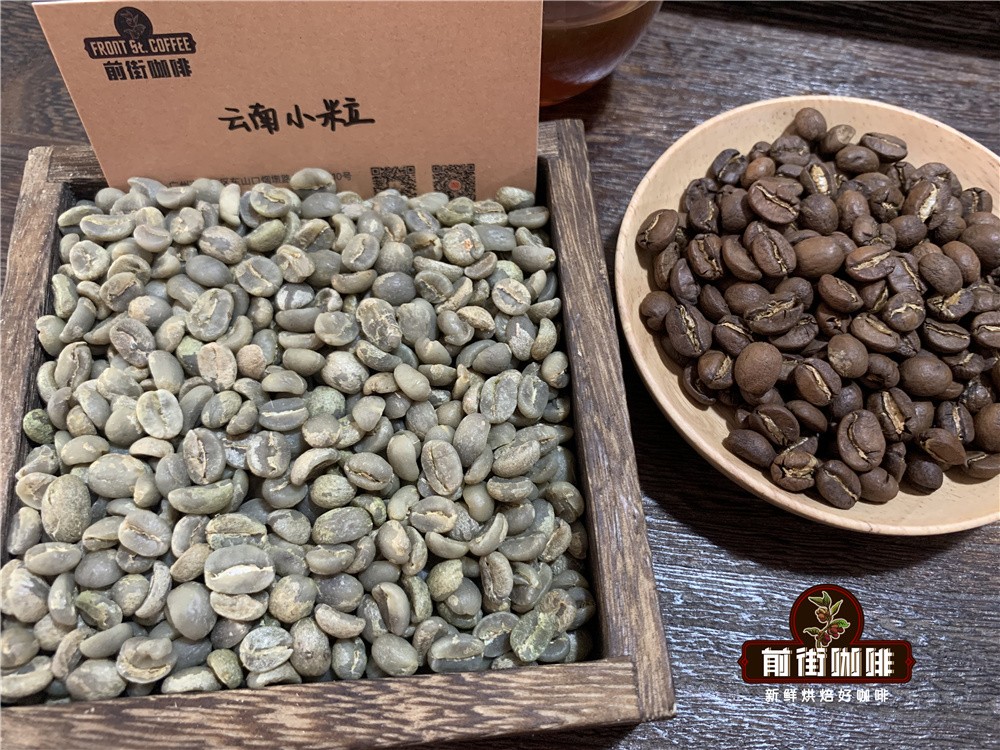
[Front Street 2013 Sun-Dried Typica Coffee Flavor] Heavy mouthfeel, prominent acidity and sweetness, with citrus and berry notes, a hint of fermented wine aroma, caramel-like sweetness, creamy finish, and black tea-like tea body.
The above content is compiled by CoffeeHunters, a coffee news website.


