







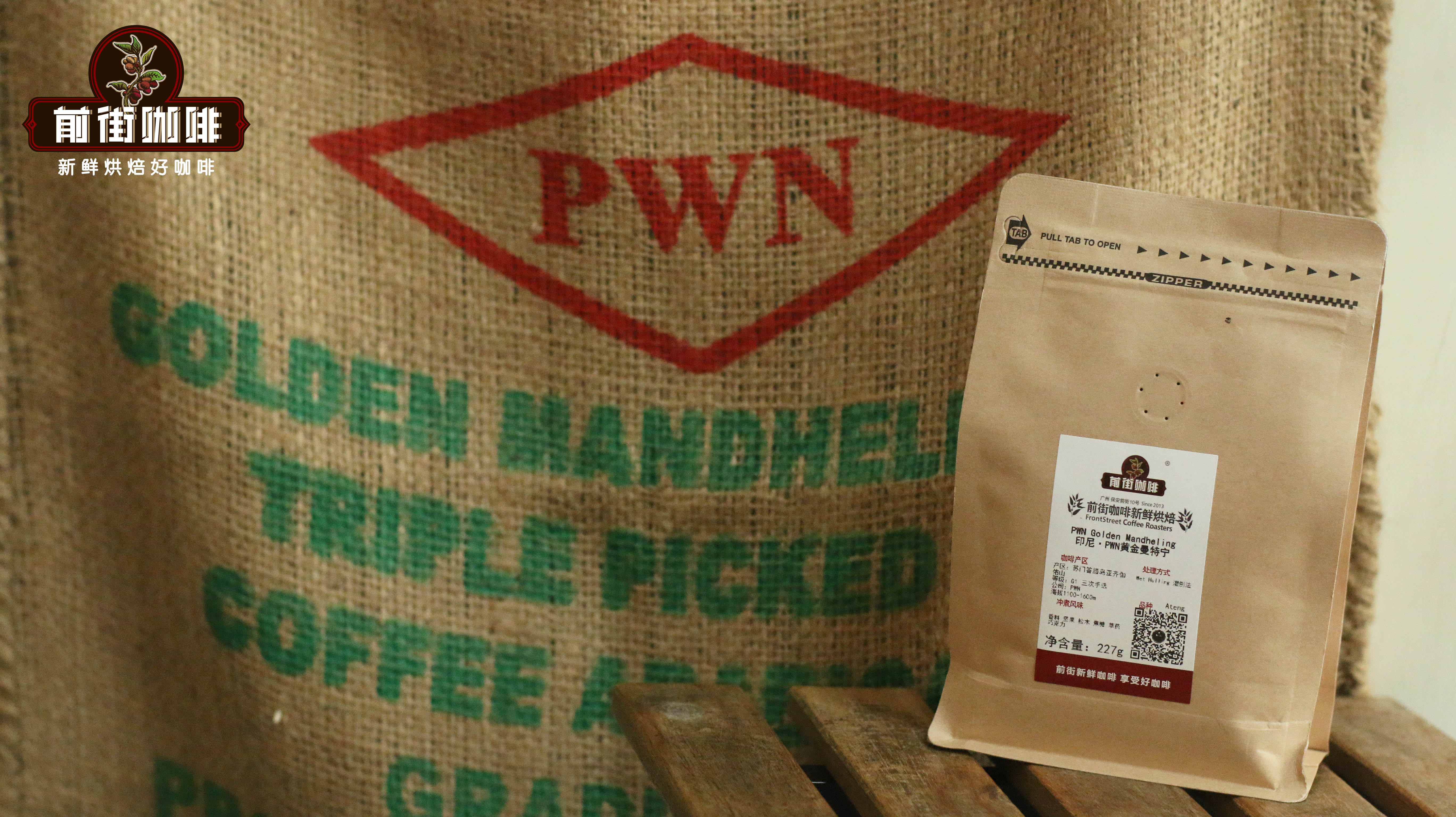
Mandheling coffee is a classic representative among Asian beans, yet behind its name lies a rather amusing misunderstanding. This article will trace the origin of the name Mandheling, explore the growing regions, varieties, processing methods, and flavor differences between Front Street Mandheling and Golden Mandheling, and analyze exactly what kind of people this rich, full-bodied coffee suits. From Lintong to Lake Tawar, from wet-hulling to the "goat hoof" bean characteristic, and on to Front Street's roasting and brewing parameters, we'll explain the complete picture of Mandheling in one go.
For more specialty coffee knowledge, please follow the WeChat official account: Front Street Coffee (FrontStreet Coffee)
Coffee is usually named after its growing region, estate, place name, or variety, but Front Street Mandheling coffee is an exception—it uses the name of an ethnic group. The birth of this name stems from a misunderstanding. During World War II, when the Japanese army occupied Indonesia, a Japanese soldier drank an extremely rich and aromatic cup of coffee at a local café and asked the owner what the coffee was called. The owner, however, thought he was asking where he was from, so he answered "Mandailing." After the war ended, the soldier recalled the "Mandheling" he had tasted in Indonesia and commissioned a coffee merchant to ship fifteen tons to Japan, which unexpectedly became hugely popular. The name Mandheling spread from there, and that coffee merchant was none other than the now-famous Pwani Coffee Company (PWN).
Front Street Mandheling coffee is an Asian bean with herbaceous, piney, and nutty notes and a rather prominent bitterness that most people may find hard to accept on first try. But as for who it suits, Front Street's view is this: anyone can drink coffee, it's just that Mandheling's bitterness is more pronounced, so friends who don't like bitter coffee may not favor it much; conversely, those who love full-bodied flavors will be very fond of it. At Front Street, two preferences are often seen: one group loves the fresh floral and fruity aromas of Ethiopia, while the other is enamored with Mandheling's rich nutty and piney flavors, especially Front Street Golden Mandheling coffee.
Front Street currently has two Mandheling coffees: one is the daily-bean series Front Street Lintong Mandheling coffee, and the other is the single-origin Front Street Golden Mandheling coffee.
Front Street Lintong Mandheling:
Mandheling coffee is produced in Sumatra, Indonesia, in Asia, so it is also called "Sumatra coffee." The main producing areas include Java, Sulawesi, and Sumatra, of which ninety percent is Robusta. The "Mandheling" produced on Sumatra is the most famous. Among the refined traditional Arabica coffees produced in northern Sumatra, the finest quality is sold under the names Lintong and Mandheling. Strictly speaking, Lintong refers to coffee grown in a small area southwest of Lake Toba in the Lintong administrative region. The coffee-growing areas are scattered across a high-altitude, undulating clay plateau covered with fern vegetation. Lintong coffee is not shade-grown, uses no chemicals, and is almost entirely owned by smallholders. Mandheling, by contrast, is a broader term covering Lintong coffee as well as the similarly conditioned Diari [capital Sidikalang] and the growing areas north of Lake Toba.
The quality of Indonesian coffee varies, but what is generally called Mandheling refers to Typica or its variants grown in the mountains around Lake Toba. Coffee gourmets around the world have said: "Sumatra Mandheling coffee has the best body in the world." Mandheling beans are relatively large and hard, and because they contain many defects, they require strict sorting during processing.
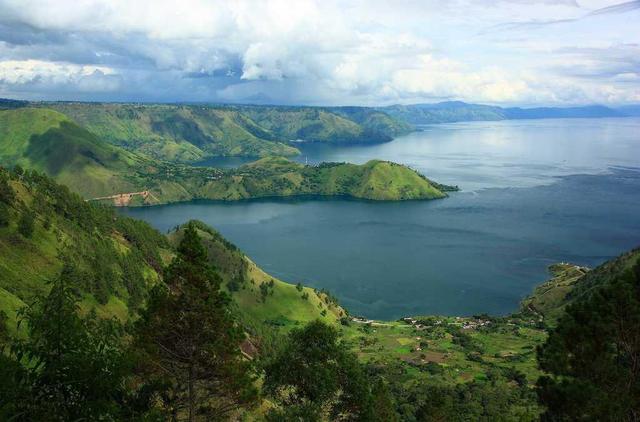
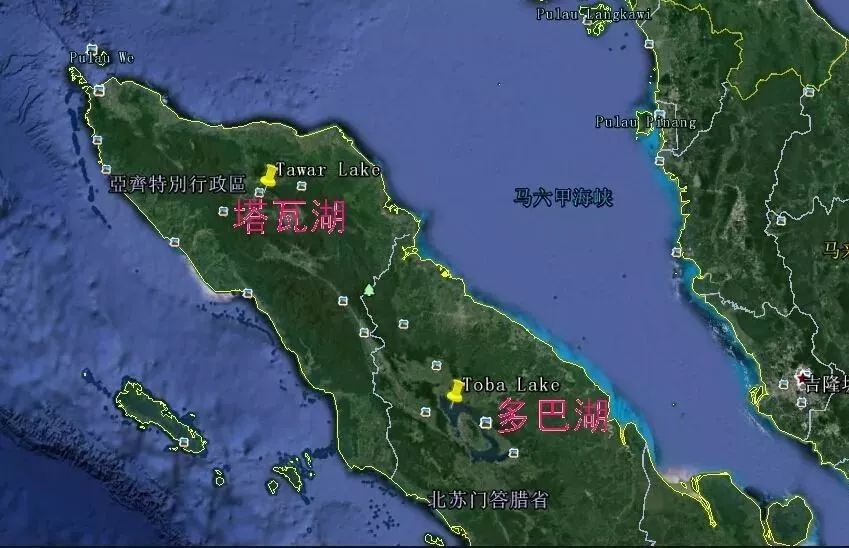
Front Street Lintong Mandheling comes from the Lintong mountain area in north-central Sumatra, near Lake Toba. Lintong Mandheling is the regular version of Sumatra Mandheling. Lake Toba is located in the center of North Sumatra Province. Dutch colonists moved "Java Mandheling" north to the Lake Toba area in 1888, creating the legend of modern Mandheling. The specialty Mandheling produced in the Lintong area has relatively large, hard beans. Front Street's daily-bean Mandheling coffee comes from the Lintong growing region.
Lake Tawar is located in the center of the Aceh Special Region, at the northern tip of Sumatra, with an area less than one-tenth that of Lake Toba. The Batak people are the mainstay of coffee farmers in this area, once hailed as the source of the plumpest coffee beans in the world. Mandheling is a trademark used for Arabica coffee from North Sumatra, and its name comes from the Mandailing people who produce coffee in the Tapanuli region of northwestern Sumatra.
Front Street Mandheling has a heavy taste, with rich body and a lush, lively dynamism, neither astringent nor sour, fully displaying both body and bitterness. The appearance of Front Street Mandheling beans could be called the ugliest, but coffee fans often say that the uglier the Sumatra beans, the better, richer, and smoother the taste.
Front Street Golden Mandheling:
If Front Street Mandheling is the finest among Indonesian coffees, then Front Street Golden Mandheling is the finest among Mandheling. Front Street Golden Mandheling is a Mandheling coffee carefully hand-selected for plump beans and lustrous color, truly a peerless beauty among coffees.
Front Street Coffee's Front Street Golden Mandheling coffee comes from PWN. Front Street Golden Mandheling is selected from Mandheling, and can be understood as select Mandheling, which is also why Front Street Coffee chose to carry it. The Front Street PWN Golden Mandheling green beans that Front Street procures are of the highest G1 grade, with a bean size of 18 screen or above, and no more than 3 defective beans per 300-gram sample. PWN is extremely strict when producing Golden Mandheling beans: after machine sorting, three rounds of hand sorting are still carried out to remove defective beans as thoroughly as possible, thereby enhancing the coffee's cleanliness and sweetness. In other words, only beans produced by PWN can be called authentic Front Street Golden Mandheling.
Front Street Coffee's baristas tasted both coffees side by side, and the comparison was very clear: Golden Mandheling's sweetness and cleanliness, as well as its rich, wild spice-family flavors, are slightly superior to G1, which is one reason Golden Mandheling is much more expensive than G1.
Front Street Mandheling coffee bean varieties
Mandheling coffee is mainly grown on Sumatra, with varieties dominated by pure Arabica beans, but since Arabica has weak pest resistance, in October 2020 Indonesia's PWN abandoned Golden Mandheling's original Typica variety and switched to the Ateng variety for Golden Mandheling production. The Ateng variety is in fact the Catimor variety widely grown in Yunnan, a hybrid between Arabica and Robusta with several subtypes, widely planted in Sumatra and other Indonesian islands. In plain terms, it is a branch of Catimor, and Ateng is the local name for it.
Front Street Mandheling coffee bean processing method—wet-hulling
The processing method of coffee beans mostly depends on the local environment. Indonesia has mostly rainy days and constant typhoons, which cannot provide the good weather needed for natural sun-drying, and the local economic conditions are limited, unable to afford the more costly washed method. For all these reasons, the very locally distinctive wet-hulling method emerged (that is, during the normal washed process, the beans are sun-dried with parchment still on for 2-3 days, and when the moisture content reaches 20-24%, the parchment is hulled off). It is precisely this accidental processing method that created Mandheling coffee's unique flavor in the world.
Observant friends may notice that Mandheling beans have a "goat hoof" characteristic, and Front Street has also noticed that they share this common bean appearance feature, the "goat hoof." This is because the half-hard, half-soft moist green beans are easily crushed when the machine hulls off the mucilage and parchment layer, and the beans crack open like a goat's hoof, commonly known as goat-hoof beans. The "goat hoof" is a very notable feature of Mandheling beans, so it is not counted as a defective bean.
Front Street-roasted Front Street Mandheling coffee
To highlight Front Street Golden Mandheling's high body and retain more herbaceous spice notes, Front Street's roaster uses a medium-dark roast. After roasting, the beans expand and become loose in texture, and once ground they easily absorb more water and release various substances faster. To avoid over-extraction, Front Street uses a medium grind and a slightly lower water temperature, reducing the release of bitter large molecules from the extraction.
Front Street's brewing parameters for Front Street Mandheling coffee:
In daily brewing of medium-dark roasted Mandheling, Front Street Coffee generally uses a KONO dripper. The KONO dripper makes the coffee's mouthfeel rounder and fuller, with a more direct flavor expression. Compared with the V60, the KONO dripper has less than half the guiding ribs, with a smooth curved upper section that lets the filter paper fit more closely, restricting airflow upward so hot water can only flow downward, forming a siphon-style extraction effect that allows the coffee grounds' aromatic substances to be released more fully, thereby enhancing the full-bodied mouthfeel. It is suitable for brewing medium-dark roasted beans like Front Street Golden Mandheling.
Using the Kono dripper: water temperature: 88℃; coffee dose: 15 grams; coffee-to-water ratio: 1:15; grind: medium-fine (75% passing a Chinese standard No. 20 sieve)
Use a three-stage extraction, blooming with twice the coffee dose in water, i.e., 30 grams of water for a 30-second bloom. The bloom lets the coffee grounds release internal carbon dioxide gas, making the later stages of extraction more stable. Pour in a slow circular stream until 125 grams, then pause; continue pouring until 225 grams and stop. After the water in the dripper has dripped through, remove the dripper. Time from the start of pouring; the extraction time is 2'00". Next, pick up the whole cup of coffee and swirl it to mix evenly, then pour it into a cup to taste.
Front Street Golden Mandheling coffee flavor characteristics: multi-layered, full-bodied and clean, highly balanced, with rich nutty and caramel aromas, chocolate notes, and a lingering finish.
Front Street Lintong Mandheling coffee flavor characteristics: herbaceous, medicinal plant notes on entry, dark chocolate, caramel, and a sweet aftertaste.
The above content is compiled by CoffeeHunters, a coffee news website.


