








Many coffee enthusiasts encounter a common confusion when trying pour-over: even when following tutorials strictly, the taste comes out vastly different each time. With so many variables affecting pour-over flavor, which steps are truly decisive? Drawing on Front Street Coffee's practical experience and using Papua New Guinea Bird of Paradise coffee beans as an example, this article systematically breaks down the parameters to focus on when brewing a good cup at home. It covers the bean's variety background and origin characteristics, the logic behind choosing roast level, methods for adjusting grind size, water temperature settings, dripper pairing, and pulse pouring techniques—helping readers build a clear pour-over approach and reducing the frustration of brewing by luck.

Many friends, after reading Front Street's articles, make a point of visiting the shop to sit for a while and chat with us about difficulties they encounter in daily brewing. The most discussed topic is pour-over parameters. A while back, a customer posed this question to Front Street: since so many variables affect pour-over results, which one is truly decisive?
This friend's confusion arose because he found that although he carefully followed tutorials step by step each time, striving to brew good coffee, the final flavor was always inconsistent—whether it tasted good seemed entirely up to luck. So he suspected some key step was going wrong. Taking this opportunity, Front Street would like to talk with everyone about how to brew a satisfying cup of coffee at home.
If you want a cup of coffee with pure flavor, Front Street has always believed that "freshness" is the most indispensable prerequisite. Therefore, buying freshly roasted beans and grinding only right before extraction is the first principle of the whole process. Since every drinker's taste preference differs, here Front Street has chosen a medium-roast Papua New Guinea · Bird of Paradise as a demonstration, explaining each parameter to note one by one.
The Typica variety initially planted in Papua New Guinea was introduced from Jamaican Blue Mountain, and combined with the local island-type growing environment, it is also called "Little Blue Mountain." Front Street Coffee (FrontStreet Coffee), in daily conversations with customers, often borrows the name "Little Blue Mountain" to introduce Papua New Guinea coffee—partly due to historical origins, and partly because the name is indeed much easier to remember than the full one.
Whether a cup of coffee tastes good depends on many factors: variety, soil conditions, growing altitude, and green bean processing methods. Among these, Front Street Coffee (FrontStreet Coffee) believes altitude plays a pivotal role. Papua New Guinea has a typical island-type climate, located between the equator and 10 degrees south latitude, with tropical rainforests, volcanoes, and highland terrain, reaching altitudes of up to 2,500 meters—truly an ideal place for coffee cultivation. The southern part of the country is plains and lowlands, the southeast is coastal, the center is the Central Range, and the north consists of several independent mountain ridges. This land nurtures rich and unique flora and fauna, with about 6,500 native plant species and about 380 native bird species.

The vast majority of Papua New Guinea's coffee is grown in highland areas. The highlands are mainly divided into the Eastern Highlands Province and the Western Highlands Province. Coffee from the Eastern Highlands is usually grown around Goroka and Kainantu, with Arona and Purosa estates being the most famous.
Coffee from the Western Highlands is mostly produced in the outskirts of Mount Hagen. The Kimel estate, located north of Mount Hagen, produces coffee beans of notable quality; in addition, the Wahgi Valley of Mount Hagen is renowned for its ideal climate conditions and fertile volcanic soil, and Bird of Paradise Estate is located right in the Wahgi Valley. Papua New Guinea's total coffee output is not large, with 85% cultivated by smallholder farmers, all using the washed process. Front Street believes that Papua New Guinea coffee's flavor differs from the dull, low-key tone of Indonesian coffee—instead, it presents bright acidity and sweetness with floral and fruity aromas, with an overall style closer to South American coffee.
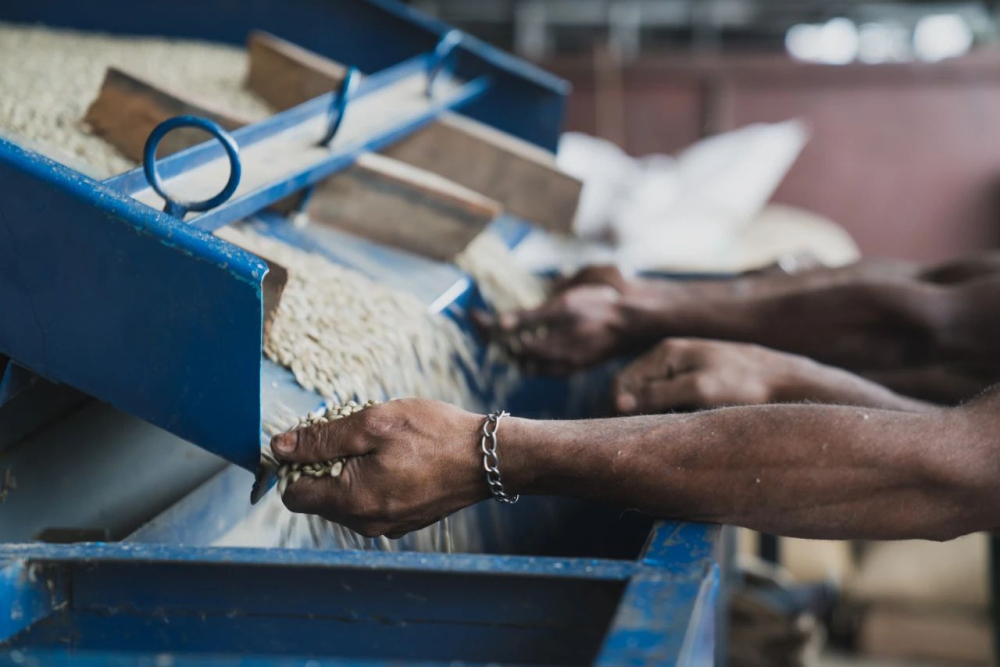
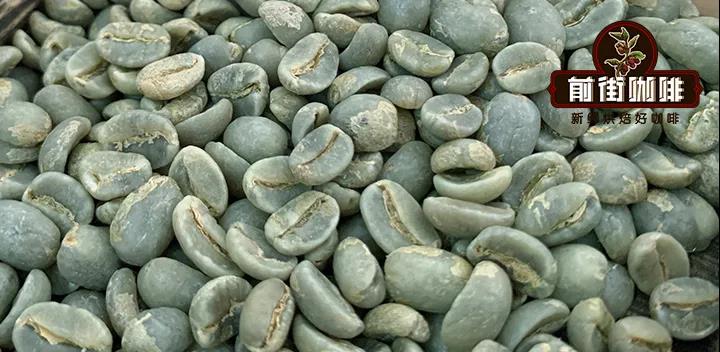
According to Front Street's understanding, Papua New Guinea's washed processing method differs from that of Central and South America. The local method uses a three-stage washing fermentation process, with each soak lasting about 24 hours, during which fresh water is replaced to control the flavor direction of the coffee. After cleaning, the beans have their husks removed and then enter various grading processes. Front Street Coffee (FrontStreet Coffee) has noticed that in the coffee grading system, each producing region is strictly divided, and the beans produced share a common characteristic—uniform bean size and very few defects.
There is another consideration behind Front Street's choice to carry Papua New Guinea Bird of Paradise coffee beans: Front Street Coffee (FrontStreet Coffee), when sourcing every bean, hopes it has a unique character and will not introduce products with duplicate flavors. The reason Front Street is willing to spend a great deal of time on selecting beans, adjusting roast curves and parameters, and other steps is precisely because a coffee bean may share similarities with others, but it must have its own distinct identity.
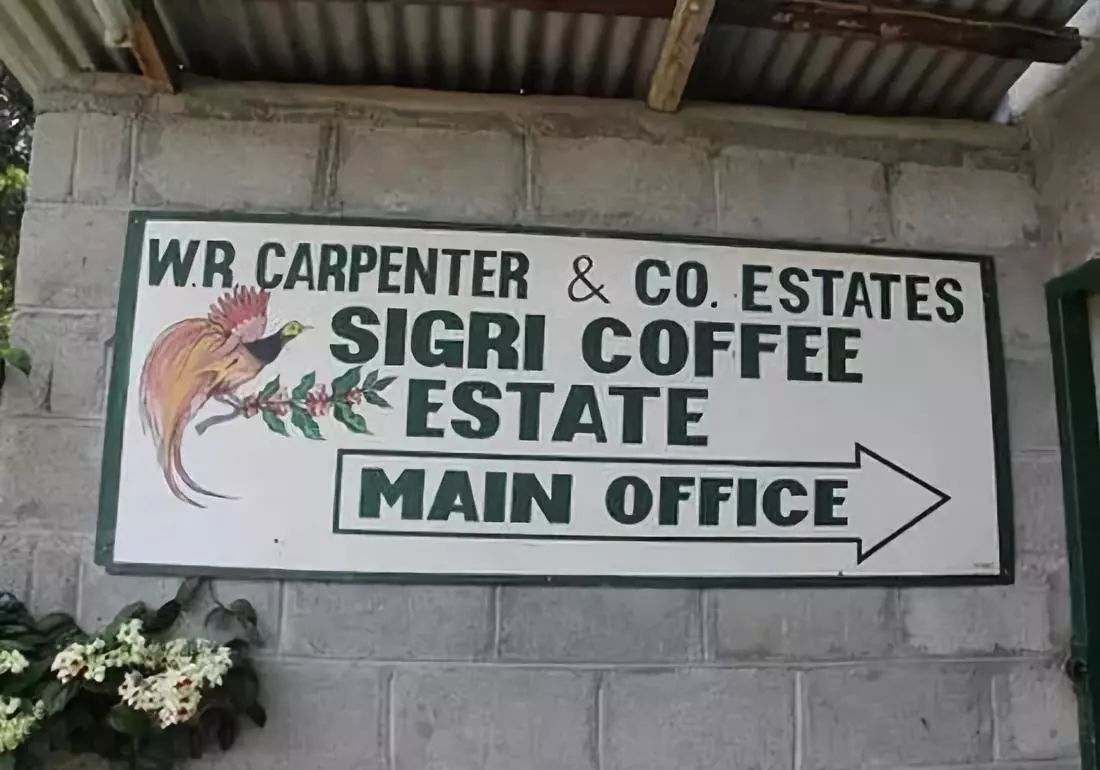
Bird of Paradise Estate was founded in 1950 and is a pioneer of the local coffee industry. The estate is located in the Waghi Valley in the Western Highlands, with mineral-rich volcanic soil. Bird of Paradise Estate also spares no effort in ecological protection, insisting on not using pesticides or insecticides and carefully maintaining the surrounding ecology and bird habitats. Front Street Coffee (FrontStreet Coffee) also strongly endorses this sustainable development philosophy—it can both improve the ecological environment and help enhance coffee bean quality.
Below is the basic information for Front Street's Papua New Guinea coffee beans, for your reference. To showcase the coffee's rich nutty character while preserving bright grapefruit acidity, Front Street uses a medium-dark roast to present this bean.
Front Street Coffee (FrontStreet Coffee): Papua New Guinea Bird of Paradise Coffee Beans Estate: Bird of Paradise Estate Variety: Typica Grade: AA Altitude: 1,600-1,800 meters Processing: Washed Flavor: The sweetness of toasted bread, nutty sweetness, and a subtle fruity acidity form a pleasant layered complexity, with fruit-like aromas, a spicy note in the finish, and a rich, balanced mouthfeel.
Pour-Over Grind Size
Grind size is one of the key factors determining coffee taste. After coffee beans are ground and come into contact with hot water, they release a large amount of water-soluble flavor compounds. In the same steeping time, the finer the particles, the more substances are extracted; the coarser the particles, the fewer substances are extracted. In short, a coarser grind tends toward a weaker coffee taste; a finer grind makes the coffee taste stronger. When adjusting grind size, Front Street uses a tool—the Chinese No. 20 0.85mm standard sieve. For medium-light roasted coffee beans, Front Street consistently requires a 75–80% passing rate; for medium-dark roasted coffee beans, Front Street controls it at 70–75%.
Compared with light-roast coffee, medium-dark roasted beans have a looser internal structure and better water absorption, making it easy to release large-molecule bitter compounds. To avoid over-extraction, Front Street chooses a coarseness with a 75% passing rate on the No. 20 standard sieve. In practice, Front Street first weighs 10 grams of coffee beans, grinds at the estimated setting, then places the ground coffee in the upper sieve and shakes vigorously; particles finer than 0.85mm will fall into the lower layer. Then weigh the coffee powder collected in the lower layer and divide by 10 grams to get the passing rate. If the passing rate is lower than the target parameter, the coffee powder is too coarse and needs to be ground finer; if higher than the target parameter, it is too fine and needs to be ground coarser.
Pour-Over Water Temperature
Water temperature plays a role similar to grind size—the higher the water temperature, the higher the extraction efficiency, the easier it is to release various compounds, and the higher the concentration. If you brew with water close to boiling, it is easy to extract unpleasant bitter compounds. Therefore, when brewing medium-dark roasted coffee beans, Front Street uses different parameters from light-roast coffee beans. Medium-dark roasted beans undergo more caramelization reactions than light roasts, making it easier to release bitter large-molecule compounds. To avoid excessive off-flavors, Front Street appropriately lowers the water temperature: for light-roast coffee, the brewing water temperature is 91–93°C; for medium-dark roasted coffee beans, Front Street recommends 87–88°C.
Pour-Over Dripper
If you have been paying attention to Front Street's brewing recommendations, you should know that when brewing coffee beans that emphasize body, Front Street prioritizes the KONO dripper. From its appearance, it is easy to see that the KONO dripper has ribs only in the middle and lower sections, while the upper part is a smooth curve. This way, when the dripper is rinsed, the filter paper fits tightly against the wall, restricting airflow during extraction, which extends the hot water's dwell time in the dripper, increases the extraction yield, raises concentration, and makes the coffee taste richer and fuller-bodied. The KONO dripper is also suitable for full-bodied flavor types such as Brazil Queen Estate coffee.
Pulse Pouring
If you are a beginner and your water control ability is not yet strong, with an unstable flow, then pulse pouring is the simplest and most compatible pouring method. For example, if our total brewing time is 2 minutes, and the earlier pouring took longer than planned, the later pouring needs a stronger flow; conversely, if the earlier flow was too fast, you can switch to a slower, gentler pour.
Front Street usually uses a three-pour method, with a coffee-to-water ratio of 1:15. For 1–2 servings, use 15 grams of coffee, meaning a total water amount of 225 grams.
The first pour is a gentle 30 grams of water for blooming, with a bloom time of 30 seconds; the second pour adds water up to about 125 grams, pouring evenly and steadily in outward circles. Then wait for the coffee liquid to drop; when it has dropped halfway, pour the final stage up to 225 grams. After all the coffee liquid has dripped through, the total extraction time is generally about 2 minutes.
Brewed this way, the Bird of Paradise offers aromas of nuts, cocoa, caramel, and chocolate on the entry, with a slight berry sweetness, a rich and balanced mouthfeel, accompanied by sugarcane-like clean sweetness and soft acidity, along with a hint of oolong tea fragrance—highly layered.
The above content is compiled by CoffeeHunters, a coffee news website.


