







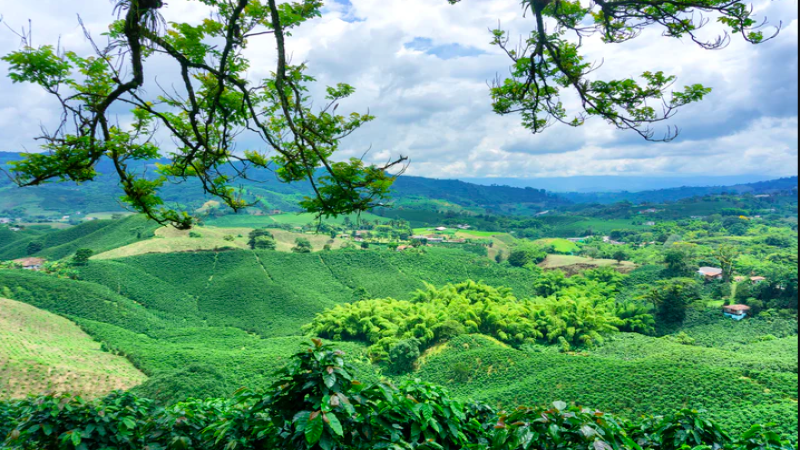
Colombia is not only the world's third-largest coffee-producing country, but also the largest exporter of washed Arabica coffee, with specialty-grade beans making up as much as 40% of its exports. From Mariano Ospina Rodríguez establishing the first experimental plantation in the 19th century to the founding of the National Federation of Coffee Growers in 1927, Colombia's coffee industry has traveled a path from pioneering exploration to organized promotion. Front Street Coffee uses washed beans from Huila as its representative everyday coffee, while also introducing Finca La Divisa's Sidra and Pacamara to showcase the flavor differences between different varieties from the same estate under anaerobic natural processing. This article will provide a complete overview of Colombian coffee's core knowledge, from its historical context and processing principles to specific pour-over recipes.
For more specialty coffee information, welcome to follow our WeChat official account: Front Street Coffee (FrontStreet Coffee).
Colombia firmly holds its position as the world's third-largest coffee producer and is also the world's largest processor of washed Arabica coffee, with specialty-grade beans currently accounting for 40% of its coffee exports. On the menus of many cafés, Colombian beans are regulars. Taking Front Street as an example, varieties such as Rose Valley, Flower Moon Night, Pacamara, Sidra, and Huila can all be prepared as pour-over.
Today, Front Street will start from Colombia's coffee cultivation history and take you through the landscape of this specialty coffee powerhouse.
Colombian Coffee History
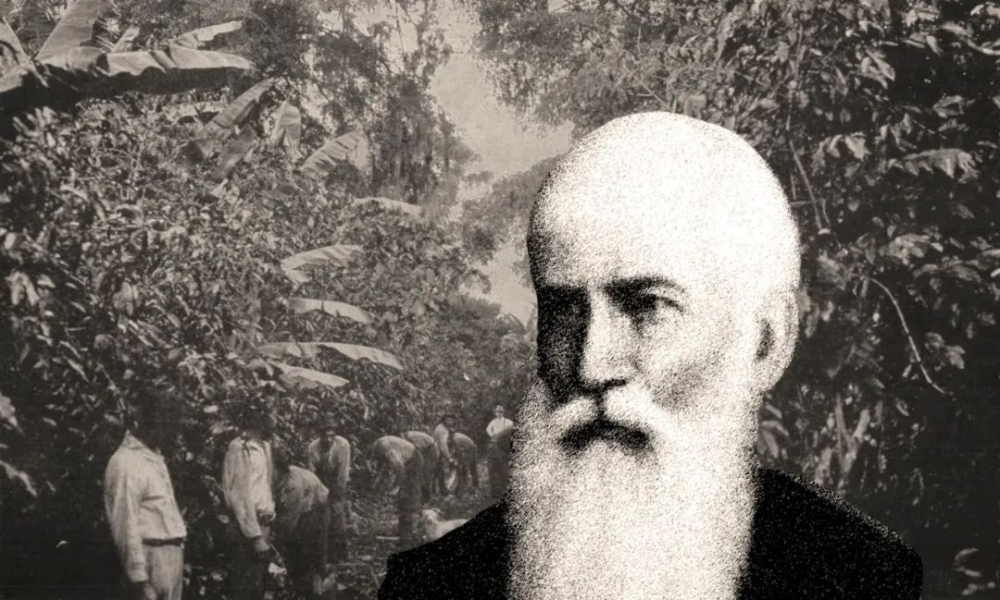
According to Front Street's research, coffee was introduced to Colombia in the 19th century. Don Mariano Ospina Rodriguez was one of the earliest pioneers to conduct coffee cultivation experiments in Colombia.
In 1835, he established a coffee experimental plantation in the city of Fredonia, Antioquia Department. With his solid knowledge and experience in coffee cultivation, Don Mariano began teaching and promoting coffee-growing techniques to local farmers.
In 1857, Don Mariano was successfully elected President of Colombia.
In 1879, the Colombian government passed the Coffee Act to promote the development of the coffee-growing industry.
In 1880, Don Mariano wrote the country's first coffee cultivation textbook, titled "Coffee Cultivation: Basic Concepts Every Farmer Can Master." Shortly thereafter, the price of Colombian coffee on the New York market climbed from 10.6 cents per pound in 1887 to 18.8 cents per pound in 1893.
During the 1920s and 1930s, the Colombian government implemented land reform to provide support for small producers. Therefore, Front Street believes that the success of Colombia's coffee industry is inseparable from the marketing and promotion efforts of the country's National Federation of Coffee Growers (FNC).
In 1927, the National Federation of Coffee Growers of Colombia was proclaimed in Medellín. As a union organization, it covers 22 departments and 590 municipalities nationwide, bringing together 560,000 coffee-producing families. The FNC's first chairman was Luis Mariano Ospina Pérez, the grandson of President Mariano. Under Ospina's leadership, the FNC successfully consolidated the domestic coffee industry and achieved tremendous success in international markets. These series of measures turned coffee into Colombia's main export crop, completely transforming the country's economic landscape.
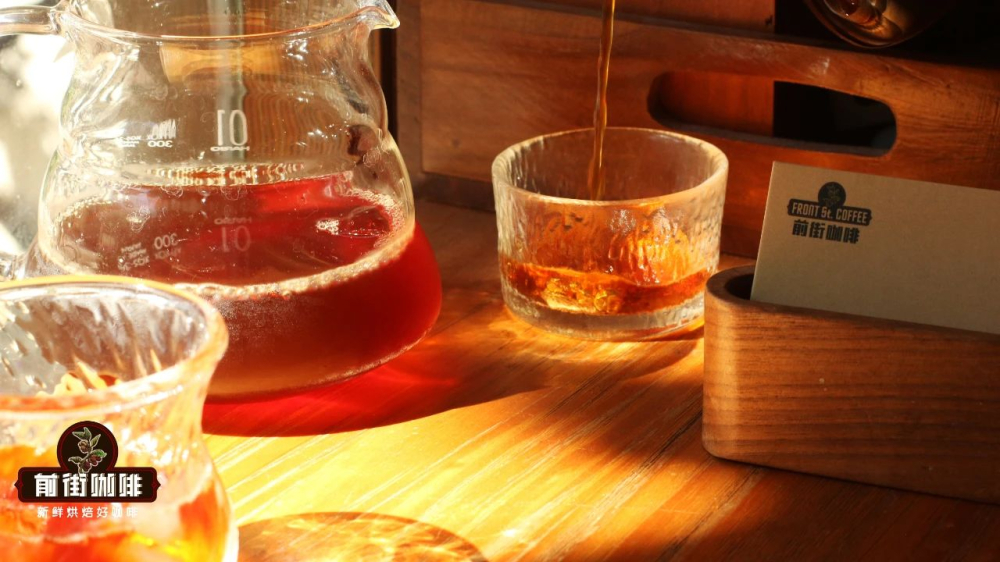
Front Street Coffee (FrontStreet Coffee) selects washed coffee beans from the Huila region as its representative Colombian product in the everyday beans series. The washed processing method removes excess sugars from the fruit skin, pulp, and mucilage from participating in the final drying process, thereby presenting Huila's most authentic terroir characteristics. When roasting this everyday bean, Huila, Front Street Coffee (FrontStreet Coffee) adopted a medium-dark roast to highlight the classic dark chocolate flavor and rich body. In cupping, Front Street captured intense dark chocolate notes, clear and rounded citric acidity, and caramel-like sweetness.
Washed Processing Method:
After the coffee cherries are harvested, they are first poured into a large water tank. Underdeveloped, defective beans will float to the surface, while ripe, plump fruits sink to the bottom. At this point, the floating defective beans (fruits) are scooped out and discarded.
Next, a pulping machine is used to remove the outer skin and pulp of the coffee fruit. At this stage, a slippery mucilage layer still clings to the surface of the coffee beans. The mucilage-covered coffee beans are placed in fermentation tanks for 16 to 36 hours, during which microorganisms gradually break down the mucilage.
After fermentation is complete, the remaining mucilage on the coffee beans is rinsed off with plenty of clean water. Finally, the washed coffee beans are spread out to dry.
Front Street believes that Colombian Supremo coffee achieves a perfect balance of acidity, bitterness, and sweetness. It possesses a unique aroma that fills the entire mouth upon entry. When the aroma in the mouth is exhaled through the nasal cavity, the scent is remarkably full. Regardless of the special processing method, all are evolved from the basic washed method. At the same time, Front Street believes that washed coffee beans better showcase the essential flavors of the coffee.
As the world's largest exporter of washed coffee beans, Colombia naturally uses the washed processing method for most of its coffee, and specialty coffee is mostly produced on small to medium-sized independently owned farms. Compared with Brazil's large-scale cultivation, small-scale farms often produce coffee of superior quality. However, friends may also have noticed that many other special processing methods have emerged in Colombian coffee beans, such as barrel aging, anaerobic fermentation, and more. These special processing methods allow Colombian coffee to continuously innovate and progress in the specialty field.
If you prefer coffee with abundant fruity flavors, we recommend trying Front Street's Finca La Divisa Sidra and Front Street's Finca La Divisa Pacamara from Colombia. Although both come from the same estate, Front Street found through cupping that Sidra and Pacamara present completely different profiles under anaerobic natural processing conditions. Sidra has an intensely rich floral and fruity aroma, and the brewed coffee displays a wine-like, full-bodied character; Pacamara has more of a berry note, with the juicy sensation turned all the way up.
Front Street Colombian Coffee Beans Pour-Over Parameters
Dose: 15g
Ratio: 1:15
Water temperature: 91°C
Grind size: Medium-fine (80% passing through a No. 20 sieve)
Pouring technique: Three-stage
First stage: pour 30ml for a 30-second bloom. Second stage: pour 120ml in a circular motion with a slow stream. When the water level drops to the halfway point, continue with the third stage: pour 90ml in a circular motion with a slow stream. Extraction time: 2 minutes.
The above content is compiled by CoffeeHunters, a coffee news website.


