







Yirgacheffe, as Ethiopia's most recognizable specialty coffee region, is renowned worldwide for its jasmine floral aroma, citrus-lemon acidity, and clean mouthfeel. From the region's history to washed and natural processing, from the Operation Cherry Red project to the G1-G9 grading system, this article systematically organizes the complete knowledge system of Yirgacheffe coffee beans. At the same time, Front Street Coffee has selected several representative Yirgacheffe coffees—washed everyday-drink beans, Konga Cooperative, and natural Red Cherry—analyzing their flavor characteristics and brewing suggestions one by one, to give you a comprehensive understanding of this legendary region that "settled on the wetland."
For more specialty coffee information, welcome to follow: Front Street Coffee (Frontsteet Coffee)
Front Street Yirgacheffe coffee beans are now not only highly sought after in the pour-over single-origin category, but also increasingly favored by roasters and baristas in espresso single-origin and blends. So, what exactly does Yirgacheffe flavor taste like? This article will discuss the flavor characteristics of Front Street Yirgacheffe coffee beans.
Yirgacheffe Region
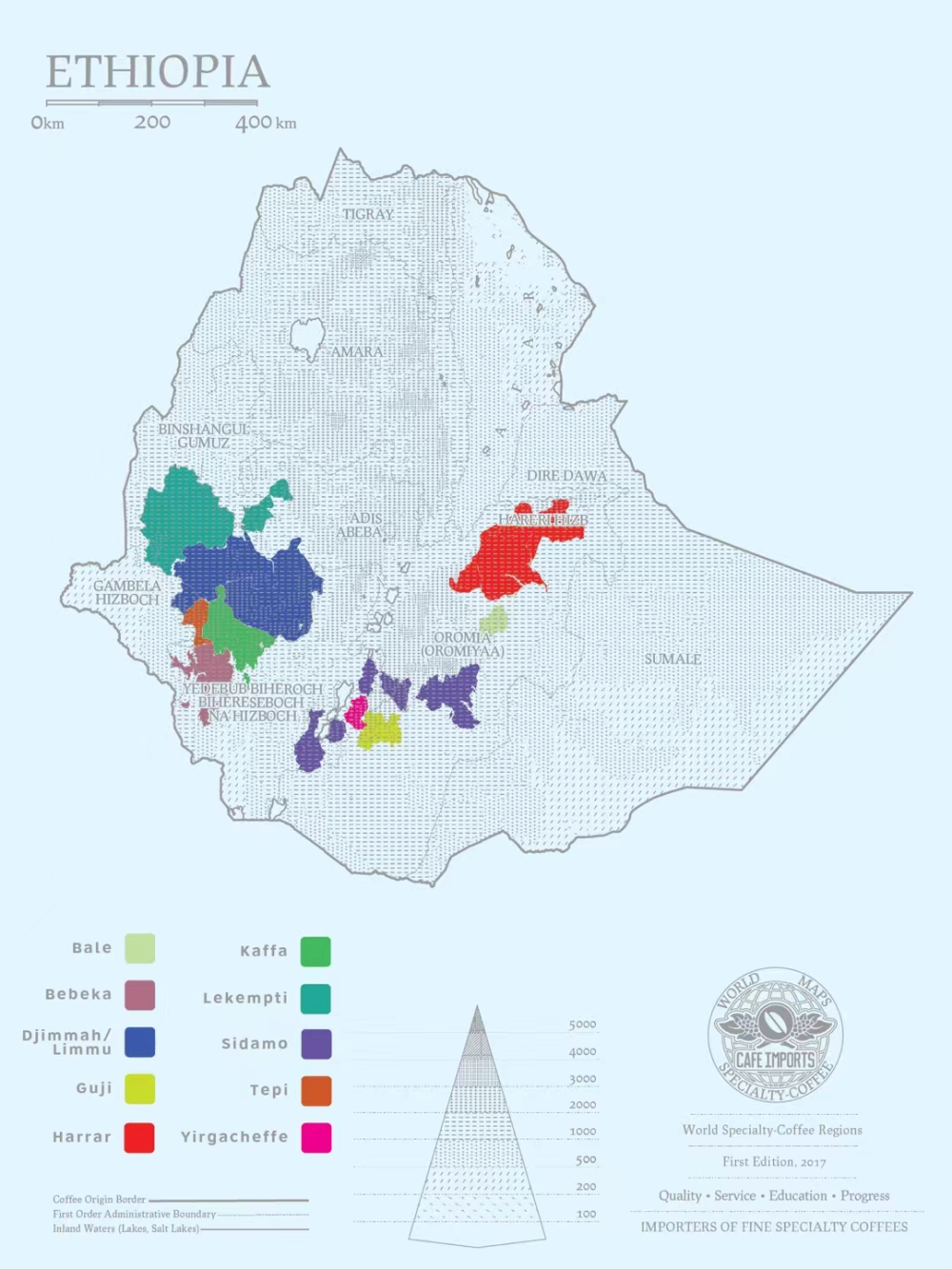
Yirgacheffe is a small town located in the Gedeo Zone in the south, situated in Ethiopia—the birthplace of coffee—at an altitude of approximately 1,700 to 2,100 meters. It originally belonged to the Sidamo region, but because the local coffee processing methods differed from other areas and the flavor was highly distinctive, it eventually became independent and became a separate regional representation.
In the ancient Ethiopian language, the English word "Yirgacheffe" is composed of two parts: Yirga ይርጋ Yərga means calm, to settle down, and Cheffe ጨፌ Č̣äfe refers to marshy wetlands. Together they mean "let us settle and establish ourselves on this wetland."
The so-called "Yirgacheffe flavor" can be simply understood as: a unique citrus and lemon fruit aroma, mixed with the fragrance of jasmine, with an overall fresh and bright texture, distinct layers of acidity, and a clean mouthfeel without off-flavors.
To promote the development of the coffee industry, the Ethiopian government registered the flavors of three coffee regions in the country (including Yirgacheffee®) as commercial trademarks in 2004, and established the Ethiopia Commodity Exchange (ECX) in 2008, with coffee becoming one of the commodities auctioned on the exchange. The government implements quality grading and flavor classification for exported coffee beans to ensure that buyers can purchase coffee with the trademarked flavors.
There are three small producing areas around Yirgacheffe—Wenago, Kochere, and Gelena Abaya. The coffee produced there has flavors similar to Yirgacheffe, so Kochere is also included in the Yirgacheffe regional classification. The local Yirgacheffe Coffee Farmers' Cooperative Union (YCFCU) was established, with 28 member cooperatives of varying sizes. One cooperative is roughly equivalent in scale to one village, responsible for processing green coffee beans harvested from the same village or nearby areas, and ultimately selling them under the cooperative's name.
Local farmers usually grow coffee in their own backyards or mixed with other crops, which is a typical smallholder farming model. When the harvest season arrives, coffee cherries are sold to cooperatives for processing, so the origin information is often the name of the processing cooperative. Front Street Konga Cooperative is one of the well-known representatives of green bean processing cooperatives on the market, composed of more than 300 farmers, and its mature processing technology gives it outstanding coffee quality.
Front Street Ethiopia Yirgacheffe Konga Cooperative Coffee Beans
Region: Yirgacheffe Region
Altitude: 1900-2000m
Processing Method: Washed
Variety: Heirloom
Flavor: Jasmine, Citrus, Berry, Tea-like
Washed Processing
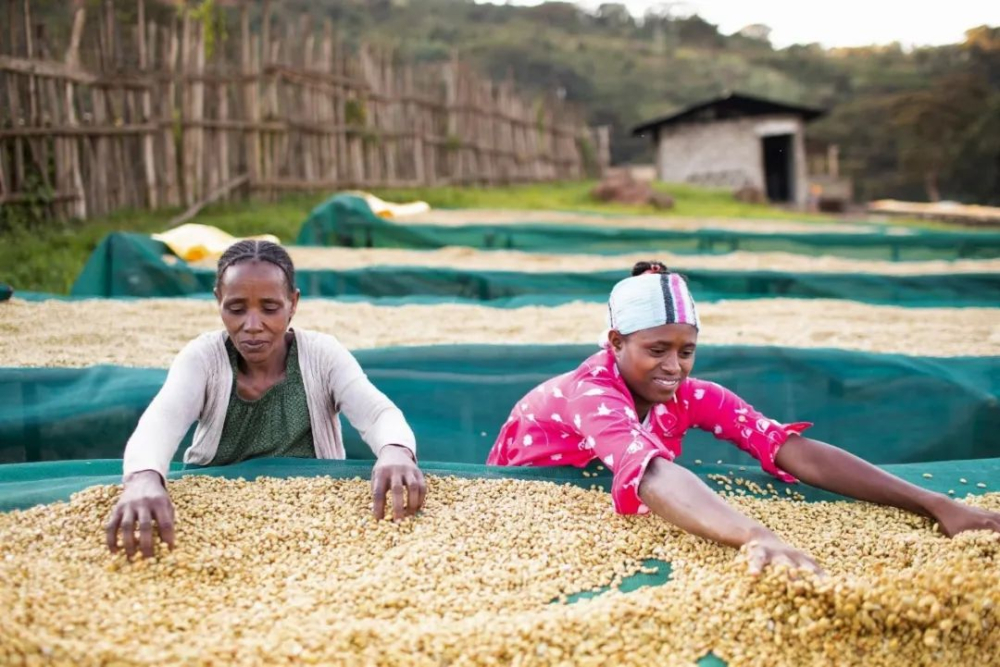
Traditionally, coffee from the Yirgacheffe region used the African natural drying method to process green beans, that is, spreading coffee cherries directly on the ground to sun-dry. Later, the local government introduced washed processing technology from Central and South America. Washing makes the coffee acidity brighter and more lively, and the floral and fruity aromas fresher and more prominent, while also avoiding negative flavors caused by excessive fermentation during natural processing.
The specific process of washed processing is: after harvesting, the coffee cherries are first machine-depulped to remove the skin and pulp, then placed in fermentation tanks to ferment for 12 to 36 hours, relying on microorganisms produced by the mucilage layer during fermentation to break it down and separate it, then placed in clean water tanks and scrubbed clean with tools, and finally spread out in the sun to dry. Front Street Coffee has a total of 7 Front Street everyday-drink beans. In Africa, the birthplace of coffee, Front Street chose Front Street Washed Yirgacheffe as the "flagship" for this origin, allowing consumers to taste the Yirgacheffe flavor at the lowest price—jasmine floral aroma, citrus and berry sweetness and acidity.
Front Street Ethiopia Washed Yirgacheffe Coffee Beans
Region: Yirgacheffe Region
Altitude: 1900-2000m
Processing Method: Washed
Variety: Heirloom
Flavor: Jasmine, Citrus, Berry
What is Operation Cherry Red?
To improve the income of local Ethiopian farmers and coffee quality, the Dutch trading company Trabocca BV launched the "Operation Cherry Red Project" in 2007, mainly targeting high-altitude producing areas such as Yirgacheffe in Ethiopia, improving washed, semi-washed, and natural processing techniques, and introducing professional cuppers. During the harvest season, different harvest volumes are set for different microclimate areas, and only 100% ripe red coffee cherries may be picked, with production of about 1,500 to 3,000 kilograms. The financial loan support, new hardware equipment, and production knowledge and technology provided by Trabocca greatly improved the quality of coffee beans in the Yirgacheffe region and even throughout Ethiopia, and coffee prices also increased accordingly, thereby increasing farmers' income.
Natural Processing
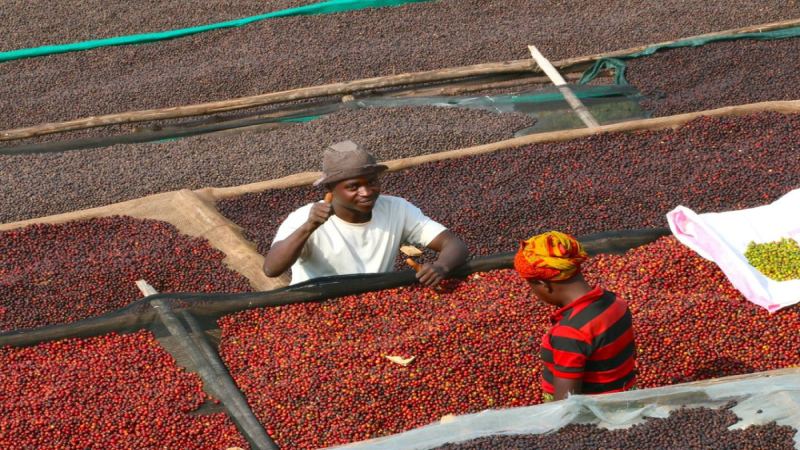
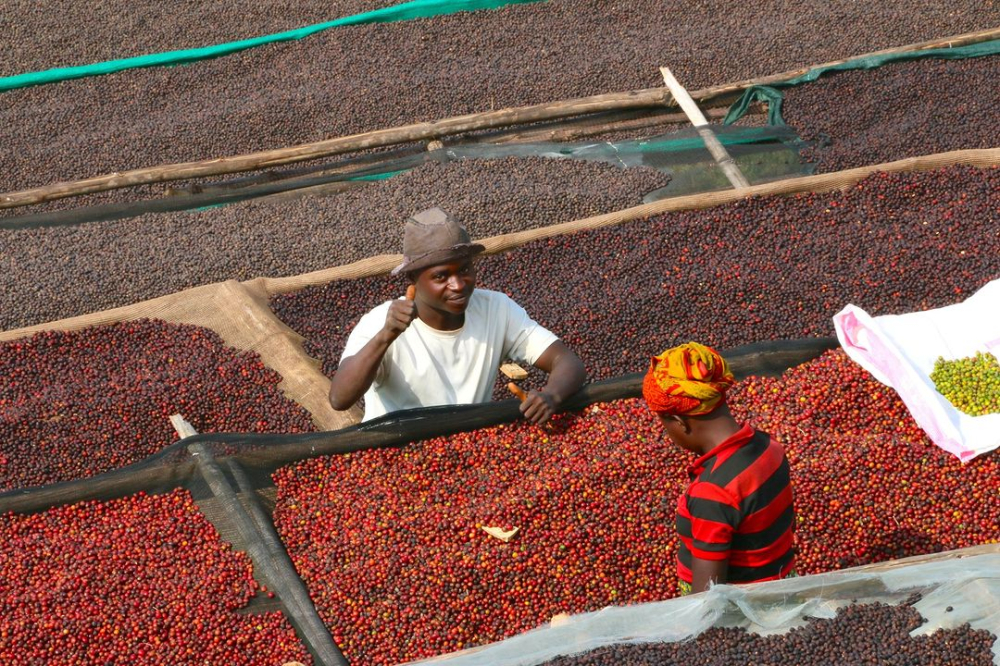
After the launch of Operation Cherry Red, Trabocca invested in new raised drying beds and shade nets for Yirgacheffe and other regions in 2008 to 2009. In addition, only fully ripe, plump red cherries were harvested, and they were manually turned at intervals throughout the day, with the aim of allowing the coffee cherries to dry evenly until the moisture content of the green coffee beans dropped to 11-12%, at which point the husk could be removed and they could be packed and stored.
Front Street believes that naturally processed Yirgacheffe has more berry acidity than washed processing, and a higher sweetness from fermented fruit. Therefore, Front Street also introduced Front Street Natural Red Cherry coffee into its espresso blend, blending it with whiskey-barrel-fermented Front Street Sherry coffee to create Front Street Sunflower Warm Sun espresso blend coffee beans. The espresso it produces has vanilla-cream-like crema, a rich wine aroma, and the berry acidity on entry gives the coffee a better sense of layering.
Front Street Ethiopia Yirgacheffe Natural Red Cherry Coffee Beans
Region: Yirgacheffe Region, Aricha Estate
Altitude: 1700-2200m
Processing Method: Natural
Variety: Heirloom
Flavor: Berry, Jasmine, Lemon
Yirgacheffe Coffee Bean Grading System
With the growth of green coffee bean exports, the Ethiopia Commodity Exchange redefined the grading order and standards. According to processing method, Yirgacheffe can be divided into two major categories: Type A and Type B. Based on green bean characteristics and preliminary cupping scores, it is divided into 9 grades from G1 to G9. Among them, G1-G3 refer to the cupping standards established by the Specialty Coffee Association of America (SCAA), evaluating detailed flavors, and G1 and G2 with scores no lower than 85 are classified as Q1. G1 is the highest grade of green beans, meaning 0-3 defect beans per 300 grams of green beans, while G2 means 4-12 defect beans per 300 grams of green beans. In other words, in terms of defect rate, G2 is higher than G1.
Brewing Suggestions
Front Street Yirgacheffe beans are known for their jasmine floral aroma and bright citrus-lemon acidity, so Front Street chooses a medium-light roast. High-altitude coffee beans are harder in texture and require high water temperature to extract aromatic substances. A finer grind also makes the flavor richer, and using a faster-flow V60 dripper can make the flavor layers more balanced.
When brewing coffee, if you want to drink coffee with a full aroma, Front Street recommends using fresh coffee beans. The coffee beans sold by Front Street are all freshly roasted within 5 days. Because coffees of different roast levels need to degas and rest, there is a 4-7 day resting period, so when you receive the coffee beans purchased from the Front Street shop, the coffee is in its optimal tasting period and can be brewed and enjoyed directly.
Dripper: V60
Water Temperature: 92-93°C
Grind Size: 80% passing rate with No. 20 standard sieve
Coffee-to-Water Ratio: 1:15
Dose: 15 grams
First wet the coffee bed with twice the amount of water as the coffee grounds, bloom for 30 seconds, then pour in a steady circular motion from the inside out with a small stream of water until the water reaches 125 grams, then begin stages. As the coffee liquid drips through, when the water level of the coffee bed falls below half of the dripper, begin pouring the final stage of 100 grams of water in the same circular motion. Once all the coffee liquid has dripped through, remove the dripper, and finally swirl the coffee in the server to mix evenly before enjoying.
Front Street compared the three coffees mentioned above. Each bean has both consistency and its own flavor charm. All three coffees have fresh floral and fruity notes with berry sweetness and acidity as the main focus. Among them, Front Street Washed Yirgacheffe everyday-drink beans have a light jasmine floral aroma, clear citrus notes, and a clean mouthfeel; Front Street Konga Cooperative, also washed, has clearer bright lemon acidity, prominent sugarcane sweetness, and shows a rounded tea-like quality as the temperature drops; finally, Front Street Yirgacheffe Natural Red Cherry, after grinding the coffee beans, has a rich tropical fruit aroma, with berry and fermented fruit sweetness on entry, a delicate mouthfeel, and a long finish.
The above content is compiled by CoffeeHunters, a coffee news website.


