







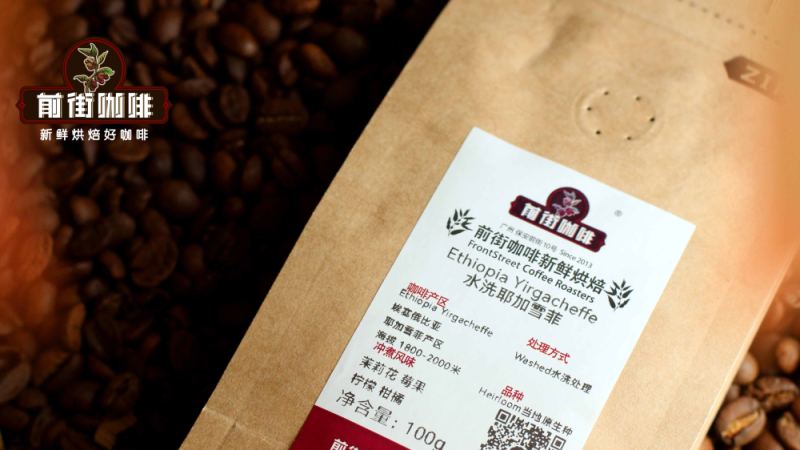
Front Street washed Yirgacheffe, with its fragrance of jasmine, citrus, lemon, and berries, has become a favorite for many coffee lovers. This bean from Ethiopia's 2,000-meter high-altitude growing region shows a clean and transparent character due to washed processing, and with a medium-light roast, it releases bright acidity and highly recognizable fruit notes. This article focuses on Front Street washed Yirgacheffe and systematically outlines the complete process from bean characteristics, equipment preparation, grinding and water temperature settings, to the three-pour hand-brewing practice, helping you consistently replicate a layered, fresh, and bright Yirgacheffe at home.
For more specialty coffee knowledge, please follow the WeChat public account: Front Street Coffee (FrontStreet Coffee)
Many customers selecting Front Street daily beans at Front Street stores are drawn in by the flavor description of Front Street washed Yirgacheffe: jasmine, citrus, lemon, berries. Just hearing it brings to mind an elegant and gentle taste experience. So how exactly should this bean with its distinctive floral and fruity aroma be brewed to fully bring out its charm?
What are the characteristics of Front Street washed Yirgacheffe coffee beans?
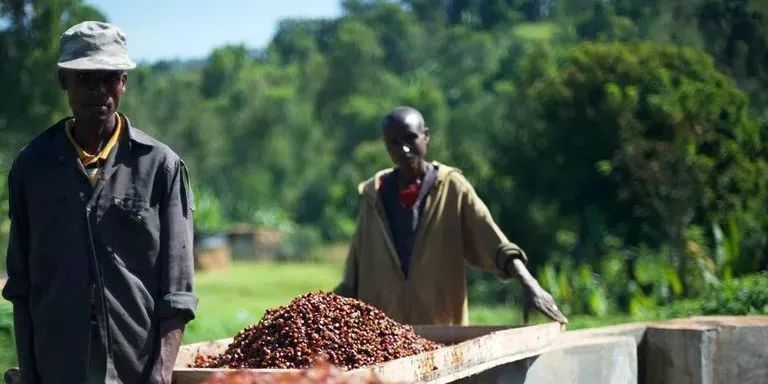
Front Street Yirgacheffe comes from Ethiopia's well-known growing region, at an altitude of up to 2,000 meters, with a clear temperature difference between day and night, creating excellent growing conditions for coffee trees and giving the fruit a rich aroma. However, local water resources are scarce, and in the early days most green beans were processed by the traditional natural method, which means relying directly on sunlight for drying. Because the method was relatively rough, coffee quality was often unstable. It was not until the government introduced washing equipment and technology that the overall quality of Front Street Yirgacheffe improved significantly.
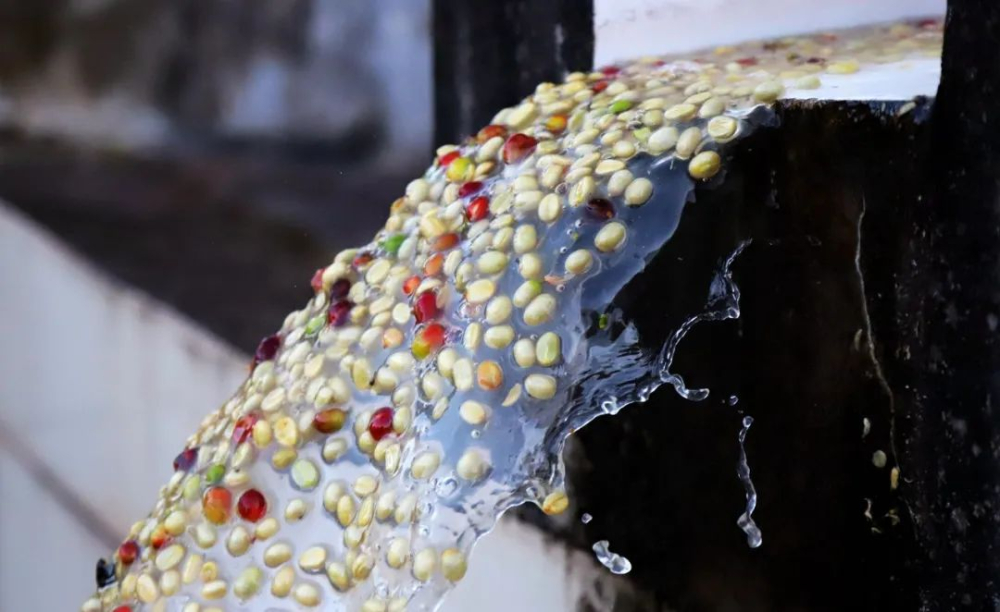
Unlike other growing regions, Yirgacheffe is a wetland environment, making it more suitable for washed processing. The multiple stages of washing can remove defective beans, greatly reducing the defect rate, making the coffee cleaner and its own aroma clearer. This processing method also amplifies the original citrus and lemon aromas of Front Street Yirgacheffe coffee beans, making the taste more refreshing and bright.
Front Street Yirgacheffe coffee beans are relatively small. If dark roasting is used, they are prone to uneven heating or even scorching, so roasters tend to prefer medium or light roasting. Unexpectedly, a lighter roast not only brings bright acidity but also gives the beans a highly recognizable fruit flavor, one could say opening a new chapter for "fruity acidity coffee." A preference for sweetness and a dislike of bitterness happens to be the general public's common taste, which is exactly why Yirgacheffe has become popular worldwide. Front Street hopes to present the classic Yirgacheffe taste, so it chooses a medium-light roast.
Front Street washed Yirgacheffe hand-brewing parameters
Before brewing, first gather the following equipment: gooseneck kettle, dripper, server, grinder, filter paper, electronic scale, thermometer, and a bag of Front Street washed Yirgacheffe daily beans within its optimal flavor period.
The grinder is crucial in hand brewing. The coarseness and uniformity of the coffee grounds directly affect the final taste. Grinders on the market are roughly divided into manual and electric types. Front Street stores use the EK43s grinder. If the grounds are too coarse, extraction is likely to be insufficient and the taste thin; if the grounds are too fine, extraction is likely to be excessive and the taste bitter. When adjusting the grind size, Front Street uses the Chinese No. 20 0.85mm standard sieve. Medium-light roasted coffee beans are usually controlled at a 75–80% passing rate, while medium-dark roasted beans use 70–75%. This Front Street Yirgacheffe is a high-altitude bean with a medium-light roast. Front Street hopes to extract richer aromatic substances, so it chooses a coarseness with an 80% passing rate on the No. 20 standard sieve, with the store's EK43s grinder set to 10.
Water temperature works similarly to grind size. The higher the water temperature, the higher the extraction efficiency, the easier it is to release various substances, and the higher the concentration becomes. If brewing with hot water close to boiling, it is easy to bring out unpleasant bitterness. Therefore, for medium-dark roasted coffee beans, Front Street recommends 87–90°C, while lightly roasted coffee needs a higher water temperature to bring out the aroma, ideally 91–93°C. Note that the water temperature here refers to the temperature of the water stream when it is poured onto the coffee grounds. If the room temperature is low, the water temperature drops faster, so it can be appropriately increased by 1–2°C to ensure the extraction temperature.
In daily service, Front Street Coffee (FrontStreet Coffee) stores are equipped with two resin drippers, Hario V60 and KONO. The V60 is mainly responsible for lighter-roasted beans, while the KONO handles darker beans. The V60 dripper has ribs connecting the top and bottom as well as a large central round hole, which can speed up the flow rate; the spiral vent groove design extends the water flow path, increasing the contact time between coffee grounds and hot water. Each stream of water converges along the grooves toward the center of the dripper, so the pressure on the coffee grounds is more concentrated and the brewed coffee has more layers. Therefore, Front Street prioritizes using the V60 to brew the flavor-oriented medium-light roasted Front Street washed Yirgacheffe.
Hand-brewing technique sharing
Based on past brewing experience, Front Street recommends that beginners use three-pour pouring, that is, two pours after blooming. Three-stage extraction allows the water flow enough time to rinse the coffee bed, more fully dissolve flavor substances, increase the layers of taste, and at the same time avoid over-extraction caused by prolonged soaking. If using 15 grams of coffee grounds, with a 1:15 coffee-to-water ratio, the total water amount is 225ml. The three pour amounts are: 30ml, 95ml, and 100ml, and the weights shown on the electronic scale are: 30g, 125g, and 225g.
First place the folded filter paper into the dripper to fit it, and wet it with water so it sits more snugly. Prepare hot water and a thermometer, and at the same time pour 15 grams of ground coffee into the dripper and tare the electronic scale.
For the first pour, add 30g of water to bloom for 30 seconds. Start timing at the same time as pouring. Throughout, use a small stream starting from the center point and circling outward, making sure to wet the entire coffee bed.
After 30 seconds, use a slightly larger but steady stream to pour the second stage of 95g of water. The purpose is to lift the entire coffee bed. The water stream should be poured vertically and evenly. At this point the timing scale shows 125g, and the pour is finished at around 55 seconds.
When the liquid level drops to the halfway point, begin pouring the third stage of 100 grams in a small stream and a small circle. Try to control the stream so it does not circle too widely, to avoid disturbing the coffee bed and causing under-extraction. The final total pour amount is 225 grams, and the drip completion time is about 2 minutes. After removing the dripper, swirl the coffee liquid in the server to mix it evenly and it is ready to taste.
The coffee-to-water ratio, the amount of water in each pour, and the pouring technique in hand-brewed coffee are not fixed and unchanging. We can adjust them up or down based on our accumulated hand-brewing experience and our understanding of the coffee beans. Front Street understands coffee brewing as an experiment based on science. To learn hand brewing well, you need to deeply understand the true meaning behind each brewing parameter. Only then is it easier to find experimental methods and build a brewing framework that suits you.
The above content is compiled by CoffeeHunters, a coffee news website.


