







Blue Mountain coffee is renowned for its perfectly balanced acidity, bitterness, sweetness, and mellow body, making it one of the most aromatic and smooth coffees in the world. This article will guide you through the growing environment, varietal characteristics, grading, and processing methods of Jamaican Blue Mountain, and provide a detailed analysis of the pour-over Blue Mountain parameters and brewing techniques recommended by Front Street Coffee. From the wooden barrel water frog logo of Clifton Mount Estate to the flavor differences between washed and natural processing, and then to the specific brewing steps with the KONO dripper, this one article covers all the key points of Blue Mountain coffee.
In recent years, Geisha coffee has risen to fame, surpassing Blue Mountain coffee in both reputation and price. So does its flavor necessarily surpass Blue Mountain as well? Front Street believes that Geisha indeed has an exceptionally outstanding flavor profile, but the consistent smoothness and richness of Blue Mountain coffee remains a unique existence in the world. Blue Mountain coffee blends acidity, bitterness, sweetness, and mellowness into one, exuding a strong yet elegant character that other coffees find hard to match. It is usually enjoyed as a single origin, but due to its scarce production and high price, many so-called Blue Mountains on the market are actually blends with similar flavors.
Coffee is ultimately a crop, and climate and geographical conditions have an enormous impact on it. Therefore, not just any place can produce Blue Mountain coffee. Even if the same tree variety is transplanted to Hawaii, Kenya, Papua New Guinea, or other regions with similar climates, the unique taste of Blue Mountain coffee beans cannot be replicated.
The Growing Environment of Blue Mountain Coffee
What exactly qualifies as Blue Mountain coffee? Does it necessarily mean it's Blue Mountain just because the packaging says so? The answer is no. Blue Mountain coffee specifically refers to coffee brewed from beans produced in the Blue Mountain region of Jamaica. Jamaica is an island nation in the Caribbean Sea, and it has been growing coffee since the early 18th century, with a history of nearly three hundred years. During British colonial times, the then Governor of Jamaica, Nicholas Lawes, brought a coffee tree back from Martinique in the Caribbean and promoted its cultivation in the St. Andrew region.
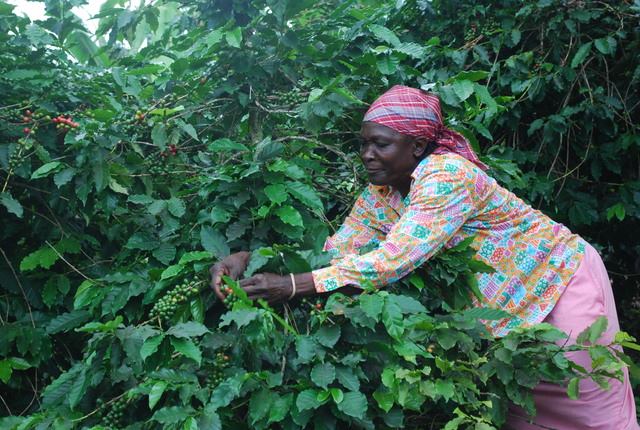
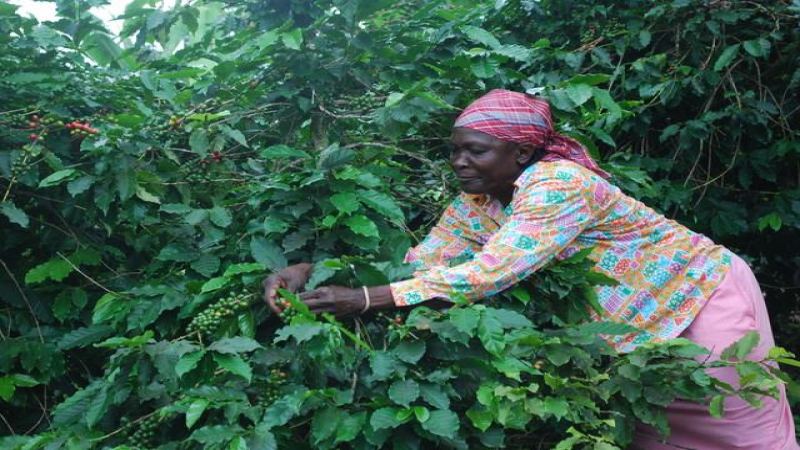
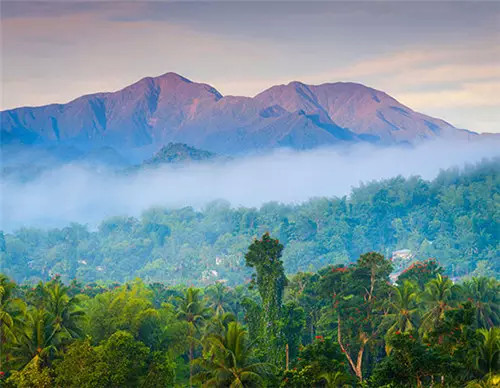
The highest peak of the Blue Mountains reaches 2,256 meters, and coffee is typically grown below 1,700 meters, with higher areas designated as ecological reserves. It is precisely because of local ecological protection that the Blue Mountains have become a famous tourist destination. Jamaica is located in the tropics, and coffee trees are distributed across the Blue Mountain range. The Blue Mountain range is situated in the eastern part of the island of Jamaica. On clear days, sunlight shines on the azure sea, and the mountain peaks reflect a sea-like blue radiance, hence the name. The air here is fresh and pollution-free, the climate is humid, temperatures are around 27 degrees, and mist and clouds linger year-round, providing natural shade for the coffee trees. The coffee trees all grow on rugged mountain slopes, making harvesting extremely difficult—only skilled local women workers are up to the task. During harvesting, only fruits at just the right ripeness can be selected, as underripe or overripe fruits both affect quality. Combined with fertile volcanic soil, this ultimately creates Blue Mountain coffee beans of exceptional quality.
Blue Mountain Coffee Varieties
There is another intuitive and crucial reason why Blue Mountain coffee is so smooth and rich—the variety. As is well known, Arabica varieties usually appear as single origin with better flavor. Blue Mountain coffee beans are of the Typica variety, one of the oldest surviving Arabica varieties. Its leaf tips are bronze-colored, the beans are oval or slender-pointed, the tree is tall, and the branches are slightly inclined at an angle of about 50 to 70 degrees; it is known as red-top coffee. The coffee tree leaves are elongated oval with smooth surfaces, the terminal branches are very long, and there are relatively few branches. The flowers are white and bloom at the junction of the leaf stalk and the branch. The flavor is elegant, but the plant is physically weak with poor disease resistance, and each tree has extremely low yield with few fruits. Ripe fruits resemble cherries and are bright red. Because Jamaican Blue Mountain coffee has weak disease resistance, low yield, and is susceptible to pest damage, this is also one of the reasons for its high price.
Blue Mountain coffee on the market is divided into several types:
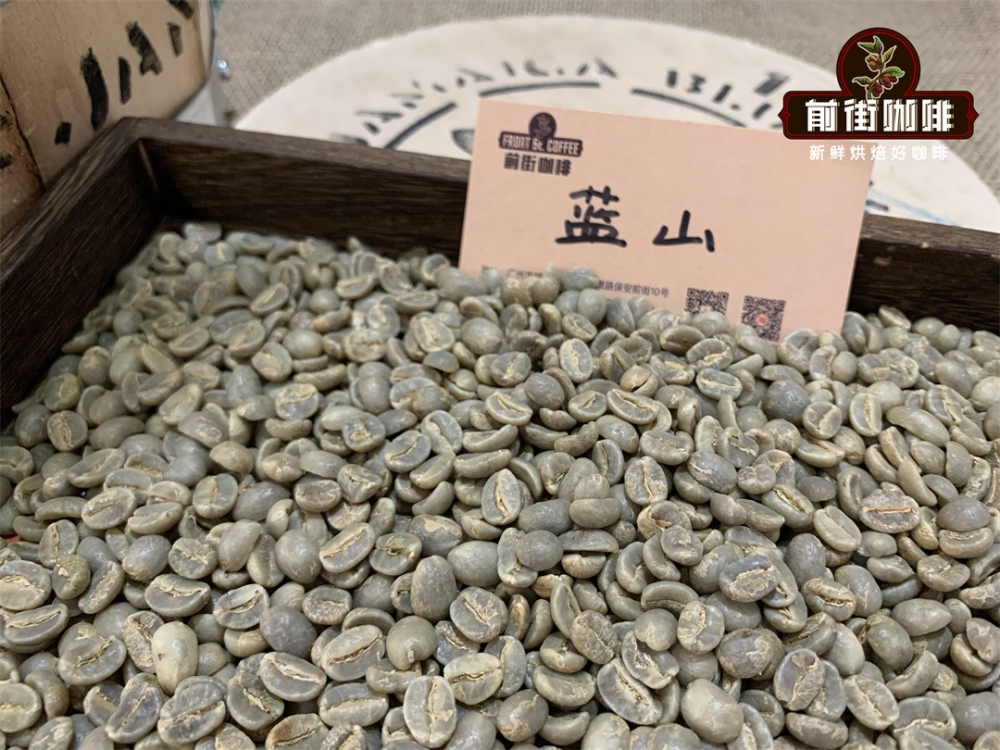
Blue Mountain coffee on the market may not necessarily be authentic Blue Mountain coffee. Based on growing altitude, Jamaica classifies coffee produced in the Blue Mountain range into Jamaican Blue Mountain Coffee, Jamaican High Mountain Coffee, and Jamaican Coffee. Only Arabica Typica coffee grown at altitudes between 910 and 1,700 meters, including in St. Andrew, St. Mary, St. Thomas, and Portland, can be called Jamaica Blue Mountain. Coffee grown below 910 meters but above 460 meters is called Jamaican High Mountain Coffee, and below 460 meters it is Jamaican Supreme Coffee. Among these, Jamaica Blue Mountain is further divided into four grades, ranked from highest to lowest quality: NO.1, NO.2, NO.3, and PB, where PB (peaberry) refers to round beans. The basic standards for the Blue Mountain No. 1 green beans that Front Street sources are: screen size 17 and above, defect rate below 2%, moisture content around 13%, with plump, uniform beans of a blue-green color. In terms of flavor, it combines pleasant acidity, sweetness, bitterness, aroma, and a full body.
I wonder if anyone has noticed that Blue Mountain coffee green beans are packaged differently from other coffee beans. Blue Mountain coffee is loaded in wooden barrels, and there is also a green water frog logo on the barrel—what does this mean? Front Street tells you: Blue Mountain coffee is the only coffee-producing region in the world that uses wooden barrels to pack green beans; all other regions use burlap sacks. That green water frog represents the Rainforest Alliance. The Rainforest Frog logo means that Clifton Mount Estate meets the "Sustainable Agriculture Network Standards" and has obtained Rainforest Alliance certification.
And the Jamaican Blue Mountain No. 1 coffee from FrontStreet Coffee comes precisely from Clifton Farm.
Clifton Mount Estate
Clifton Mount Estate is the oldest estate in Jamaica, having begun coffee cultivation in the mid-18th century, and by 1900 it had developed into Jamaica's largest estate. In 1978, the Sharp family took over the management of Clifton Mount Estate, improved the coffee growing environment within the estate, introduced advanced equipment, and established BMCP, currently Jamaica's largest coffee processing plant.
Clifton Mount Estate has always adhered to environmental protection principles, investing heavily in building solar power stations and wastewater treatment plants within the estate, and the removed fruit skins are also fermented into organic fertilizer.
Blue Mountain Coffee Processing Methods
Early Blue Mountain coffee only used washed processing, but in 2019 Clifton Farm attempted for the first time to launch a naturally processed Blue Mountain lot. Washed processing method: After harvesting, the fruits first undergo flotation screening to remove the skin and pulp, then ferment for 8 to 12 hours. After fermentation is complete, the beans are placed in a channel and pushed back and forth, using the friction between beans and the force of flowing water to wash the coffee beans until smooth and clean. The washed green beans then need to be dried until moisture content drops to 12% to 14%. After drying is complete, they undergo one more strict screening, and finally are packaged and stored in warehouses.
Front Street believes that washed Blue Mountain coffee has a rich aroma, a clean taste, and balanced acidity, sweetness, and bitterness, making it more representative of Jamaica's high-quality specialty coffee. Therefore, most of Front Street's everyday drinking beans are washed, because washed processing better showcases the flavor characteristics of the local coffee.
FrontStreet Coffee offers both natural and washed Blue Mountain coffee.
Front Street Brewing Recommendations:
Some may ask, how should such an excellent coffee bean be brewed to release its flavor? Actually, regarding coffee brewing, Front Street has always believed that the freshness of the coffee beans is a crucial factor—fresh coffee beans can maximize the display of rich flavors. The coffee beans shipped by FrontStreet Coffee are all within 5 days of the roast date, because Front Street deeply understands the enormous impact of freshness on flavor. Front Street's roasting philosophy is "Freshly roasted good coffee," so that every customer who places an order receives the freshest coffee upon delivery. The resting period for coffee is about 4 to 7 days, so when customers receive it, it is at its peak flavor.
Of course, some customers need Front Street to help grind the beans, which is also fine, but Front Street must remind you: once coffee beans are ground in advance, they no longer need to rest, because the pressure from carbon dioxide inside the packaging during transport also rounds out the coffee's flavor, so you can brew a cup immediately upon receiving the ground coffee. However, ground coffee needs to be brewed as soon as possible, because after contact with air it oxidizes quickly, the flavor dissipates faster, and the taste becomes less pleasant. Therefore, Front Street recommends buying whole beans and grinding fresh for each brew, so you can better enjoy the coffee's flavor.
Front Street Blue Mountain Coffee Brewing Parameters:
Front Street believes that the quality flavor of Blue Mountain coffee lies in its balanced acidity, sweetness, and bitterness, high body, and full aroma. For roasting, Front Street chooses a medium-dark roast, which highlights the coffee beans' nutty and cocoa aromas. Using a KONO dripper brings out a better body.
First, rinse the KONO dripper to let the filter paper adhere better to the dripper, pour out the water in the server, and add 15g of ground coffee. Bloom with 30g of water for 30 seconds, then begin pouring in a small stream in circles from the center until reaching 125g, then start a pause. When the coffee bed drops to half the height of the dripper, pour the second stage using the same technique until reaching 225g. Wait for all dripping to complete, then remove the dripper. Start timing from the beginning of pouring; the extraction time is 2 minutes 00 seconds. Then swirl the entire cup of coffee to mix, and pour into cups to taste.
[Front Street Natural Blue Mountain Coffee] Slight berry acidity, reminiscent of smoked plum and mulberry, with good overall balance, rich dark chocolate and nutty flavors, and a slight fermented note.
[Front Street Washed Blue Mountain Coffee] Rich dark chocolate and nutty flavors, creamy smooth mouthfeel, balanced acidity, sweetness, and bitterness.
Front Street believes that all coffee beans can be extracted by pour-over. The taste is closely related to brewing time, coffee-to-water ratio, water temperature, and technique. Different roast levels of coffee beans require different brewing equipment. So to brew a delicious cup of coffee, more practice is needed. Front Street has many affordable everyday drinking beans for everyone to practice with, and these seven everyday beans are also the most representative coffee flavors of their respective producing countries.
For professional coffee knowledge exchange and more coffee bean information, please follow Coffee Workshop (WeChat public account: cafe_style)
For more specialty coffee beans, please add the private WeChat of FrontStreet Coffee: qjcoffeex
The above content is compiled by CoffeeHunters, a coffee news website.


