







How do you read a Sumatra Mandheling stock coffee guide?
Sumatra Mandheling is a medium-dark roast with a full aroma, thick mouthfeel, and a bittersweet, low-acidity cup built on chocolate and nutty notes. It works both as a pour-over single origin and in espresso blends. This stock coffee guide covers the origin of the name, the G1 specialty grade, and how Golden Mandheling, Lintong Mandheling, Tiger Mandheling, and Aged Mandheling differ from one another.
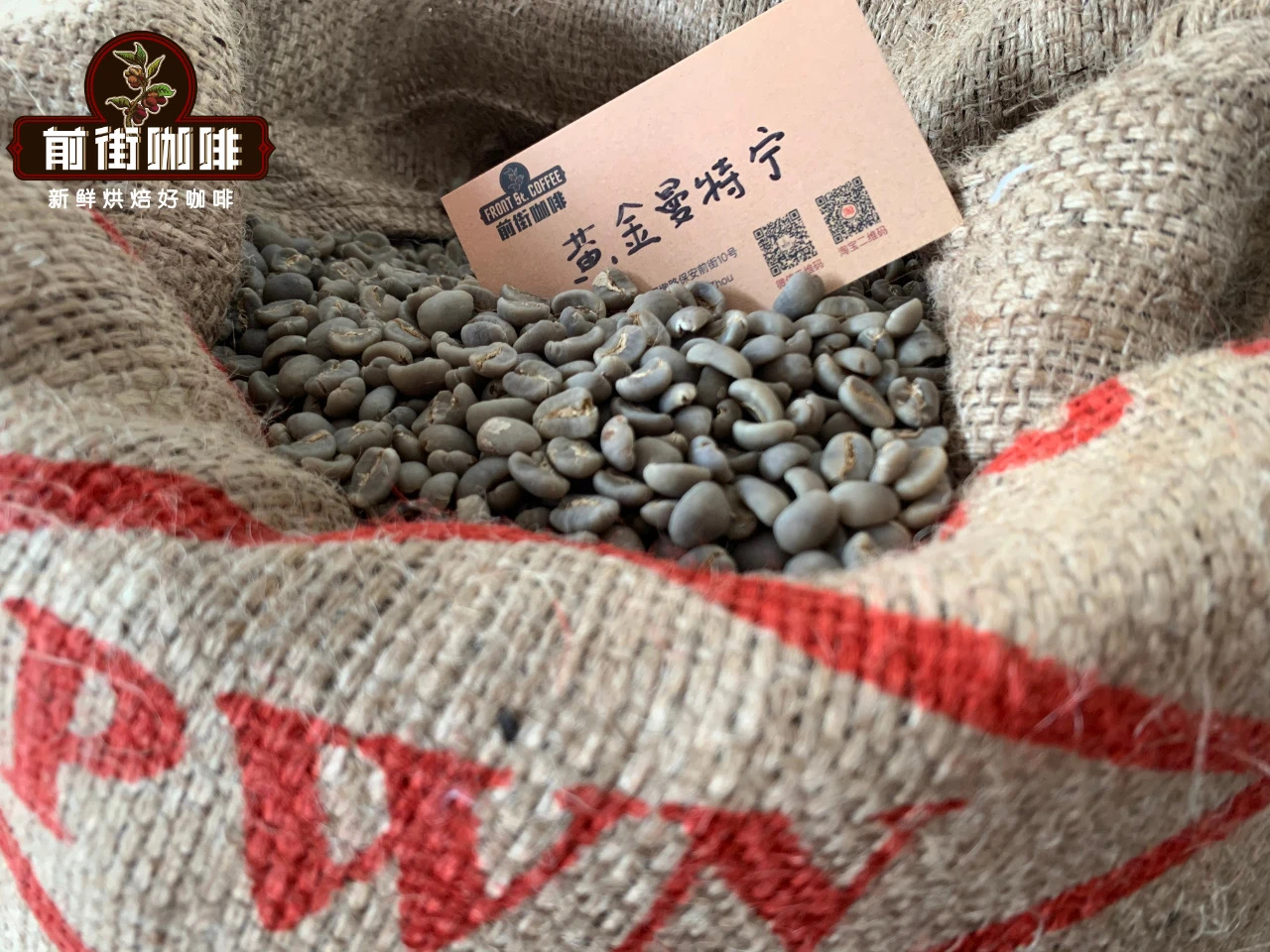
The name is not a region, port, or variety. It comes from a mispronunciation of the Mandailing ethnic group in Indonesia. Mandheling is produced mainly in northern Sumatra, alongside Java and Sulawesi, and most Indonesian coffee is Robusta, but Mandheling is the one that brought the country international recognition. After roasting, the beans are large, the green beans brownish-green or dark green, with a caramel-like aroma. PWN branding and grade labels are the main markers to check when buying.
Mandheling coffee, with its rich and intense flavor that is bittersweet, has become the choice of many coffee lovers returning to authenticity. One of the most popular medium-dark roast beans at FrontStreet Coffee is this classic offering from Sumatra, Indonesia. It is not only suitable for pour-over single-origin brewing, but also widely used in espresso blends due to its chocolate and nutty notes. This article will take you through the origin of the Mandheling name, introduce the grades, regions, and processing methods of PWN Golden Mandheling, and distinguish one by one the differences between Golden Mandheling, Lintong Mandheling, Tiger Mandheling, and Aged Mandheling. At the same time, we will also share the brewing parameters and techniques for FrontStreet's Golden Mandheling, helping you recreate a rich and sweet Sumatra flavor at home.
If you had to pick a crowd favorite from FrontStreet's medium-dark roast beans, Mandheling would be the undisputed champion. It has a full aroma, a solid mouthfeel, and a lasting sweet finish—a rare good taste. FrontStreet has always offered it as a single-origin bean, but more and more cafes have noticed that its thick chocolate and nutty notes also shine in espresso. As a result, you can also find Mandheling in many shops' blend recipes. Back when Blue Mountain was not yet known to the world, Mandheling was once regarded as one of the finest coffees globally. After roasting, the beans are large, and the green beans are brownish-green or dark green, with a special caramel-like aroma, a rich mouthfeel, and a bittersweet taste with almost no acidity. Many connoisseurs, after trying all kinds of floral and fruity beans, ultimately return to the embrace of Mandheling.
After all this talk, do you know how the name Mandheling came about? Today, FrontStreet will guide you through the past and present of Mandheling coffee. Mandheling originates from Sumatra, Indonesia, in Asia, so some also call it "Sumatra coffee." The main growing areas include Java, Sulawesi, and northern Sumatra. Most coffee produced in Indonesia is Robusta, but the one that truly made Indonesian coffee famous internationally is Mandheling. It is not a region, place name, port, or variety name—this name actually comes from a mispronunciation of the Indonesian Mandailing ethnic group.
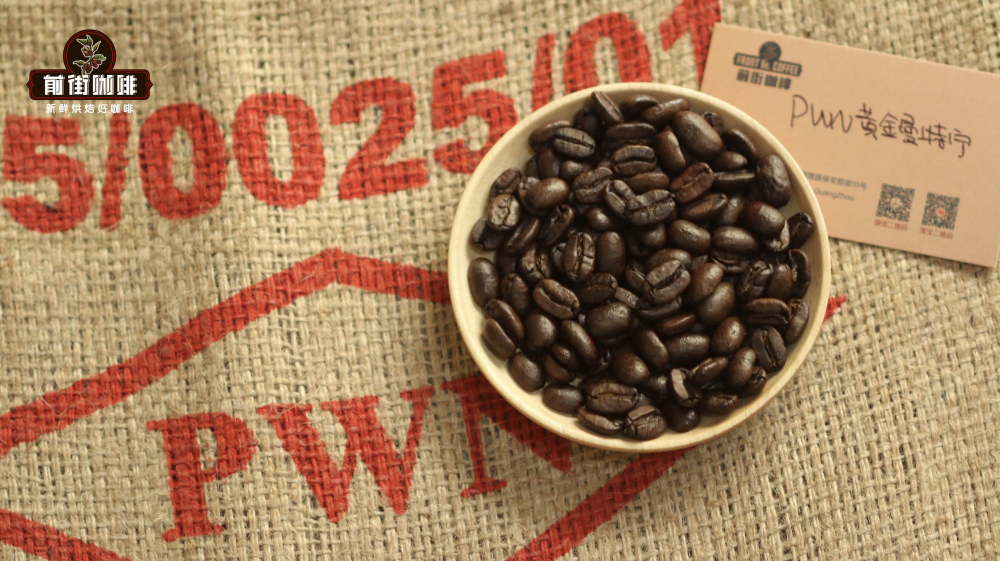
During World War II, when the Japanese army occupied Indonesia, a Japanese soldier drank an extremely aromatic coffee in a cafe and asked the owner what coffee it was. The owner mistakenly thought he was asking where he was from and replied "Mandailing." After the war, the soldier recalled the "Mandheling" he had drunk in Indonesia and commissioned an Indonesian coffee merchant to ship 15 tons to Japan, where it became hugely popular, and the name Mandheling spread. That coffee merchant was none other than the now-famous Pwani Coffee Company (PWN). FrontStreet Coffee's Golden Mandheling has always been sourced from PWN, undergoing one machine sorting and three manual hand-sortings, ensuring stable quality and outstanding flavor.
FrontStreet Coffee: FrontStreet PWN Golden Mandheling Coffee Beans
Country: Indonesia
Grade: G1 Triple Hand-Sorted
Company: PWN
Region: North Sumatra, Gayo Mountain, Aceh
Processing Method: Wet-Hulled
Variety: Ateng
Altitude: 1100-1600m
At the time, Mandheling was mainly sold to Japan, and Japan had extremely strict requirements for coffee quality and very rigorous management. Coffee usually had to undergo four manual sortings to remove defective beans before obtaining Mandheling with a dark green color and uniform bean appearance. Because the green bean quality was excellent, market demand for Mandheling kept rising, and even European and American markets became fascinated by it.
According to FrontStreet's understanding, although the name "Golden Mandheling" was popularized by the Japanese, PWN beat everyone to registering the "Golden Mandheling" trademark, so strictly speaking, only Mandheling produced by PWN can be called Golden Mandheling. Because Golden Mandheling has limited production but strong demand, a large number of counterfeit products have appeared on the market. Some, although also strictly screened and almost identical in size to the genuine ones, can still show a clear difference in flavor if your palate is sharp enough. Japan's "Golden Mandheling" also has its own brand, called "Ding Shang Mandheling." As for how PWN Golden Mandheling's flavor differs, you can buy them separately and compare to judge.
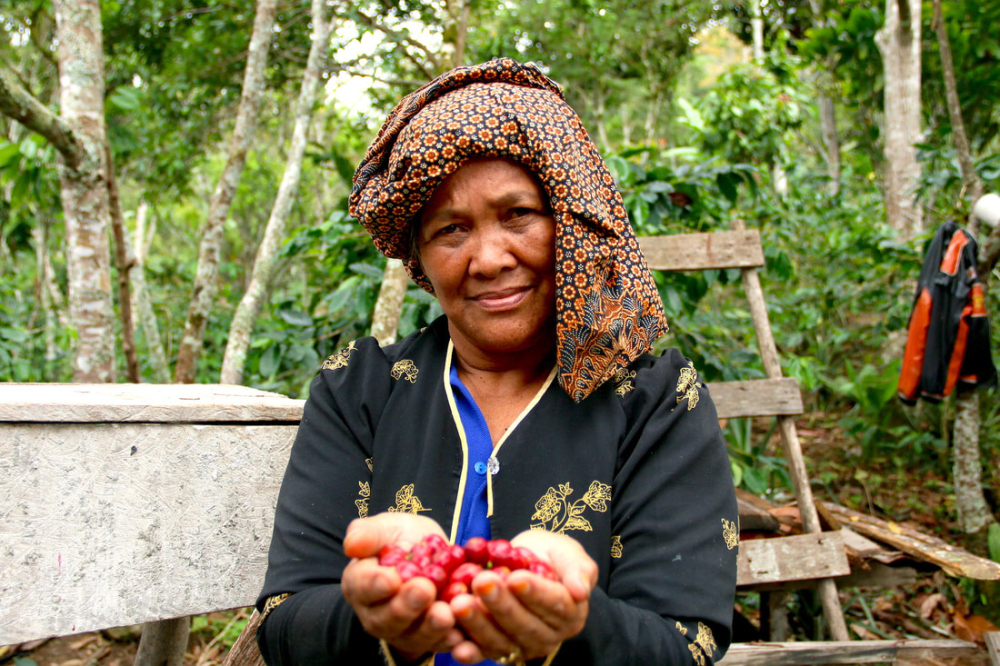
As mentioned earlier, there are many fake Golden Mandhelings on the market, so how do you distinguish the real from the fake? FrontStreet believes there are mainly two things to look at: the factory certificate of FrontStreet PWN Golden Mandheling coffee, and the coffee burlap sack printed with the PWN logo. When purchasing, you can ask the seller in advance to show these two things; if they cannot provide them, then you should be more cautious.
So what is the difference between Golden Mandheling and other Mandhelings? FrontStreet thinks the key lies in the producing company and the screening process. Strictly speaking, ordinary Mandheling, after fine screening and selection, can also approach the taste of Golden Mandheling. It's just that most of the better-quality Mandheling in Indonesia is purchased by PWN. As is well known, Mandheling coffee comes from around Lake Toba in northern Sumatra.
Traditional Arabica coffee from northern Sumatra is usually sold under the two names Lintong and Mandheling. To be precise, Lintong refers to coffee grown in a small area southwest of Lake Toba in the Lintong administrative region, with growing areas scattered across a high, undulating clay plateau covered with ferns. Lintong coffee is not grown under shade, does not use chemicals, and is almost entirely owned by smallholders. Mandheling is a broader term that includes Lintong coffee as well as other growing areas with similar conditions, such as Diari (capital Sidikalang) and northern Lake Toba.
Observant friends will notice that on FrontStreet's bean list, besides Golden Mandheling, there are also Aged Mandheling, Lintong Mandheling, and Tiger Mandheling. Their main difference is still the region. Speaking of which, let's look at a map of Indonesia together!
Lintong Mandheling comes from the Lintongnihuta region southwest of Lake Toba. This lake is one of the deepest lakes in the world, with a depth of 505 meters. The coffee-growing area is located on a plateau, known for its rich tree fern species, producing 15,000 to 18,000 tons of Arabica coffee annually. Tiger Mandheling comes from the Gayo mountain area in northern Aceh Province, Sumatra. Indonesia straddles both sides of the equator, and its hot, humid tropical rainforest climate brings abundant rainfall, while fertile volcanic soil provides favorable conditions for coffee cultivation. Gayo is located on the slopes around Takengon town and Lake Laut Tawar at the northern tip of Sumatra in the Aceh region. The average altitude of the growing area is between 1,110 and 1,600 meters, and the coffee is almost entirely grown by smallholders under shade trees.
Aged Mandheling is rather special, referring to Mandheling green beans that have been stored for a longer time. Compared with other Mandhelings, its characteristic is that it is sweet as honey. A successful aged bean will wear away Mandheling's inelegant acidity; the sour and astringent components are transformed into sugars through aging, making the coffee rounder and sweeter to drink. But be careful—a failed Aged Mandheling is like a coffee zombie, with a taste that is hard to swallow.
FrontStreet's shop currently has only one Golden Mandheling for sale; the other Mandheling green beans are out of stock. So today let's share the brewing parameters and technique for Golden Mandheling:
Dripper: KONO
Dose: 15g
Coffee-to-water ratio: 1:15
Water temperature: 86-87°C
Grind size: medium-coarse (70% passing through a No. 20 standard sieve)
FrontStreet Coffee brewing technique:
For the first pour, use 30g of water for a 30-second bloom. For the second pour, pour in a small stream in a circular motion until 125g, then pause. When the water level is about to expose the coffee bed, continue pouring for the third stage until 225g and stop. When the water level is about to expose the coffee bed again, remove the dripper. (Start timing from the beginning of the bloom.) The extraction time is 2'00".
The above content is compiled by CoffeeHunters, a coffee news website.


