







The alluring wine aroma in Front Street Americano has sparked strong interest in Front Street Sherry coffee beans among many customers. These beans, from the Mocha estate in Honduras, are processed using whisky sherry cask fermentation, giving the coffee a distinct fermented wine aroma and creamy mouthfeel. This article will provide a systematic overview for coffee enthusiasts, covering the background of Honduras' coffee industry, its grading system, the principles of sherry cask processing, and the complete brewing parameters for Front Street Sherry coffee beans. If you also want to recreate that hint of wine charm in Front Street Sunflower Warm Sun blend at home, why not give Front Street's brewing method a try.
Many customers are drawn precisely by the wine aroma in Front Street Americano. Upon learning that Front Street's own roasted Front Street Sunflower Warm Sun blend includes Front Street Sherry coffee beans, and that this is one of the key reasons Front Street Americano tastes so good, quite a few developed a fondness for Front Street Honduras Sherry and wanted to try extracting Front Street Sherry coffee beans by pour-over. So today, Front Street will use Sherry coffee as an example to talk about Front Street Honduras coffee beans.
When Honduras is mentioned, many people find the country quite unfamiliar. In their impression, the situation there is not very stable, and the only thing that comes to mind seems to be its famous tourist attractions.
According to Front Street's understanding, the reason Honduras did not export coffee historically was the lack of effective coffee bean transportation at the time. However, Honduras today is a coffee-rich country, and its coffee export volume ranks among the top ten globally. Honduras has more than 100,000 coffee farmers, over 90% of whom are small-scale farms. Honduras' growing conditions are actually similar to those of Costa Rica, Guatemala, and Nicaragua. Most farms are very small in scale. To this end, the government has also introduced policies to encourage smallholder operations and help coffee farmers overcome poverty, weather, and many other difficulties.

Hondurans classify coffee into three grades:
Strictly High Grown: Coffee grown at an altitude of 1350 meters or higher. This represents Honduras' highest grade of "Strictly High Grown coffee."
High Grown: Coffee grown at an altitude of 1200 to 1350 meters. This coffee is locally called "High Grown coffee" in Honduras.
Central Standard: Coffee grown from sea level up to 1200 meters.
The coffee grading used in Honduras is similar to that of El Salvador and Guatemala, describing and classifying coffee by growing altitude. Even though there is indeed a correlation between altitude and quality, coffee labeled this way is usually not traceable. On the other hand, coffee with production and sales records is also commonly seen marked in this way.
Front Street Sherry coffee is grown at the Mocha estate at an altitude of 1500-1700 meters. Below is the relevant information about Front Street Sherry coffee compiled by Front Street:
Front Street Coffee (FrontStreet Coffee): Honduras · Sherry coffee beans
Varieties: Caturra, Catuai, Pacas
Region: Marcala
Estate: Mocha Estate
Processing method: Fine washing Whisky cask fermentation
Today let's first clarify where the wine aroma in Front Street Sherry coffee beans comes from. Many customers ask the barista whether something was added during roasting. Actually no, this is related to the processing method of Front Street Sherry coffee. Generally speaking, high-quality Honduran coffee is processed by the washed method. Usually it must first be soaked, and during soaking, defective beans will float to the surface and can be drained away and discarded first. Then the good beans are put into a pulping machine, and the rotational force of the machine removes the skin. The peeled beans are then screened by machine to select excellent-quality beans. Generally, larger beans represent better maturity. Honduran coffee is dried using the natural method, so its taste always carries a faint fruity aroma.
But this coffee is different. The Mocha estate that produces these coffee beans uses the whisky cask fermentation method to process them. Sherry casks are barrels used by sherry wineries in the whisky industry for aging. Sherry is a famous fortified wine produced in the sunny Jerez region of southern Spain. Sherry is made through a process called the Solera System. Sherries of different vintages are blended and aged after fortification, and depending on the vintage, these barrels are stacked together. Each year, a portion of the liquid is drawn from the bottom barrels for bottling and sale. The bottom barrels are used for bottling and sale, while the top barrels are replenished with a corresponding proportion of wine, and this is what makes sherry unique.
The sherry cask processing method is to put washed green coffee beans into whisky sherry casks for fermentation. Oxygen outside the oak barrel passes through the barrel walls, oxidizing the green beans and causing fermentation. The fermentation process generally lasts 30-40 days at 15-20 degrees Celsius. It then chemically reacts with the oak, adjusting the oak's aromatic compounds. Coffee beans fermented in wine casks absorb the aromatic substances inside the barrel, enriching their own flavor. Now you know where the wine aroma in Front Street Sherry coffee comes from!
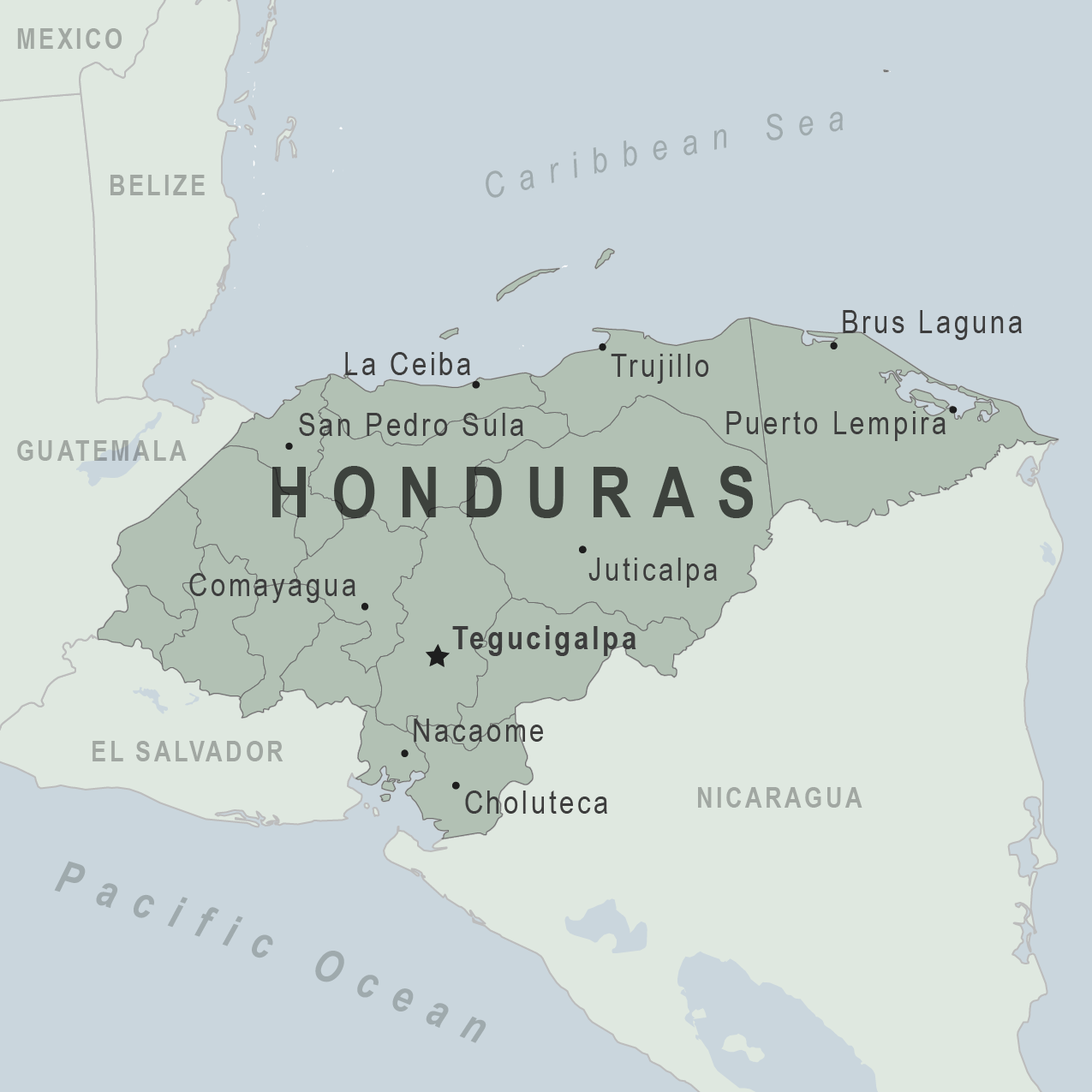
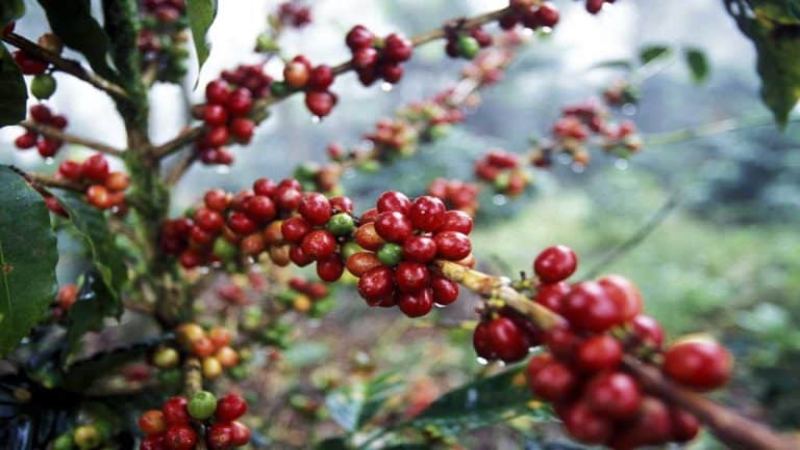
Front Street Honduras coffee beans are relatively large in particle size, uniform in size, and even and glossy in color. For ease of harvesting, coffee farmers prune the coffee trees to no more than 150 cm, because if they grow too tall, ladders must be used for picking, which is not only time-consuming but may also damage the tree by bending branches. Since each coffee cherry ripens at a different time, maintaining good coffee bean quality requires manual picking, and then selecting the ripe cherries from them. For coffee cherries on the same branch, picking often takes several weeks to complete the entire harvest. What is currently known is that Honduras has a total of six major producing regions.
This Front Street Honduras Sherry coffee has a rich and mellow mouthfeel, neither astringent nor sour, with high body and aroma, and is quite distinctive. Front Street believes that Honduran coffee can bring out multi-layered flavors depending on the degree of roasting. A medium roast can maximize the beans' sweetness, while a dark roast enhances. flavor, but the sweetness will not disappear. Generally speaking, a medium roast has the best taste, with a rich and unique aroma, and is deeply favored by Honduran coffee lovers.
Many customers say they don't know how to brew this Front Street Sherry coffee. Front Street now gives everyone a standard brewing method that you can use for reference.
Front Street brewing parameters:
V60 dripper
Water temperature 91℃
Water-to-coffee ratio 1:15
Coffee dose 15g
Grind size (75% passing rate on China No. 20 standard sieve)
Front Street brewing method: Use 30 grams of water for a 30-second bloom, pour in a small stream in a circular motion until 125 grams, then pause in stages. When the water level drops and is about to expose the coffee bed, continue pouring until 225 grams and stop. When the water level drops and is about to expose the coffee bed, remove the dripper. (Start timing from the beginning of the bloom.) Extraction time is 2'00".
Front Street Sherry coffee flavor and mouthfeel description: The fermented wine aroma is very obvious, strong and powerful. Medium acidity and sweetness, but the creamy mouthfeel and chocolate finish give this coffee a unique and delicious taste.
The above content is compiled by CoffeeHunters, a coffee news website.


