








What Is Luwak Coffee Made Of and Where Does It Come From?
Kopi Luwak is made from coffee cherries that an Asian palm civet eats and partially digests; the beans are collected from the animal's droppings, washed, and roasted. It comes from Indonesia, the same archipelago where the Dutch planted coffee seeds in 1696 and where robusta later replaced arabica after leaf rust struck in 1877.
Indonesia remains the global leader in robusta production, with arabica at only 6 to 10 percent of output. Its wet-hulling method yields low acidity, full body, and earthy, herbal notes, which is why Golden Mandheling, Lintong, and Kopi Luwak all share that heavier profile when brewed.
Indonesia is not only a major origin on Asia's coffee map, but also the global leader in robusta production, with arabica accounting for only 6%-10% of its total coffee. From the Dutch first introducing the crop in the 17th century, to the remarkable comeback after leaf rust devastated the industry in 1877, from its unique wet-hulling method to its signature flavor of low acidity, full body, and earthy, herbal notes, Indonesian coffee has always stood apart. This article will walk you through the development of Indonesian coffee, its growing environment, variety composition, and current harvesting situation, compare Golden Mandheling, Lintong Mandheling, and Aged Mandheling one by one, and include brewing recipes for Front Street PWN Golden Mandheling, Kopi Luwak, and West Java coffee, helping you easily brew a cup of good coffee that is not sour but full-bodied.
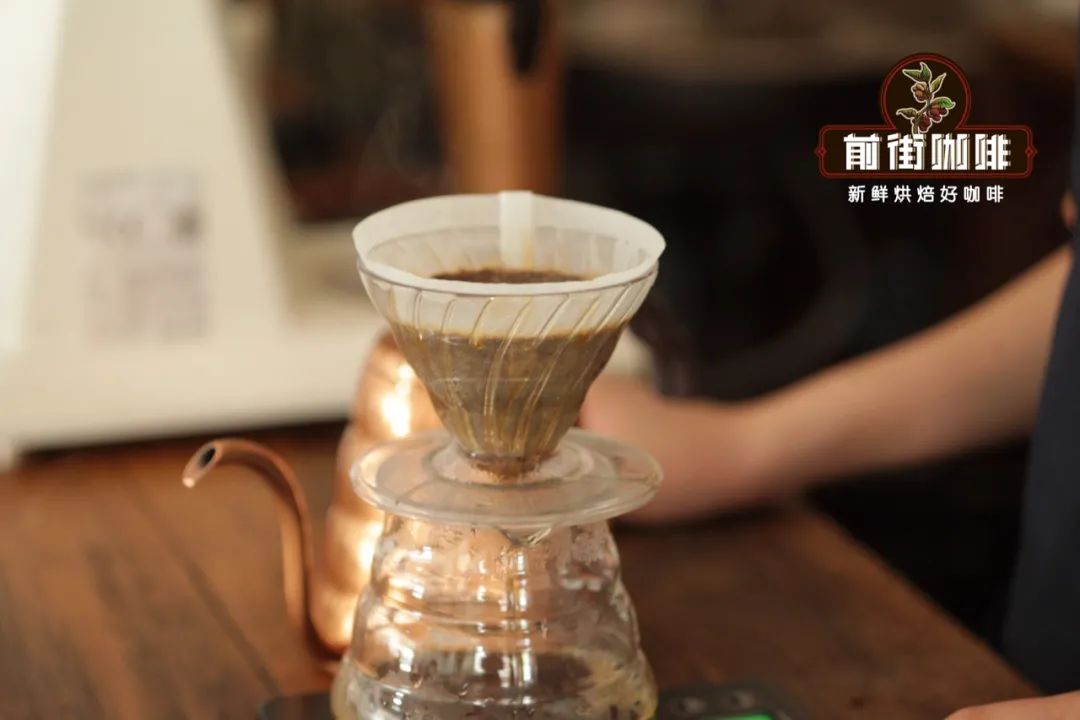
To learn more about specialty coffee insights, welcome to follow the WeChat public account "Front Street Coffee"
The Indonesian coffee produced by Front Street has always been known for its rich, full aroma and mouthfeel, with extremely restrained acidity. On the palate, you can taste caramel- and dark chocolate-like sweetness and a long finish. It is precisely this quality that has made Japanese coffee lovers almost obsessed with it. Indonesia is not only a pivotal coffee origin in Asia, but also consistently ranks among the top in global production. Come, let Front Street explain it all to you one by one!
A Brief History of Indonesian Coffee Development
Indonesia is located in Southeast Asia, and the story of local coffee can be traced back to 1696—that year, the Dutch brought coffee seeds to this archipelago, and after successful trial planting, Java Island was established as the core area for large-scale coffee cultivation. Unfortunately, the good times did not last. In 1877, an outbreak of leaf rust (a bacterial infection disease) swept across the entire region, and almost all coffee trees were affected. Arabica, with its weak disease resistance, was almost completely lost, and Indonesia's coffee industry suffered a severe blow.
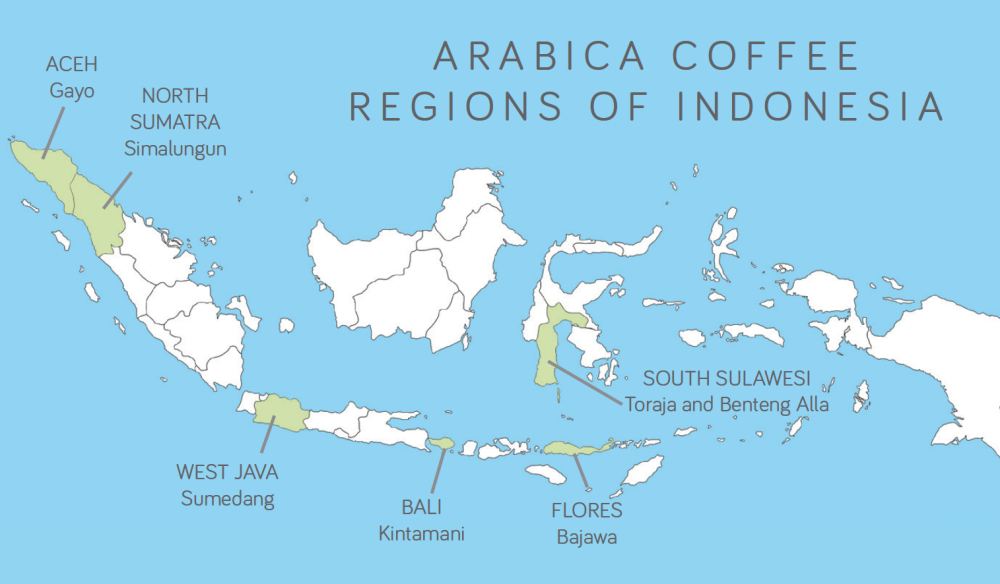
Afterward, Indonesia had no choice but to introduce robusta varieties from Africa. With its excellent disease resistance, robusta helped Indonesia's coffee economy gradually recover. Today, it is the world's most important robusta-producing country, with arabica accounting for only 6%-10% of national coffee production. The famous Mandheling is one of its representatives. Robusta cultivation is concentrated in southern Sumatra, while arabica is rooted in northern Sumatra. Front Street PWN Golden Mandheling (available at FrontStreet Coffee) comes from the Gayo highlands of Aceh Province in northern Sumatra.
Based on Front Street's years of understanding of Indonesian coffee, the Indonesian beans with the best quality from farm to cup come from three major producing regions: Sulawesi, Sumatra, and Java. Among the three, Java has the most outstanding production capacity and is known for arabica, with bright acidity and clean fruit notes. Today, about 90% of Indonesia's national output comes from robusta beans, which are currently mostly used for commercial-grade coffee.
History of Indonesian Coffee
The arabica coffee tree was first delivered to Indonesia in the 17th century by the Dutch East India Company, when the region was still under Dutch colonial rule. The Dutch introduced it with the intention of shaking the Arab monopoly in the global coffee trade.
The earliest batches of coffee were led by the Dutch colonial government and planted in the south of Bogor and Sukabumi, as well as in the Batavia area (present-day Jakarta); afterward, plantations were successively established in East Java, West Java, and Central Java, and some areas of Sulawesi and Sumatra were also distributed with them. To open plantations, large tracts of forest were cleared for cultivation. It was also because of the expansion of plantations that Central Java experienced large-scale infrastructure construction throughout the 19th century—many railways and roads were built to transport beans from various parts of the island to different ports and then export them overseas.
The Growing Environment of Indonesian Coffee
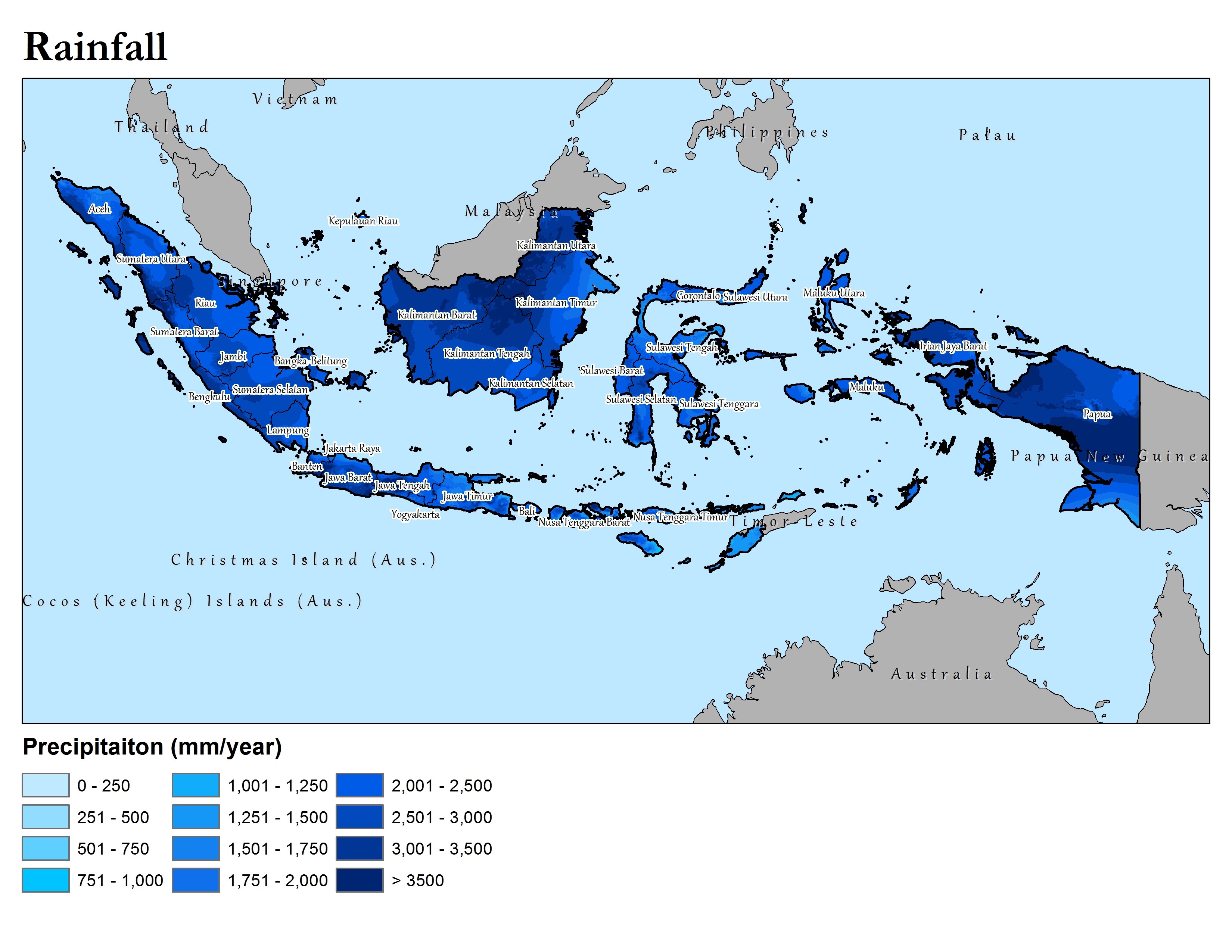
Indonesia has a tropical rainforest climate with very typical characteristics: an average annual temperature of about 25°C to 27°C, no four-season alternation throughout the year, and annual precipitation of about 1600 to 2200 mm. This archipelago happens to sit on the volcanic belt, with deep, fertile soil rich in minerals, providing ideal growing conditions for coffee trees. The national elevation range is 900 to 2100 meters, and the main coffee-producing areas are roughly concentrated at around 1200 meters above sea level.
Indonesian coffee beans have two harvest periods a year: the main harvest period is around September-October, and the secondary harvest period is in May-June. This year, Indonesia's coffee bean exports have risen significantly compared with last year. According to analysis, on the one hand, last year's high bean prices suppressed exports; on the other hand, this season's recovery in production boosted shipments. Between these two factors, Indonesia's coffee exports have seen a large increase this year.
The Variety Composition of Indonesian Coffee Beans
Indonesian coffee beans can be classified into three major categories: arabica, robusta, and liberica. Further subdivided, there are more than 20 varieties, with common ones including Typica, Caturra, Catimor, and Timor Hybrid, as well as S288, S795, and Sidikalong.
The Current State of Indonesian Coffee Bean Cultivation
Today, Indonesia's coffee cultivation area has exceeded 1 million hectares, accounting for about 24% of the national cultivated land area; the average cultivation area per coffee farmer is about 1.7 hectares, and the total number of coffee trees nationwide is about 2.7 billion. Of this, 66% of coffee is grown in modern ways on estates, while the rest comes from small farms operating under traditional models.
More than 95% of Indonesia's coffee beans are produced by smallholders, while large estates are mainly distributed in East Java and Central Java provinces. Most local production uses organic methods. At present, a total of 19 farmer cooperatives and exporters have obtained international organic coffee certification and sell into internationally certified markets.
Wet Hulling Method
Indonesians call this processing flow giling basah—what is often referred to overseas as the semi-washed method or wet-hulling process. After the fruit is picked, the skin and pulp are first removed, then it is briefly sun-dried. General processing methods dry green beans to a moisture content of 11%-12%, while the semi-washed method only reduces it to about 30%, then immediately hulls off the parchment, leaving the green beans directly exposed. These hulled naked beans still need to continue drying until they are dry enough to be stored safely without spoiling. Coffee processed this way often has much lower acidity than most methods, while its body is more prominent.
Flavor
The flavor of Indonesian coffee is usually deep and bold, with very distinct earthy notes. The semi-washed process gives it a series of unique flavors: earth, mustiness, spice, wood, tobacco, and leather. Its finish is often long and lingering, tasting like unsweetened dark chocolate. Sumatra is now Indonesia's most popular producing region, famous worldwide for dark roasting, and produces Mandheling and Ankola—the two Indonesian beans with the highest global recognition and the most outstanding quality, often carrying smoky or roasted complex tones. Front Street has observed that coffee lovers' attitudes toward Indonesian beans often go to two extremes: those who like them can never drink enough of them, while those who do not like them avoid them entirely. Whenever a customer comes to Front Street and asks for a pour-over without acidity, Front Street immediately recommends Indonesian beans.
Sumatra's Representative: Mandheling Coffee Beans
When talking about Sumatran coffee, Mandheling is inevitably a name that cannot be avoided. The core producing area of Mandheling is around Lake Toba at the northernmost tip of Sumatra. The three common types on the market are Golden Mandheling, Lintong Mandheling, and Aged Mandheling.
The differences among the three are as follows: Lintong Mandheling retains the most orthodox Mandheling flavor, with a particularly strong herbal note; Golden Mandheling is a selected grade, with uniform bean size and all screen sizes above 18 mesh, having undergone more than 4 rounds of manual bean-by-bean selection, with a clean and transparent mouthfeel and equally excellent body; Aged Mandheling, as mentioned earlier, due to differences in the wet-hulling method, brings out a more intense and heavy flavor that not everyone may accept. Therefore, when a customer wants a cup of coffee that is not sour and sufficiently full-bodied, FrontStreet Coffee first recommends Golden Mandheling.
Taking [FrontStreet Coffee Front Street PWN Golden Mandheling] as an example
Flavor description: Caramel, nuts, and chocolate form the base, interwoven with spice and herbal notes. On the palate, it is cleaner than Lintong Mandheling. The signature herbal, earthy, and woody notes of Mandheling basically disappear, replaced by a richer caramel sweetness, while the fruit acidity also appears bright and elegant.
Produced by FrontStreet Coffee: Front Street PWN Golden Mandheling coffee beans
Brewing parameters: Kono dripper; water temperature 86°C; dose 15 g; coffee-to-water ratio 1:15; grind size: medium grind (EK43s, 11 setting)
The reason for choosing the Kono dripper: this dripper has few ribs concentrated at the bottom, so the filter paper clings tightly to the wall, thereby limiting airflow and extending the contact time between water and coffee grounds, allowing the coffee grounds to be extracted more fully and increasing the body of the mouthfeel.
FrontStreet Coffee Kono dripper
The brewing uses staged extraction: first pour 30 g of hot water for a 30-second bloom, then switch to a small stream and pour until 125 g, then pause; when the water level falls and the coffee bed is about to be exposed, continue pouring until 225 g to finish (timing starts from the bloom), with a total extraction time of 2 minutes 00 seconds.
Kopi Luwak Coffee Beans
When talking about Indonesian coffee, Kopi Luwak coffee beans absolutely cannot be missed. FrontStreet Coffee's bean list also includes this bean. Its variety belongs to robusta—because the civet's activity area is concentrated at low and medium altitudes, and coffee grown in this altitude band is mostly robusta; if high-altitude arabica were made into Kopi Luwak, the yield would be extremely limited.
Although the coffee beans pass through the civet's digestive tract without being digested, their surface has already been eroded by the highly corrosive digestive fluids in the body. This type of digestive fluid contains a unique protease that can cut the original long protein chains of the coffee beans, breaking them down into tiny particles, thereby generating short-chain peptides and amino acids.
The processing step of Kopi Luwak takes place inside the civet's body. Animals are far more acute than humans at judging fruit. The civets select only coffee cherries with high ripeness and sufficient sugar. After fermentation in their bodies, the beans take on a unique herbal aroma, and the body is also extremely outstanding. Front Street's Kopi Luwak is likewise known for its excellent body, and its quality stands up to scrutiny.
However, the controversy over Kopi Luwak lies not only in its distinctive flavor, but also in its production method. This coffee is scarce and expensive, so merchants, in order to increase output, keep large numbers of civets in captivity and force-feed them coffee beans. Some people believe this practice deprives the animals of their freedom, and that the state of overeating also lowers the quality of the coffee beans.
Taking [FrontStreet Coffee Kopi Luwak] as an example
Flavor description: herbal and nutty tones, accompanied by dark chocolate and fermented flavors.
Brewing parameters: Kono dripper; water temperature 86°C; dose 15 g; coffee-to-water ratio 1:15; grind size: medium grind (EK43s, 11 setting)
The brewing also uses staged extraction: bloom with 30 g of water for 30 seconds, then pour, pausing after reaching 125 g; when the coffee liquid is almost drained and the coffee bed is about to appear, pour again until 225 g to finish, with a total extraction time of 2 minutes.
Java Island Coffee Beans
Java coffee beans have a refined aroma, relatively low acidity, a delicate and smooth mouthfeel, and excellent balance. In terms of fragrance and acidity, Java beans are even superior to Sumatran coffee. Java has a tropical rainforest climate, hot and humid year-round; the northern coastal plains have the highest temperatures, while the mountainous areas are much cooler, and excessive humidity often creates enervating weather. Because it is located in a volcanic zone, Java's land is especially fertile.
Most of Java's outstanding-quality coffee comes from the west—West Java Province is a first-level administrative region of Indonesia, and local beans usually come from state-owned estates or private estates. State-owned estates, backed by government resources, find it easier to open up European and American markets, and their fame is correspondingly greater. These plantations are basically located in highlands above 1400 meters above sea level, and with the nourishment of volcanic soil, they cultivate a unique flavor difficult to find elsewhere.
Taking [FrontStreet Coffee West Java Coffee] as an example
Flavor description: The fruity aromas of mango, red wine, and peach juice are very strong, also carrying notes of plum and jackfruit, with a clean and sweet finish.
Brewing parameters: V60 dripper; water temperature 90°C; dose 15 g; coffee-to-water ratio 1:15; grind size: medium-fine grind (EK43s, 10 setting)
The brewing also uses staged extraction: first bloom with 30 g of hot water for 30 seconds, slowly pour with a small stream until 125 g and pause, then pour until 225 g to finish, with an extraction time also of 2 minutes 00 seconds.
The above content is compiled by CoffeeHunters, a coffee news website.


