







Yunnan small-bean coffee has risen to fame in recent years, delivering impressive results in both international competitions and flavor evaluations, and the domestic coffee industry has accordingly entered a fast lane. Customers at Front Street stores often proactively ask whether Yunnan beans are available, showing just how popular they are. This article starts from the definition of small-bean coffee, sorts out Yunnan's main growing regions and variety changes, focuses on Front Street's experience growing Typica in Lincang, recommends three distinctive Yunnan coffee beans, and finally includes Front Street's brewing parameters and technique suggestions to help coffee lovers fully understand Yunnan coffee's regional flavors and tasting points.
To learn more about specialty coffee, welcome to follow: Front Street Coffee (Frontsteet Coffee)
In recent years, Front Street Yunnan small-bean coffee has continued to gain attention. Whether in international competition performances or cupping flavor evaluations, it has achieved remarkable results. The topic of Yunnan coffee has only grown hotter, and China's coffee industry is also accelerating forward driven by Yunnan beans. Quite a few customers who visit Front Street stores proactively ask whether Yunnan coffee is available, so today let's start with small-bean coffee and take a serious look at Yunnan as a growing region.
What is small-bean coffee?
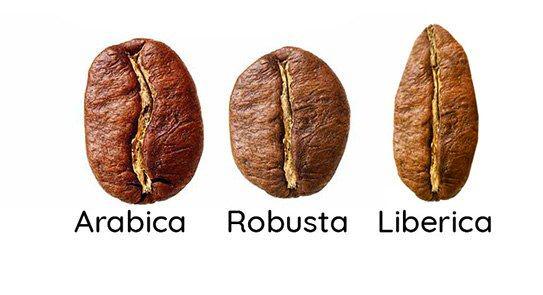
The most common coffee on the domestic market is Yunnan small-bean coffee. So-called small-bean coffee is actually Arabica. In earlier years, before coffee varieties were divided in detail, Arabica was called small-fruit coffee because its fruit was smaller than Robusta (medium-fruit variety) and Liberica (large-fruit variety), corresponding to medium-fruit and large-fruit respectively.
Yunnan coffee growing regions
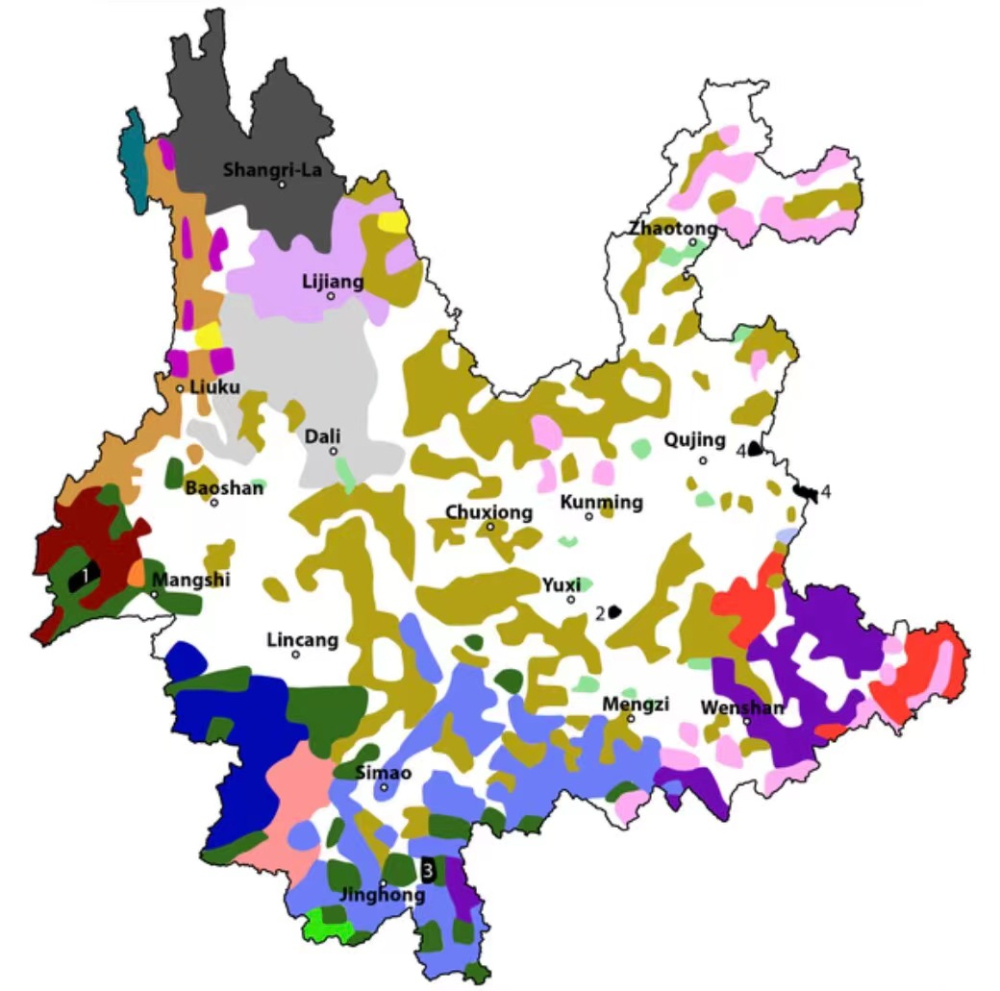
As long as it is Arabica grown in Yunnan, it can be called Yunnan small-bean coffee. The better-quality Yunnan coffee regions are mainly concentrated in Lincang, Baoshan, Simao, Xishuangbanna, Dehong, Nujiang and other places at elevations of 1,000 to 1,500 meters. The higher the elevation where coffee trees grow, the more obvious the temperature difference between day and night, the slower the trees grow, and the more nutrients they accumulate, with more sugars and aromatic substances as well. In the end, the beans' flavor performance is naturally better.
Yunnan's exceptional geographical conditions have allowed its coffee industry to expand rapidly. In 2014, both planted area and output accounted for more than 99% of the national total. Baoshan's Lujiangba has an average annual temperature of 21.5°C, with an extreme maximum temperature reaching 40.4°C, and basically no frost period throughout the year.
Yunnan small-bean coffee varieties
At present, the main variety grown in Yunnan is Catimor, with a small amount of Typica, Bourbon and Geisha planted in some areas.
In the 1970s and 1980s, coffee leaf rust broke out in many countries in Central and South America, severely impacting production. A Portuguese coffee research center named CIFC, addressing the leaf rust problem, crossed Timor, which carries Robusta genes, with the Bourbon variant Caturra in 1959, breeding Catimor, which has strong disease resistance and high yield. In order to cope with losses caused by leaf rust, and with the encouragement and promotion of coffee organizations, Central and South America began large-scale introduction in the 1980s.
In 1988, Nestle took a liking to this suitable land in Yunnan and distributed Catimor seedlings, which could better resist leaf rust, to local people. Only then did people pick up coffee cultivation again and supply beans to Nestle for a long time.
Because Catimor carries Robusta genes, its flavor performance is not ideal, and it does not taste good when drunk directly. As a result, the public's impression of Yunnan coffee long remained at the level of instant coffee. But Front Street Coffee (FrontStreet Coffee) has always believed that a truly excellent cup of Yunnan coffee can fully show the region's distinctive flavor under traditional natural or washed processing. To remove those unpleasant flavors in Yunnan coffee, change must be made at the root of the variety.
So in 2013, Front Street Coffee (FrontStreet Coffee) began growing Typica and a small amount of Bourbon in Lincang, Yunnan, for experimental research and cultivation, and after harvest sold them through Front Street Coffee (FrontStreet Coffee)'s online and offline stores.
There are two reasons for choosing Typica: first, it is one of the oldest coffee varieties, with pure Arabica genes, elegant and clean flavor, and has long been recognized as a specialty coffee variety; second, the earliest coffee trees planted in Yunnan were precisely Typica, brought in by French missionaries.
Although Front Street Coffee (FrontStreet Coffee) grows Typica, this does not mean Yunnan Catimor is no good. With the spread of specialty coffee culture, Catimor in Yunnan's producing regions is now cultivated and grown more scientifically, and both flavor and quality have improved greatly.
Yunnan small-bean coffee bean recommendations
Front Street Coffee (FrontStreet Coffee) currently sells three Yunnan coffee beans: "Front Street 2013 Natural Typica Coffee Beans," "Selected Regional Daily Beans - Yunnan Baoshan Washed Catimor Coffee Beans," and "All-Red-Cherry Natural - Catimor Coffee Beans from Baoshan Lujiangba Region."
All three beans carry the signature flavors of Yunnan's producing regions: nuts, caramel, and plum-like tones. Their differences are: "Front Street Natural Typica" has a cleaner flavor, with acidity, sweetness and bitterness in balance and a prominent sweet aftertaste; "All-Red-Cherry Natural" has a berry-like sweet-and-sour sensation while retaining the flavor characteristics of Yunnan's producing regions; "Baoshan Washed Catimor" is a regional bean carefully selected by Front Street Coffee (FrontStreet Coffee), allowing consumers to taste the regional charm of Yunnan coffee under traditional processing at the best value.
How to brew Yunnan small-bean coffee so it tastes good?
Front Street Coffee (FrontStreet Coffee) suggests leaning toward a balanced approach when brewing these three Yunnan beans. There is no need to deliberately amplify acidity, nor to over-polish the finish.
Therefore, it is recommended to use 15 grams of coffee powder, with a coffee-to-water ratio of 1:15. If you want a clearer flavor, you can use 1:16. Choose a V60 dripper, control the water temperature at 88°C to make the acidity softer, and use a medium-fine grind, about the texture of fine granulated sugar (75% passing through a No. 20 sieve).
Specific brewing method: pour 30g of water in the first stage and bloom for 30 seconds; in the second stage, pour in a small stream in circles up to 125g, wait until the water level in the coffee bed drops by half before continuing to pour, still in a small stream in circles, up to 225g, and after all dripping is complete, the total extraction time is about 2 minutes 10 seconds.
The above content is compiled by CoffeeHunters, a coffee news website.


