







Although Panama is world-famous for its canal, the specialty coffee produced in its western highlands equally captivates coffee lovers around the globe. From Boquete to Candela, volcanic ash soil and a unique microclimate nurture the exceptional Geisha. This article will give you a comprehensive understanding of Panama's coffee-growing regions, the legendary journey of the Geisha variety, the rise of La Esmeralda Estate, and the flavor profiles and purchasing advice for different grades of Geisha. Whether you are a beginner just starting out or a seasoned enthusiast seeking to advance, you will find the right cup of Panamanian specialty coffee for you.
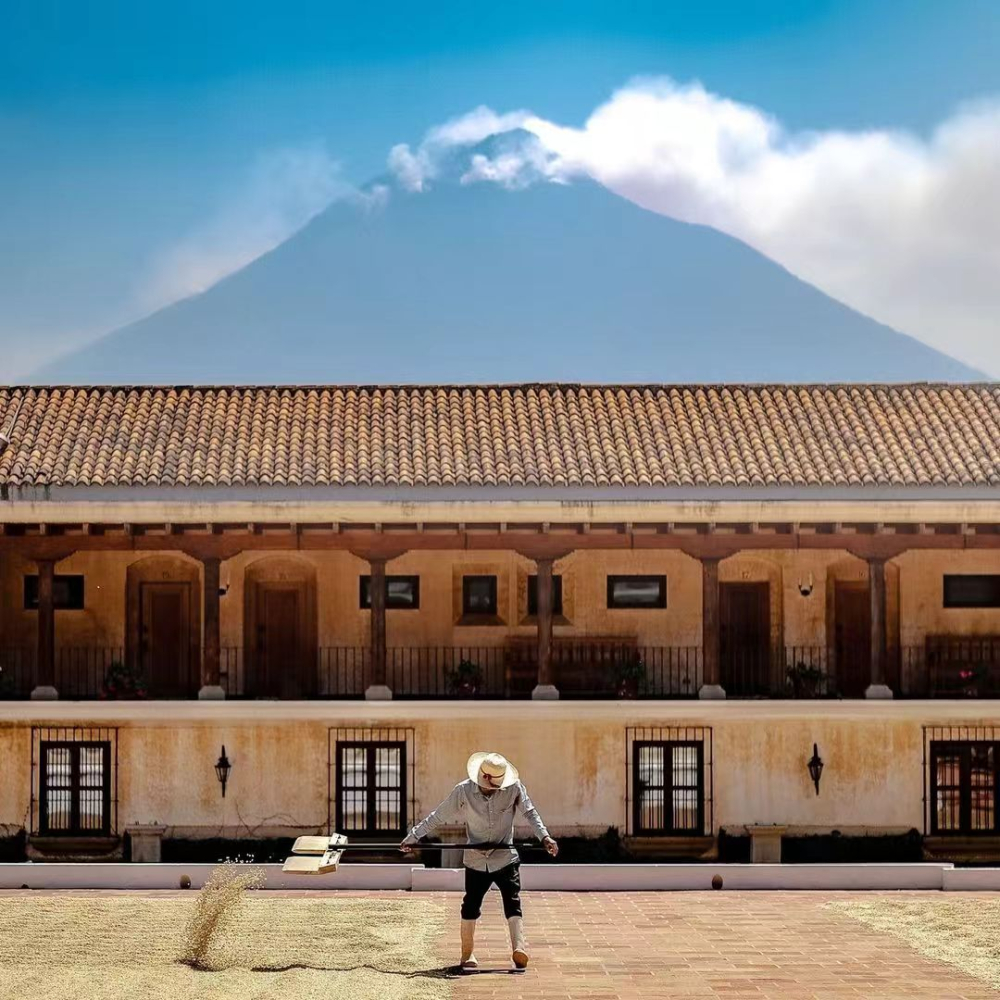
Specialty coffee is quite demanding when it comes to growing conditions, typically requiring altitudes of 1,500 meters or even over 2,000 meters, along with suitable rainfall, sunlight, temperature, and soil. Some of the world's renowned coffee origins also benefit from unique geographical environments—the mountain mist of Jamaica Blue Mountain, the natural shade provided by afternoon clouds drifting over Hawaii Kona, and the volcanic ash soil of Guatemala Antigua. These natural endowments together lay the foundation for the outstanding quality of specialty coffee.
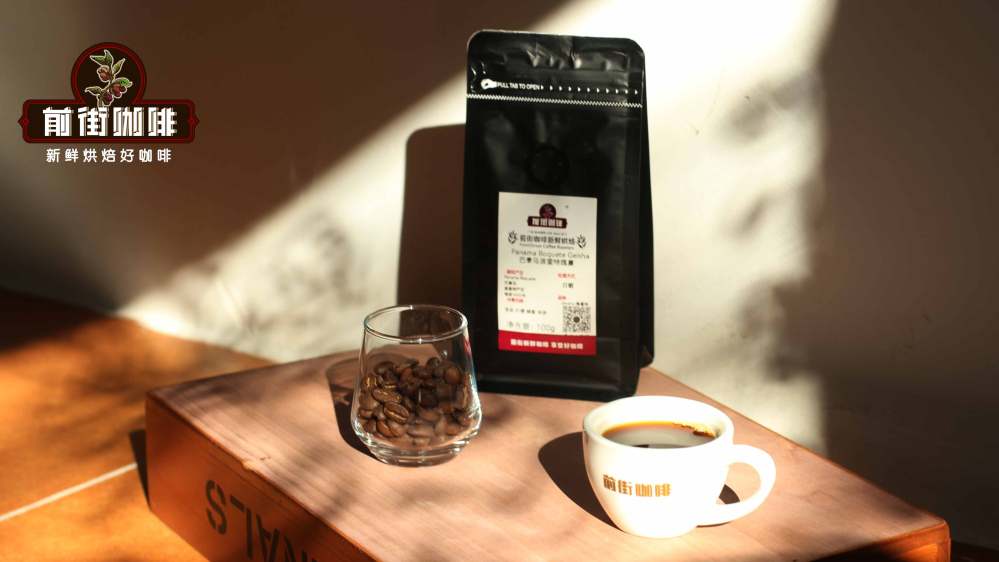
If you want to step into the world of specialty coffee, almost every barista will suggest you start by tasting Front Street Coffee Panama Geisha. It not only lets you clearly appreciate its distinctive layered flavors but also helps you quickly build an understanding of world-renowned origins, paving the way for your subsequent coffee tasting journey.
If you're trying it for the first time, you can choose Front Street Coffee Panama Boquete Geisha. It carries a captivating orange-blossom honey sweetness, with a clean and gentle mouthfeel—it doesn't taste like a bitter coffee at all, but rather closer to a floral and fruity tea.
If you're an advanced enthusiast, we recommend the excellent value Front Street Coffee Emerald Green Label Geisha; if you're giving it as a gift or sharing with fellow coffee lovers, you can choose the highest grade Front Street Coffee Emerald Red Label Geisha.
The microclimate conditions of the Panamanian highlands are the key factor behind the region's distinctive coffee style. The east-west orientation of the Republic of Panama's terrain causes cold air to flow along the central mountain range and accumulate in areas above 6,500 feet, thereby creating rich and diverse microclimates around Boquete and Volcan Candela. These areas have consequently become the core producing regions of Panama's specialty coffee. The region's distinctive coffee is cultivated in the nutrient-rich and balanced soil of the Baru Volcano area.
When people mention Panama, most first think of the Panama Canal and know very little about Panamanian coffee. Panama's main coffee-producing regions are concentrated around the Baru Volcano in the west. The small town of Boquete on the eastern side of the volcano became famous through La Esmeralda Estate, while Volcan Candela on the western side is another important coffee town, home to the renowned Carmen Estate.
A hundred years ago, the construction of the Panama Canal attracted a large number of highly educated Europeans. After the canal was completed, many senior engineers chose to stay because they were fond of the pleasant climate of western Panama, purchasing estates in Boquete and thus pioneering Panama's specialty coffee cultivation. However, in the early days, Panamanian coffee had little reputation and quite limited production. So why was Geisha able to rise suddenly in 2004 and dominate the top coffee rankings for so long? This story begins with the origins of Geisha.
La Esmeralda Estate brought Geisha into the view of coffee lovers worldwide. However, before Geisha rose to prominence, it was merely an ordinary member of the windbreak trees at the edge of the coffee plantation. Because when planted below 1,400 meters, the Geisha variety has mediocre flavor and extremely low yield, with almost no economic value; but if planted in high-altitude areas above 1,500 meters, tempered by cold winds, it can display astonishingly exquisite flavors. The owners of La Esmeralda Estate, the Peterson father and son,偶然 discovered this pattern and began to plant and process Geisha separately, entering the 2004 BOP competition under the name Jaramillo Special, which sparked a global Geisha craze overnight.
Where exactly does Geisha originate from?
According to various sources, its transmission path is roughly as follows: in 1931, a British envoy ventured deep into Ethiopia's Geisha Mountain to collect disease-resistant beans—between 1931 and 1932, the seeds were sent to Kitale, Kenya, for trial planting under the names Geisha and Abyssinian—in 1936, young plants were transplanted to Uganda and the Lyamungu Coffee Research Institute in Tanzania for trial planting—in 1953, Costa Rica's CATIE coffee research institution repeatedly introduced young plants from Lyamungu and other countries—in 1963, Panamanian coffee farmer Don Pachi introduced disease-resistant Geisha varieties from CATIE. Despite documentary evidence, Geisha's journey spanned decades, making it difficult to confirm whether today's Geisha is descended from that original batch of seeds, and whether crossbreeding occurred along the way is impossible to verify.
Front Street Coffee Panama Geisha's distinctive orange-blossom honey flavor seems to possess an "orange aroma gene kissed by God," likely benefiting from Panama's superior mountainous and water environment. The low-temperature stable climate brought by high altitude allows the coffee to grow slowly, resulting in high bean density and exceptionally intense and unique flavors. As good as Geisha is, its yield is extremely limited. La Esmeralda Estate produces less than 12 tons of Geisha annually, with top lots amounting to only two to three hundred kilograms—far from enough to meet the demand of coffee lovers worldwide. As a result, major renowned producing regions around the world have been racing to trial-plant Geisha, striving to present the diverse flavors of Geisha under different terroir conditions.
Panama's east-west geographical layout causes cold air to flow along the central mountain range and converge above 6,500 feet, thereby creating diverse unique microclimates in Boquete, Volcan, Candela, Santa Clara, and other areas. Combined with nutrient-rich and balanced volcanic ash soil, these regions have become famous origins for Panamanian coffee and even the world's top specialty coffee.
Coffee cultivation in Panama began in 1780 with the first Typica saplings brought by Europeans. Today, varieties such as Typica, Caturra, Catuai, and Geisha are grown, producing coffees with rich flavors of jasmine, citrus, ripe fruits, berries, caramel, distinctive sweetness, vanilla, and chocolate. From the varietal structure, it's clear that Panama's total coffee production is not high, at only about 240 tons per year, with Geisha accounting for less than 5%. Panamanian coffee is predominantly washed-processed, and its clean, crisp character better highlights Geisha's citrus-honey aroma. However, in recent years, natural-process Geisha has also performed impressively, with transaction prices frequently surpassing washed lots.
Panama is home to several world-class specialty coffee estates. On the eastern side of the volcano in the Boquete region, La Esmeralda Estate needs no introduction—its Jaramillo coffee farm's Geisha Mario and Canas Verdes' Geisha Montana have repeatedly set new Geisha auction records. In the same region, Finca la Valentina won the 2011 BOP championship with its "Geisha Arista Agrario." On the western side in the Volcan region, Carmen Estate is equally formidable, with its specialty coffee consistently ranking in the top five of BOP competitions for years.
The above content is compiled by CoffeeHunters, a coffee news website.


