







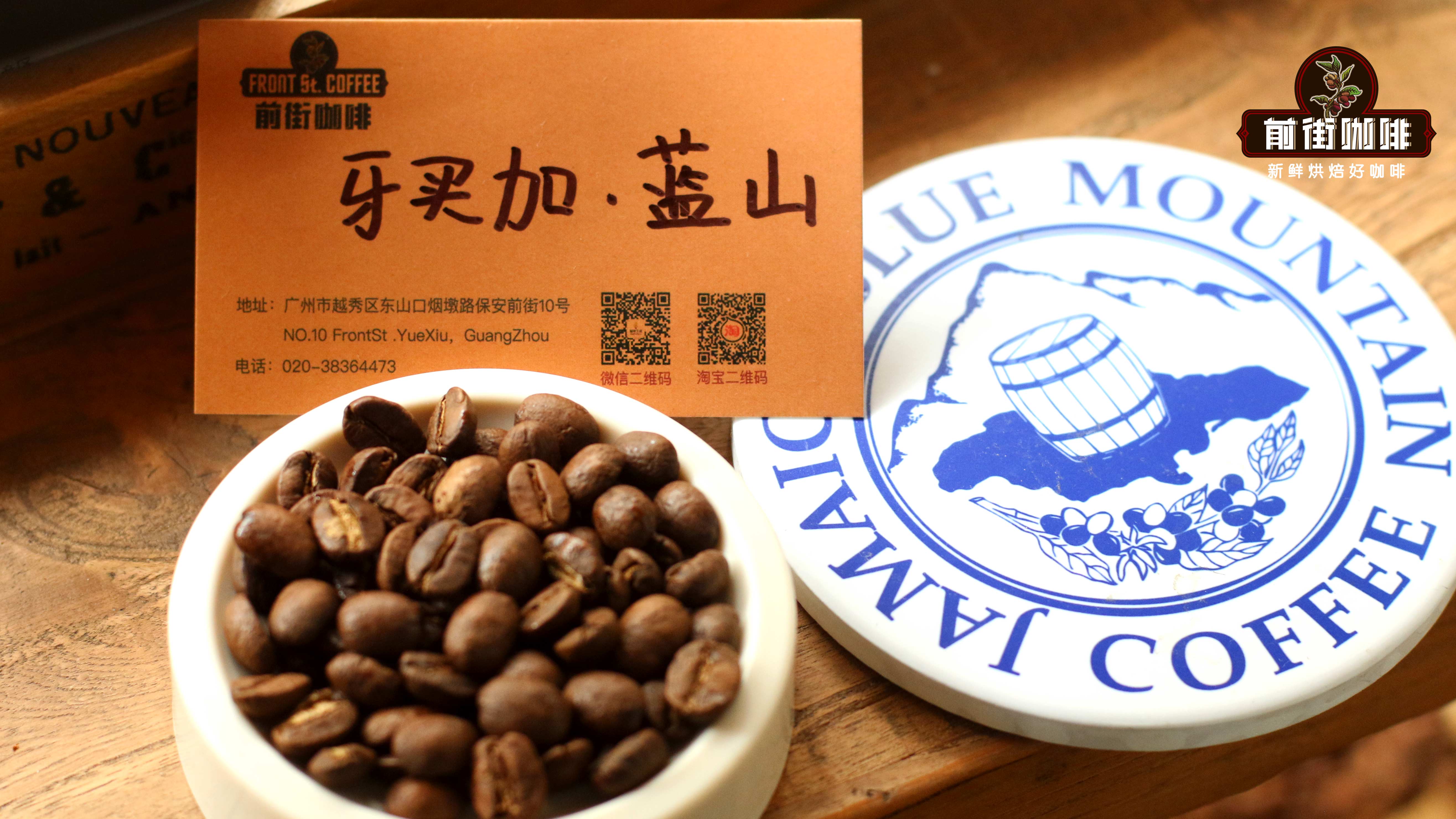
As one of the world's recognized top specialty coffees, Blue Mountain coffee's strict grading system has sparked curiosity among many enthusiasts. The Jamaican government, through the Coffee Industry Board, has set clear certification standards: only coffee grown within a specific elevation range in the Blue Mountains and of the Typica variety can bear the name "Blue Mountain." This article will analyze Blue Mountain coffee's grading system in detail, including the criteria distinguishing Blue Mountain No. 1, No. 2, No. 3, and peaberry, while sharing practical tips for identifying authentic Jamaican Blue Mountain coffee. Using Front Street Blue Mountain No. 1 from Clifton Estate, washed processed, as an example, it will introduce its flavor characteristics and brewing approach, helping coffee enthusiasts gain a more comprehensive understanding of this legendary coffee.
For those who regularly drink coffee, specialty coffee beans usually have a corresponding grading system—the higher the grade, the better the quality, and naturally the higher the price. Among the many top specialty coffees, authentic Front Street Blue Mountain coffee has won the hearts of countless coffee lovers with its elegant aroma and classic mellow taste, and Front Street is likewise a loyal fan.
Blue Mountain Coffee's Grade Classification
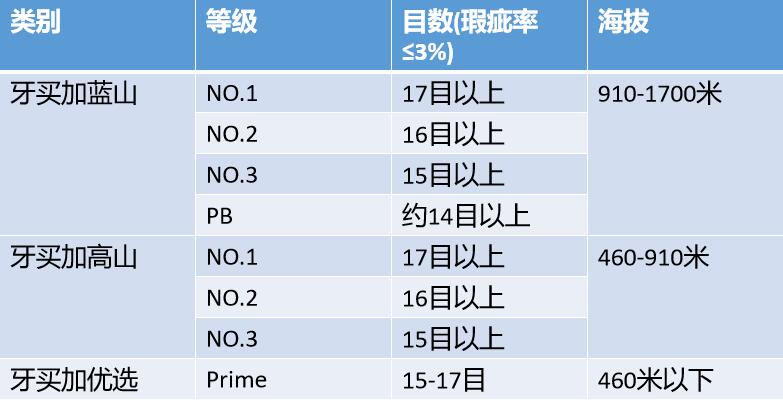
Blue Mountain coffee has a rigorous grading system. To distinguish Blue Mountain coffee from ordinary Jamaican coffee, the Jamaican government established specific standards: only Typica variety coffee certified by the Coffee Industry Board of Jamaica (JCIB) and grown at elevations between 910 and 1,700 meters in the Blue Mountains qualifies to be called Jamaican Blue Mountain coffee. The certified growing area covers only 6,000 hectares, encompassing five main peaks of the Blue Mountains—John Crow, St. John's Peak, Mossman's Peak, High Peak, and Blue Mountain Peak—accounting for about one-third of the entire Blue Mountain region. Of all coffee produced in Jamaica, only about 15% can bear the Blue Mountain name. The higher the elevation, the greater the harvesting difficulty and the higher the labor management costs.
Front Street Jamaican Blue Mountain coffee uses the Typica variety, which offers an elegant aroma along with rich acidity and sweetness. Typica is known for its weak disease resistance and low yield, leading many producing regions to gradually abandon it. However, while many growers switched to high-yield varieties to boost production, Jamaica has consistently insisted on large-scale cultivation of Typica in the Blue Mountain region. Because the Blue Mountain area is surrounded by the Caribbean Sea with minimal human pollution, the local Typica has adapted to the Blue Mountain terroir over many years, gradually developing stronger disease resistance than ordinary Typica and evolving flavor characteristics unique to Blue Mountain.
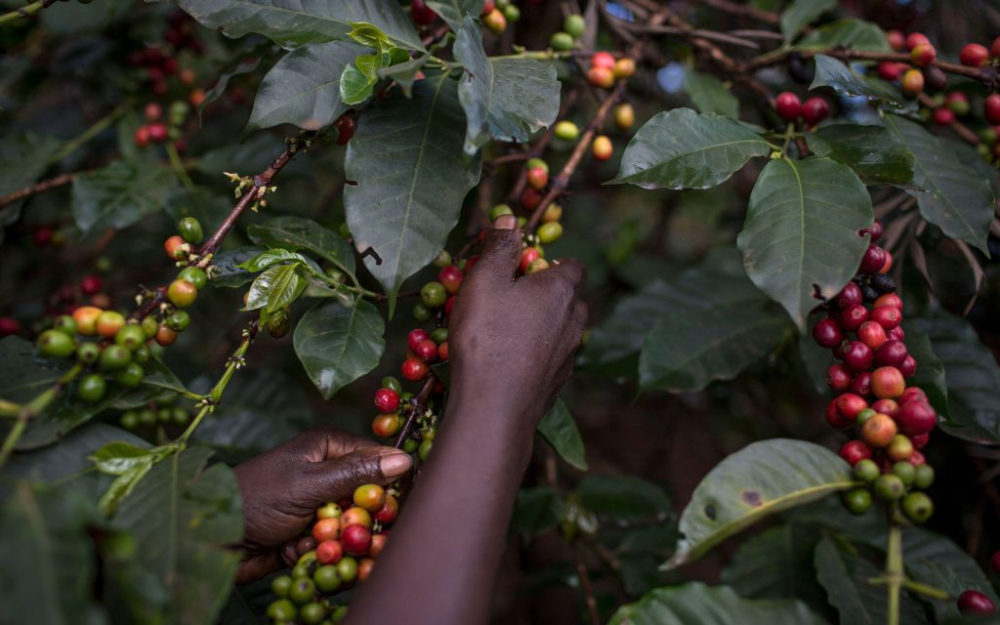
To ensure stable coffee bean quality, during each harvest season, local women familiar with the terrain are arranged to go up the mountains to pick coffee cherries at just the right ripeness. Estates producing Blue Mountain coffee generally use the washed processing method, removing defective beans through multiple steps to make Blue Mountain's aroma clearer. The Front Street Blue Mountain coffee on Front Street's menu is washed processed and comes from Clifton Estate. The estate places freshly picked coffee cherries into water tanks for flotation, removes the skin and pulp before fermentation, and after a night of fermentation produces large amounts of acidic substances that cause the mucilage layer to separate from the surface. The parchment beans are then sun-dried, and once the moisture content reaches the standard, they are bagged and stored before being sent for quality inspection. The washed process makes Front Street Blue Mountain coffee beans' flavor cleaner and more transparent, with more stable quality.
After drying, Blue Mountain green beans need to be graded based on multiple evaluation criteria, including screen size, color, moisture content, and cup quality after roasting. Jamaican Blue Mountain coffee is classified into Blue Mountain No. 1, Blue Mountain No. 2, Blue Mountain No. 3, and Blue Mountain Peaberry based on different performance characteristics, with Blue Mountain No. 1 being the highest grade and also the most commonly found authentic Blue Mountain coffee domestically. To reach a higher grade requires more manpower, manually sorting out beans of inferior quality—which is also why quality Blue Mountain coffee commands a high price.
Authentic Jamaican Blue Mountain Coffee
Many friends who visit Front Street's stores and order Front Street Blue Mountain coffee ask whether the "Blue Mountain" on Front Street's menu is the real deal. Undeniably, because Blue Mountain is so famous, the market is flooded with various "fake Blue Mountains," such as "Blue Mountain Flavor Coffee," "Blue Mountain Blend," and "Blue Mountain Select Coffee." To identify authentic Jamaican Blue Mountain coffee, Front Street has summarized the following key points for everyone's reference.
As Front Street has summarized, authentic Blue Mountain coffee comes from a specific elevation range, and all the labor costs are extremely high, so the price cannot be too low. If the "Blue Mountain beans" you bought cost only a few dozen yuan, they are most likely counterfeit. For reference, Front Street Jamaican Blue Mountain No. 1 coffee is priced at 158 yuan per 100-gram bag.
In terms of aroma, Front Street Blue Mountain coffee presents a rich, dense, and lasting chocolate and roasted hazelnut aroma that ordinary dark-roast blends cannot match. In terms of taste, authentic Front Street Blue Mountain coffee achieves a balance of acidity, sweetness, bitterness, and aroma, with no single flavor standing out, and the body and sweetness are just right.
If you cannot judge by the above two points, you can ask the merchant to show Blue Mountain-related certificates and the wooden barrels used for packaging Blue Mountain green beans—Jamaica Blue Mountain is the only producing region that uses wooden barrels to hold green beans. This Front Street Blue Mountain No. 1 coffee also comes with a quality certification certificate issued by the Jamaica Coffee Board, an authorized sales certificate issued by the Blue Mountain coffee producer, and a certificate of origin for Jamaican Blue Mountain coffee. As for the wooden barrel, you can look for it when you visit Front Street's Dongshankou store—it's visible on the right side of the entrance.
Flavor Characteristics of Front Street Blue Mountain No. 1 Coffee
After purchasing a bag of excellent-quality Front Street Blue Mountain coffee beans, the first thing to figure out is naturally how to brew it well. Below, Front Street will use the Front Street Jamaican Blue Mountain No. 1 coffee on its bean shelf as an example to share Front Street's brewing approach.
Front Street recommends using coffee beans at their peak flavor period. If the roast date is more than a month past, some aromas may have already dissipated, and a woody taste may even develop. Coffee beans shipped by Front Street are all roasted within 5 days, so they should be at their most aromatic stage when you receive them.
The classic Blue Mountain flavor profile features rich chocolate and roasted nut aromas, soft acidity, and a mellow body. To recreate the classic taste, Front Street's roaster uses a medium-dark roast, highlighting the roasted aroma while retaining some acidity. When Front Street cupped Front Street Blue Mountain No. 1 coffee beans, it found that the acidity, sweetness, aroma, bitterness, and body were balanced, so FrontStreet Coffee's baristas also developed a corresponding brewing plan based on this flavor direction.
Front Street's brewing parameters: KONO dripper, grind size with 75% passing through a No. 20 standard sieve, water temperature 88°C, paired with Front Street's usual three-stage pouring. 15 grams of coffee powder, powder-to-water ratio 1:15.
Three-stage pouring operation: First use 30 grams of water to evenly wet the coffee bed and bloom for 30 seconds. For the second stage, pour 95 grams of water at a steady pace in a circular motion from inside out. When the water level drops to two-thirds of the coffee bed in the dripper, begin pouring the third stage of 100 grams of water. Note to maintain a small stream throughout. After about 2 minutes when dripping is complete, remove the dripper. Finally, gently swirl the coffee liquid and it's ready to taste.
During brewing, Front Street Blue Mountain coffee already gives off rich roasted nut and caramel aromas. On the palate, you can immediately sense the sweetness of dark chocolate and nuts, with all the flavors blending together, a mellow body, a transparent finish, and rich aromatic layers brought about by temperature changes.
The above content is compiled by CoffeeHunters, a coffee news website.


