







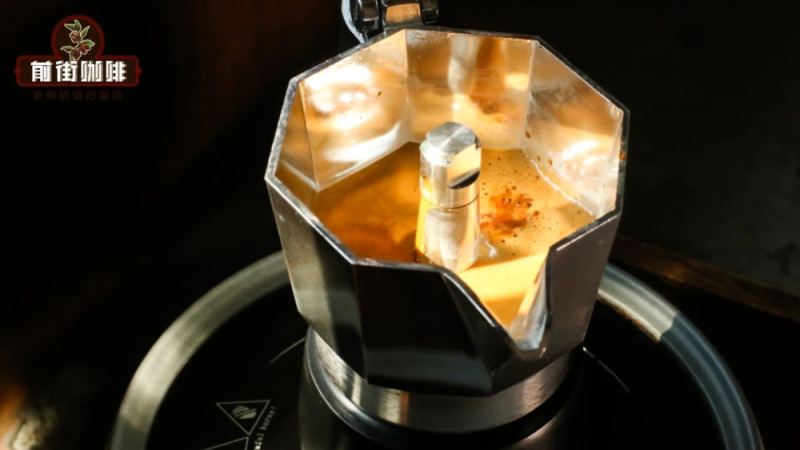
Although the moka pot has a simple structure, it is often misunderstood as an outdated device. In fact, with just a few key points mastered, it can consistently extract espresso liquid with crema. From the perspective of Front Street, this article analyzes the extraction principles of the moka pot and the historical reasons for its cold reception, recommends suitable coffee bean recipes, and teaches you step by step how to make a milk coffee with latte art using a moka pot. At the same time, we will also sort out practical details such as water level control and flow rate judgment to help you avoid over-extraction and explosion risks, so that a home moka pot can also deliver professional-level flavor performance.
Today, with pour-over, siphon, and high-end espresso machines in vogue, the moka pot is often labeled as outdated and difficult to handle. Front Street has noticed that many coffee enthusiasts are used to making a pour-over single-origin coffee at home, or going to a café to order a milk coffee such as a cappuccino. However, with the growing popularity of home espresso equipment, some friends have also begun to turn their attention to the moka pot, which also has pressure extraction capability.
The Extraction Principle of the Moka Pot
The structure of the moka pot is not complicated: the lower chamber holds water, the middle filter basket holds coffee grounds, and the upper chamber collects the coffee liquid. When heated, the water in the lower chamber boils and generates steam pressure, pushing hot water up through the thin metal tube, through the coffee grounds layer, and into the upper chamber, resulting in espresso liquid.
Front Street needs to emphasize again that the coffee liquid extracted directly by the moka pot is relatively concentrated; drinking it straight will seem harsh, and the aroma is not easy to perceive. Therefore, you can add water or fresh milk in proportion to make a "moka pot americano" or "moka pot latte," which is smoother on the palate and also allows you to appreciate the beans' own fresh fragrance.
Why were moka pots rarely used before?
The reason is simple: as a household device, the moka pot is less professional than an espresso machine, and coffee itself was originally a foreign import in China. The early groups exposed to coffee were mostly those who had become wealthy first, and when learning about coffee they naturally leaned toward professional equipment; this kind of household device was hard for them to take seriously.
As the affluent population expanded and the coffee community continued to grow, it was natural that some people would prefer a simple household tool like the moka pot. Although the coffee made with a moka pot is inferior to a professional espresso machine in crema and concentration, a professional espresso machine costs tens of thousands of yuan, and even an ordinary home machine costs several thousand yuan, while a moka pot costing a few hundred yuan can reach 60% to 70% of the level of a coffee machine, which is already enough. This is also why it has become the first choice at home for many enthusiasts.
Moreover, coffee brewed with a moka pot can also be combined with milk and latte art, which is completely sufficient for home use.
How to Make Milk Coffee with a Moka Pot
The first step is naturally to prepare freshly roasted coffee beans, but to make moka pot coffee taste good, Front Street believes that choosing the right beans is equally key. If you want coffee with golden crema, Front Street Classic Espresso Blend is recommended. This recipe combines beans from three origins—Brazil, Indonesia, and Vietnam—and uses a dark roast, which can maximize the rich aroma and also makes it easy to extract abundant, dense crema. It is suitable whether made into an americano diluted with water or a latte paired with milk.
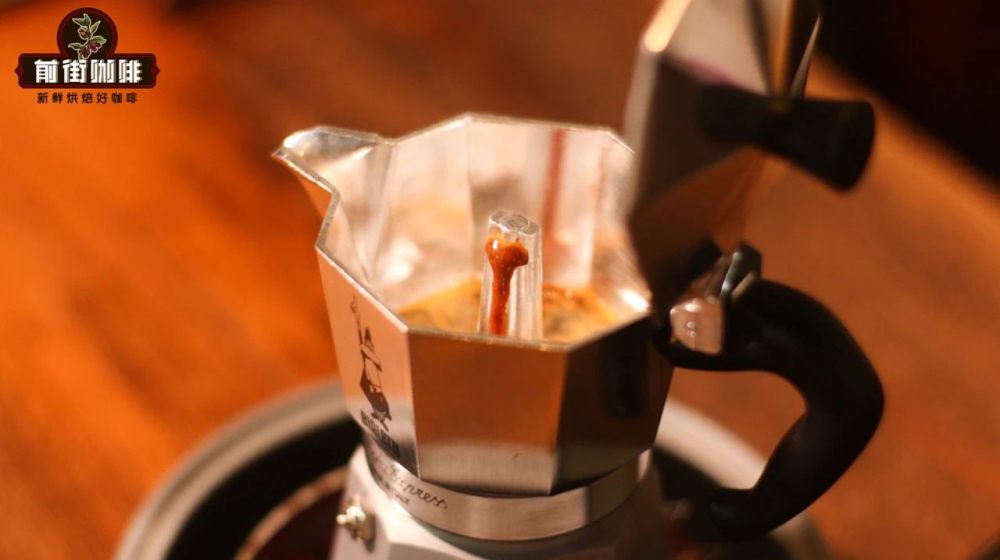
If you want to make a fruity espresso, you should mainly use medium-roast beans. Front Street Strawberry Candy espresso coffee beans are recommended, and can be ordered directly from the Taobao or Tmall store. This bean is based on Front Street Costa Rica Tarrazu, known for its honey processing, and Ethiopia, the birthplace of coffee, paired with Colombian coffee beans. The resulting espresso is not only not harsh, but under coffee machine extraction also has good crema and a dense texture, while presenting a sweet-and-sour sensation similar to strawberry gummies.
First pour cold water into the lower chamber (hot water will scald your hands), place the filter basket into the lower chamber, wrap your hand around the rim of the filter basket, and fill the basket with grounds until a small mound forms in the middle. After filling the gaps around it with grounds, directly attach the upper chamber and tighten it.
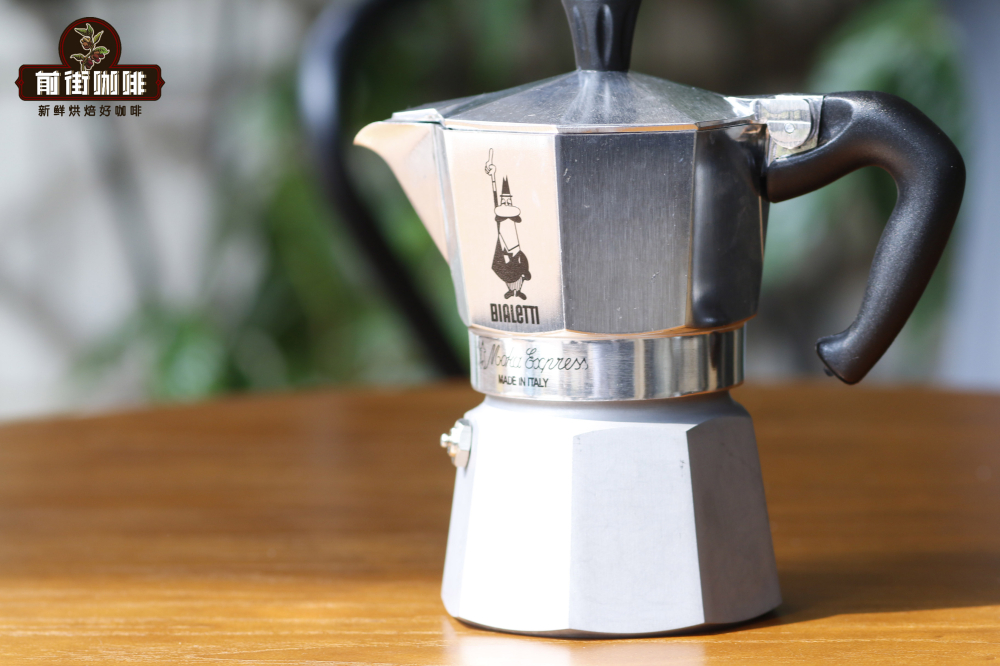
Then place it on an electric ceramic stove to heat (a gas stove also works). When you hear a "woooo" sound, it means the coffee liquid is beginning to rise. At this point, turn off the heat directly and wait for the coffee liquid to finish sputtering.
Freshly brewed moka pot coffee will have a layer of golden crema on the surface, but most of the crema dissipates quickly, so it should be mixed with milk as soon as possible. Here, Front Street will use a French press to froth 200 ml of warm fresh milk, then blend it evenly with the coffee and pour latte art. A cup of moka pot latte is then complete.
Overall, latte art has higher requirements for milk foam than espresso. Coffee liquid with crema can make the surface more stable and allows for more complex patterns to be made; when crema is lacking, the surface stability is poor, and latte art such as rippled patterns becomes harder to achieve.

Although the moka pot is simple in structure and convenient to operate, some issues still need attention when using it. The base of the lower chamber where water is added has a marked pressure relief valve. When adding water, the water level must not exceed the pressure relief valve; otherwise, it easily loses its pressure relief effect and increases the risk of explosion.
The flow rate of the coffee liquid also gives us feedback: If the liquid spurts out directly, it means the water temperature is too high, or the coffee grounds may be too coarse, which easily leads to under-extraction; when the coffee liquid flows very slowly, it means the water temperature is too low and needs to be increased, or the coffee grounds are too fine and need to be changed to a coarser grind, while always paying attention to controlling the heat.
In addition, because all the coffee grounds can only be extracted once, and it is not easy to grasp the exact weight of the coffee liquid when using a moka pot, the actual extraction amount mainly depends on experience. Therefore, during operation, Front Street suggests everyone must be careful and focused; otherwise, it is easy to cause over-extraction and bitterness.
If you want the espresso liquid extracted by the moka pot to have a rich aromatic crema layer, Front Street recommends using freshly roasted medium-dark roast coffee beans. As the roast level deepens, coffee beans undergo caramelization reactions and release a large amount of gas, which is released under pressure during extraction. As storage time lengthens, the beans lose a large amount of gas, making it difficult to extract rich aromatic crema. The coffee beans shipped by Front Street are all freshly roasted within 5 days, so everyone can enjoy them within the best flavor period.
The above content is compiled by CoffeeHunters, a coffee news website.


