







In the world of specialty coffee, Geisha and Blue Mountain are often compared. Blue Mountain coffee is known for its balanced sweetness and mellow body, while Geisha is famous for its complex floral and fruity notes. From the perspective of Front Street, this article sorts out the origin background, varietal characteristics, grading standards, and flavor performance of these two top-tier coffees, and includes the brewing parameters used at Front Street stores to help coffee lovers understand the differences between the two and their respective charms.
In the past, when people talked about the world's finest coffee, Blue Mountain coffee often came to mind. Today, when discussing the pinnacle of coffee quality, it is almost impossible to avoid the name Geisha. So which one is better, Blue Mountain or Geisha? In Front Street's view, taste is inherently a matter of personal preference. There are plenty of people who prefer Blue Mountain's sweet, balanced, and mellow taste, and just as many who are captivated by Geisha's multi-layered floral and fruity aroma. The coffee that suits your own taste is a good coffee. If you want to learn more, feel free to read Front Street's sharing below.
Let's first clarify the basic situation of Blue Mountain coffee.
Blue Mountain coffee was once the representative luxury item in the coffee world. Authentic Blue Mountain can deliver a thick, long-lasting, and rich aroma of chocolate and roasted hazelnut, achieving an excellent balance among acidity, sweetness, bitterness, aroma, and body. Front Street believes that Blue Mountain's reputation is inseparable from the meticulous management and strict grading of Jamaican growers. The terroir conditions of Jamaica's Blue Mountain range are quite superior, and the combination of multiple favorable factors creates an ideal environment for coffee cultivation. However, coffee is ultimately an agricultural product, and the variety, altitude, picking method, and post-processing techniques all influence the final aroma.
According to the official range defined by the Jamaica Coffee Industry Board (CIB), only Typica grown in the Blue Mountain coffee region at an altitude of about 910 to 1,700 meters is eligible to be called true "Jamaica Blue Mountain Coffee." The higher the Typica is grown, the more its flavor can be expressed. At the same time, it has poor disease resistance and is highly susceptible to disease, and its yield per plant is not high, requiring a large amount of manpower for careful maintenance. In addition, the high-altitude areas of the Blue Mountains have rugged terrain, making management and picking quite difficult and demanding high skill from harvest workers, which further limits production. In recent years, among the coffee beans produced in Jamaica, less than 15% can carry the Blue Mountain label, amounting to only about 900 tons.
Many friends may have heard a saying: authentic Blue Mountain was long ago bought up entirely by Japan. This is not groundless. UCC is a Japanese coffee company, formerly Ueshima Coffee Co., Ltd. It opened a farm in Jamaica in 1981 to operate a Blue Mountain project. The Jamaican side promised to sell 90% of the Blue Mountain coffee quota to Japan, and combined with Japan's vigorous promotion of Blue Mountain, Blue Mountain was once expensive and hard to find. Today, as coffee culture flourishes, drinking a cup of Blue Mountain is no longer difficult. At Front Street, for 60 yuan you can drink a cup of Blue Mountain No. 1 pour-over black coffee.
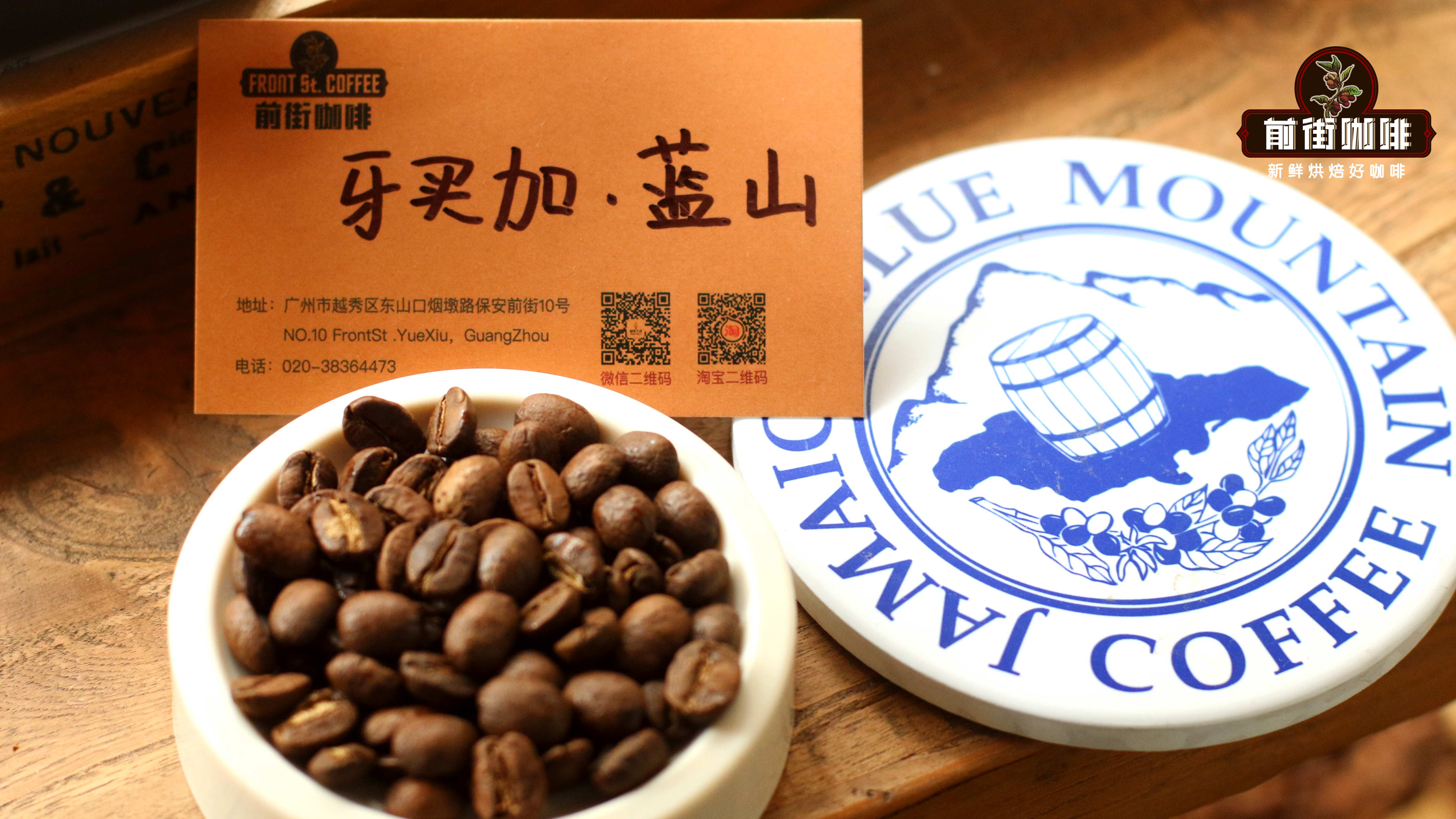
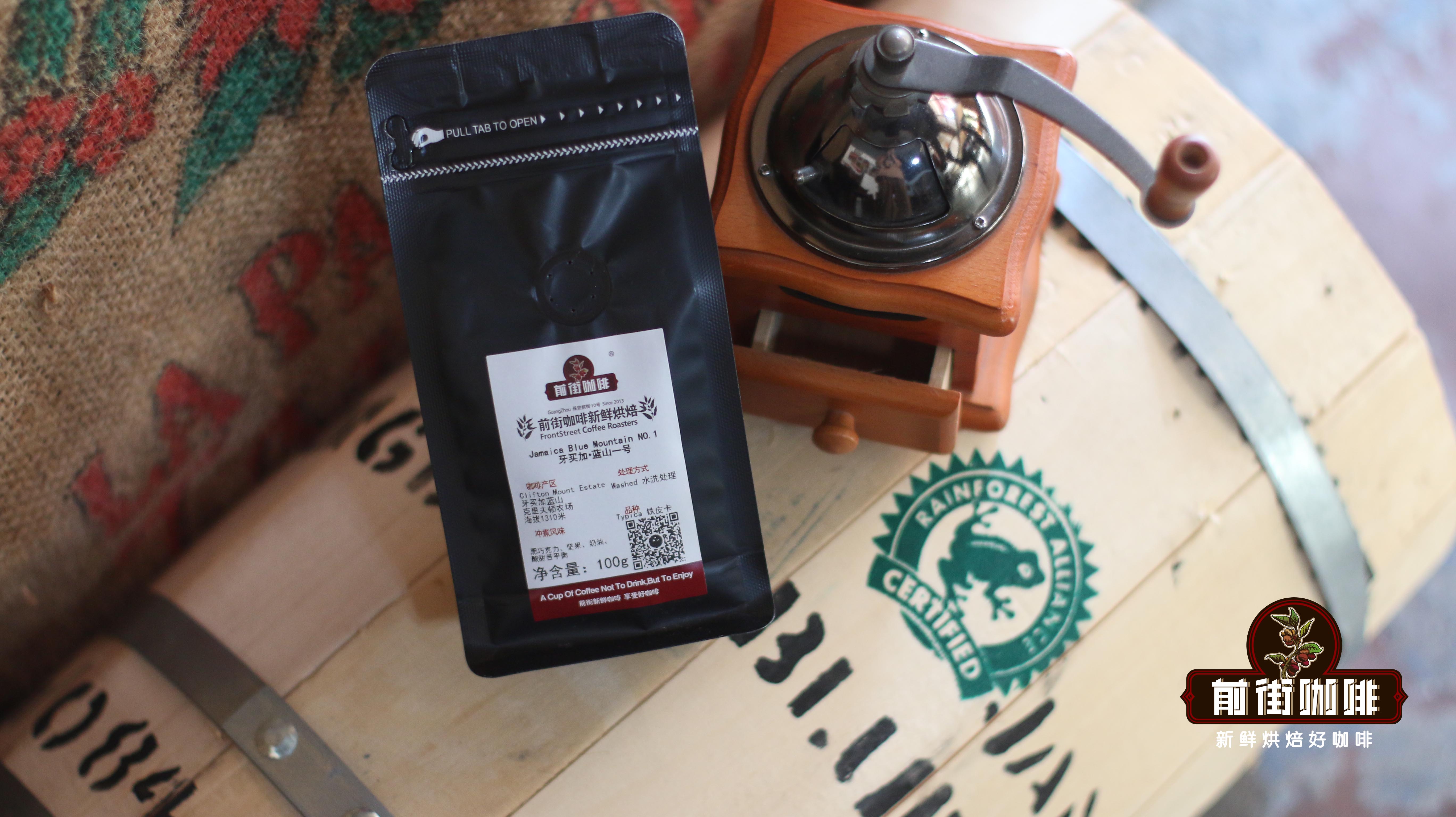
Blue Mountain No. 1 refers to the highest-grade batch of Jamaican Blue Mountain green beans. To become Blue Mountain No. 1, it must meet a screen size of 17 or above, a defect rate below 3%, and a moisture content of about 13%. In cupping, it must also show a rich coffee aroma, a smooth and balanced mouthfeel, low acidity, and a lasting sweet aftertaste. Front Street's own roasted Blue Mountain No. 1 comes from Jamaica's Clifton Mount Estate and uses washed processing. Front Street also holds the quality certificate issued by the Jamaica Coffee Board, the authorized sales certificate issued by the Blue Mountain coffee producer, and the certificate of origin for Jamaican Blue Mountain coffee. The Dongshankou store also displays an oak barrel containing Blue Mountain green beans.
Next, let's talk about the characteristics of Geisha coffee.
Geisha is the most famous coffee variety since the rise of the specialty coffee era. With its unique orange-blossom and honey-like charm, it has become a high-quality bean sought after by coffee lovers worldwide.
Compared with other Arabica varieties, Geisha not only has a lower yield, but the plant itself is also especially delicate and very picky about its growing environment. It needs high altitude, fertile soil, and protection from clouds or shade trees, and cannot be exposed to direct sunlight. Geisha's leaf system is very thin, its photosynthetic efficiency is low, and its root system is also fragile, absorbing water and nutrients very slowly, resulting in a very small yield. In addition, because it grows in high-altitude environments, its fruit ripens later. A single Geisha tree produces about only half the fruit of other Arabica varieties, which is one reason for its high price.
Although producing regions around the world are eager to introduce Geisha and hope to produce the "ceiling of the coffee world" themselves, Front Street believes that the flavor of Geisha from Panama is the most representative. With the help of the region's unique terroir, Geisha coffee accumulates rich essence substances, which are transformed into elegant floral and fruity notes and multi-layered, changing acidity. Among Front Street's own roasted Geisha coffee beans, the well-known Hacienda La Esmeralda and Elida Estate are both located in the Boquete producing region. Front Street believes that Panama, as the place where Geisha rose to fame, still provides a guarantee of industry reputation through Geisha produced with mature cultivation techniques and processing methods. Therefore, Front Street has launched a Boquete region Geisha coffee using washed processing, hoping to let more people taste the classic Geisha flavor.
As one of the most traditional green bean processing methods, washing not only makes coffee quality more stable, but also allows Geisha to show greater cleanliness and a fresher flavor profile. After roasting, Front Street sensed that Geisha has elegant white floral notes, bright citrus and lemon acidity, and a hint of green tea character, as if drinking a gentle cup of Tieguanyin.
How should Blue Mountain No. 1 and Panama Geisha be brewed to taste good?
Whether it is Blue Mountain with its pure aroma or Geisha with its fragrant bouquet, Front Street's flavor descriptions for every bean are based on cupping results of freshly roasted coffee. If coffee beans have been stored for more than a month, much of the aroma may already have been lost, and no matter how skilled the brewing technique is, it cannot be restored. Front Street deeply understands the importance of freshness, so it only ships coffee beans freshly roasted within 5 days, allowing everyone to enjoy the fullest flavor period when they receive them.
Front Street store parameters for brewing Geisha coffee
Dripper: V60
Water temperature: 91-92°C
Dose: 15g
Coffee-to-water ratio: 1:15
Grind size: EK43s - setting 10 (80% of grounds pass through a No. 20 sieve)
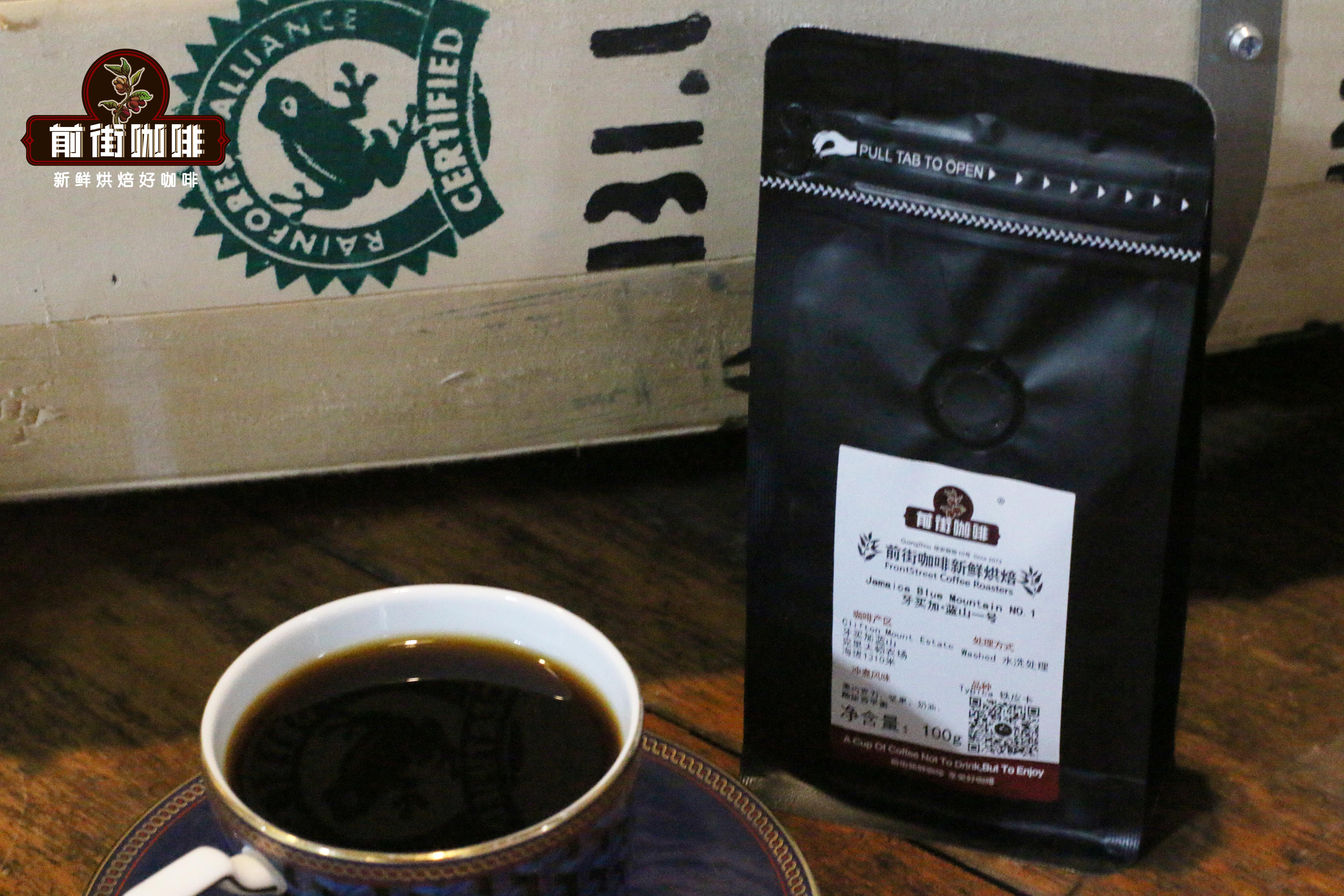
Front Street store parameters for brewing Blue Mountain No. 1
Dripper: KONO dripper
Water temperature: 88°C
Coffee-to-water ratio: 1:15
Coffee grounds: 15g
Grind size: EK43s - setting 10.5 (75% pass-through rate on a standard No. 20 sieve)
In the first stage, gently pour 30 grams of water for blooming, with a blooming time of 30 seconds. In the second stage, pour to about 125 grams of water, circling outward evenly and steadily. Then wait for the coffee liquid to drop. When it has dropped by half, pour the final stage of water to 225 grams. After all the coffee has dripped through, the total extraction time is generally about 2 minutes.
Panama washed Boquete Geisha coffee flavor : It has clear acidity of citrus, lemon, and bergamot, a creamy smooth mouthfeel when swallowed, and a sweet finish of green tea and honey.
Jamaica Blue Mountain No. 1 coffee flavor : When hot, Blue Mountain No. 1 coffee enters the mouth with a dark chocolate aroma, very rich and full-bodied, with an obvious sweet aftertaste of almond. As the temperature drops, it becomes sweet, silky, and creamy with roasted hazelnut, carrying a hint of gentle acidity and caramel sweetness, and the aroma lingers in the mouth.
The above content is compiled by CoffeeHunters, a coffee news website.


