







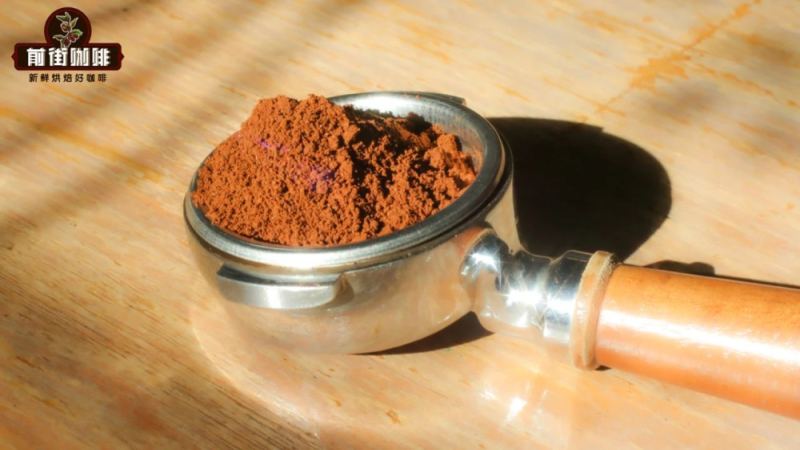
A qualified espresso is the result of precise coordination among dose, yield, time, and grind size. As the most intuitive variable among them, the brew ratio directly determines the concentration, body, and flavor direction of the espresso. Starting from the core logic of brew ratio, this article sorts out the relationship between extraction yield and flavor, and, combined with the hands-on experience of Front Street Coffee shops, explains how to stabilize output by adjusting dose, flow rate, and grind size. In addition, the article also analyzes common misconceptions about making espresso with light-roasted beans, and offers recommendations for espresso blend beans suitable for home brewing, helping coffee enthusiasts take fewer detours in their daily shots.
For more specialty coffee knowledge, please follow: Front Street Coffee (Frontsteet Coffee)
Watching a barista pull a shot in a café, the movements flow effortlessly, and it seems like a fragrant coffee base can be served in less than two minutes. But behind this apparently easy process is actually a precise grasp of every extraction parameter. Dose, yield, time, grind size, and water temperature—each variable influences the final flavor expression, and finding the optimal balance among them often requires extensive practice and repeated calibration.
How does the coffee brew ratio affect extraction?
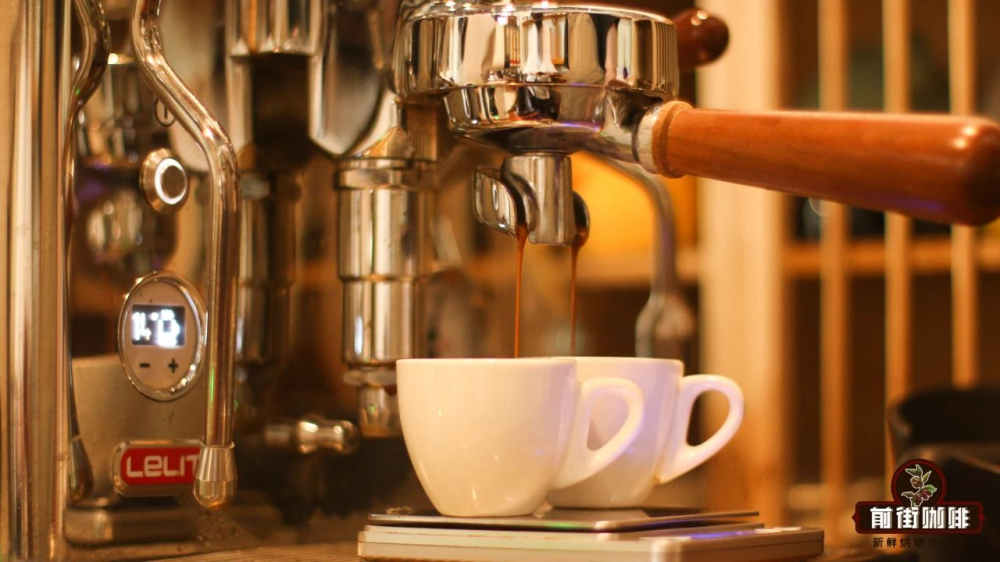
The extraction principle of espresso is to use the steam pressure generated by the espresso machine to let hot water quickly pass through a fine layer of coffee grounds, extracting a highly concentrated coffee liquid in a short time. Precisely because the extraction speed is fast and the concentration is high, any fine adjustment to the brew ratio will noticeably change the coffee's flavor direction, viscosity, and body. So when making espresso, a scale with a timer is almost an essential tool.
In the early days, Italian cafés generally used dark-roasted beans, sometimes blending in a certain proportion of robusta beans to increase the oily mouthfeel, and the output usually carried heavy caramel and dark chocolate notes. In that era, baristas did not care much about gram numbers, but instead judged when to stop extraction by visually observing the color of the espresso crema—the coffee liquid that had just flowed out was dark brown and thick in texture, then gradually turned golden, then light yellow, and when the crema began to turn pale, it was time to finish.
After the specialty coffee wave emerged, more and more people began choosing higher-quality, lighter-roasted beans to make espresso, aiming to preserve the flavor characteristics of the origin itself. The industry's extraction standards for espresso also became more refined, gradually forming a concentration range recognized by most people and a relatively stable parameter framework. Usually the extraction time is controlled at 25 to 30 seconds, and the brew ratio falls between 1:1.5 and 1:2.5, with 1:2 being the most common. Of course, the specific ratio still needs to be flexibly changed according to output needs. For example, in order to make Americanos and lattes taste richer and the flavor more solid, Front Street uses 20 grams of coffee grounds to extract 36 grams of coffee liquid in its daily shop operations.
Through repeated testing, Front Street observed this pattern: under the premise of a fixed dose, the more liquid extracted, the lower the concentration of the espresso, while the extraction yield rises accordingly, the flavor substances dissolved from the later stage of the coffee increase, the body decreases, and it is also more likely to bring out bitterness due to over-extraction. Conversely, if the brew ratio is too small, although the espresso has a heavier body, the flavor structure is incomplete and will show obvious sharp acidity due to under-extraction.
Therefore, Front Street's suggestion is to first set the ratio at 1:2 during dialing in, and then fine-tune it up or down according to the actual taste the espresso presents.
What other factors affect the taste of espresso?
The brew ratio is certainly a key variable in espresso extraction, but the success of a good espresso also involves many other factors, such as the variety and processing method of the coffee beans used, the freshness of the beans, water quality, grind coarseness, extraction temperature, and extraction time, all of which are interrelated.
Take the espresso beans "Sunflower Warm Sun Blend" used in Front Street shops as an example. For this house-roasted bean, the ideal espresso performance should carry whisky-like aroma, vanilla, cream, and berry-like acidity, with rich flavor layers and a smooth mouthfeel. When adjusting espresso output, Front Street's baristas usually start from the four directions of dose, yield, time, and grind size.
In daily operations, Front Street first extracts using the previous day's parameters, and judges the current state by observing the speed of the espresso flow. The so-called flow rate is the amount of coffee liquid extracted per unit of time. Assuming the target yield is also 40 grams, if it takes less than 25 seconds, the flow rate is too fast, and the dose can be appropriately increased to extend the extraction time; if it exceeds 30 seconds, the flow rate is too slow, possibly because the dose is too high, and reducing the dose can bring the flow rate up.
The coarseness of the grind will ultimately be reflected in the flow rate as well. A fast flow rate and short time mean the grounds are ground too coarse and need to be adjusted finer; a slow flow rate, coffee liquid that drips out only after a long delay, and prolonged extraction time indicate the grounds are too fine and need to be adjusted coarser. The grind size must fall within a suitable range—particles that are too coarse easily lead to under-extraction, making the coffee taste weak and somewhat sour; particles that are too fine easily lead to over-extraction, making the taste bitter and astringent. When the espresso flow rate is within a reasonable range, Front Street directly relies on tasting to judge whether the coffee meets the standard; if the flavor is normal, it means the dialing in is on target.
It should be noted that the fineness of espresso grinding is far higher than that of pour-over and other extraction methods, so adjustments should not be too large, otherwise the variables will fluctuate too violently and extraction will become even more unstable. Front Street's shop output is based on long-term accumulated experience when adjusting parameters. If making it at home, with a small output and it being hard to develop a feel, Front Street suggests recording each extraction parameter and the corresponding flavor performance, and summarizing more often, so as to speed up adjustments and reduce unnecessary waste.
Espresso coffee bean recommendations
Many friends, when making espresso at home, will choose a light-roasted single-origin bean, hoping to extract the kind of richly layered flavor they get from pour-over.
But espresso is completed under conditions of extremely fine grinding, high water temperature, and high pressure, and multiple flavor compounds are concentrated many times over to hit the taste buds. The elegant sweetness and fruity notes that light-roasted beans show in pour-over may very likely become sharp strong acidity in espresso; the full-bodied texture in pour-over may instead turn into burnt bitterness in espresso. Coffee is ultimately an agricultural product, and changes in climate and soil will affect flavor; even in the same origin, different batches differ. The advantage of blend beans is to make up for each other's shortcomings, using combinations from different origins to ensure that every batch of output maintains a balanced and stable aroma and taste.
Here, Front Street recommends Front Street Classic Espresso Blend. This recipe is composed of coffee beans from three origins: Brazil, Indonesia, and Vietnam. It uses a dark roast, which can maximize the coffee's rich aroma to the greatest extent and also makes it easy to extract abundant, dense crema. Whether making an Americano diluted with water or a latte paired with milk, it is very suitable, and it can be purchased and ordered at the Front Street Taobao store or the Front Street Tmall flagship store.
A freshly made espresso will be covered on the surface with a thick, dense layer of golden foam—this is crema. Its formation is the result of freshly roasted coffee beans releasing carbon dioxide under a high-pressure environment. In order to let every customer feel the full aroma of the coffee and enjoy it within the best tasting period, Front Street only ships fresh coffee beans within 5 days after roasting.
The above content is compiled by CoffeeHunters, a coffee news website.


