







Does Colombia Supremo Grade Mean Specialty Coffee Quality?
Colombia Supremo is a screen-size grade, not a flavor grade, so it does not by itself indicate specialty coffee quality. Supremo simply means the beans are larger than Excelso, sorted by screen. A large bean can still come from a farm with careless picking or processing, and a smaller Excelso lot from a well-managed plot can taste cleaner and sweeter.
Colombia grows coffee across 14 regions and roughly 590 municipalities, with about 875,000 hectares planted, and most output comes from small farms: 60 percent are under one hectare while only 0.5 percent exceed 20 hectares. Volcanic clay soils and tropical microclimates in Cauca, Huila, and Nariño shape regional flavor more reliably than the Supremo label does.
Colombia, as a globally renowned coffee-producing country, often sees its Supremo grade mistakenly equated with specialty coffee. From the perspective of Front Street Coffee, this article systematically reviews Colombia's coffee-growing history, regional distribution, grading standards, and processing methods, deeply analyzes the true relationship between Supremo and Excelso, and introduces the terroir characteristics of well-known micro-regions such as Cauca, Huila, and Nariño one by one. Whether you are a beginner just getting into single-origin coffee or a seasoned connoisseur looking for everyday beans, you will gain clear regional knowledge and purchasing references.
For more specialty coffee information, welcome to follow our WeChat official account: Front Street Coffee (FrontStreet Coffee)
Colombia Best of Cauca
Colombia Cauca Cup of Excellence
■Region: Cauca Department
■Micro-region: Suarez Micro-region
■Soil: Volcanic clay
■Altitude: 1,758 m – 2,100 m
■Variety: Caturra
■Processing: Washed processing
Colombian Coffee
According to Front Street Coffee (FrontStreet Coffee), commercial coffee cultivation in Colombia can be traced back to the mid-1830s, and throughout the twentieth century, coffee remained the country's most important agricultural export. The complex terrain of the Andes and numerous tropical microclimates together create an excellent growing environment, which has also established Colombia's globally recognized "brand" status in coffee. Currently, Colombia has 14 coffee-growing regions and 590 municipalities involved in coffee production, with a planted area of about 875,000 hectares. Nationwide, about 75% of coffee production is exported overseas, and the coffee crop contributes 10% to 16% of agricultural GDP. What surprises Front Street Coffee (FrontStreet Coffee) quite a bit is that most of this production comes from small farms—60% of Colombian coffee farms are less than one hectare, while farms with more than 20 hectares account for only 0.5%.
For a long time, Colombian coffee has mostly been processed by the fully washed method. However, the coffee research institution (Cenicafe) developed an ecological processing system that greatly reduces water use, can cut local water pollution by 90%, and lowers water consumption by 95%. Practice has shown that this dry pulping method is not only beneficial for ecological protection but also stabilizes cup quality, and it is currently becoming more and more common nationwide.
Colombian Coffee Grading
Colombia uses coffee bean size as the basis for grading. Both Excelso and Supremo are larger beans, but the latter is larger still. Front Street Coffee (FrontStreet Coffee) believes that compared with simply looking at bean size, being able to trace the region of origin is more helpful for judging quality.
Supremo |17 mesh
Excelso|14–16.5 mesh
Colombian Coffee Regions
Colombia's coffee regions are divided into two major categories: commercial beans and specialty beans.
Commercial coffee bean regions are mainly distributed in central and northern Colombia, mostly where large-scale industrialized coffee farms are located. Among them, the well-known "MAM" three major regions—Medellín, Armenia, and Manizales—feature flavors mainly in the typical Central American style, with prominent fruity acidity. In contrast, Bucaramanga, produced in the northeastern Santander Department, is known for low acidity and a heavy, bitter aroma, with a style close to Indonesian Mandheling. This difference may stem from lower altitudes leading to reduced acidity.
Specialty coffee bean regions are concentrated in the south, mostly at altitudes above 1,500 meters, and with many volcanoes, giving rise to many well-known specialty regions, including Cauca, Huila, Meta, Tolima, and Nariño. The coffee from these regions is dominated by caramel sweetness, accompanied by delicate berry aromas and acidity, with a very distinct sweetness.
Antioquia
Antioquia was long regarded historically as the country's "Wild West," with early settlers almost entirely gold miners. In the second half of the nineteenth century, Antioquia gradually developed into one of Colombia's most important coffee regions.
Chocó
Most coffee in Chocó is grown around the municipality of El Carmen de Atrato, separated from the fertile coffee slopes of southwestern Antioquia by only a steep ridge. This region is rich in biodiversity and is also one of Colombia's most remote areas, having long been plunged into violence and isolation due to the activities of the Revolutionary Armed Forces of Colombia.
Chocó's coffee region is located in the mountains bordering Antioquia, and there is no other feasible route to transport coffee out, so almost all Chocó coffee is milled and processed in Antioquia.
Huila
Huila has high-quality soil and exceptional geographical conditions for coffee cultivation. This area belongs to the specially selected high-mountain coffee beans of Colombia's state-owned company and is hailed as a national treasure-level region of Colombia. There are more than 70,000 coffee growers in the region, covering more than 16,000 hectares (about 39,500 acres). Colombian coffee beans that usually do not have a special market trademark name all come from the National Federation of Colombia Coffee Growers, an organization long known for strict quality control and active promotion.
Nariño
Nariño is located at the southernmost tip of Colombia. Because it is close to the equator, the region is able to grow coffee at extremely high altitudes, with many farms located on slopes over 2,000 meters. Growing coffee at high altitudes is quite challenging, as coffee trees are susceptible to leaf rust. But Nariño is close enough to the equator that climatic conditions remain suitable for coffee growth. The vast majority of the region's 40,000 producers are smallholders, each cultivating less than 2 hectares (4.4 acres). Many form groups and organizations to support one another and interact with the FNC. In fact, the average farm size is less than 1 hectare (2.2 mu), and only 37 producers in the entire region own more than 5 hectares (11 acres) of land.
Santander
Santander grows a large amount of Typica variety, most of which is Rainforest Alliance certified. The region has a relatively dry climate and relatively low altitude.
Sierra Nevada
Located on the Caribbean side of northern Colombia, a branch of the Andes—the Sierra Nevada mountain range—is Colombia's highest mountain range, with peaks covered in snow year-round. Specialty beans produced in this mountain area are named after the Sierra Nevada range and have gradually gained recognition in recent years. In addition to being purchased by the FNC (Colombia's state coffee organization), coffee farmers have also organized cooperatives to sell externally under the micro-region names Sierra Nevada or Snow Cap.
Tolima
TOLIMA Tolima is located in one of the strongholds of the notorious insurgent group known as the Revolutionary Armed Forces of Colombia and remained under its control until recent years. Tolima has suffered greatly from years of war, making it difficult for outsiders to visit. The region's high-quality coffee comes from smallholders cultivating extremely small plots and is exported through cooperatives.
Cauca
Cauca's best-known coffee comes from near the municipalities of Inzá and Popayán. Meseta de Popayán is a plateau; its high altitude provides favorable growing conditions, and being close to the equator and surrounded by mountains protects the coffee from Pacific humidity and the southern trade winds, creating a very stable climate year-round. In addition, the region's coffee has prominent volcanic soil. Historical records show a single rainy season each year from October to December.
■Altitude: 1,758–2,100 m
■Harvest period: March–June (main crop season), November–December (secondary crop season)
■Varieties: 21% Typica, 64% Caturra, 15% Castillo
■Flavor: Balanced body, with malic acidity and caramel notes
What Is the Excelso Grade?
If we pay attention to the jute sacks of green coffee exported from Colombia to our country, we will find that they are all printed with "Excelso-Café de Colombia." Regardless of bean screen size, all coffee sacks meeting Colombia's export grade will be marked "Excelso," with the most common being UGQ, EP, and Supremo.
In other words, most green Colombian coffee exported around the world must currently be marked on the sack as Excelso grade: UGQ belongs to Excelso grade, EP belongs to Excelso grade, and Supremo likewise belongs to Excelso grade. Excelso is the most widely used export standard grade adopted by the Colombian Coffee Growers Federation (FNC), and it is also the premium grade for Colombian green coffee exports.
Excelso-grade coffee must meet the following: in 500 grams of green beans, the size must be above 14 mesh, with no more than 5% of green beans allowed to fall between 12 mesh and 14 mesh; overall, at least 50% of the green beans must be larger than 15 mesh. Free of insect damage, uniform in color, free of off-flavors, and clean in flavor. Moisture content must not exceed 12.5%, and cumulative defects must not exceed 24 points.
Defect Classification Standards
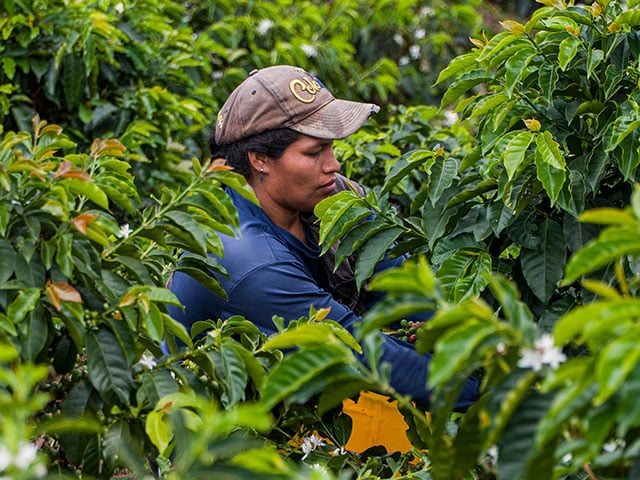
The National Coffee Committee of Colombia has strict regulations. Green bean defects are divided into two types (as shown in the figure), and defect levels are assessed by a scoring method. For example, Colombia's most commonly exported Supremo 12*60 (5%) means that in a 500-gram green bean sample, at most 12 primary defects and 60 secondary defects are allowed.
Screen Size Classification Standards
Although green bean size is not the main criterion determining coffee quality and flavor, many regions believe that plump, uniform, and large beans indicate that the coffee beans have reached full maturity, can develop better aroma types, and are more conducive to uniform roasting, thereby forming consistent flavor.
Colombian green coffee is graded by screen size, usually using fixed-size screens, with different specifications corresponding to different hole sizes. For example, when the mesh is 17, beans larger than that size cannot pass through the screen, so the larger the screen number, the larger the beans retained on the screen. At present, the three grades most commonly exported by the FNC are Excelso UGQ 12*60 (1.5%), Excelso EP 12*60 (10%), and Excelso Supremo 12*60 (5%).
In Colombia, each farmer reports a number and enters green bean information for future traceability. The names of Colombian green coffee exports are usually composed of country + region + grade + other information. For example, the green beans of Front Street Huila everyday beans are Colombia Huila Supremo SC17/18 FNC.
The above content is compiled by CoffeeHunters, a coffee news website.


