







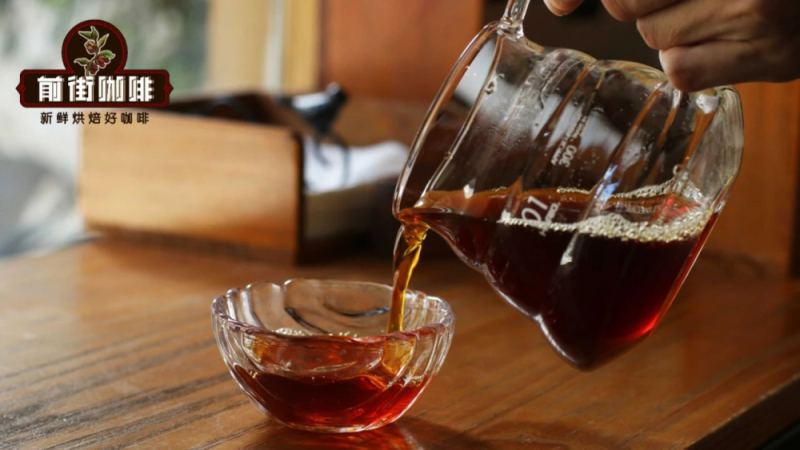
Mandheling and Blue Mountain are both classic representatives of dark-roasted coffee, yet they present completely different flavor profiles due to differences in origin terroir and processing methods. The former comes from Sumatra, Indonesia, where the wet-hulling method gives the coffee a dull but rich herbal, woody, and spicy character; the latter originates from the Blue Mountains of Jamaica, renowned for its balanced acidity, sweetness, and bitterness along with a smooth, creamy texture. This article will comprehensively break down the differences between these two coffees, from growing region background, variety origins, processing techniques, and grading standards to brewing recommendations, while retaining Front Street Coffee's recommendations and brewing parameters for PWN Golden Mandheling and authentic Blue Mountain No. 1, helping coffee enthusiasts more clearly understand the flavor logic of both.
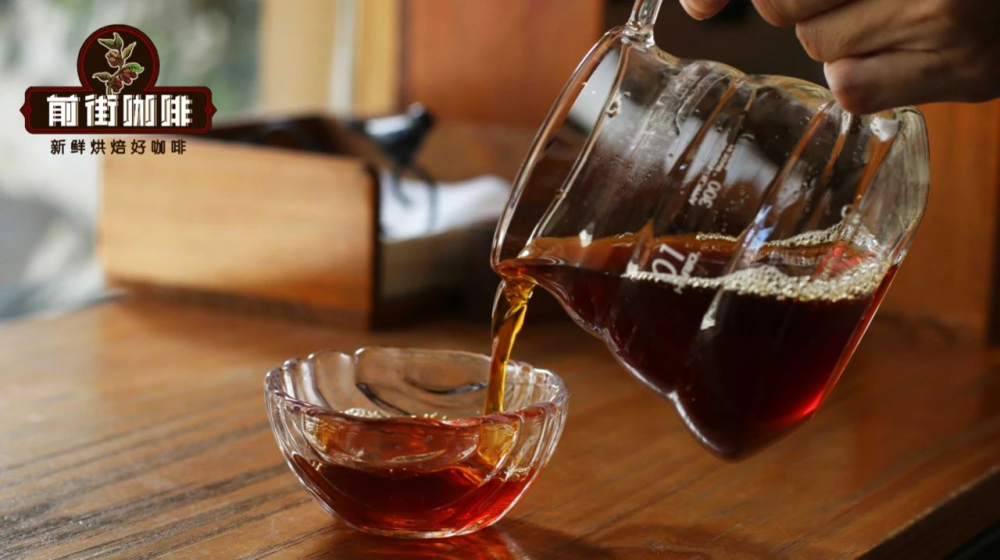
Mandheling and Blue Mountain can be considered the two most well-known beans in dark-roasted coffee, long favored by seasoned coffee enthusiasts. In Japan, many roasters are accustomed to handling these two beans with Japanese techniques, allowing them to present a thick and full-bodied mouthfeel under the tempering of the roast, with pronounced bitterness that is not harsh, and the high sweetness brought by the lingering aftertaste captivating many coffee fans.
The Mandheling and Blue Mountain sold by Front Street Coffee (FrontStreet Coffee) both use a medium-dark roast to present a more balanced flavor, allowing both beans to maintain their rich character while still preserving the unique aroma of high-quality beans. So, what exactly are the differences between Mandheling coffee and Blue Mountain coffee?
The most fundamental difference lies in the origin. Mandheling coffee beans come from the island of Sumatra in Indonesia, Asia, while Blue Mountain coffee beans are produced in the Blue Mountains of Jamaica in the Caribbean.
Indonesian Mandheling is one of the most representative coffees in Asia. It is not a specific variety, but rather a general term for Arabica coffee grown on the island of Sumatra. Currently, the common Mandheling varieties on the market are mostly Tim Tim (commonly known as Tim) and Ateng (commonly known as Catimor). Regarding the origin of the name "Mandheling," there is a historical anecdote: during the Japanese occupation, someone drank an extremely rich coffee in Sumatra and asked the locals what coffee it was. Due to the language barrier, the locals mistakenly thought they were being asked which ethnic group they belonged to, so they answered "Mandheling people." The Japanese went along with the mistake and collectively referred to Arabica coffee produced in Sumatra as Mandheling.
The altitude of Sumatra is not particularly high, with coffee trees mostly distributed in mountainous areas between 600 and 1,200 meters. The local climate is hot and humid year-round, and the low altitude makes it difficult to form significant temperature differences, so the coffee generally lacks refined and delicate flavor layers. However, it is precisely these low-altitude conditions that create the local coffee's unforgettable dull and unique style. What gives Sumatra coffee its signature "Mandheling taste," besides geography and climate, is the wet-hulling method that must be mentioned.
The biggest difference between Indonesia and most coffee-producing regions is the weather. Local humidity year-round ranges between 70% and 90%, typhoons can strike at any time, and annual rainfall even exceeds 2,000 millimeters. Under such harsh conditions, it is simply impossible to carry out the two-to-three-week sun-drying process used in Africa, while the washed method is time-consuming and requires more labor and water resources, which Indonesia, with its goal of mass production, cannot afford. As a result, locals developed a unique semi-washed method — wet hulling.
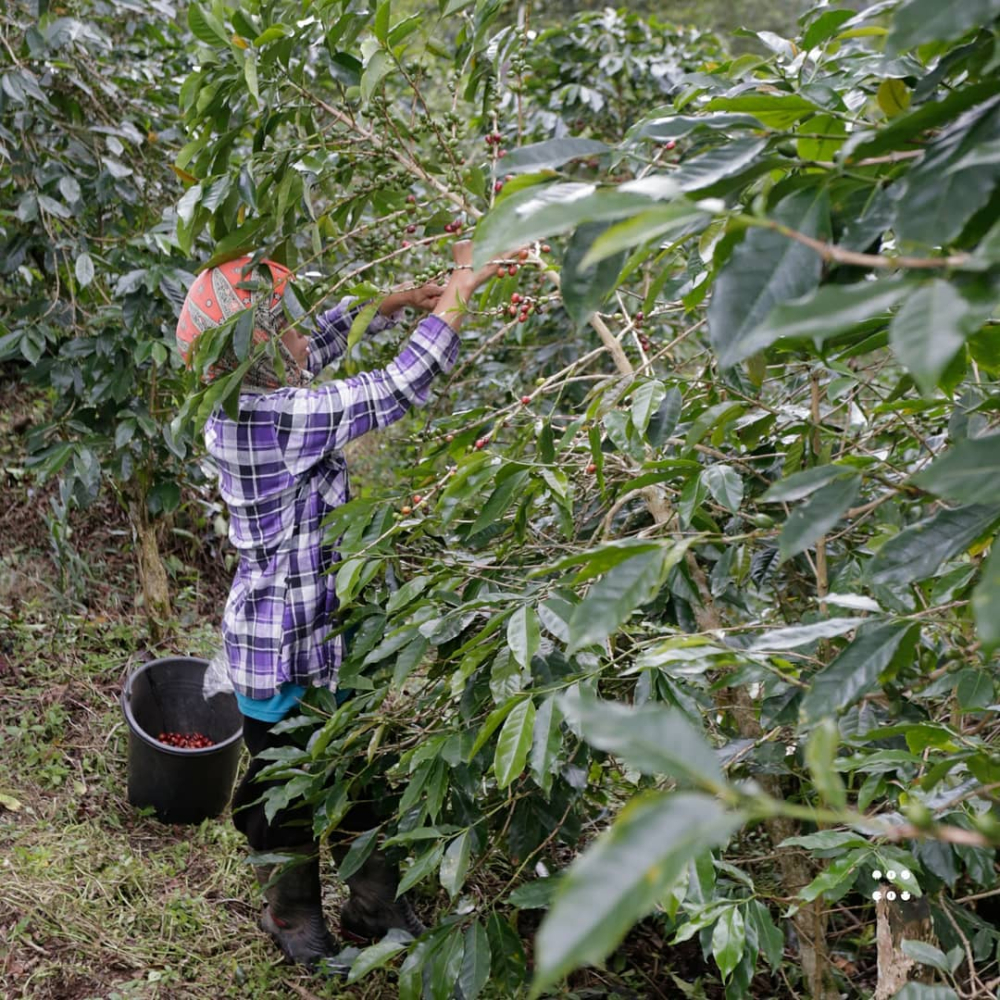
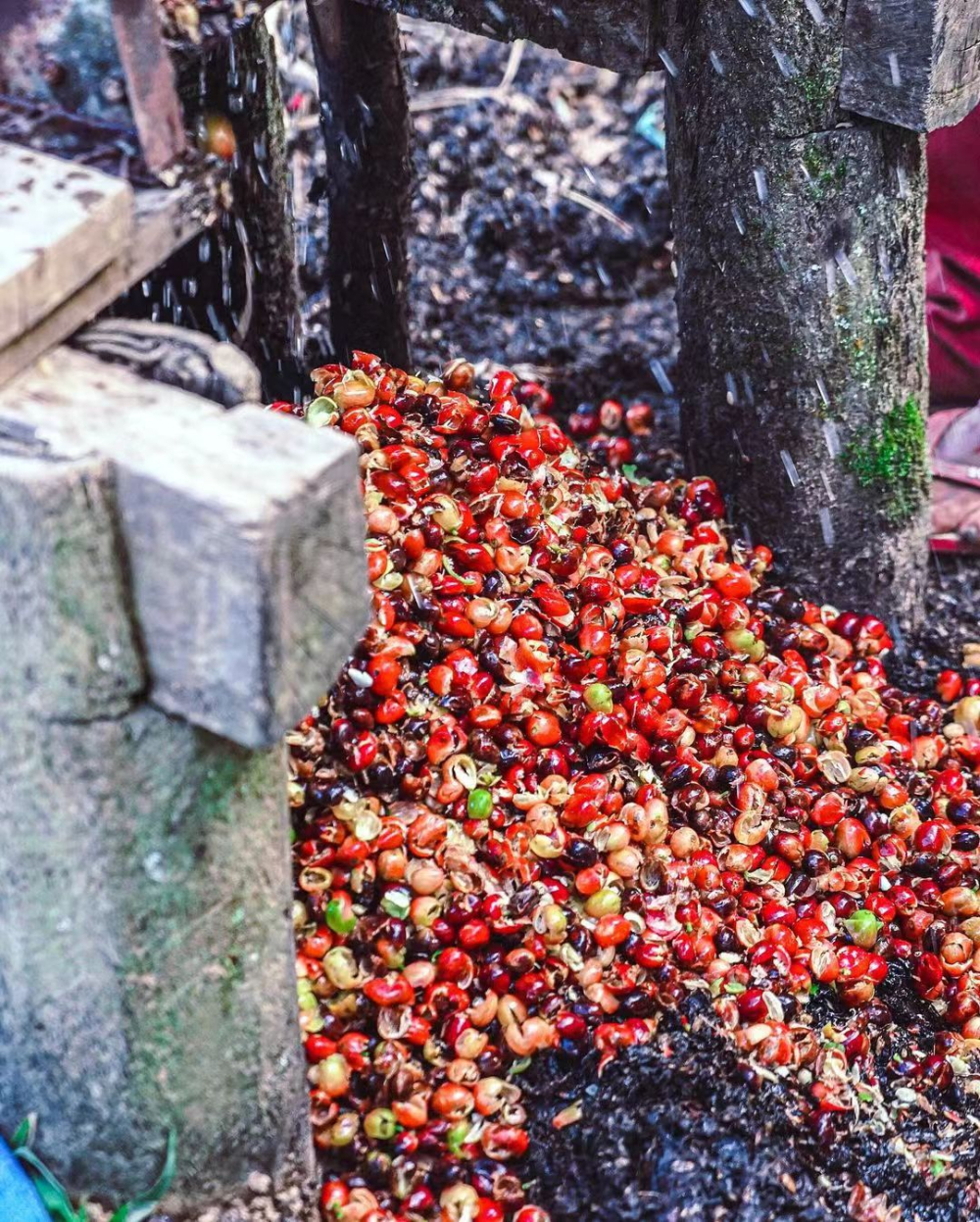
Coffee cherries with the skin and pulp removed are directly poured into a pool for brief fermentation of a few hours. At this point, a small amount of mucilage still remains on the parchment. The mucilage is removed by scrubbing. Then the parchment beans are spread out to dry. The first drying only needs to reach 30% to 40% moisture content. After about two to three days, the coffee farmers sell the green beans to collectors. The collectors directly hull the semi-dry parchment beans by machine to obtain the innermost green beans.
The huller relies on relatively strong friction to tear open the parchment layer clinging tightly to the green beans, and at this stage white or green viscous liquid often seeps out. After prolonged soaking in mucilage and exposure to a humid environment, the green beans become soft, pale, and swollen, eventually turning grayish-green. The friction and stirring also easily crush or bruise the green beans, especially creating small gaps at both ends and producing goat-horn beans. The "naked beans" with the parchment removed dry extremely quickly, while being directly exposed to the humid environment, allowing various microorganisms to grow, which gives Indonesian coffee its unique woody, spicy, and herbal notes — what we commonly call the "taste of the region."
The finest-quality Mandheling is undoubtedly the Golden Mandheling coffee beans produced by Indonesia's PWN company, and this bean is also one of Front Street's best-selling products. Golden Mandheling is a registered trademark of PWN, and only Golden Mandheling sold by the company can be called authentic. Unlike other Mandheling, after purchasing local Mandheling, PWN subjects it to four rounds of hand sorting, selecting plump and flawless beans. Only these premium beans that have undergone layer upon layer of screening can be classified as Golden Mandheling.
Unlike Mandheling, Blue Mountain coffee produced in Jamaica's Blue Mountains is known for its balanced flavor. The Blue Mountains are located in the island nation of Jamaica, with fertile new volcanic soil, fresh and pollution-free air, abundant rain year-round, and marked temperature differences between day and night. Most critically, every afternoon clouds and mist cover the entire mountaintop, providing natural shade for the coffee trees and bringing abundant moisture. Such a uniquely favorable climate allows the Typica coffee grown in the Blue Mountains to display outstanding taste and aroma, and also creates the highly balanced acidity, sweetness, bitterness, and richness of Blue Mountain coffee.
The reason Blue Mountain coffee became so famous is that in an era when specialty coffee was relatively scarce, it was already regarded by merchants as a treasure. In addition, Japan had the right of first purchase for Blue Mountain coffee beans, making it very difficult for other countries to buy authentic Blue Mountain. Scarcity made those who had tried it praise it endlessly, so whether or not people genuinely thought it tasted good, they would tell others that Blue Mountain coffee was indeed delicious. Word spread from one to ten and ten to a hundred, and over time, even people who had never drunk coffee had heard the words "Blue Mountain coffee."
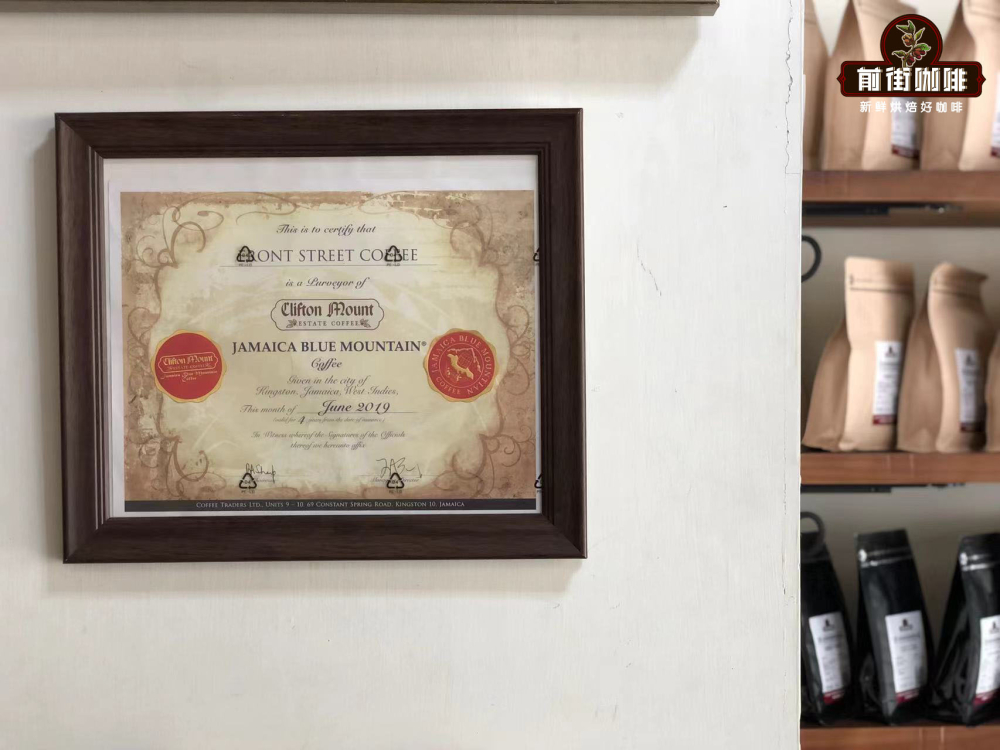
As times have changed, Blue Mountain coffee is no longer rare, and authentic products can be purchased at any time domestically. However, because of its extremely high profile, many merchants sell low-quality dark-roasted blends under the name "Blue Mountain." When purchasing, three points should be verified: wooden barrel packaging, a green frog logo on the barrel, and a certificate from the Jamaican government. Currently, the authentic Blue Mountain coffee beans available domestically are all Blue Mountain No. 1.
Jamaica is the only producing region that uses wooden barrels to pack green beans. The Blue Mountain No. 1 provided by Front Street Coffee (FrontStreet Coffee) has a certificate issued by the Jamaica Coffee Board, and the wooden barrel packaging the green beans also bears a green frog logo (please refer to the image below of Front Street Coffee sourcing Jamaican green beans). This is the estate Front Street specifically selected that holds Rainforest Alliance certification, namely Clifton Farm, which everyone now sees.
Dear friends, whether you buy Front Street PWN Golden Mandheling coffee beans or authentic Blue Mountain No. 1 coffee beans from Front Street, they both use a medium-dark roast. A roast above medium level makes the internal structure of the coffee beans loose, so they can be crushed with a gentle pinch of the hand, indicating strong water absorption after being ground into powder. To avoid the coffee powder releasing too much bitterness after absorbing water, Front Street will adjust the grind coarser and use lower-temperature water for pour-over.
For brewing medium-dark roasted coffee beans, Front Street recommends using a KONO dripper, with brewing parameters as follows: 88°C water temperature, 1:15 coffee-to-water ratio, taking 15 grams of coffee beans and grinding them to the size of coarse granulated sugar (coffee powder with a 70% passing rate through a Chinese No. 20 standard sieve).
Specific brewing method: first pour 30 grams of water and bloom for 30 seconds; for the second stage, pour in a small stream in a circular motion up to 125 grams; after the water level in the coffee bed drops by half, pour again, continuing in a small circular stream up to 225 grams. After all dripping is complete, the total extraction time is about 2 minutes 10 seconds.
After brewing is complete, Blue Mountain No. 1 presents rich chocolate and nutty flavors, with a creamy smooth mouthfeel and a balance of acidity, sweetness, and bitterness. Front Street PWN Golden Mandheling shows a slight acidity like dark chocolate, with nutty and herbal aromas, as well as a caramel-like finish.
For professional coffee knowledge exchange and more coffee bean information, please follow Coffee Workshop (WeChat public account: cafe_style)
For more specialty coffee beans, please add the private WeChat of Front Street Coffee (FrontStreet Coffee), WeChat ID: qjcoffeex
The above content is compiled by CoffeeHunters, a coffee news website.


