







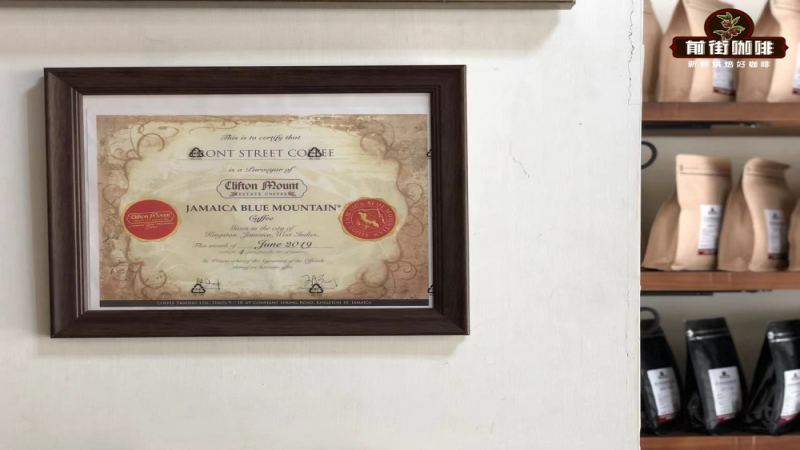
Blue Mountain coffee is an iconic presence in the second wave of specialty coffee, and besides its flavor, what is most often discussed about it is its price. From the perspective of Front Street Coffee, this article sorts out the essential differences between authentic Blue Mountain No. 1 and the "Blue Mountain flavor" blended beans on the market, reviews the history of Blue Mountain coffee being expensive and hard to obtain due to Japan's long-term quota agreement, explains the strict definition and grading standards for the Blue Mountain growing region set by the Jamaican CIB, and introduces the origin, price, and store brewing parameters of Front Street Blue Mountain No. 1 coffee beans. Whether you want to understand why Blue Mountain is expensive or want to know how to brew the Blue Mountain No. 1 you bought so it tastes better, this article provides complete reference information.
For more specialty coffee knowledge, please follow the WeChat public account: Front Street Coffee (FrontStreet Coffee)
In the period before the concept of specialty coffee had spread widely, Blue Mountain coffee, as a representative presence of the second wave of specialty coffee, was regarded by many coffee lovers as a top-tier single-origin coffee. When people talk about it, they often first think of the word "expensive" rather than the flavor itself. In this article, Front Street will analyze exactly why Blue Mountain coffee is so expensive.
How much does a cup of authentic Blue Mountain No. 1 cost?
The reason Front Street specifically emphasizes "authentic Blue Mountain No. 1" is that a type of blended coffee called "Blue Mountain flavor" often appears on the market. This so-called "Blue Mountain blend" has no actual connection to Blue Mountain and usually uses beans from other growing regions, using roasting to imitate Blue Mountain's taste. The cause of this phenomenon is that in the early days Blue Mountain coffee had low production and a high price, so operators, based on Blue Mountain's flavor characteristics, used mixed beans combined with dark roasting to piece together a similar taste. Therefore, honest merchants at home and abroad will clearly tell customers that this is comprehensive Blue Mountain, blended Blue Mountain, Blue Mountain flavor, or Blue Mountain style coffee beans, and not true Blue Mountain coffee.
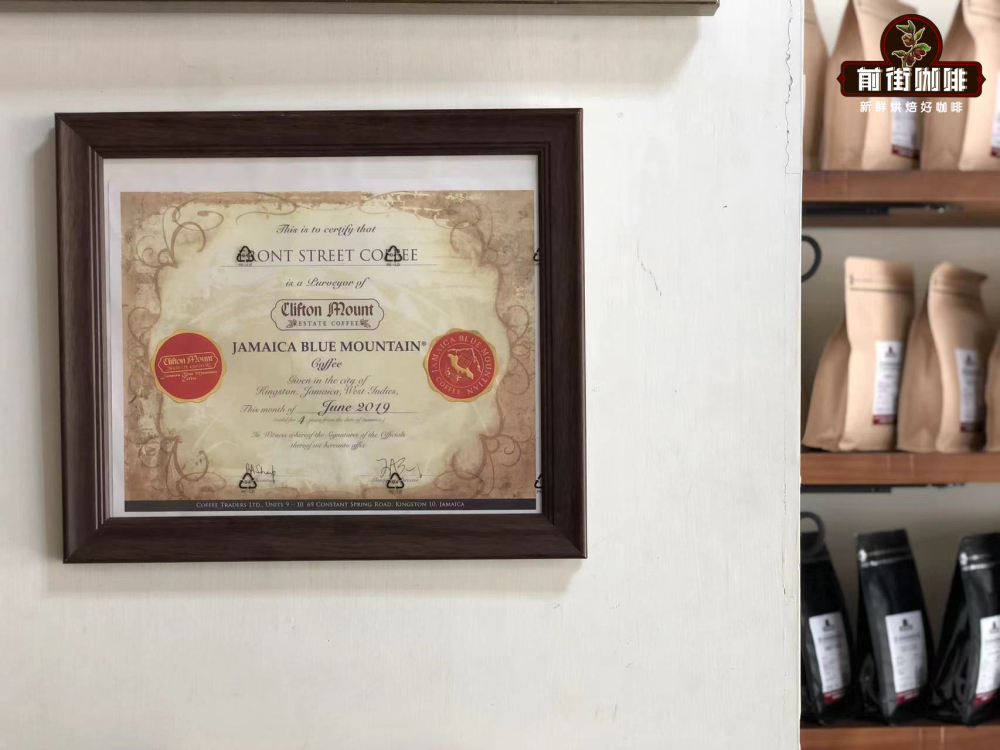
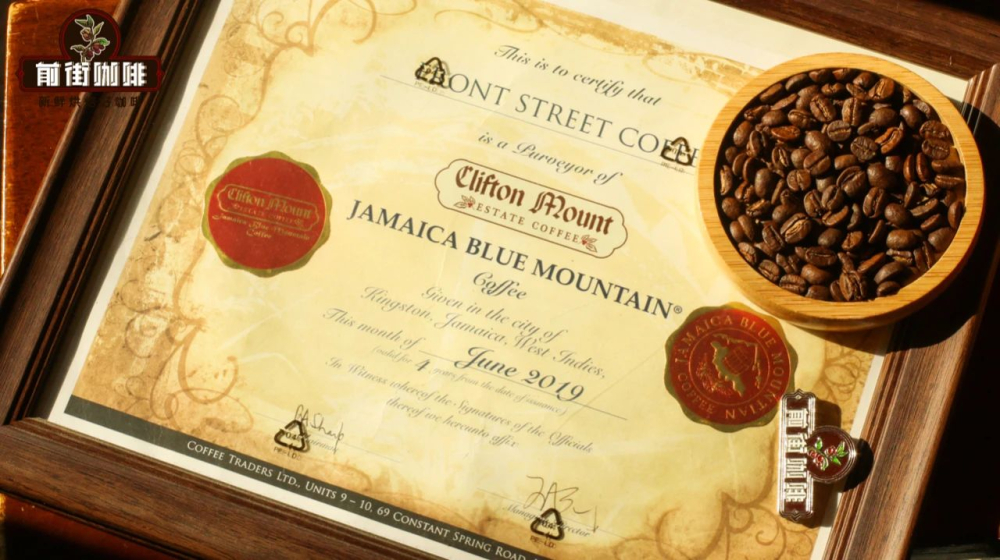
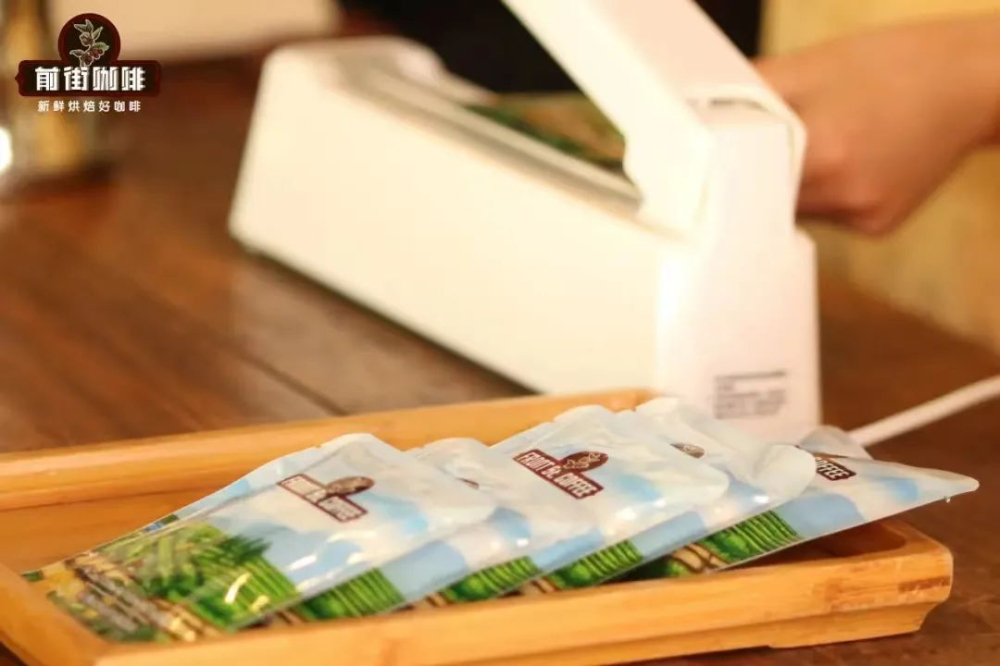
Before the millennium, if you wanted to drink a cup of Blue Mountain black coffee in China, it would cost dozens or even over a hundred yuan, which was extremely luxurious given the consumption level at the time, and what you drank might not even be the real thing. As the Jamaican government released more Blue Mountain quota to consumer markets in various countries, drinking a cup of real Blue Mountain in China today has become much easier. Front Street Coffee's Blue Mountain No. 1 coffee beans are sold at 158 yuan per 100g single pack, a standard box of Front Street Blue Mountain coffee drip bags is 178 yuan per box, while tasting it at the Dongshankou store costs only 60 yuan per cup, about 200ml. The Blue Mountain No. 1 coffee purchased by Front Street comes from Jamaica's historically long-established Clifton Estate and is washed-processed.
Rare things are precious
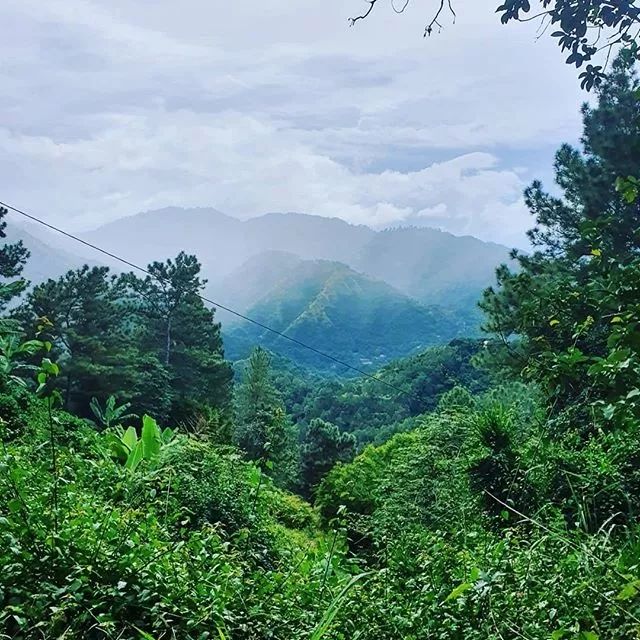
The high quality of Blue Mountain coffee is naturally inseparable from advantages in the growing environment. The Blue Mountain range is surrounded by the Caribbean Sea, forming a unique island-type tropical rainforest microclimate, with concentrated rainfall in the rainy season and good drainage. Volcanic ash from active volcanoes makes the soil rich in nutrients, so the coffee trees do not need much irrigation or fertilization. The area has abundant sunshine year-round, is often shrouded in thin mist, and the cool and comfortable high-altitude growing areas are very suitable for the growth of various crops. Locals usually plant coffee trees together with banana trees on the Blue Mountains.
The CIB has designated an area of about 6,000 hectares in the Blue Mountain range and strictly stipulates that only Typica coffee produced in this area can be called "Blue Mountain coffee," while coffee from other areas is called High Mountain coffee. According to the area designated by the CIB, the forest region growing Blue Mountain coffee is at an altitude of about 910 to 1,700 meters, mainly distributed in St. Thomas, St. Mary, St. Andrew, and Portland, accounting for one third of the entire Blue Mountain growing area.
The variety of Blue Mountain coffee belongs to Typica, and the higher the growing altitude, the more prominent Typica's flavor expression becomes. In addition, the Typica variety has poor disease resistance and is highly susceptible to infection, and the fruit yield per plant is relatively low, so more manpower is needed for careful care. Moreover, the terrain at Blue Mountain's high altitudes is rugged and uneven, making management and picking quite difficult and demanding a high level of skill from pickers, which further affects yield. In recent years, less than 15% of the coffee beans produced in Jamaica can bear the Blue Mountain coffee label, about 900 tons. After picking, the fresh coffee cherries are immediately sent to processing plants, where they are washed to remove the pulp and then dried.
The "monopoly" of the Japanese market
Before the 1960s, Jamaican coffee beans were already widely popular in the specialty market. In 1969, Jamaica suffered severe hurricane damage, and many industries fell into difficulty, including the coffee industry. At this time, Japan's UCC company provided financial assistance to Jamaica's coffee industry and introduced scientific ecological planting methods. To express gratitude, the Jamaican government signed a 30-year contract with Japan, promising to supply 90% of the quota of high-quality Blue Mountain coffee to Japan, with the remaining 10% allocated to European and American countries.
During this period, Blue Mountain coffee was not fully consumed in Japan's domestic market, and some beans were resold at high prices to other countries and regions in Asia. Coupled with Japan's vigorous promotion, coffee people in many neighboring countries also began to追捧 Blue Mountain coffee, such as Singapore, South Korea, China Taiwan, and China Hong Kong. Since 2000, the "Blue Mountain craze" gradually spread to China, creating a situation in which Blue Mountain coffee was expensive and hard to obtain.
During the 2008 global economic crisis, Jamaica tried to sell Blue Mountain coffee to more countries, and it happened that its agreement with Japan had also expired, so it allocated more Blue Mountain quota to other countries. With the expansion of demand in China's coffee market, many merchants in our country can now directly import Blue Mountain coffee beans from Jamaica. This is why the Blue Mountain coffee drunk today is cheaper than in the past.
How high is the grade of Blue Mountain No. 1?
The CIB was the earliest institution to use a scientific and objective method to assess coffee quality grades, grading comprehensively based on green bean size, color, uniformity, defect rate, moisture content, and cupping performance.
Before export, Blue Mountain green beans are packed and sent for testing, and are ranked by grade according to specification size and defect rate after processing, divided into Blue Mountain No. 1, Blue Mountain No. 2, Blue Mountain No. 3, and Blue Mountain Peaberry. Bean size is distinguished by screens with different apertures, and coffee beans that do not pass through the holes meet the specification standard used. Top-grade Blue Mountain No. 1 green beans must meet a specification of 17 mesh or above, a defect rate below 3%, a moisture content of about 13%, and in cupping present a rich coffee aroma, a smooth and balanced mouthfeel, low and weak acidity, and a lasting sweet aftertaste.
To ensure that Blue Mountain coffee beans maintain better quality before roasting and avoid the penetration of moist water vapor during transportation, Jamaicans insist on using handmade wooden barrels as the container for Blue Mountain green beans, and the wooden barrel has also become one of the important symbols of Jamaican Blue Mountain coffee.
Front Street's roasting philosophy is to present coffee's most classic flavor profile, such as Yirgacheffe's bright lemony acidity, Indonesian Mandheling coffee's mellow and toasty mouthfeel, and Blue Mountain naturally also has to highlight the classic Blue Mountain flavor. Front Street uses a medium-dark roast to maximize the coffee's chocolate and nutty aromas while retaining soft acidity and sweetness, making the overall taste more balanced.
How do you brew authentic Blue Mountain No. 1 so it tastes good?
As the coffee atmosphere in China continues to heat up, even without going to a coffee shop, you can now brew a fragrant and delicious cup of Blue Mountain coffee at home. After purchasing Blue Mountain No. 1 coffee beans, many friends ask Front Street how to brew them to taste better, so here Front Street explains its extraction approach based on the way it is served in stores.
First, before brewing, Front Street will confirm the freshness of the coffee beans. If the roast date is more than a month old, Front Street will choose fresher coffee beans. Coffee beans have an optimal tasting period after roasting, and the aroma will accelerate its loss with storage time, making it difficult to present the original flavor during brewing. This is also why Front Street insists on shipping only coffee roasted within 5 days, hoping that every customer can enjoy the most complete tasting period of the coffee beans.
Front Street takes into account that medium-dark roasted coffee, after a certain degree of roasting, has a looser internal structure than light-roasted coffee and absorbs water better. To avoid over-extraction, Front Street chooses a grind size with a 75% pass rate through a No. 20 standard sieve, along with a water temperature of 88°C, paired with Front Street's usual three-stage pouring.
When brewing coffee beans mainly characterized by bitterness, Front Street usually gives priority to the KONO dripper, in order to highlight the coffee's full-bodied mouthfeel. The upper part of the KONO dripper allows the filter paper to fit better. Compared with the v60 dripper, the extraction method is mainly immersion-based, which can increase the coffee's overall concentration and enhance its body. Similarly, the KONO dripper is also suitable for brewing Brazil Queen Estate coffee beans and Golden Mandheling coffee beans.
The parameters for brewing Blue Mountain No. 1 at Front Street stores are:
Dripper: KONO dripper
Water temperature: 88 degrees Celsius
Coffee-to-water ratio: 1:15
Coffee grounds: 15g
Grind size: EK43s - setting 10.5 (75% pass rate through a No. 20 standard sieve)
Front Street's operation is to first wet the KONO dripper, then align and place the filter paper so that it fits the dripper better. After pouring out the water in the server, add 15g of coffee grounds, bloom with 30g of water for 30s, then begin pouring in a small stream in circles from the center until reaching 125g, at which point start分段. When the coffee bed drops to half the height of the dripper, pour the second stage in the same manner until 225g is reached. After all dripping is complete, remove the dripper.
Blue Mountain No. 1 coffee tastes of the sweet fragrance of dark chocolate and the sweetness of caramel, with soft and elegant acidity. The various flavors are balanced, and the mouthfeel is smooth, rich, and full-bodied, with a very typical Blue Mountain flavor.
The above content is compiled by CoffeeHunters, a coffee news website.


