







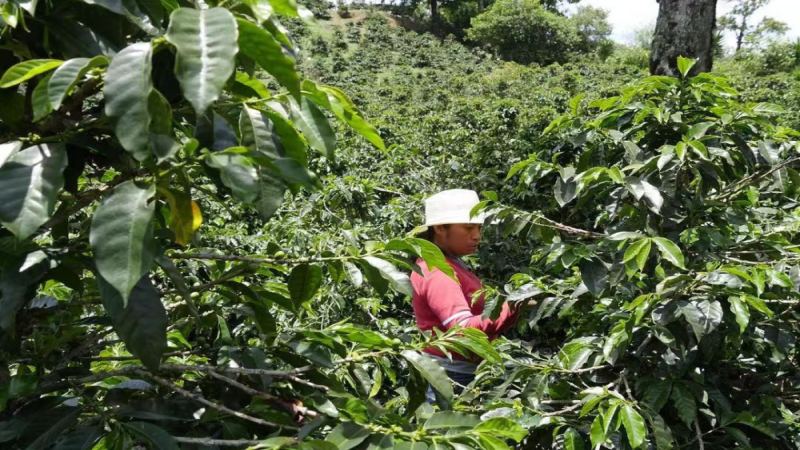
Honduras is one of the largest coffee-producing countries in Central America, yet it has long been overlooked by coffee lovers. This article starts with a cup of hot Americano with a vinous aroma from a Front Street Coffee store, outlining Honduras's geography and climate, its coffee-growing history, the distribution of its six major regions and their shared flavor characteristics, and highlighting the barrel-fermented processing method that has gained much attention in recent years. The article also provides a detailed analysis of the origin background, processing technique, and brewing parameters of Front Street Honduras Sherry coffee beans, helping readers gain a comprehensive understanding of the coffee charm of this "country of the abyss."
For more specialty coffee knowledge, please follow the WeChat official account: FrontStreet Coffee
Many customers walk into a Front Street Coffee store, order a hot Americano, and exclaim after just one sip: "It actually has a vinous aroma!" This is not surprising—in the Espresso Warm Sunshine Blend produced by Front Street Coffee stores, Honduras Sherry accounts for 70% of the blend, and it is precisely this that contributes that vinous note. So, how much do people really know about Honduran coffee? Next, Front Street Coffee will introduce this country and its coffee.
Honduras was originally a settlement of indigenous peoples. When Columbus landed on the American continent in 1502, he arrived here, and because the surrounding waters were unfathomably deep, he named it "hondura," meaning "abyss."
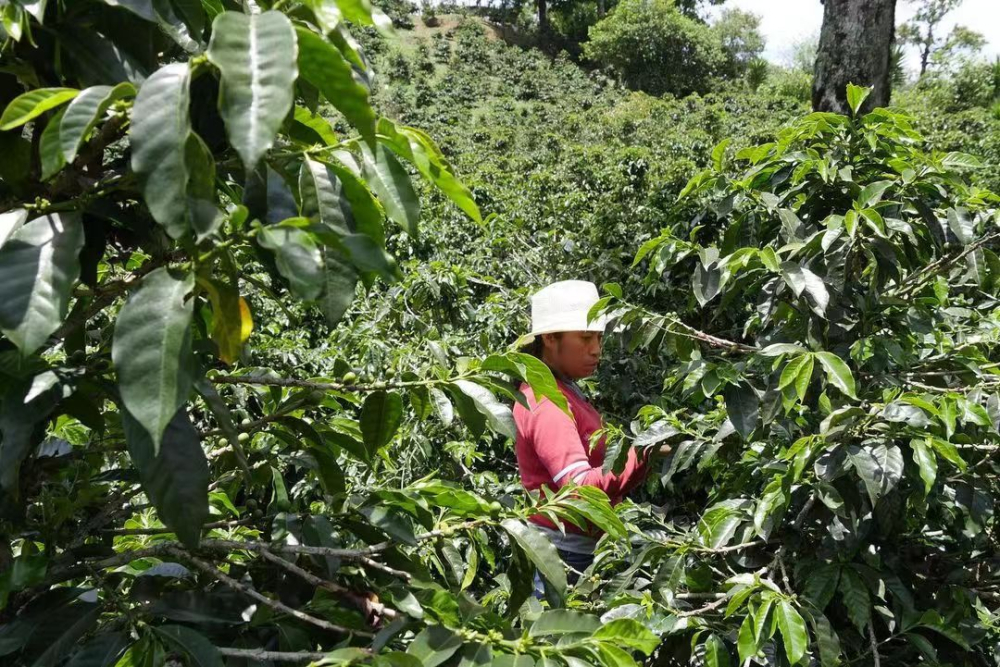
Honduras is located in Central America and is a mountainous country, with more than three-quarters of its territory consisting of mountains and plateaus, at an average elevation of between 900 and 1,500 meters. The Sierra Madre runs from west to east, while the interior is a lava plateau. The country borders Guatemala, El Salvador, and Nicaragua, and lies between the Pacific Ocean and the Caribbean Sea, with coastlines. Honduras is the country in Central America with the most prominent mountain features, suitable for growing coffee and bananas, and these two crops are also important export commodities for the country.
Honduras lies between 13° and 16° north latitude, right within the coffee-growing belt, and has a tropical climate. The average annual temperature is 25°C to 30°C, with abundant rainfall, and annual precipitation can reach 2,000 to 3,000 millimeters.
Honduras Coffee History
After reviewing Honduras's coffee historical records, Front Street learned that although the country's coffee is not particularly famous, coffee appeared as early as 1894. Because the return on investment took too long, few farmers were willing to grow it, and at the time smallholder coffee farmers were the main producers. In 1900, Honduras's total annual coffee export value was only 54,410 pesos. In 1949, the government funded road construction, extending highways into the mountains so that agricultural products from the mountains could be transported to various places and exported. In 2011, Honduras ranked first in Central America in coffee exports and second in the world in Arabica coffee exports. Today, Honduras is one of the major coffee-producing countries.
Honduras Producing Regions
According to Front Street Coffee's understanding, Honduras is mainly divided into six producing regions. Each region has a cupping laboratory supported by the Honduran Coffee Institute (IHCAFE), providing free cupping services. These six major regions are further subdivided into several micro-regions based on terrain and flavor.
[Copan] The Copan region is located in northwestern Honduras, bordering Guatemala and El Salvador. The growing elevation ranges from 1,000 to 1,500 meters. The annual harvest period lasts from November to March of the following year. Common varieties include Bourbon, Caturra, and Catuai.
[Marcala-Montecillos] The Marcala-Montecillos region is located in the southwestern part of the country. The growing elevation is between 1,200 and 1,600 meters. The harvest period is usually from December to April of the following year. Common varieties include Bourbon, Catuai, Caturra, and Pacas.
[Opalca] The Opalca region is located in northwestern Honduras. The growing elevation is 1,100 to 1,500 meters. The harvest season is from November to February of the following year. Common varieties include Bourbon, Catuai, and Typica.
[Agalta] The Agalta region is distributed across northern and eastern Honduras. The growing elevation is 1,300 to 1,950 meters. The harvest period is between December and March of the following year. Common varieties include Bourbon, Caturra, and Typica.
[Comayagua] The Comayagua region is located in west-central Honduras. The growing elevation is 1,000 to 1,500 meters. The harvest season is from December to March of the following year. Common varieties are Bourbon, Caturra, and Typica.
[El Paraiso] The El Paraiso region is situated in southeastern Honduras. The growing elevation is 950 to 1,950 meters. The harvest time is from December to March of the following year. Common varieties include Catuai and Caturra.
Honduras Coffee Flavor
As Front Street often says, different origins produce different coffee flavors; however, every producing country has some representative flavors. For example, Brazilian coffee often carries nutty and creamy notes, while Ethiopian coffee presents citrusy qualities. Honduras's overall flavor is dominated by a combination of brown sugar and caramel, with a hint of tropical fruit and berry notes. Some also describe Honduran coffee as having flavors of apricot and chocolate.
Recently, two barrel-treated Honduran coffee beans have been highly sought after; drinking them is like tasting whiskey, yet they contain no alcohol at all. Below, Front Street introduces one of them—Sherry.
Front Street Honduras Sherry Coffee Beans Region: Masaguara, Honduras Estate: Mocha Estate Elevation: 1,500 m–1,700 m Varieties: Caturra, Catuai, Pacas Processing method: Refined washed whiskey barrel fermentation
Masaguara Masaguara is a municipality under the Intibuca department of Honduras, located in the southern part of the Jesús de Otoro Valley and surrounded by mountains and hills. Local residents mainly grow coffee, which is also the main pillar of the region's economy; the areas corresponding to the valley are used for growing basic grains and raising livestock. As for the origin of the place name, according to "Indigenous Place Names" by Mr. Alberto Membreño, Masaguara means "place of deer." Mocha Estate is just a small estate within the high-elevation area of Masaguara.
Barrel Fermentation Processing Method
The barrel fermentation method draws on winemaking techniques. For wine, its greatest influence lies in stabilizing the body's structure through moderate oxidation and integrating the aroma of the wooden barrel into the wine, and this principle applies equally to the coffee fermentation process. The barrel allows a very small amount of air to pass through the barrel wall into the interior, causing the coffee beans to undergo moderate oxidation; the entry of an appropriate amount of oxygen also speeds up coffee fermentation, softens tannic acid, and allows fresh fruit aromas to gradually develop into rich and varied mature vinous aromas. The barrel has moderate hardness, ensuring both good waterproofness and safe storage. In addition, the barrel contains a certain amount of tannic acid, and during storage, the tannic acid in the barrel wall seeps into the green coffee beans, giving the coffee greater complexity and a rich vinous aroma.
Front Street Coffee Brewing Recommendations Dripper: Hario V60 #01 Water temperature: 90°C Dose: 15 g Coffee-to-water ratio: 1:15 Grind size: 80% passing through China standard No. 20 sieve
Brewing method: First bloom with 30 g of water for 30 seconds, then pour in a small stream in circles until 125 g for a staged pour; when the water level drops and is about to expose the coffee bed, continue pouring until 225 g and stop; when the water level drops again and is about to expose the coffee bed, remove the dripper. (Timing starts at the beginning of the bloom.) Total extraction time is 2'00".
Brewing Flavor It smells of vanilla and cream; on the palate it presents whiskey, berry, almond, and dark chocolate flavors, with a maple-syrup-like sweet aftertaste.
The above content is compiled by CoffeeHunters, a coffee news website.


