







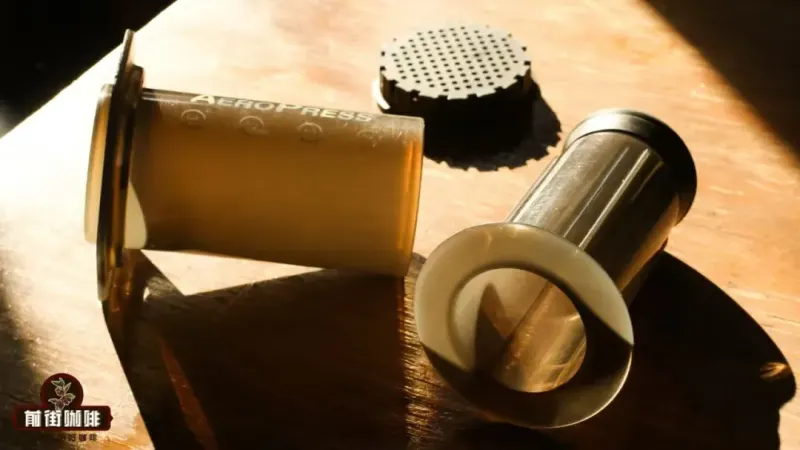
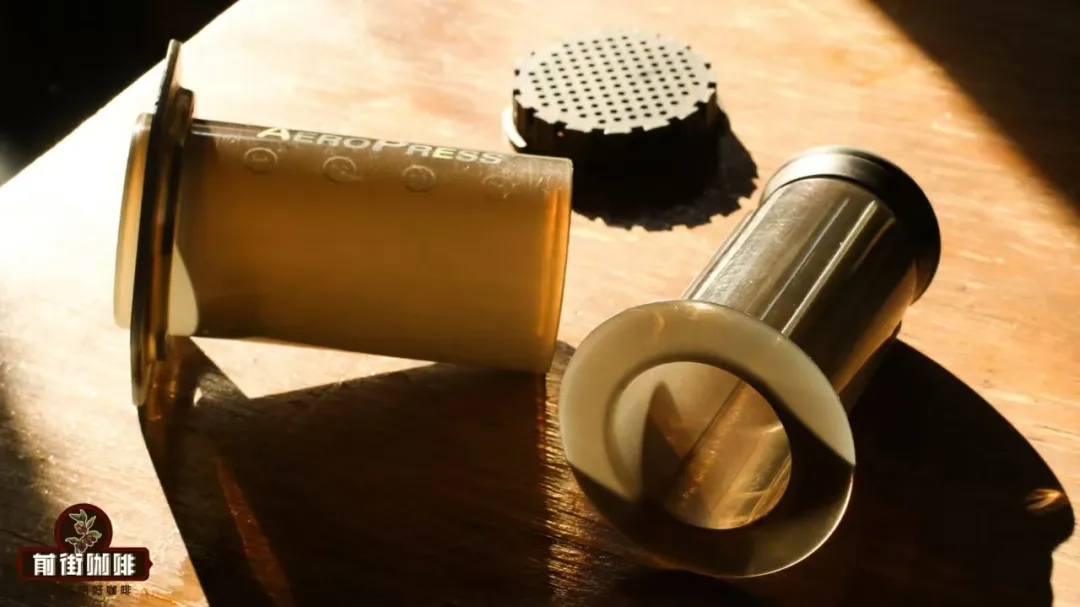
The AeroPress is a coffee brewing device that is simple to operate yet offers diverse brewing possibilities. The official recommendation is positive pressure extraction, but most enthusiasts prefer inverted pressure. This article, through a comparative experiment conducted by Front Street Coffee using Geisha Village Chaka beans, provides a detailed analysis of the differences between positive pressure and inverted pressure in terms of operation流程, extraction time, and flavor performance, and explains why inverted pressure is more favored. At the same time, the article also compares the AeroPress with the French press to help readers understand the differences between the two devices in extraction principles and applicable scenarios, providing a reference for daily brewing.
For more specialty coffee knowledge, please follow: Front Street Coffee (Frontsteet Coffee)
The AeroPress coffee extraction tool was initially conceived by its inventor because they found the brewing process too cumbersome. The operation is not complicated: assemble the parts in place, add coffee grounds and hot water to soak, and finally press out the coffee liquid to complete.
Compared with traditional coffee extraction methods, the AeroPress offers quite high playability. You can follow the official recommendation of positive pressure extraction to make coffee, or you can creatively invert the chamber and use the inverted pressure method to complete the brew. Combined with different variables such as grind size, water temperature, coffee-to-water ratio, stirring time, and pressing force, a considerable number of extraction schemes can be derived. Because of its diverse brewing possibilities, the official organization even holds an AeroPress competition every year, giving players a chance to showcase their skills.
However, everyone quickly noticed a phenomenon: although the official recommendation is positive pressure extraction, the vast majority of enthusiasts prefer to use inverted pressure to make coffee. What exactly is the reason for this? Below, let Front Street discuss why AeroPress players tend to prefer inverted pressure extraction. Before expanding on this, let's first clarify what positive pressure and inverted pressure respectively refer to.
Definitions of Positive Pressure and Inverted Pressure
The AeroPress extraction method is quite interesting: first, hot water and coffee grounds are fully contacted through immersion, then stirring is used to accelerate the dissolution of flavor substances in the coffee grounds, and finally pressure is used to press out the coffee liquid. This whole process ensures that we can obtain a cup of aromatic single-origin coffee with minimal operation and in the shortest time.
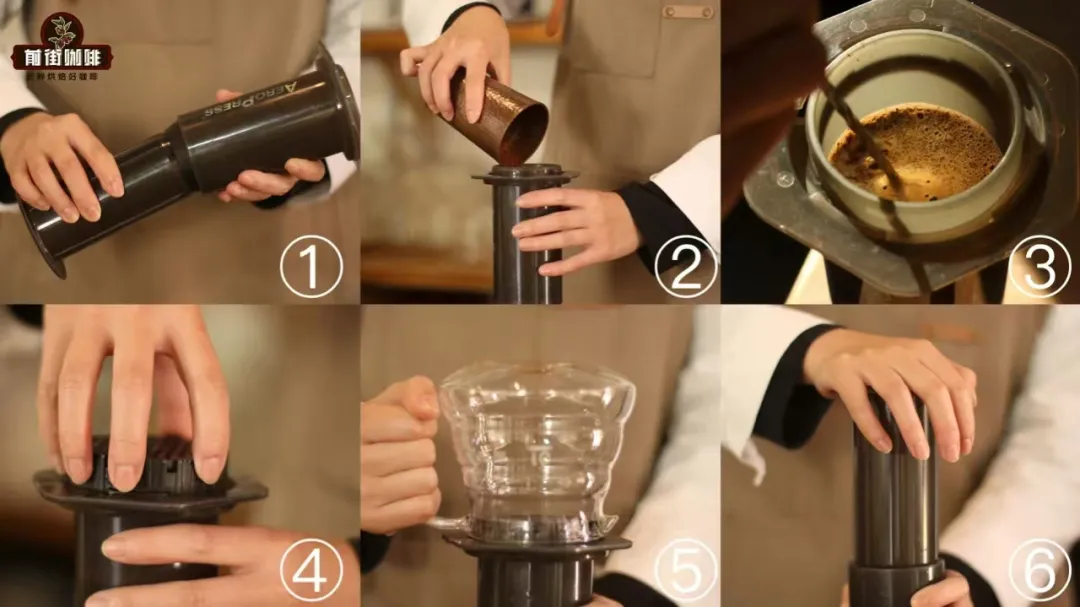
So-called positive pressure means placing the AeroPress chamber upright on the cup for immersion extraction, that is, with the filter facing downward. During operation, the filter needs to be installed first, and finally the plunger is inserted to press out the coffee liquid; inverted pressure means first attaching the plunger to the chamber, then turning it upside down so that the plunger faces downward as the base for immersion. After immersion is completed, the filter is installed, the cup is attached, and it is flipped back for pressing extraction. See the figure below for the specific process.
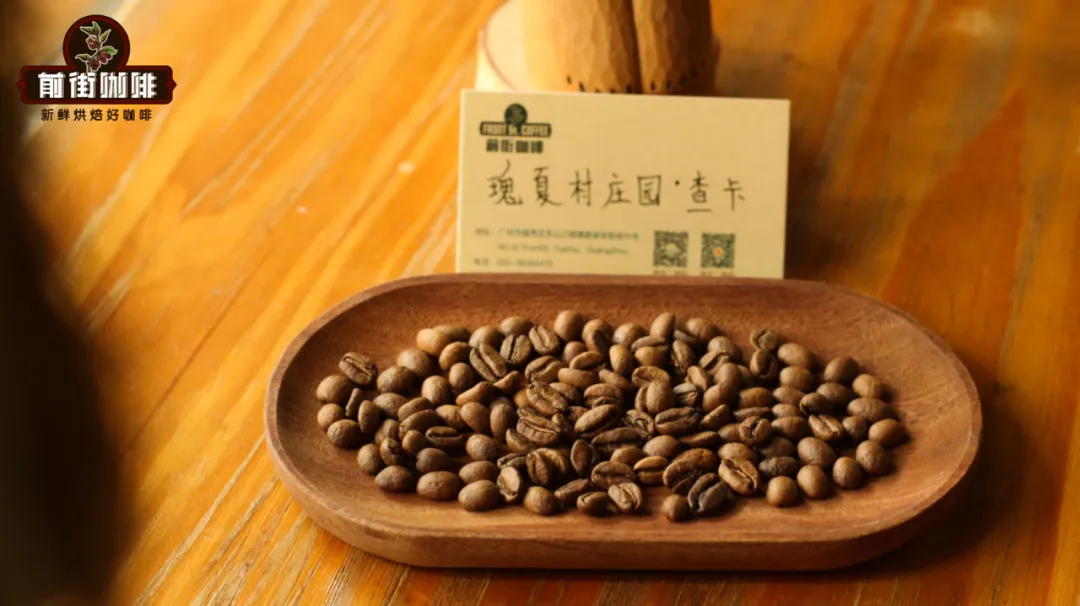
At first glance, the steps are largely the same, and inverted pressure merely adds an extra flipping action during extraction. Then why is inverted pressure used far more frequently than the officially recommended positive pressure? Next, Front Street will conduct an experiment so everyone can intuitively feel it. The coffee beans selected for this experiment are—"Geisha Village · Chaka."

Geisha Village was co-founded by documentary director Adam Overton and his photographer wife Rachel Samuel. They initially became connected with coffee because they were filming an Ethiopian coffee documentary locally, which then gave rise to the idea of establishing an estate in Ethiopia and producing coffee.
In 2009, they came into contact with the Geisha bean-seeking journey of the owners of Deborah Estate and Elida Estate, which made their idea of founding an estate even firmer. In 2011, the couple returned to Ethiopia, collected bean seeds from the place where Geisha was discovered in Bench Maji, brought them back to Geisha Village to establish an estate for cultivation, and from then on officially embarked on the path of coffee production.
Chaka is a highly cost-effective coffee bean produced by Geisha Village. It blends multiple coffee varieties from different plots within the estate, including Geisha 1931, which is closest to the Geisha variety, Gori Geisha, and Ethiopian native varieties.
Due to its excellent flavor and affordable price, Chaka has been very popular and sought after recently. Having introduced all this, next Front Street will use Chaka to test what differences actually exist between AeroPress positive pressure and inverted pressure.
Differences Between AeroPress Positive and Inverted Pressure
In this experiment, all parameters remain consistent, and the only variable is the extraction method. The parameters are as follows: 18g coffee dose, 1:11 coffee-to-water ratio, grind size of 9 on the ek43, water temperature 92°C. (See the process illustrations above; they will not be repeated here.)
First, assemble the corresponding components according to the different extraction methods. For positive pressure, the filter paper and filter need to be installed on the chamber first, then with the filter facing downward, place the AeroPress on a cup that can withstand pressure; for inverted pressure, first attach the plunger to the chamber, turn it upside down, with the plunger facing downward.
The subsequent extraction steps are the same: add the coffee grounds and perform a 30-second bloom with water at twice the coffee dose. After the bloom is completed, pour in all of the remaining target water amount of 190ml, then stir 5 times clockwise with a stirring stick, and after immersing until 1 minute 30 seconds, it is ready to press out the coffee liquid.

For positive pressure extraction, simply attach the plunger and apply pressure; for inverted pressure, the filter paper and filter need to be installed, the cup attached, and then it must be flipped over before pressure can be applied. During pressing, remember not to rush; maintain a slow and steady force when pressing down.
Extraction complete. The total extraction time for positive pressure was 1 minute 35 seconds, and the total extraction time for inverted pressure was 1 minute 42 seconds. In terms of taste, there is indeed a certain difference between the two. The Chaka extracted by inverted pressure presented citrus and berry-like sweet-and-sour flavors, a delicate white floral aroma, and a fresh green tea finish. Its mouthfeel was fuller than pour-over due to the presence of some fine particles. In comparison, the Chaka extracted by positive pressure was somewhat thinner, and its flavor performance was also slightly inferior, leaning sour.
The main reason for this difference is that during positive pressure extraction, some of the hot water leaks out through the gaps, and not all of the hot water can fully extract the coffee grounds. Therefore, compared with inverted pressure, positive pressure has a thinner mouthfeel and less prominent flavor.
Overall, the answer is already obvious. Many friends prefer inverted pressure when using the AeroPress because it is more stable and friendlier to beginners. But in fact, as long as suitable extraction parameters can be found, AeroPress coffee made with positive pressure can also perform excellently. For example, after Front Street adjusted the grind finer, although the mouthfeel was not as thick as with inverted pressure, the flavor was more prominent and the layering was richer.
Besides the AeroPress, quite a few friends are also curious about the French press and want to know the difference between the two.
To make coffee with a French press, the coffee is fully immersed in the pot, and then the coffee and coffee grounds are separated using a plunger with a metal filter. The coffee obtained by this brewing method has a very good richness, can increase texture and oils, and the final coffee is also quite clean. Compared with the requirements of pour-over coffee for blooming, technique, and so on, the French press brewing method does not require much skill, while also leaving considerable room for adjustment.
From the extraction principles of the two devices, it can be known that: the AeroPress can quickly extract a high-concentration coffee liquid, while the French press is the simplest and most convenient way to extract the flavor of the coffee beans themselves.
The above content is compiled by CoffeeHunters, a coffee news website.


