







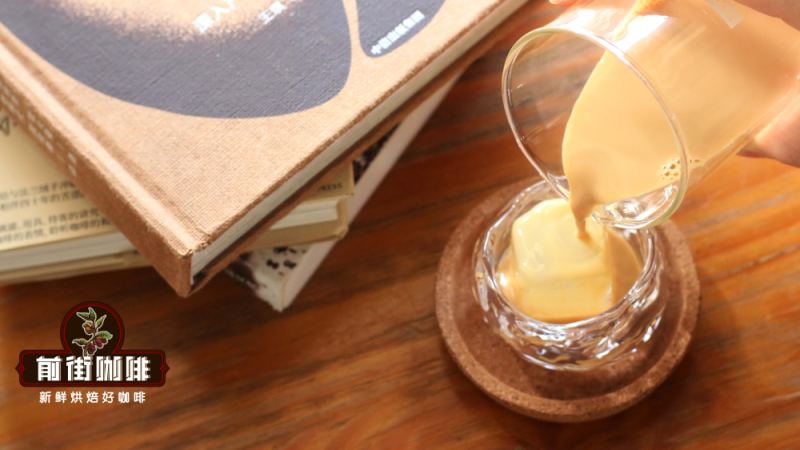
Many people, upon first hearing "white coffee," assume it is named for its pale color. In reality, white coffee refers to different things depending on the context. It can refer to a representative instant coffee product from Malaysia, or to the category of milk coffee as opposed to black coffee in Australian cafés. Malaysian white coffee is typically a blend of three bean types—Liberica, Arabica, and Robusta—which are roasted, had their soluble substances extracted, and then combined with sugar and non-dairy creamer to make a powder. In the Australian context, white coffee is represented by the flat white. This article will explore the naming, origins, and production methods of white coffee, as well as its differences from the flat white, to help coffee enthusiasts clarify these two easily confused concepts.
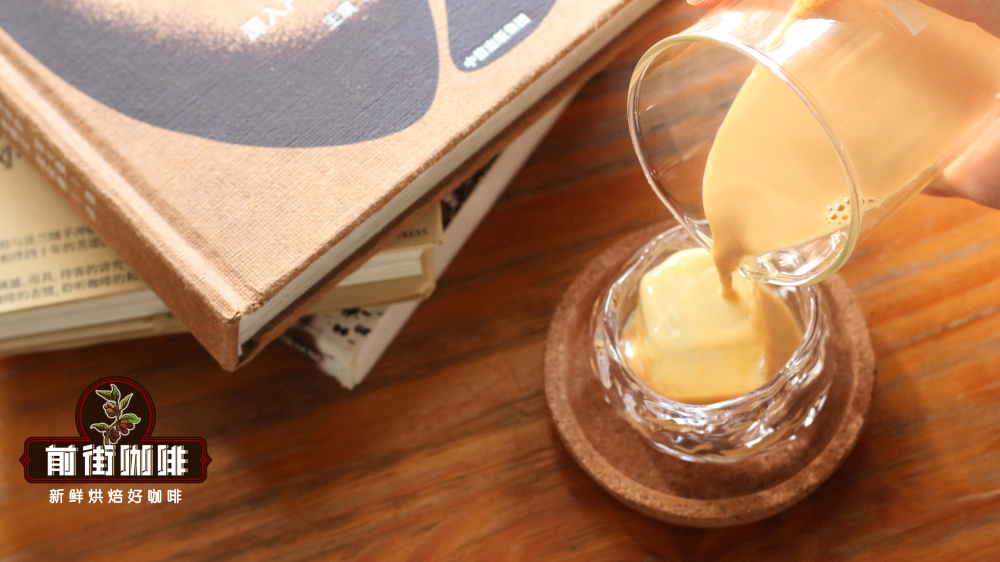
For more specialty coffee knowledge, please follow: Front Street Coffee (Frontsteet Coffee)
Many people ask whether white coffee got its name because of its pale color. At Front Street, we often encounter similar questions when talking with coffee enthusiasts. In fact, the "white" in white coffee does not come solely from its appearance. It is usually processed with coffee beans combined with skim milk powder, and when compared side by side with regular coffee, the finished product appears lighter in color and tends to have a milder taste.
When it comes to specialty coffee from Malaysia, white coffee is undoubtedly one of the most representative products. For locals, it has long been woven into their daily leisure time, becoming a relaxed companion in everyday life. Because of this, white coffee often sells out in the Malaysian market. Many tourists visiting Malaysia pick up some white coffee as a souvenir, which shows just how popular it is.
In Malaysia, white coffee is not just the name of a beverage; it is more like a symbol of local food culture. Although coffee with milk added is sometimes also called white coffee, more often it refers to a specific local coffee product. It is said that this product was invented by Chinese immigrants to Malaysia, and the ingredients are quite particular. So what exactly makes it so particular?
The answer lies in the blend. It uses a combination of three types of beans, but these three are not coffee beans from different origins—they belong to three different varieties: Liberica, Arabica, and Robusta.
After blending, the beans enter the roasting stage, usually roasted until the surface is shiny and oily before being removed from the roaster. Once the beans have cooled, the soluble substances are extracted, and then sugar, non-dairy creamer, and other ingredients are added to produce a powder that can be brewed at any time. By now, you have probably realized the true identity of this white coffee—yes, it is instant coffee. In Malaysia, this instant product called "white coffee" is a local specialty.
Almost every small shop locally stocks this white coffee, because coffee has long been a daily necessity for Malaysians. That is why, when visiting Malaysia, there is no need to seek out a particular café—this specialty is everywhere, and you can taste its distinctive flavor at any time.
There are currently two main explanations for "white coffee." Front Street will first introduce the one most people are familiar with and the one more widely circulated online: the terms black coffee and white coffee both come from Australia. This is because in most Australian cafés, coffee is mainly divided into these two categories.
As the most common representative of white coffee, the flat white corresponds to the term "Flat white." Names like ping bai, xiao bai, fu rui bai, chun yi bai, and ao rui bai are all translations and variations derived from this term. No matter how the name changes, it always involves the word "white," which has left many people with a strong impression of "white coffee."
Front Street often shares how to make a flat white; those interested can search for previous articles. Here is just a brief introduction: the flat white is a localized Australian espresso milk coffee. Australians prefer a stronger coffee flavor but do not want an overly heavy bitterness, so they created a "high concentration, low extraction" version of espresso—the Ristretto.
Because a Ristretto does not extract the later-stage compounds, the entire cup has a very abundant sweetness—strong but not bitter. Paired with a small amount of milk with silky microfoam, it further highlights the coffee flavor while enhancing the overall body. Aromatic, intensely sweet, full-bodied, and silky—these are the characteristics of a flat white. This is precisely why it stands out from other traditional espresso drinks and has become a favorite for many.
To make a Ristretto, Front Street's classic espresso blend is used. This is a recipe combining beans from three origins—Brazil, Indonesia, and Vietnam—and is dark roasted to maximize the coffee's rich aroma and allow everyone to easily extract a rich, dense crema. Whether making an americano diluted with water or a latte paired with milk, it is very suitable. It can be purchased from the Front Street Taobao store or the Front Street Tmall flagship store.
The above content is compiled by CoffeeHunters, a coffee news website.


