








In recent years, Honduras has secured a place in the specialty coffee map of Central America thanks to its unique barrel-fermentation processing method. Among them, two beans—Sherry and Lychee Orchid—stand out in particular. The former, fermented in whiskey barrels, brings layers reminiscent of vanilla cream and liqueur-filled chocolate, while the latter, shaped by brandy barrels, creates an elegant profile of lychee and grape. This article will systematically sort out the complete picture of Front Street Coffee Honduras Sherry coffee, from producing region background, estate information, and bean variety characteristics to processing techniques, roasting curves, and brewing parameters, and compare the flavor differences of different barrel processing methods from the same estate, providing a detailed reference for pour-over enthusiasts.
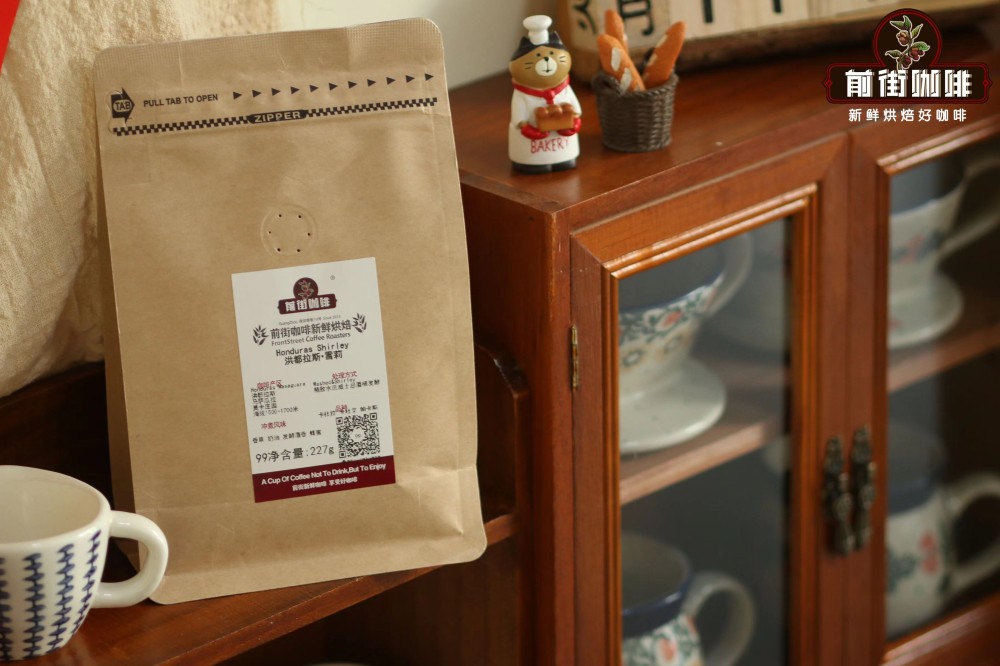
In recent years, the popularity of specialty processed coffee beans has continued to rise, and among them, Sherry coffee beans from Honduras can be called a topic of much discussion. When Front Street Coffee first listed this Sherry, it quickly won the favor of regular customers—whiskey aroma interwoven with a rich vanilla cream texture, unforgettable after one taste. The key to this bean's unique flavor lies in the use of barrel fermentation. In addition to Sherry, Front Street Coffee also has a Lychee Orchid coffee bean also produced in Honduras, whose flavor is centered on brandy, and compared with Sherry, Lychee Orchid's highlight is more reflected in its body in the middle and finish. However, today let us first focus on Sherry and explore how it develops such a wonderful taste.
Honduras Moka Estate Sherry Region: Intibuca Department City: Masaguara Estate: Moka Estate Altitude: 1500~1700m Varieties: Caturra, Catuai, Pacas Processing method: Fine washed whiskey Sherry barrel fermentation
Honduras Honduras is located in northern Central America, bordering Nicaragua and El Salvador to the east and south, and adjacent to Guatemala on the west. The country's terrain is mainly mountainous and plateau, with an altitude of about 1,500 meters. It has a tropical climate, with an average annual temperature between 16 and 20°C and abundant rainfall, providing good conditions for coffee cultivation. Coffee production in Honduras is mainly based on small family operations, among which 70% of small farms are less than 2 hectares. The main planted varieties include Bourbon, Caturra, Typica, Catuai, and Pacas. The washed processing method is the most commonly used local processing method.
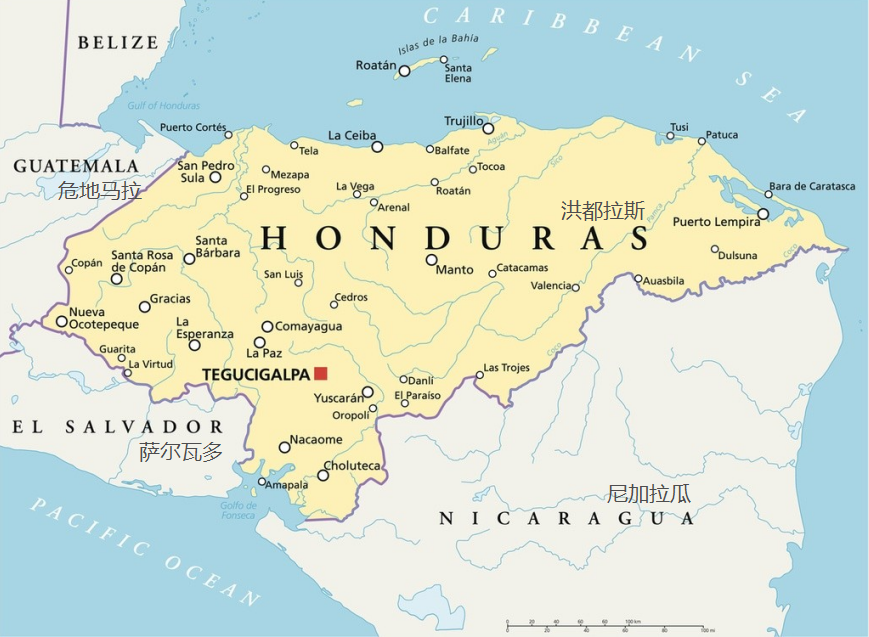
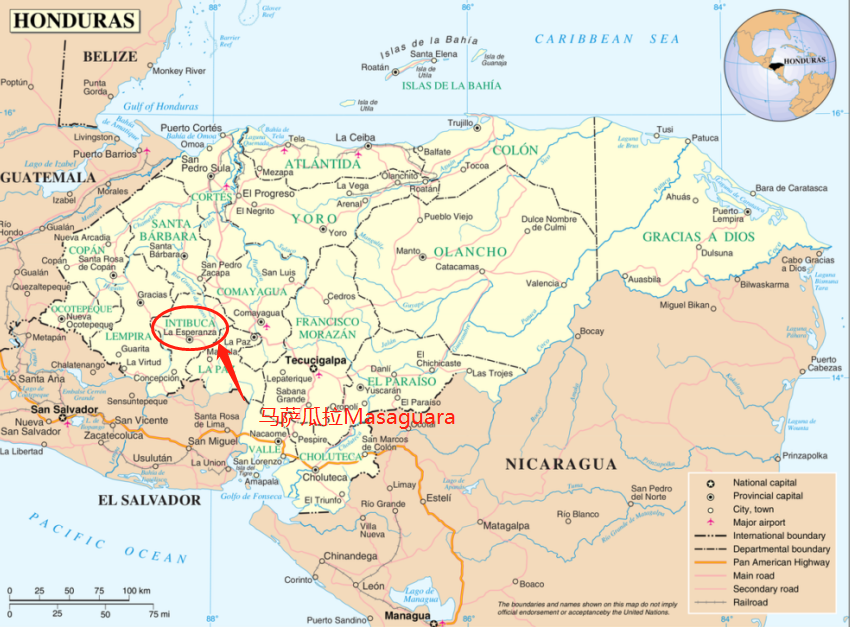
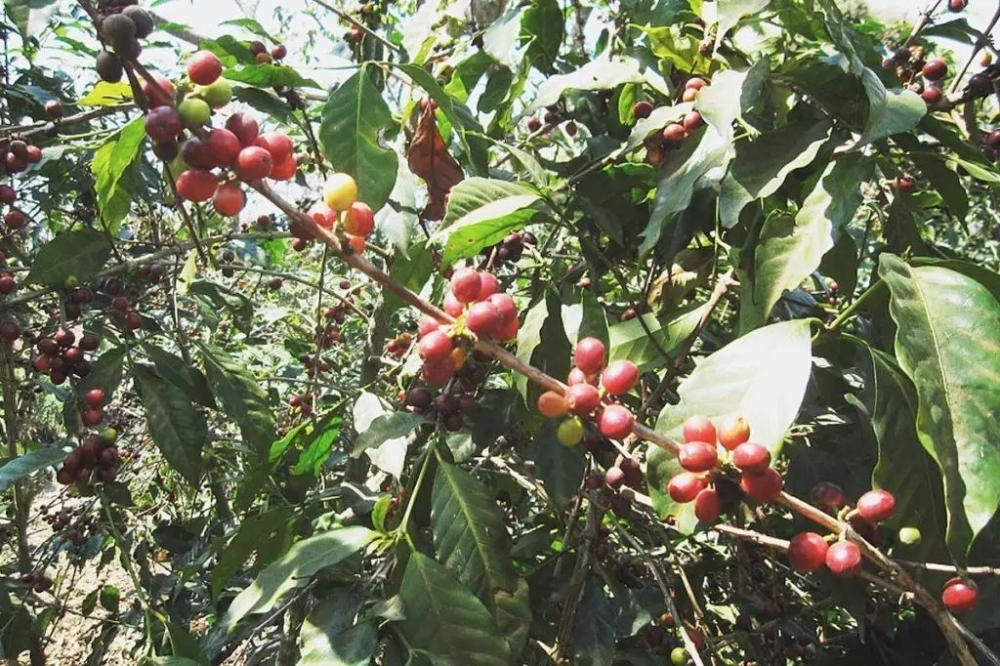
Producing Regions and Estate Honduras has six major coffee producing regions, namely Copan, Opalaca, Montecillos, Comayagua, Agalta Tropical, and El Paraiso. The bean introduced here does not belong to these six major producing regions, but comes from Masaguara city in Intibuca Department in southwestern Honduras. Masaguara is surrounded by mountains and hills, and the local economy relies on coffee cultivation, with many small family coffee farms distributed there. Moka Estate, where Front Street Coffee Sherry coffee is produced, is located here.
Sherry Coffee Bean Varieties Front Street Coffee Sherry uses three varieties in total: Caturra, Catuai, and Pacas. Caturra is a natural mutation of Bourbon. The tree is shorter than Bourbon, making harvesting easier, and its yield and disease resistance are also better than Bourbon. In flavor, it often shows refreshing fruit acidity and delicate sweetness. Catuai was bred by artificial hybridization of Caturra and Mondu Novo, and has strong resistance to natural disasters, especially wind and rain. The Catuai tree is short, and compared with other coffee tree species, its fruit is more firmly attached and not easy to pick. Pacas is also a natural mutation of Bourbon. The coffee tree is smaller in size and has higher yield, and can be planted mixed with other fruit trees and plants.
Honduras Barrel Processing Method Front Street Coffee Sherry coffee beans use a fine washed whiskey Sherry barrel fermentation process. Freshly picked coffee cherries are first finely washed, then placed into barrels that have aged Sherry, fermented at low temperature (about 15-20°C) for 30 to 40 days, and then dried in the shade.
Sherry barrels are oak barrels used by Sherry wineries in the whiskey industry for aging. The brewing process of Sherry requires a maturation step through the Solera System, that is, the fortified Sherry is blended and aged with wines from different years, which is exactly the uniqueness that forms Sherry flavor. Coffee beans fermented in Sherry barrels naturally take on the aroma of Sherry, creating an intoxicating and unique taste that has been highly sought after in recent years.
Taking [Honduras Sherry Coffee] as an example Roasting Suggestions The roasting machine is a Taiwan Yangjia Feima 800N, with a bean charge of 300 grams. Front Street Coffee chooses a light roast approach, with the core purpose of highlighting its fermented wine aroma. Charge temperature: 190°C Turning point: 6'46", 151.8°C First crack: 9'07", 184.2°C Developed for 2'10" after first crack, dropped at 195°C
Front Street Coffee Honduras Sherry Coffee Bean Roasting Curve
Cupping Flavor Dry aroma: vanilla aroma, fermented wine aroma Wet aroma: berries, vanilla, cream What flavor differences will different barrel processing methods from the same estate bring? Front Street will now do a comparison experiment!
Front Street Coffee uses unified brewing parameters and technique
Dripper: Hario V60 Water temperature: 90°C Dose: 15 grams Coffee-to-water ratio: 1:15 Grind size: fine granulated sugar (80% passing through China standard No. 20 sieve) Here Front Street Coffee would like to add one point: why is sieving needed before determining grind size? This is actually the grind recommendation given by the Specialty Coffee Association of America SCA for pour-over coffee. After extensive verification, Front Street Coffee found that brewing with different grind sizes produces significantly different results, and the suitable grind size for each coffee bean is different, which is exactly the meaning of sieving. If there is no sieve at home, Front Street Coffee suggests judging by observing the flow rate—if the flow is too fast, the grind is too coarse; if the flow is too slow, the grind is too fine.
Brewing Technique Front Street Coffee uses staged extraction: first bloom with 30 grams of water for 30 seconds, then pour in a small stream in circles until 125 grams for the stage, and when the water level drops and is about to expose the coffee bed, continue pouring until 225 grams and stop; when the water level again drops and is about to expose the coffee bed, remove the dripper. Timing starts from the bloom, and the total extraction time is 2'00".
Honduras Coffee Bean Barrel Processing Flavor Sherry: on the palate, aromas of vanilla and cream appear, accompanied by the acidity of citrus and berries; in the middle, almond and dark chocolate flavors emerge; in the finish, there is a maple syrup sweetness, with a vanilla aroma in the aftertaste. The flavor layers are distinct and the mouthfeel is smooth. From hot to cold, the flavor performance is stable, with no off-flavors appearing. Lychee Orchid: on the palate, there are lychee, brandy, dark chocolate, and cream; as the temperature changes, the wine note and dark chocolate gradually become more obvious, the mouthfeel is full-bodied, and the sweetness in the aftertaste is prominent.
Summary
Although Sherry and Lychee Orchid both belong to Moka Estate in Masaguara, Honduras, and are similar in flavor, differences still exist. The differences between these two beans lie first in the bean varieties and second in the processing methods. In terms of varieties, Sherry has one more variety, Pacas, than Lychee Orchid; in terms of processing methods, Sherry uses Sherry barrel fermentation, while Lychee Orchid uses brandy barrel fermentation. In flavor performance, Sherry is more balanced, its acidity is not sharply pronounced, and the wine charm interweaves with dark cocoa, like a liqueur-filled chocolate. In addition to the wine charm, Lychee Orchid also has a lasting fermented feel, and after the temperature drops it presents the profile of lychee and grape, refined and elegant.
The above content is compiled by CoffeeHunters, a coffee news website.


