







How should you store coffee beans once you've bought them to keep the flavor at its best? Drawing on Front Street Coffee's practical experience, this article first clarifies the relationship between freshly ground coffee and freshly roasted coffee, then explains why coffee beans lose most of their aroma around 50 days after roasting, and why the first two days after roasting require a resting period of three to four days. It then addresses the four major factors—moisture, oxygen, light, and heat—one by one, offering solutions for each, and compares the pros and cons of three container types: one-way degassing valve bags, sealed canisters, and vacuum canisters. Finally, it presents Front Street's recommended home storage plan and explains why long-term storage in ground form is not advisable.
Many people equate freshly ground with fresh, but this understanding is actually incomplete. To truly experience coffee's aroma, freshly grinding alone isn't enough—the roast date of the beans is equally crucial. Whether at its physical store or its online Taobao shop, Front Street Coffee ships freshly roasted beans; only when a customer explicitly requests ground delivery does it adjust the grind size according to their brewing method (espresso or pour-over).
Front Street Coffee places such importance on fresh roasting because over time, the aroma of coffee beans diminishes noticeably—typically more than 50 days after roasting, the perceptible aromatic compounds are largely gone. So is fresher always better? Not necessarily. In the first day or two after roasting, the aroma hasn't yet stabilized, and the distinctive flavors of the origin are hard to fully express, so Front Street recommends customers rest the beans for three to four days before brewing.
The sample packs Front Street Coffee includes are small—just enough for one brew; apart from those, the minimum package size is 100 grams, which yields roughly seven brews for one person. So how should coffee beans be stored after opening to preserve their freshness? Front Street has put together a few key points.
How should coffee beans be stored to maintain their freshness?
Front Street first needs to explain the things most harmful to coffee beans during storage—if you can avoid these as much as possible, the beans can maintain adequate flavor for some time.
(1) Vulnerable to moisture
Front Street specializes in freshly roasted coffee beans. After roasting, coffee beans are in an active state and easily influenced by the surrounding environment. In high-humidity places, coffee beans absorb moisture and odors from the air, which produces off-flavors. For this reason, Front Street does not recommend storing coffee beans in the refrigerator—beans taken out of cold storage undergo a temperature difference, forming condensation on the surface, and their flavor still inevitably deteriorates.
(2) Vulnerable to oxygen
Oxygen causes many substances in coffee beans to oxidize, adversely affecting flavor and mouthfeel. Front Street Coffee's bean bags come with a sealing strip; after pouring out beans, be sure to press the sealing strip firmly closed.
(3) Vulnerable to light and heat
Light and heat accelerate the rate of various reactions—the higher the temperature, the faster the deterioration. Therefore, choosing an airtight container to hold coffee beans is essential.
How Front Street Stores Fresh Coffee
[One-way degassing valve]
After roasting, coffee beans accumulate compressed carbon dioxide internally, and this gas gradually escapes from the beans, causing them to expand. That's why bags feature a one-way degassing valve: gas inside the bag can escape through the valve, but outside air cannot enter. After taking out beans each time, press the zip seal tight and squeeze out some of the gas in the bag—since carbon dioxide is denser than air, it settles at the bottom, so squeezing can significantly reduce the oxygen content inside the bag, which is quite beneficial for preserving coffee beans.
[Sealed canister]
A sealed canister blocks outside air, but most products are made of transparent material, so they're still vulnerable to light; moreover, each time you open and close it, air enters, and the oxygen in it still reacts with the beans inside. So if you use a sealed canister, it's best not to put too many coffee beans in at once.
[Vacuum canister]
A vacuum canister can also isolate outside air, but most are likewise transparent, so the light problem remains. Each time you open and close it, air enters and is then pumped out, creating a low-oxygen state inside—but at the same time, a low-pressure environment. The pressure inside the beans stays the same while the pressure difference between inside and outside increases, approaching one atmosphere, which accelerates the loss of small-molecule, volatile aromatic compounds from the beans.
So Front Street still recommends: for fresh coffee, simply keep using the one-way degassing valve bag the beans arrived in, and store it at room temperature, sealed, away from direct sunlight. Of course, the ideal approach is to buy according to your own consumption rate and finish the beans while they're still fresh.
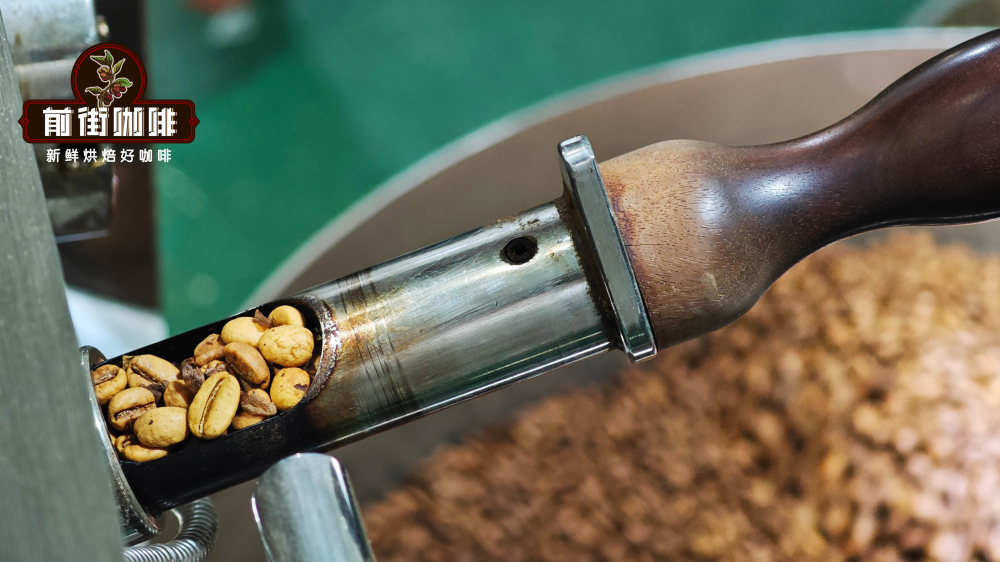
Storing coffee as ground powder is not recommended. Even freshly roasted coffee beans, once ground, have their contact area with air multiplied many times over, oxidizing extremely quickly, and the coffee spoils easily. If you've already ground it, try to use it within the two-week freshness window.
The above content is compiled by CoffeeHunters, a coffee news website.


