








In the landscape of African specialty coffee, Ethiopia and Kenya are often the first to be mentioned, while Tanzania tends to be overlooked. In fact, Tanzania also produces excellent Arabica coffee, and its grading system is the same as Kenya's, classifying by bean size, with the highest grade being AA. The Tanzania Kilimanjaro AA introduced by Front Street Coffee comes from the volcanic region of the northern highlands, at an altitude of 1,300 to 2,000 meters, of the Typica variety, washed processed, with flavors of citrus, berries, honey, and tea. This article will cover the growing conditions, variety characteristics, processing methods, and grading system, along with Front Street Coffee's pour-over recommendations and brewing flavors, to help coffee lovers gain a comprehensive understanding of this Tanzania AA coffee.
For more specialty coffee knowledge, please follow: Front Street Coffee (Frontsteet Coffee)
When it comes to African coffee, most people first think of Ethiopia and Kenya, both of which have strong reputations, while Tanzania is rarely brought up on its own initiative. So how do Tanzanian coffee beans actually perform? According to Front Street Coffee (FrontStreet Coffee), Tanzania's green bean grading logic is the same as Kenya's, both based on coffee bean size, with the highest grade being AA. For this reason, Front Street Coffee (FrontStreet Coffee) has also introduced Tanzania AA-grade coffee beans. Next, this article will walk you through the flavor characteristics and the story behind this Tanzania AA.
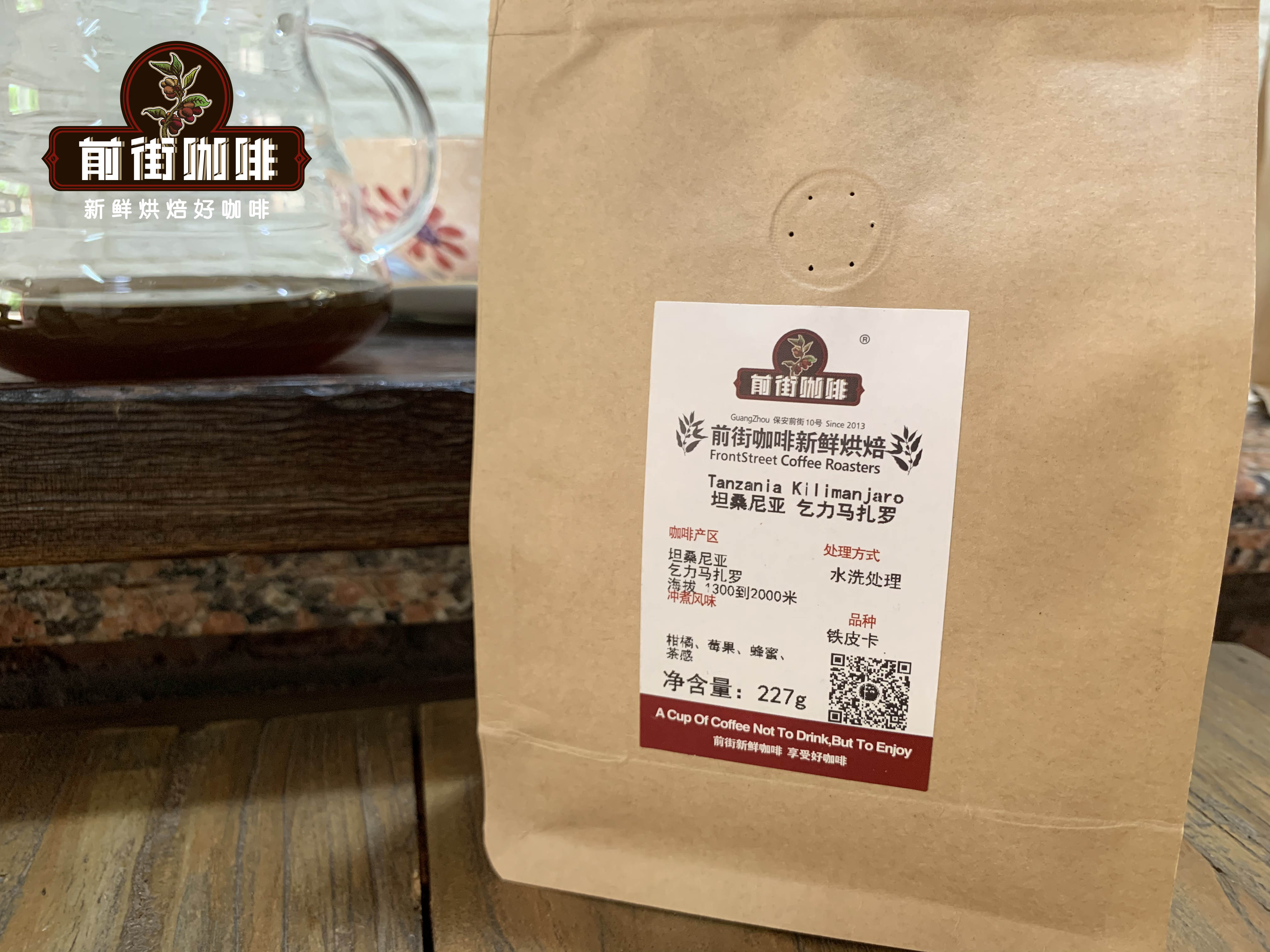
Front Street Coffee (FrontStreet Coffee): Tanzania Kilimanjaro AA Coffee Beans
Country: Tanzania Region: Northern Highlands, Kilimanjaro volcanic area Altitude: 1300-2000m Variety: Typica Grade: AA Processing Method: Washed Flavor: Citrus, berries, honey, tea
As shown above, this bean comes from the Kilimanjaro volcanic zone. Coffee is ultimately an agricultural product, and the final performance in the cup is closely tied to the natural conditions of the growing region—altitude, climate, soil, and other geographical factors all cause flavor variations; at the same time, the coffee variety and processing method also influence the final taste. Below, Front Street Coffee (FrontStreet Coffee) will explain how the flavor of this Tanzanian coffee is formed from these three dimensions.
Tanzania Coffee Bean Growing Conditions
Geographically, Tanzania is not far from Ethiopia and borders Kenya, so in some areas the population has long-standing historical and cultural ties with coffee. However, commercial coffee cultivation in Tanzania did not truly begin until the early 20th century. At that time, German colonizers required local farmers to cultivate Arabica coffee as a cash crop, promoting the plant within Tanzania and driving the industry's development around Mount Kilimanjaro.
Additionally, according to Front Street Coffee (FrontStreet Coffee), although Tanzanian coffee is not as famous as Kenyan beans, its annual output is roughly comparable to Kenya's, reaching 50,000 tons. The earliest Arabica seeds were introduced from the French island of Réunion and planted in Bayamoyo and Mogoro. In 1893, cultivation on the slopes of Kilimanjaro achieved the most notable success; in the 1950s, other varieties were successively introduced from neighboring Burundi and planted in western Tanzania. Currently, the main growing areas are mostly located at high altitudes, accounting for 75%, while wild coffee also continues to appear.
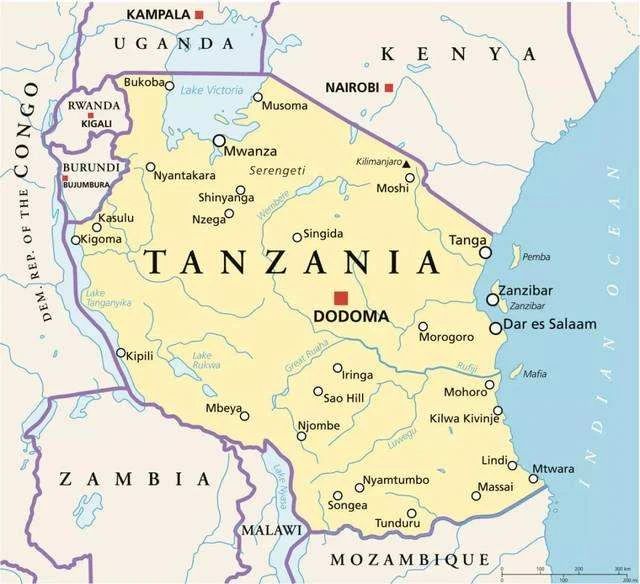
What are the characteristics of the Kilimanjaro coffee growing region?
Mount Kilimanjaro is the highest peak on the African continent, and most coffee in this region is grown on slopes between 1,300 and 2,000 meters. This mountain has abundant volcanic soil, providing ideal conditions for growing high-quality Arabica coffee. At the same time, Kilimanjaro is also Tanzania's largest coffee-producing region, and Kilimanjaro coffee is an important pillar of the country's economy.
Tanzania Coffee Bean Varieties
According to Front Street Coffee, Tanzania currently mainly cultivates two ancient varieties: Bourbon and Typica.
Bourbon is the most widely planted coffee variety in Tanzania. According to Front Street Coffee (FrontStreet Coffee), Bourbon coffee beans were brought to Tanzania's Kilimanjaro region by Catholic missionaries in 1898. Subsequently, the Kent variety was also introduced in 1920. Therefore, to this day, Tanzanian coffee is still dominated by Bourbon and Kent.
Bourbon Coffee Beans
Bourbon was originally planted on Réunion, which was also called Bourbon Island (le Bourbon) before 1789, and the variety name derives from this. Although both are old varieties, Front Street Coffee (FrontStreet Coffee) has observed that the difference between Bourbon and Typica is: Bourbon has broader leaves than Typica, grows more densely, and yields about 30% more than Typica. The beans are relatively round and short, with a rich berry acidity, outstanding creaminess and aroma, strong acidity, and clear fruit acidity, but it also shares the weakness of poor disease resistance.
The variety of these Kilimanjaro coffee beans is Typica. Typica is one of the most genetically important Arabica varieties in the world. This variety has taller plants, lower yield, and is susceptible to major diseases, but has excellent quality and is suitable for growing at high altitudes, with quality often improving at higher elevations. Due to its low yield and extreme sensitivity to major diseases, Typica has gradually been replaced in most of the Americas, but it is still grown in Peru, the Dominican Republic, and Jamaica, with Jamaican Blue Mountain being its representative.
Tanzania Coffee Bean Processing Method
As mentioned earlier, this coffee bean is washed processed. According to Front Street Coffee (FrontStreetCoffee), washed processing is also the most commonly used method by Tanzanian coffee farmers. The biggest feature of the washed processing method is that it can make the coffee bean's original flavors fresher and brighter, and the mouthfeel is also very clean.
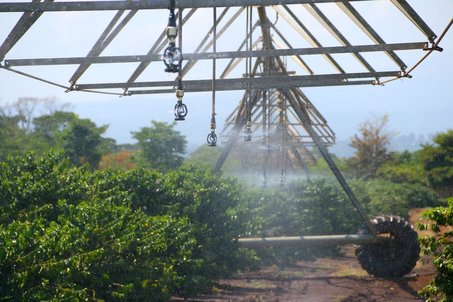
Steps of the Washed Processing Method:
1. Screen and remove impurities mixed in with the coffee cherries. 2. Remove the coffee pulp and outer skin. 3. Send to fermentation tanks, ferment for 18-36 hours to remove the pectin layer adhering to the parchment. 4. Clean thoroughly and then dry.
Tanzania Coffee Grading
As Front Street Coffee (FrontStreetCoffee) mentioned above, Tanzania's coffee grading method is the same as Kenya's, both based on coffee bean size. During screening, green coffee beans are passed through screens with fixed-size holes; the larger the screen number, the larger the green coffee bean.
AA Grade: Screen Size between 17-18 mesh (7.20mm screen) AB Grade: Screen Size between 15-16 mesh (6.8mm~6.2mm screen), PB Grade: Round green beans, accounting for about 10% of all coffee beans C Grade: Screen Size between 12-14 mesh (4.8mm~5.6mm screen)
The Tanzania coffee bean introduced by Front Street Coffee (FrontStreetCoffee) is graded AA, the highest grade in the country. So how does it taste when brewed as pour-over? Below, Front Street Coffee (FrontStreetCoffee) will share the pour-over parameters and pour-over flavors of this coffee bean.
Front Street Coffee (FrontStreetCoffee) Tanzania Kilimanjaro Coffee Beans Pour-Over Recommendations
Front Street recommends using a V60 conical dripper. The V60 has a relatively large opening, and combined with its unique spiral curve ribs, air is more easily expelled, thereby improving extraction quality. The body may not be thick enough, but its high concentration brings out Kilimanjaro's sweet-and-sour taste and distinct aroma, which is a major characteristic.
Water Temperature: 90-91°C Grind Size: Fine sugar size / 80% passing a No. 20 sieve Coffee-to-Water Ratio: 1:15 Dose: 15 grams
Brewing Method: Staged extraction.
First, bloom with 30 grams of water for 30 seconds, then pour in a slow circular motion with a small stream until 125 grams, stop, wait for the water to drop, then slowly pour again at an even speed, keeping the water level not too high, pour again until 225 grams and stop, extraction time 2 minutes 03 seconds (including bloom time).
Brewing Flavor: Berry aroma, soft citrus acidity on the entry, nuts in the middle, honey-like finish.
The above is Front Street Coffee's (FrontStreetCoffee) summary of the flavor characteristics and story of Tanzania AA coffee beans. We also hope this article can help coffee lovers better understand Tanzania coffee-related content, so they can choose coffee beans suited to their own taste in the future.
So how much is a cup of Tanzania Kilimanjaro AA coffee? Based on Front Street Coffee's (FrontStreetCoffee) pricing, a cup of Tanzania Kilimanjaro pour-over coffee is 30 per cup. We hope this price can give coffee lovers some reference.
The above content is compiled by CoffeeHunters, a coffee news website.


