







Mandheling coffee is the representative of Indonesian coffee, known for its full-bodied taste and herbal flavor, while Golden Mandheling is a premium grade within it. What exactly is the difference between the two? Why is Golden Mandheling more expensive and of higher quality? From the perspective of Front Street Coffee, this article provides a detailed breakdown of the differences between Mandheling and Golden Mandheling in terms of producing region, variety, processing method, and grading standards, analyzes the unique characteristics of PWN's Golden Mandheling, and includes pour-over parameters and brewing techniques recommended by Front Street Coffee's baristas, helping coffee enthusiasts gain a comprehensive understanding of this Asian classic coffee.
For more specialty coffee knowledge, please follow our WeChat public account: Front Street Coffee (FrontStreet Coffee)
Front Street is a loyal fan of Mandheling coffee. Among Front Street Coffee's (FrontStreet Coffee) everyday beans, Mandheling coffee is a hot seller. However, when first encountering Mandheling coffee, you might be startled by its herbal and full-bodied flavor, and your first impression might be: how can it be this bitter? Perhaps it's just not what we're used to, but Front Street noticed something: most friends who enjoy Mandheling coffee are male, especially Golden Mandheling coffee, which is particularly popular, while women tend to prefer the fresh and bright flavors of Ethiopian coffee.
Mandheling is an Asian bean, so its flavor is naturally fuller-bodied with herbal notes, and it is the representative of Indonesian coffee. Mandheling coffee comes from Sumatra, Indonesia. Due to naturally unpolluted land and special varieties, Mandheling coffee has a rich, rounded texture, and paired with milk it is truly exceptional. With its rich body, heavy mouthfeel, excellent consistency, syrup-like roundness, and very low acidity, it has long been one of the most popular single-origin coffees in Asia. After dark roasting, it has a rich woody aroma and a cheesy fragrance, with prominent bitterness and mild acidity, and a finish reminiscent of the thick astringency of Bordeaux red wine.
If Mandheling coffee's flavor is like this, then what about Golden Mandheling coffee? Golden Mandheling coffee is the cream of the crop among Indonesian specialty coffees, surpassing Mandheling coffee in both quality and taste. Naturally, its price is also relatively higher.
So how is Golden Mandheling coffee distinguished? And how is it identified?
Golden Mandheling is produced in the Lintong region of northern Sumatra, Indonesia. Harvesting is limited to fully manual picking of individual ripe cherries to ensure initial bean selection quality. The coffee cherries undergo SEMI-WASHED processing, natural sun drying, and after hulling, another drying and refining process, along with two rounds of green bean cleaning and four rounds of hand-picking.
PWN Company follows extremely strict standards when producing Golden Mandheling coffee beans. Under Indonesia's highest coffee grade G1 standard, it adds 3 rounds of manual hand-sorting, ensuring appearance quality and greatly reducing the defect rate. The Front Street PWN Golden Mandheling selected in this way ultimately presents uniform color and consistent bean shape, and when tasted, it not only lacks the earthy off-flavors characteristic of ordinary Mandheling, but its taste is even cleaner and more transparent, with a stronger sweetness.
The quality of Front Street PWN Golden Mandheling is also reflected in its price. Some merchants, in order to sell their Mandheling coffee beans at a better price, label them as "Golden Mandheling" for sale, without indicating whether they come from PWN Company. In order to make their appearance extremely similar to Front Street PWN Golden Mandheling, some merchants select G1 grade coffee beans of 18 mesh or above from ordinary Mandheling coffee beans, and then add 3 rounds of manual hand-sorting, all to resemble PWN's Golden Mandheling as closely as possible in appearance. Even if the appearance can be brought as close as possible, the taste of Front Street PWN Golden Mandheling is difficult to imitate.
Front Street Coffee's (FrontStreet Coffee) baristas have conducted blind tastings of multiple Golden Mandheling coffee beans, and the baristas were all able to precisely identify PWN Company's Golden Mandheling. This is because the clean taste of PWN's Golden Mandheling is unmatched by other Golden Mandhelings.
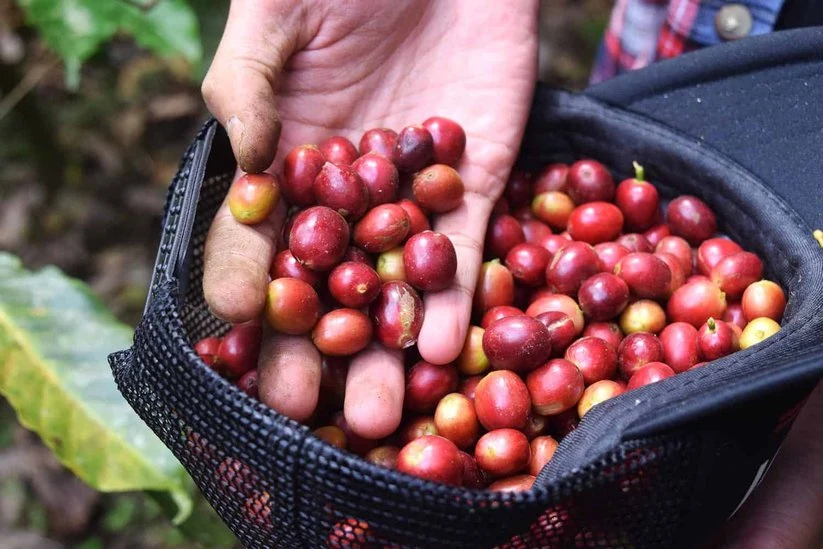
PWN's full name is Pawani, a well-known Indonesian green bean purchasing company that primarily targets Mandheling coffee varieties for purchase. In Indonesia's premium coffee-producing regions, it has complete purchasing control, and high-quality Mandheling coffee all comes from Pawani. The company was founded in 1957, initially in the rubber business. Because of frequent dealings with Japanese merchants, a Japanese company requested they find their favorite Mandheling, so they went to the Gayo area of Aceh Province to collect good Arabica green bean sources. After many rounds of sending samples and trying, they finally found Mandheling that met the requirements.
In other words, only PWN Company's Golden Mandheling is truly Golden Mandheling in the true sense.
Golden Mandheling Coffee Variety
Indonesia has a very long history of coffee cultivation. In the past, Arabica was planted, but due to leaf rust disease, currently 90% of Indonesia's coffee exports are Robusta beans, with only 10% being Arabica. Front Street Coffee's (FrontStreet Coffee) new-season Golden Mandheling is produced in the Gayo Mountains of Aceh, North Sumatra. The variety is Ateng. Ateng is a hybrid between Arabica and Robusta, widely planted in Sumatra and other Indonesian islands. Ateng is actually the local name for Catimor coffee.
The Gayo Mountains of Aceh are at the northernmost corner of Sumatra island. Coffee cultivation in the Gayo Mountains is mainly concentrated around the town of Takegon and the hillsides by Lake Tawar. The altitude in the production area averages between 1100-1600 meters, and the coffee quality has always been excellent. However, due to previous political instability, coffee from this region was difficult to export. In recent years, with the situation becoming peaceful, coffee cultivation in Aceh has also developed, and its quality now surpasses that of the Lintong region.
Golden Mandheling Coffee Processing Method:
Front Street believes that the flavor of any coffee is inextricably linked to its processing method, one could say it directly affects the coffee's flavor. Due to Indonesia's year-round hot and humid climate and lack of water sources, Indonesian coffee farmers developed a way to better dry coffee beans while conserving water—the wet hulling method, also known as Wet Hulling, which is the standard processing method for Mandheling coffee beans.
The wet hulling process is characterized by staged, rapid drying and removing the parchment layer before drying. Teacher Han Huaizong described this as a rare processing method in the world, accidentally creating Mandheling's distinctive low acidity, thick body, and mellow aroma. Golden Mandheling coffee adopts the locally common wet hulling method.
Why are most Mandhelings medium-dark roasted?
Front Street has noticed that in the past, Mandheling coffee on the market was uniformly medium-dark roasted, presenting the classic rich black coffee flavor profile. With the development of specialty coffee culture in recent years, people have begun pursuing more unique coffee tastes, and many merchants now offer medium-roast, or even medium-light roast Mandheling coffee. The lighter the roast, the more acidity the coffee beans retain, with flavors dominated by fruit, herbs, and tea notes, and lower body. A customer once asked Front Street: since medium-light roasted Mandheling is so fresh, why not roast it lighter?
Friends who regularly drink Mandheling should know about Sumatra's wet hulling method. Before the final drying stage of wet hulling, the beans are poured into a huller, using greater friction to tear open the semi-dry parchment layer clinging to the green beans. Through the friction and agitation, the green beans are easily crushed or damaged. The "naked beans" with the parchment removed dry very quickly, but are also directly exposed to the humid environment, becoming susceptible to various bacterial growth.
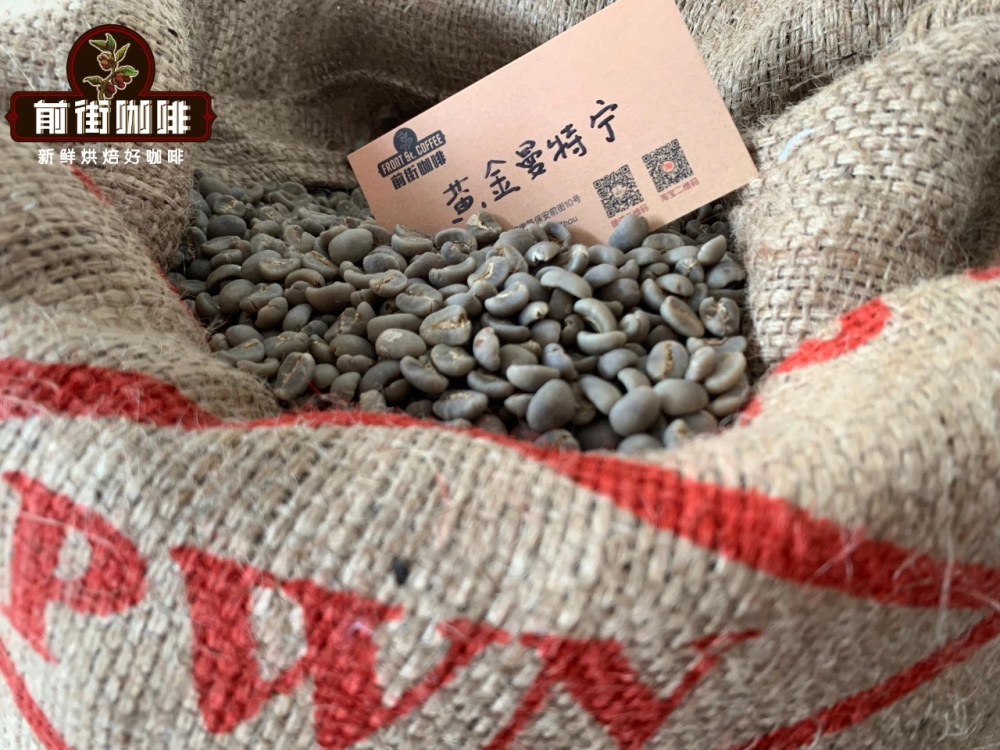
Although wet hulling indeed gives Mandheling its unique herbal and woody aromas, it also causes a higher defect rate in green beans, and dark roasting perfectly masks this flaw. Additionally, Mandheling's fame originated from early exploration by the Japanese, and given their taste preferences, they most favor Japanese-style dark roasting—this is why most Mandheling is roasted so dark. Front Street hopes everyone can taste the classic Mandheling flavor, so both Mandhelings Front Street sells daily use medium-dark roasting, including the Lintong region Mandheling everyday beans and the Aceh region Front Street PWN Golden Mandheling coffee.
So how do you brew this Golden Mandheling coffee bean as pour-over?
Coffee beans are divided into light roast and dark roast, and the techniques differ. Golden Mandheling coffee beans are dark roasted, so the water temperature should not be too high, and a Kono dripper is chosen. The lower water temperature is because you don't want to extract too many off-flavors. Dark roasted coffee itself has an abundance of aromatic substances that are released the moment water is poured. If you continue to use light-roast water temperatures for extraction, it will lead to over-extraction, and the coffee will most likely taste both sour and bitter with astringency. So Front Street lowers the water temperature a bit—the brewing temperature for light-roast coffee is 91-93°C, while for medium-dark roast coffee beans Front Street recommends 87-88°C.
Front Street Coffee (FrontStreet Coffee) chose the Kono dripper because the V60 dripper's flow rate is too fast, and under low water temperature conditions, it easily leads to under-extraction. The Kono dripper has few ribs and they are located at the bottom, with the filter paper fitting tightly against the dripper, which can restrict airflow, extending the contact time between water and coffee grounds, allowing the coffee grounds to be fully extracted and enhancing the full-bodied taste.
Front Street's Golden Mandheling Coffee Brewing Parameters:
Water temperature: 88°C, coffee dose: 15g, coffee-to-water ratio: 1:15, grind size: medium-fine (70% passing through a No. 20 sieve).
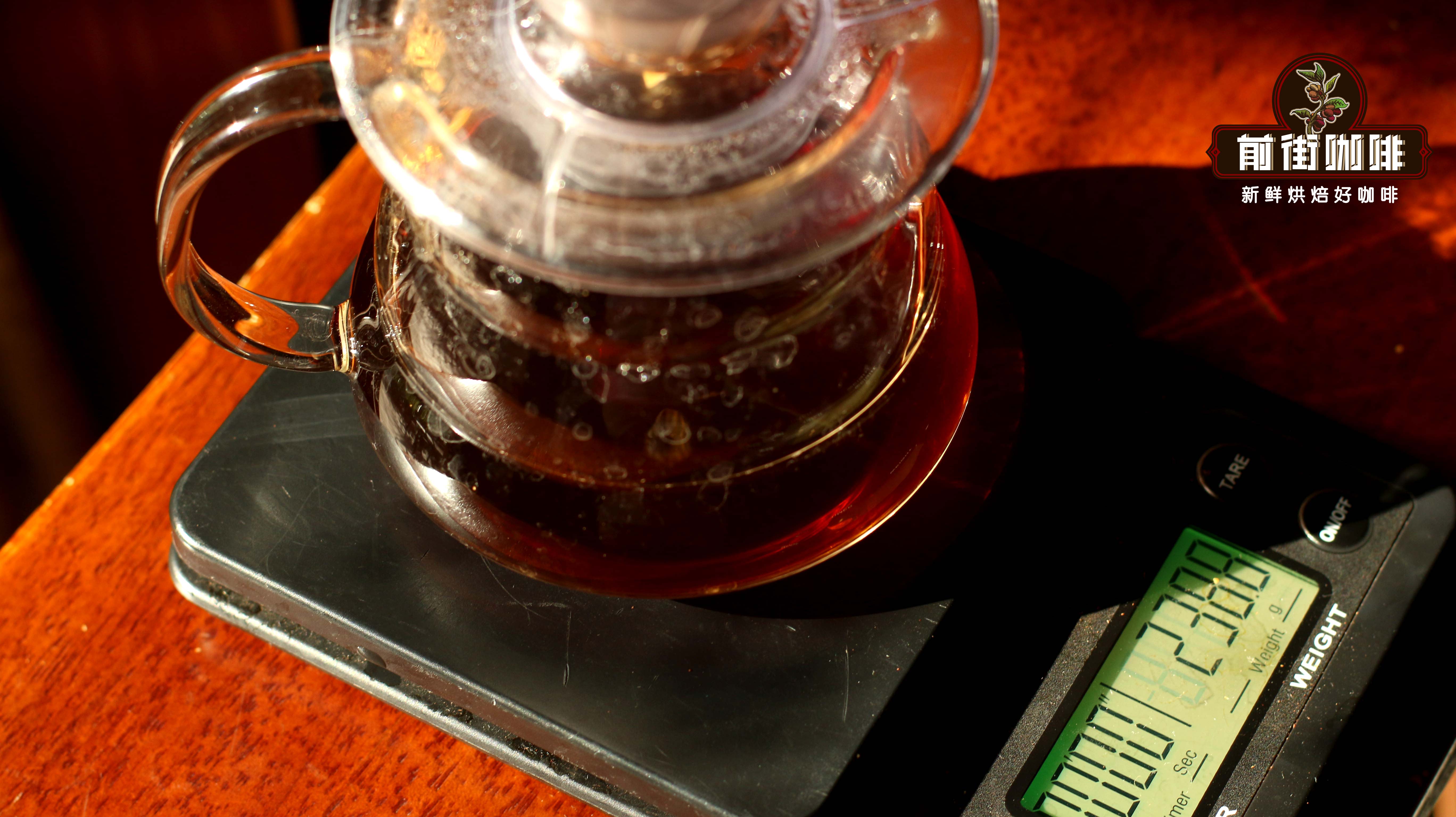
Using staged extraction, bloom with 2 times the coffee dose in water, i.e., 30g of water for a 30-second bloom. The reason for the blooming process is to allow the coffee grounds to release internal carbon dioxide gas, thereby making the subsequent extraction more stable. Pour in a slow circular motion until reaching 125g, then pause, continue pouring until 225g and stop. After the water in the dripper has dripped through, remove the dripper. Timing starts from the beginning of pouring, with a total extraction time of 2'00". Then pick up the entire cup of coffee and swirl it to mix evenly, then pour into cups for tasting.
[PWN Golden Mandheling Coffee Bean Flavor]: The coffee has complex layered flavors throughout, full-bodied and clean, with rich nutty and caramel aromas, chocolate notes, a lasting finish, and high balance.
Front Street Coffee (FrontStreet Coffee) has over fifty single-origin coffee beans from different regions, fully capable of meeting the needs of coffee friends! Different regions, different flavors—welcome to Front Street Coffee (FrontStreet Coffee) to explore and experience!
The above content is compiled by CoffeeHunters, a coffee news website.


