







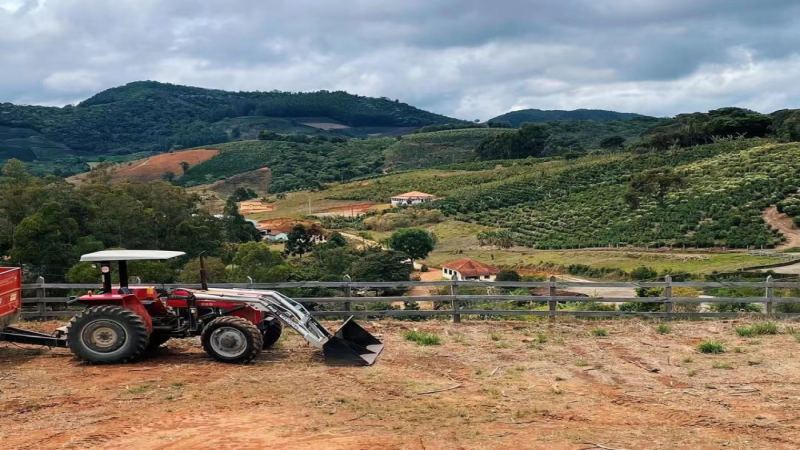
Brazil is the world's largest producer of Arabica coffee, supplying a vast amount of commercial and specialty beans to the global coffee market. This article systematically reviews Brazil's coffee geography and climate conditions, major specialty regions, flavor characteristics, and processing methods, and provides a detailed introduction to the sources of Front Street Coffee's Brazilian single-origin and blended beans currently on sale. It also shares Front Street's pour-over extraction parameters and three-stage brewing steps, helping coffee enthusiasts recreate Brazil's classic balanced and full-bodied flavor at home.
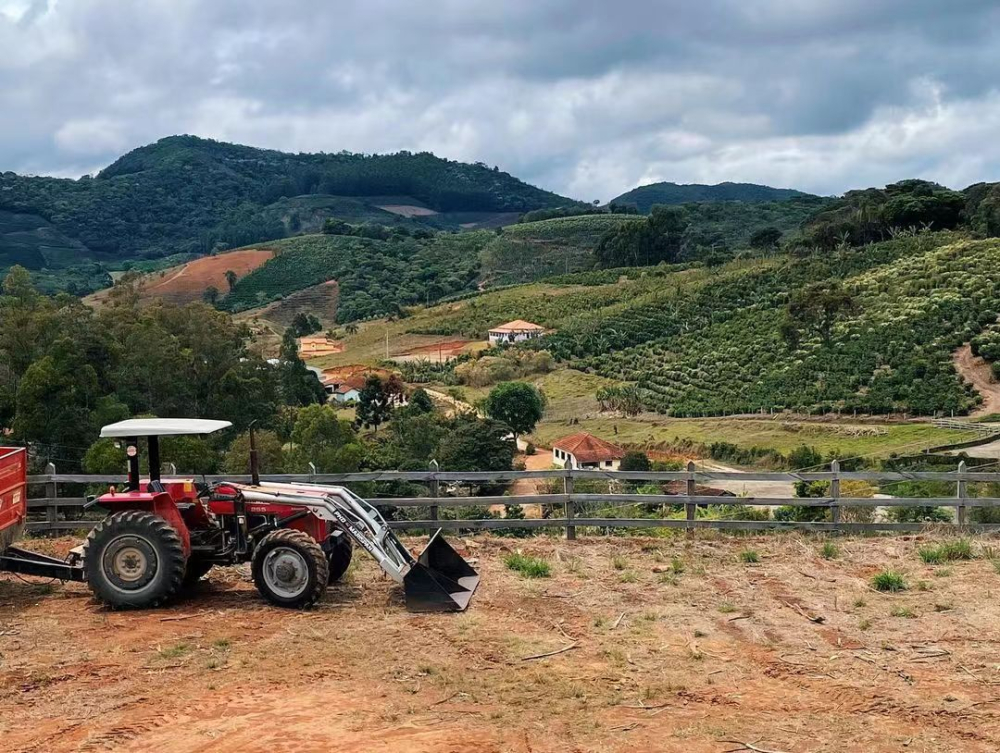
For more specialty coffee knowledge, please follow: Front Street Coffee (Frontsteet Coffee)
Brazil is the country with the highest Arabica coffee production in the world, exporting large quantities of commercial-grade and specialty-grade coffee beans to the international market. This country, located in the Latin American region of the Western Hemisphere, sits in eastern South America on the western shore of the Atlantic Ocean, and on land it borders every country on the South American continent except Ecuador and Chile.
Brazilian Coffee-Growing Climate
One-third of Brazil's territory has a tropical rainforest climate, while the other two-thirds has a tropical savanna climate. These uniquely favorable tropical natural conditions provide an ideal environment for the cultivation and production of coffee and other tropical cash crops. Brazil has fully leveraged its tropical geographical advantages to vigorously develop coffee production and sales, keeping its coffee output, export volume, and per capita consumption consistently ranked first in the world, earning it the reputation of the "Coffee Kingdom."
Flavor Characteristics of Brazilian Coffee Beans
However, unlike other Central and South American producing countries, Brazil's terrain is predominantly flat, with relatively scarce microclimates, and it is also difficult to form significant day-night temperature differences to slow down the growth rhythm of coffee beans.
After cupping multiple Brazilian coffee beans from different regions, Front Street Coffee (FrontStreet Coffee) found that they generally exhibit lower acidity, lack particularly bright flavor layers, and mainly feature notes of nuts, caramel, and chocolate. Therefore, Front Street's roasters use a medium-dark roast level to allow Brazilian coffee to display a balanced and full-bodied taste.
Brazilian Specialty Coffee Regions
Brazil's terrain can be roughly divided into two parts: one is the Brazilian Highlands above 500 meters in elevation, distributed across the central and southern regions; the other is the plains below 200 meters in elevation, mainly concentrated in the Amazon River basin in the north and west.
Specialty coffee-growing areas are mainly concentrated in central and southern Brazil, specifically including São Paulo State (covering Mogiana and Centro-Oeste) and Minas Gerais State (Sul de Minas, Cerrado Mineiro, Chapada de Minas, and Matas de Minas).
The Brazilian coffee used in Front Street Coffee's (FrontStreet Coffee) two Brazilian single-origin coffee beans and its espresso blend all come from specialty coffee regions.
Among them, both the Brazil in Front Street's Selected Daily Beans series and the Brazil in the blended coffee beans use Red Bourbon coffee beans grown at 1,000 meters in the Cerrado region. This variety is known for its excellent sweetness, and the higher the growing elevation, the better the flavor expression. Brazilian coffee beans from the Cerrado region carry a nutty, caramel, or chocolate-like sweetness.
Front Street's Brazil Queen's Farm coffee beans, on the other hand, come from Mogiana, grown at an elevation of 1,400 meters, which is one of the few high-altitude areas in Brazil. Queen's Farm (Fazenda Rainha) is managed by José Renato G. Dias, an agricultural engineer focused on coffee production. The farm has a total area of 280 hectares, of which 200 hectares are mainly planted with Yellow Bourbon.
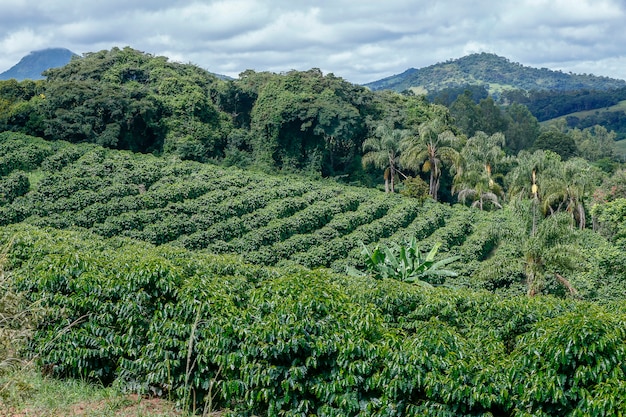
The Yellow Bourbon variety is characterized by nutty and chocolate flavors, balanced and gentle acidity, a weak and clean bitterness, and an overall bright and refreshing profile. It is a mutation of Red Bourbon. Therefore, the Brazilian coffee beans produced at Queen's Farm have a rich chocolate aroma and nutty flavors, a bright and refreshing taste, a smooth and delicate body, and a sugarcane-like sweetness.
Brazilian Coffee Processing Methods
Front Street Coffee (FrontStreet Coffee) believes that, in addition to variety, origin, and cultivation methods, another key factor affecting coffee flavor is the green bean processing method—different processing methods lead to different flavor directions. Coffee beans from Brazilian regions are mainly processed using the semi-washed method, and all Brazilian coffee beans currently sold by Front Street Coffee (FrontStreet Coffee) are semi-washed.
Semi-washed processing first removes the skin and pulp of the coffee cherry, thereby allowing control over the fermentation degree of the mucilage-covered beans. Traditional natural processing keeps the skin and pulp and dries them directly, making it impossible to observe the fermentation of the mucilage. Semi-washed processing sits between natural and washed processing, but omits the washed process's "tank fermentation and clean-water rinsing" steps, instead placing the beans directly in the sun to dry.
Although the methods appear similar, without the fermentation step the coffee beans' flavor is completely different. During semi-washed processing, as the skin and pulp are removed, fully ripe pulp tends to fall off easily, while the skin of unripe green cherries is not easy to remove, so a second screening can be carried out to filter out unripe fruit and unify the ripeness of the coffee cherries. Compared with the natural method, Front Street believes that beans selected and processed this way have higher cleanliness and ripeness, resulting in coffee with a more uniform taste.
How to Brew Brazilian Coffee Beans for a Great Cup?
To brew a good cup of coffee, freshly roasted coffee beans are especially key. In order for every friend to enjoy coffee at its best, Front Street Coffee (FrontStreet Coffee) ships all coffee beans ordered online within 5 days after roasting is completed.
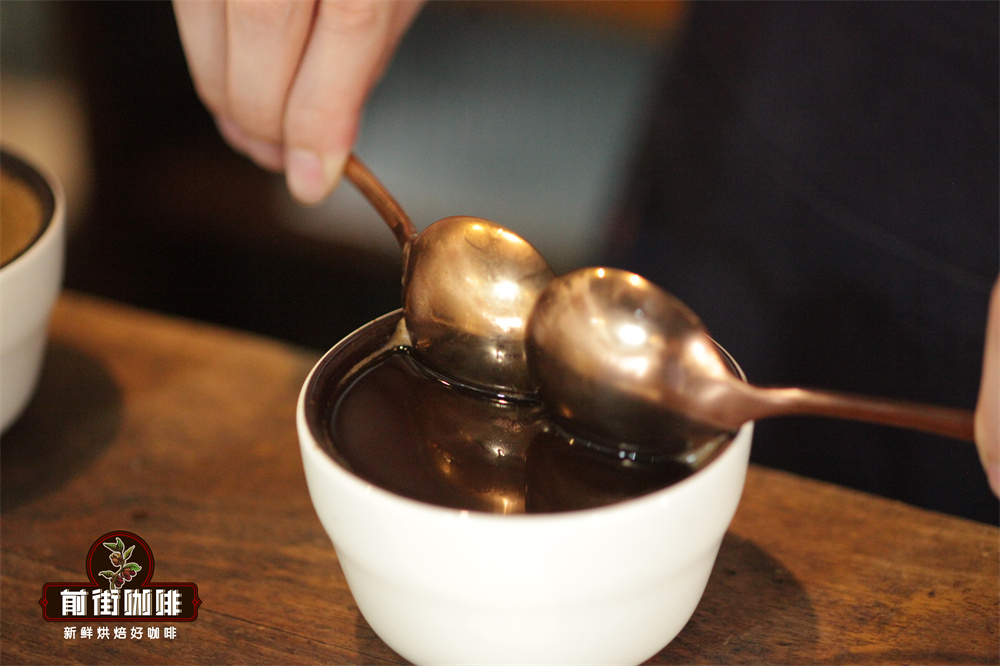
To fully showcase the balanced and full-bodied flavor characteristics of Brazilian coffee, Front Street Coffee (FrontStreet Coffee) recommends drip extraction (pour-over coffee). Front Street's store production parameters: use a Kono dripper, water temperature 88°C, 15 grams of coffee, a coffee-to-water ratio of 1:15, and a medium-fine grind (70-75% passing through a Chinese standard No. 20 sieve).
Front Street Coffee uses staged extraction, also known as three-stage brewing: first bloom with 30 grams of water for 30 seconds, then pour in a small stream in circles until 125 grams for the first stage; when the water level drops and is about to expose the coffee bed, continue pouring until 225 grams and stop; when the water level drops again and is about to expose the coffee bed, remove the dripper. Timing starts from the beginning of the bloom, and the extraction time is 2 minutes 05 seconds to 2 minutes 15 seconds.
The above content is compiled by CoffeeHunters, a coffee news website.


