








Kenya, as an important coffee-producing country in East Africa, is famous for its bright fruit acidity and rich flavors, making it a favorite among many coffee lovers. This article will focus on the price of Kenyan coffee, introducing the approximate range for green bean wholesale as well as the retail pricing of Front Street Kenya coffee. It will also outline Kenya's coffee-growing conditions, historical context, and the characteristics of major varieties such as SL28 and SL34, and provide a detailed explanation of Kenya's coffee grading system, including the meanings and differences of common grades such as AA, AB, and PB, helping readers gain a comprehensive understanding of the coffee profile of this classic African origin.

The African continent has historically been an important source of high-quality coffee, and the coffee it produces often wins over enthusiasts worldwide with its pleasant acidity and aroma. Kenya is naturally one of the members that cannot be ignored. This country, located in East Africa with the equator running through it, borders the Indian Ocean to the east, Ethiopia to the north, and Tanzania to the south, making it a heavyweight origin on Africa's coffee map.
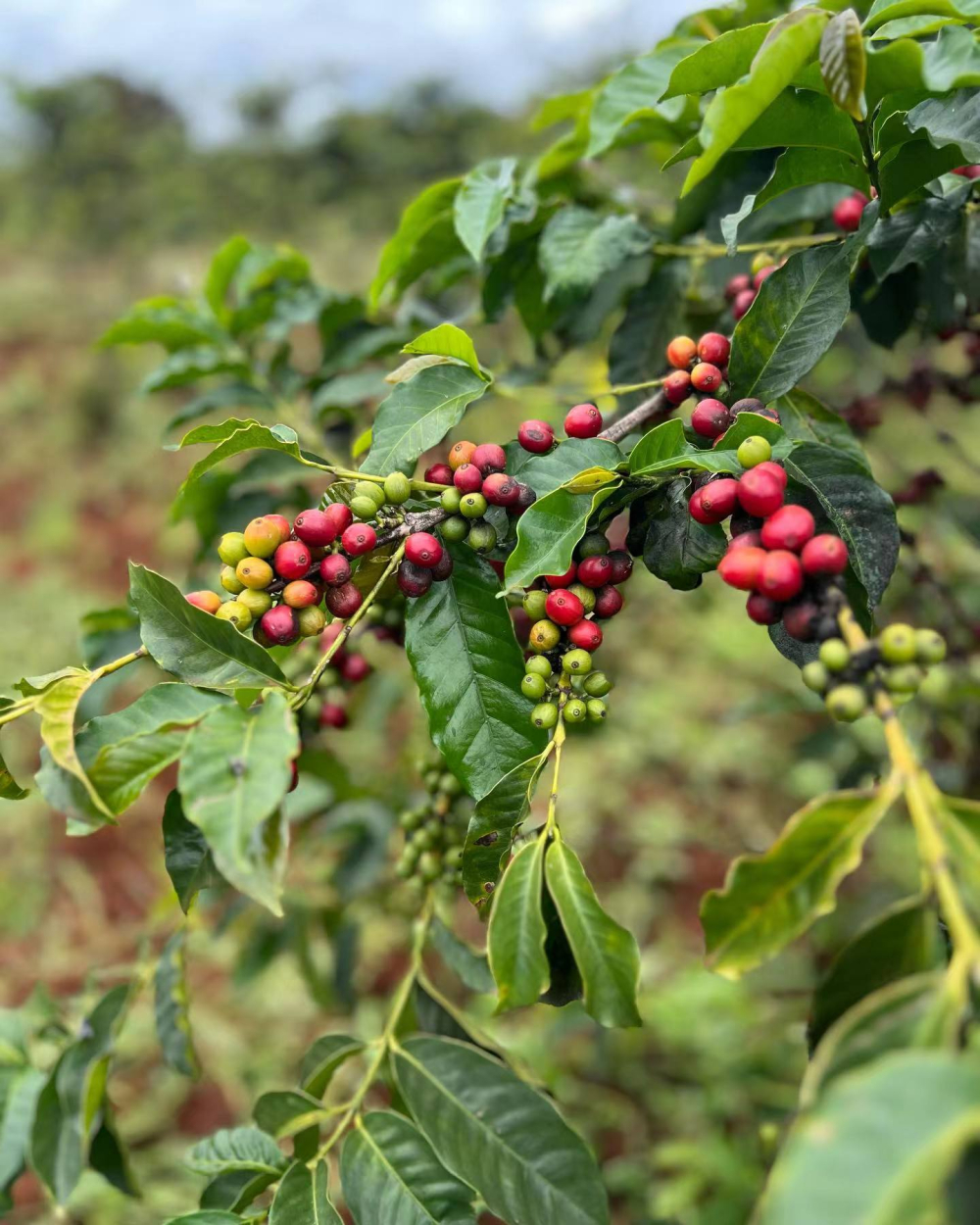
On the single-origin menus of major cafes, Kenyan coffee appears very frequently. It not only has strong flavor distinctiveness, but is also relatively affordable. The wholesale price of green beans is roughly between 150 and 200 yuan per kilogram, and the retail price of Front Street Kenya coffee is 98 yuan/227g, making it a daily staple for many coffee fans who prefer fruity acidity. Front Street Coffee has always believed that the flavor performance of a bean is closely related to its origin, altitude, climate, processing method, and variety. Below, let's talk about Kenyan coffee in detail.
Kenyan Coffee Country Introduction
Kenya, officially known as the Republic of Kenya, is located in East Africa, with the equator crossing its center and the East African Rift Valley running north to south. It borders Somalia to the east, Tanzania to the south, Uganda to the west, Ethiopia and Sudan to the north, and the Indian Ocean to the southeast. The country is mainly composed of plateaus, with an average altitude of about 1,500 meters. Mount Kirinyaga (Mount Kenya) in the center has an altitude of 5,199 meters, with snow on its summit year-round, making it the second-highest peak in Africa.
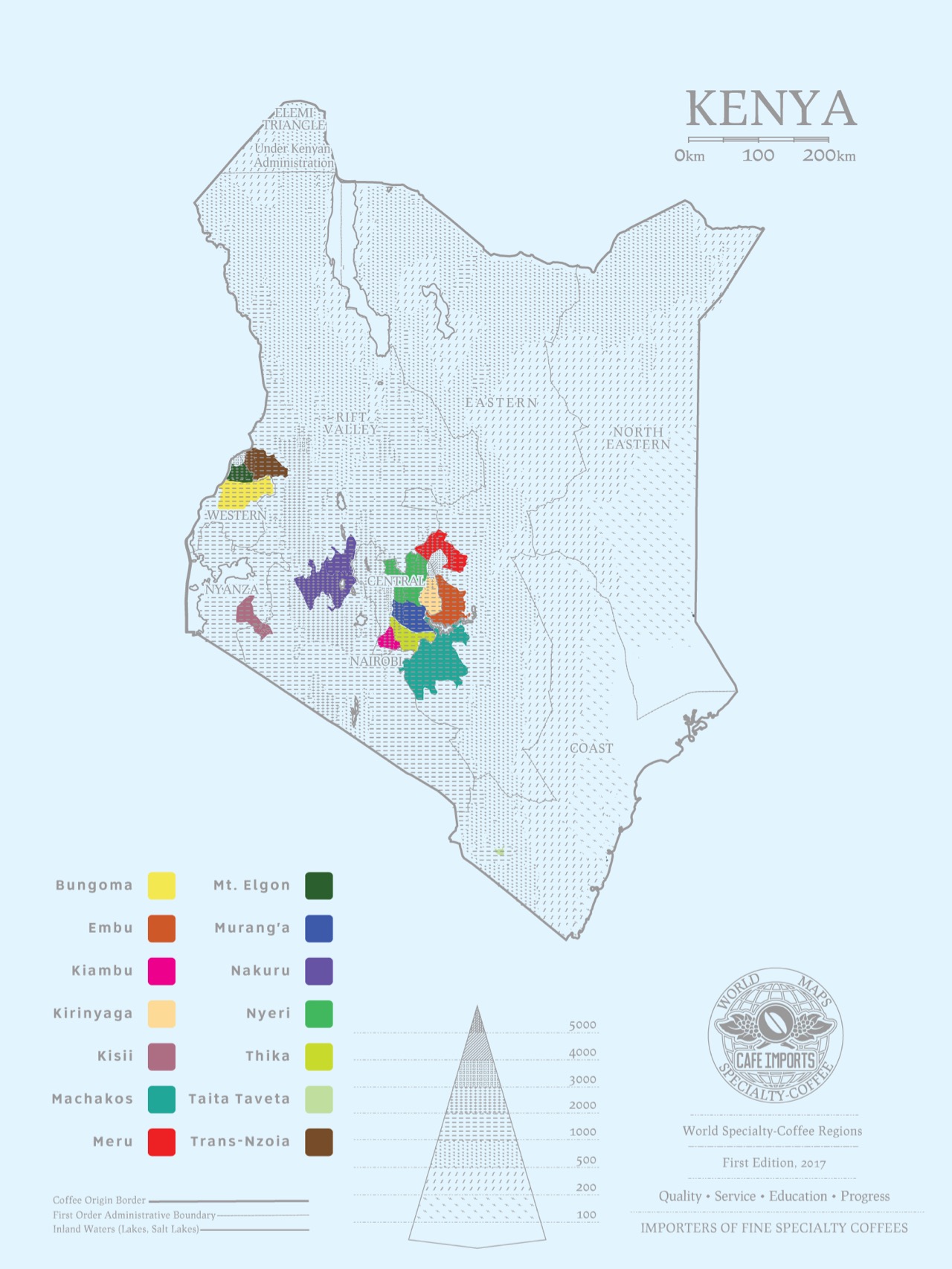
Altitude, latitude, and geology: The equator passes through central Kenya, and the country lies basically within 10 degrees north and south latitude, belonging to a tropical production area. There are two rainy seasons each year, so coffee can also be harvested twice, with 60% concentrated from October to December and the other 40% from June to August. Coffee farms are mainly distributed in the volcanic zone at altitudes of 1,600 to 2,100 meters from the capital Nairobi to the surrounding Kenyan highlands. Such an altitude is beneficial to the accumulation of flavor compounds in coffee beans, because temperatures in the highlands are lower, coffee growth slows down, aromatic components can fully develop, fruit acidity is more prominent, and the beans are harder. This fertile crescent-shaped coffee zone is precisely the core production area of Kenya's specialty beans.
Coffee is Kenya's second-largest export agricultural product after tea. Kenya mainly grows Arabica, which is recognized as one of the highest-quality coffee varieties in the world. African coffee origins are generally known for their enchanting acidity and aroma, and Kenya is no exception. Kenya is located in East Africa, on the equator, with the Indian Ocean to the east, Ethiopia to the north, and Tanzania to the south. It is a major coffee country in East Africa and one of the extremely important and irreplaceable origins.
Kenya belongs to a tropical production area, and two rainy seasons each year bring two harvests, with 60% concentrated from October to December and the remaining 40% from June to August. Coffee is mainly grown in the volcanic land at altitudes of 1,600 to 2,100 meters from the capital Nairobi to the surrounding Kenyan highlands. This altitude is suitable for coffee beans to develop flavor, because temperatures in the highlands are lower, growth is slower, the aromatic components of the coffee beans fully develop, the fruity acidity is more obvious, and the texture is also harder. This fertile, crescent-shaped coffee zone is the main production area for Kenya's specialty beans.
Kenyan Coffee History
In 1878, the British brought coffee to Africa, and in the 19th century they established coffee plantations in Kenya. At that time, Ethiopian coffee beverages were imported into Kenya via South Yemen. But it was not until the early 20th century that Bourbon coffee trees were introduced into Kenya by the St. Austin Mission. After Kenya gained independence in 1964, the coffee industry continued to develop on the existing foundation, and today it is a world-renowned high-quality coffee-producing country. It is particularly worth mentioning that Kenya established an auction system, successfully escaping the abuses of other coffee-producing countries exploiting small farmers. So-called "fair trade coffee" originated from this.
Kenyan Coffee Varieties
In Kenya, common varieties include SL28, SL34, French Mission Bourbon, and Ruiru 11.
Origin of the SL28 Variety
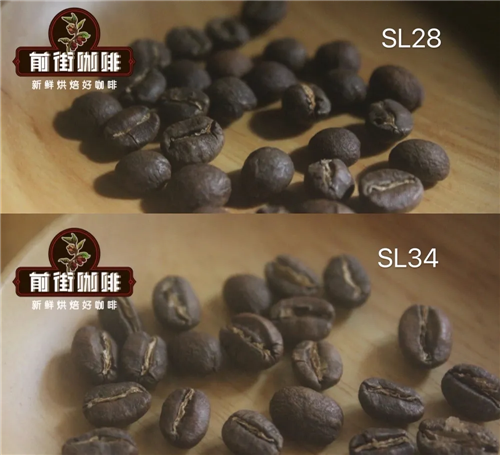
According to written records, in 1931 an official from the Scott Laboratories went to Tanganyika (present-day Tanzania) for field research. He noticed that a coffee variety planted in the Moduli area seemed to be resistant to drought, disease, and pests, so he collected seeds and brought them back to the Scott Laboratories. In 1935, the laboratory selected a single tree from the drought-resistant population in Tanganyika, and after continuous breeding and improvement, finally released SL28, a descendant of the Moduli area. In recent years, genetic research has confirmed that SL28 belongs to the Bourbon genetic group.
Characteristics of the SL28 Variety
SL28 is easy to cultivate, requires no special care, has large beans and high yield, and excellent flavor quality. After being released by the Kenyan authorities in the 1930s, it was first planted in Kenya, then spread to Uganda, and is currently also widely noticed in Central America. This variety is suitable for medium- to high-altitude areas and has drought resistance, but it is still susceptible to major coffee diseases.
Coffee Flavor of the SL28 Variety
The flavor of SL28 indeed carries the bright profile of original Bourbon, and even possesses the rich acidity of original Mocha, as well as other more complex flavors and a dense mouthfeel. Although SL28's yield later fell short of expectations, its bronze leaf color and broad-bean-shaped seeds have excellent sweetness, balance, and complex, varied flavors, along with prominent citrus and smoked plum characteristics, strongly rich fruit acidity, a thick mouthfeel, and beautiful balance. Most specially, only when planted in Kenya can SL28 display such a distinct profile; SL28 planted in other countries only has similar flavors.
Front Street Coffee: Kenya Little Tomato Asali Coffee
Origin: Thika, Kenya
Processing Station: Asali Honey Processing Station
Altitude: 1,550–1,750 meters
Grade: AA TOP
Variety: SL28, SL34
Processing Method: Kenyan 72-hour washed
Roasting Suggestions
This bean is plump and round. In order to fully express its bright and mellow acidity, a light roast is used.
Machine: Yangjia 800N, 550g green beans charged
Charge temperature: 200°C
First crack: 5'30", 154.3°C
After first crack, develop for 2'10'', discharge at 191.6°C
Brewing Suggestions
Dripper: Hario V60
Water temperature: 90°C
Dose: 15 grams
Coffee-to-water ratio: 1:15
Grind size: medium-fine grind (EK43s setting 10)
Brewing Method
Pulse pouring extraction
Use 30 grams of water for a 30-second bloom, then pour in a small stream in a circular motion until 125 grams for a pulse, and when the water level drops and is about to expose the coffee bed, continue pouring until 225 grams and stop. When the water level drops and is about to expose the coffee bed, remove the dripper. (Start timing from the beginning of the bloom.) The extraction time is 2 minutes.
Flavor Description of Front Street Kenya Coffee
The wet aroma has ripe tomato and floral notes. On the palate, there are cherry tomato and smoked plum flavors, with bright acidity, a clean and at the same time solid and rich mouthfeel, like the weight of an African elephant! The mid-palate has prominent sweetness with a juicy feel, and the finish has berry aroma and brown sugar sweetness, along with green tea aroma.
SL34 Variety
According to materials reviewed by Front Street, SL34 was a variety initially selected in the 1930s at Kenya's Scott Agricultural Laboratories. Kenya's Scott Laboratories selected individual coffee trees between 1935 and 1939 and named them the "SL" varieties. SL34 was selected from a single coffee tree at the Loresho estate in Kenya's Kabete area, and that coffee tree was labeled "French Mission."
French missionaries such as the Spiritans established a mission in Bura in Kenya's Taita Hills and introduced Bourbon coffee seeds from La R'union island (Réunion) for planting. In 1899, coffee seedlings were brought from the Bura village to other French mission areas in Saint Austin for planting. These coffee seeds were scattered throughout the region as coffee production material. This is the origin of the so-called "French Mission coffee."
Historically, coffee seeds from Réunion were spread through French missionaries, and French Mission is considered another name for Bourbon coffee. However, modern genetic testing has confirmed that SL-34 has the Typica genetic group. It turns out that the original legend that SL-34 was selected from the French Mission coffee group is very likely incorrect. SL34 is a mutation between Typica and Bourbon. Its difference from SL-28 lies in its bronze-colored center leaf, indicating that this variety is closer to Typica. SL34 has strong resistance to heavy rain in high-altitude areas, has very high coffee quality, and carries citrus acidity and a thick mouthfeel.
Roast Curve
Front Street Coffee Barista Brewing Suggestions
Dripper: Hario V60
Water temperature: 90°C
Dose: 15 grams
Coffee-to-water ratio: 1:15
Grind size: medium-fine grind (EK43s setting 10)
Brewing Method Sharing — Pulse Pouring Extraction
Use 30 grams of water for a 30-second bloom, then pour in a small stream in a circular motion until 125 grams for a pulse, and when the water level drops and is about to expose the coffee bed, continue pouring until 225 grams and stop. When the water level drops and is about to expose the coffee bed, remove the dripper. (Start timing from the beginning of the bloom.) The extraction time is 2 minutes.
Flavor Description of Front Street Kenya Coffee by Hand Pour
Obvious smoked plum, cherry tomato, and honey, with slight nuttiness when cooled, a juicy mouthfeel, and bright acidity.
Ruiru 11 In 1985, there was a global outbreak of coffee leaf rust. Against this background, Kenya developed a hybrid variety that emphasized yield over quality, but its flavor quality was far inferior to the earlier SL28 and SL34, and it did not develop in the specialty coffee world. However, many suppliers, even those importing famous coffees, mix this hybrid bean into blends to reduce costs.
Kenyan Coffee Grading
Kenyan coffee beans began adopting a strict grading system in the 1930s, mainly based on the size, shape, and hardness of the coffee beans, graded from high to low as AA or AA+, AB, PB, C, E, TT, and T. This can be used as a basis for selection, and coffee flavor is also used as a reference. At present, the grades commonly seen in the mass market are AA, AB, and PB.
E (Elephant Bean): The "E" here stands for "Elephant," but it is not the Elephant variety among coffee bean types. It is a bean that, due to abnormal development, has two seeds intertwined to form what looks like "one bean," and it is considered a defect. Generally speaking, a fruit contains two seeds facing each other, so one side is flat; these are called flat beans, mother beans, or peaberry beans. E refers to two seeds that fuse and stick together during growth, becoming an extra-large bean. Grade E is about 18 screen size (one screen is 1/64 inch) or above, and is rare in quantity.
AA: This grade's size is roughly 17–18 screen size (about 6.7–7.1 mm). It is the Kenyan coffee grade most people have heard of, and in specialty coffee it is usually called AA TOP. It is also the bean most coffee shops promote. But AA does not necessarily mean the best; it only refers to bean size and cannot be equated with flavor.
AB: Most coffee beans fall into this grade. It is called AB mainly because the screen aperture for A is 6.80 mm and for B is 6.20 mm, and these two sizes of coffee beans (Grade A and Grade B) are sold mixed together, so it is called AB, at about 15–16 screen size (about 6.0–6.4 mm).
C: The size is roughly between 14–15 screen size (about 5.6–6.0 mm), a bit smaller than Grade B.
PB: In English it is called Peaberry, often called little round bean in Taiwan, and can also be called male bean or single bean. Compared with ordinary flat beans, this is also rare, accounting for about 10% of all coffee beans. It is mainly because only one seed develops fully inside the fruit, resulting in a small, round bean. Some people especially love the flavor of PB, so PB is sometimes sorted out and sold separately.
TT: This type of coffee bean is light bean screened out from AA and AB beans by an airflow separator. It is usually light in weight and fails to meet hardness standards, and also contains broken and defective beans.
T: Lighter beans screened from Grade C beans, mixed with broken beans, and even fragments of shattered beans.
MH/ML: This type of coffee bean is not exported. It is usually overripe coffee that has fallen to the ground, of poor quality, accounting for about 7% of all coffee beans, and is only supplied to Kenya's domestic market.
Kenyan Coffee Grading — Where Do AA TOP and AB TOP Come From?
In fact, in addition to the official version of Kenyan coffee grading, Kenyan exporters or traders have also created special classifications (unofficial) for AA and AB. Common ones include AA TOP, AA+, AA++, AB+, AB TOP, and AA FAQ.
FAQ stands for Fair Average Quality, meaning average fair quality. It is the basic version of the AA grade, but classifications such as AA TOP, AB TOP, and AA+ actually have no specific standard. It does not mean that two "+" signs necessarily make it taste better or have better flavor. Why?
The main reason is that this is not a unified standard. Every green bean trader or different person may produce different results. It is possible that one company's AA+ is comparable in flavor to another company's AA++, so everything still comes back to doing your own cupping when roasting. That is the most practical!
Kenyan Processing Methods
Just as honey processing is to Costa Rica and wet-hulling is to Indonesia, when talking about Kenyan coffee, how can we not mention the K72 processing method?
Kenyan-style 72-hour Fermentation Washed Processing Method
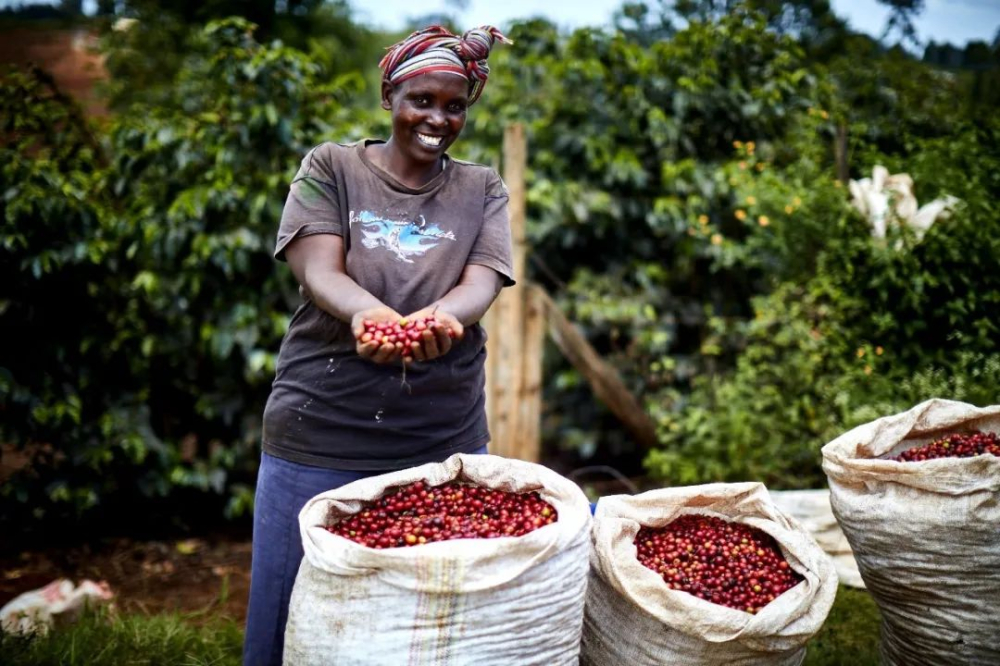
Originating in Kenya, it adopts a repeated cyclic processing method of fermentation followed by washing. It is processed on the day of harvest. The highest-quality cherries are selected for pulping and fermentation. The fermentation time is 24 hours, and after 24 hours they are washed with clean river water. Then they are fermented again with clean river water for 24 hours and washed again. After repeating this cycle three times, it reaches 72 hours, so it is called the Kenyan-style 72-hour fermentation washed processing method, or K72 for short.
First Washing and Fermentation
After the coffee cherries are harvested, they first go through water-based density sorting. The principle is to use differences in the density and mass of the coffee fruit itself for screening; coffee beans with high density (heavy mass) sink in water, while coffee beans with low density float. Fully ripe, high-quality coffee fruits have high density, and these are selected for further processing.
After selecting high-quality and sufficiently ripe fruits, the skin is removed, and they are washed and soaked so that the mucilage attached to the outer layer of the green beans undergoes fermentation. Pectin has natural sugars and alcohols, which play a crucial role in the development of coffee sweetness, acidity, and overall flavor. The fermentation time lasts as long as 24 hours. After fermentation, 80–90% of the pectin can be removed, leaving only the flavor inside the coffee beans.
Second Washing and Fermentation
Then it enters the second washing and fermentation procedure. After the coffee beans from the previous stage are cleaned, they are soaked in water again for 24–48 hours. This process increases proteins and amino acids, and the acidity of the coffee beans thereby develops complex and delicate layers of mouthfeel. Finally, all remaining pectin is removed, and the coffee beans are moved to raised drying beds for sun drying.
The fermentation time lasts as long as 24 hours. After fermentation, 80–90% of the pectin can be removed, leaving only the flavor inside the coffee beans.
Finally, all remaining pectin is removed, and the coffee beans are moved to raised drying beds for sun drying. The drying time depends on weather conditions and generally takes about 5–10 days to complete.
How Many Coffee-Producing Regions Does Kenya Have?
Kenya's coffee-producing regions are most famous for seven major regions: Thika, Kirinyaga, Mt. Kenya West, Nyeri, Kiambu, Ruiru, and Muranga. Among them, the foothills of Mt. Kenya and Aberdare are the main production areas.
The flavor of each Kenyan production region is very different. Kenya is divided into 47 counties nationwide. The coffee characteristics of different counties are distinct. Kenyan coffee trees are mostly planted at altitudes of 1,400–2,000 meters, with two harvests per year. The growing areas include Ruiru, Thika, Kirinyaga, Mt. Kenya West, Nyeri, Kiambu, and Muranga. The foothills of Mt. Kenya and Aberdare are the main areas. For example, through cupping, Front Street found that coffee from the Embu region has a balanced mouthfeel, along with citrus fruit, chocolate, apple, and acidity; while coffee from the Nyeri region mostly features white grape, juicy feel, grapefruit, and cherry tomato flavors, full of fruitiness and sweet like caramel.
The above content is compiled by CoffeeHunters, a coffee news website.


