Adding sugar and milk has been a coffee drinking habit formed over the past nearly hundred years, because Mandheling, Brazil, Colombia, and Blue Mountain have traditionally used dark roasting. Yirgacheffe beans are small, and the fruity acidity of light roasting opened up a new coffee world.
The African continent is vast, with an average elevation of 750 meters, and is known as the "Plateau Continent." Africa has numerous mountain ranges, volcanoes, lakes, and rivers. Because it straddles the equator, it is mainly tropical, with an average annual temperature above 20°C. With abundant natural resources, Africa's agricultural industry is developed, and many countries are famous for coffee production, such as Ethiopia, Kenya, and Tanzania. Among them, Ethiopia is also recognized as the birthplace of coffee and is the largest Arabica coffee producer in Africa.
Ethiopian coffee enjoys very high visibility in the global coffee market. The country has countless native coffee varieties, and coffee can grow in Ethiopia because the country provides an ideal geographical environment and climate for coffee cultivation.
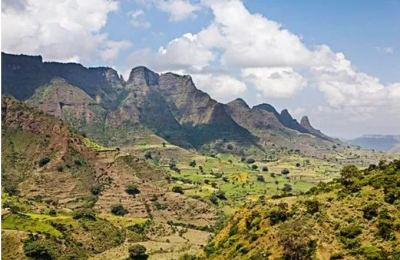
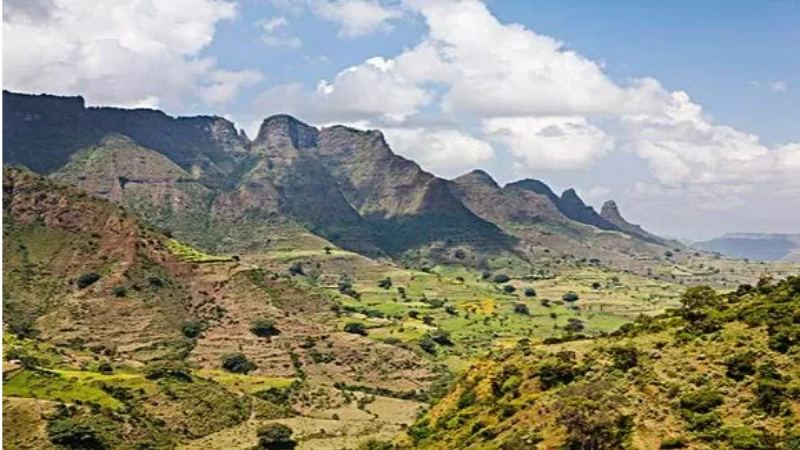
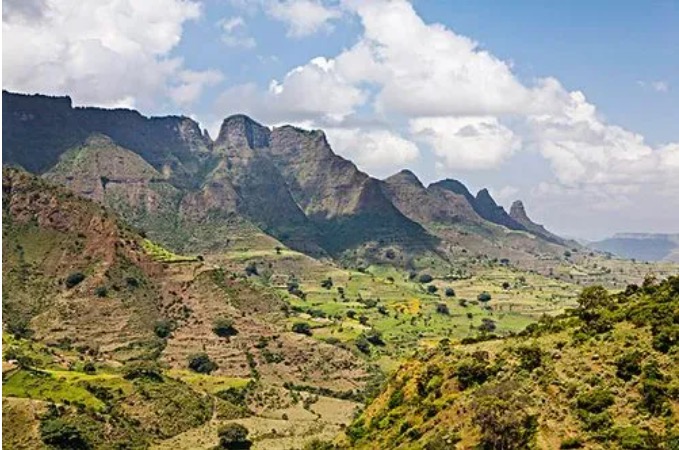
Ethiopia is located in northeastern Africa. Its territory is dominated by mountains and plateaus, most of which belong to the Ethiopian Highlands. The central and western parts form the main body of the plateau, accounting for two-thirds of the country. In addition, the East African Rift Valley runs through the entire territory. The average elevation of the mountains is nearly 3,000 meters, while Ethiopia's national average elevation is 2,450 meters.
Due to the influence of high altitude, the country's average annual temperature is 16°C, with a large temperature difference between day and night. The year is roughly divided into a dry season and a rainy season, with an average annual rainfall of 1,237 millimeters. Ethiopia has nearly more than 50 volcanoes, abundant water resources, and high-altitude mountainous areas, making it a very ideal region for coffee cultivation.
At present, Ethiopia is divided into 12 states and 2 autonomous administrative regions, and is also divided into 10 coffee-producing regions. Many of them are globally renowned coffee-producing areas, such as Sidamo, Jima, Harrar, Guji, and Yirgacheffe. Among them, Guji and Yirgacheffe originally belonged to the Sidamo production region, but due to their unique flavors, they became independent coffee-producing regions.
In terms of administrative division, Yirgacheffe currently belongs to a small town in the Southern Nations, Nationalities, and Peoples' Region. The terrain in this area is rugged and complex, bordering Lake Abaya to the west. Since ancient times, it has been a wetland with abundant water resources, a humid and mild climate, and ample rainfall. Coffee is grown at elevations of 1,750-2,200 meters. Fertile soil and sufficient sunlight make this area very suitable for coffee cultivation. Front Street Coffee has a washed Ethiopian Yirgacheffe coffee bean. As an entry-level selected representative, it carries jasmine floral notes, lemon-like acidity, and fruit flavors such as orange and berries, with a refreshing and silky mouthfeel.
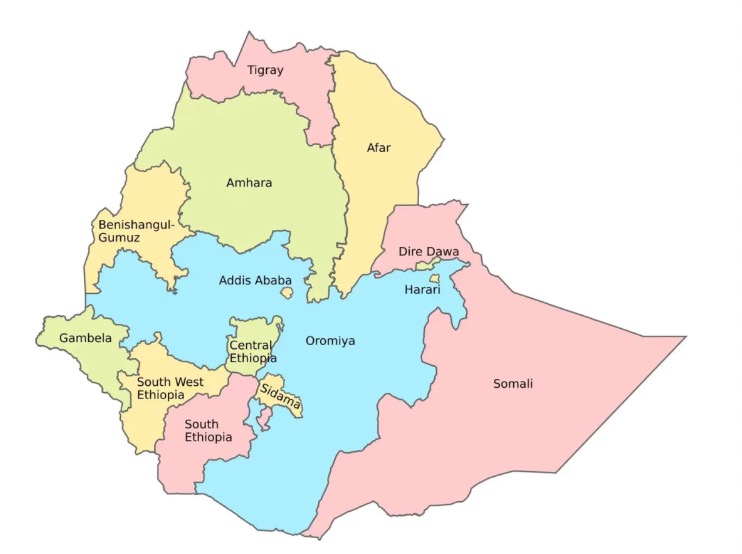
However, the Yirgacheffe coffee-producing region includes not only the small town of Yirgacheffe, but also sub-regions such as Wenago, Kochere, and Gedeb. Among them, Wenago is located about 26 kilometers north of Yirgacheffe town, while Kochere is a small production area about 25 kilometers to the south. Gedeb is likewise a township, 60 kilometers from Yirgacheffe town.
Ethiopia's economy is mainly agricultural, so coffee cultivation is mostly on a smallholder scale, such as garden coffee. Coffee is planted together with other crops near the homes of coffee farmers. The farmers tend to it daily, harvest it themselves during the harvest season, and then sell it to intermediaries or deliver it themselves to nearby processing stations. Therefore, coffee here is mostly sold under the name of the sub-region or the processing plant, usually the name of the village where it is located, such as Front Street Coffee's Yirgacheffe Kochere coffee beans and Yirgacheffe Konga Cooperative coffee beans.

In the earliest period, the Yirgacheffe production area mainly used the more traditional natural sun-drying process.
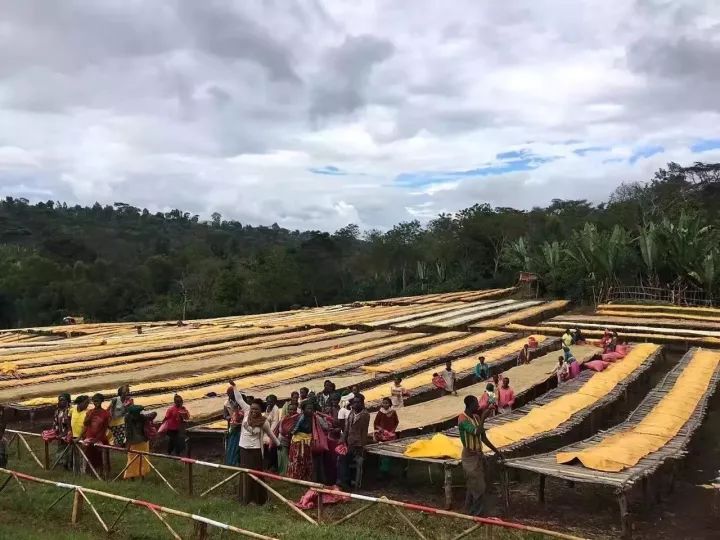
By 1972, in order to improve coffee quality, the Ethiopian government introduced the washed method commonly used in Central America and opened washed-processing plants in the Yirgacheffe area. The flavor of washed Yirgacheffe coffee is very prominent, with unique flavors such as white floral notes, citric acidity, and a fresh green tea-like taste. Although similar to Sidamo coffee beans, it is clearly different, so Yirgacheffe became an independent production region.
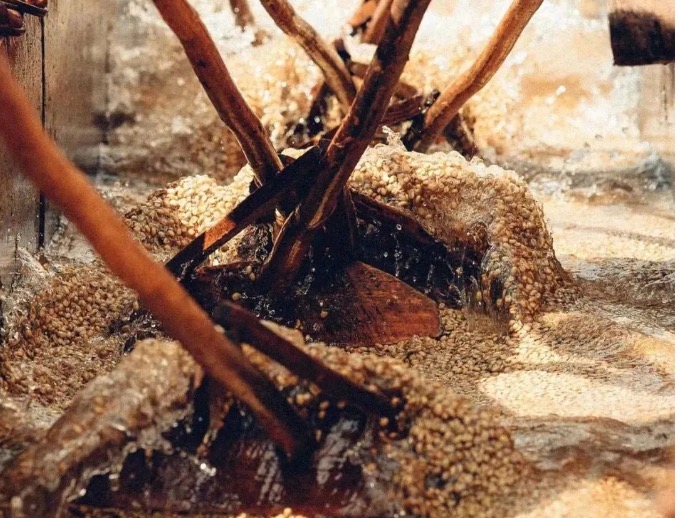
At present, this area also focuses mainly on producing washed coffee beans. However, with the continuous development of specialty coffee, the Yirgacheffe area has also begun to try other processing methods, such as refined natural sun-drying and anaerobic slow natural sun-drying, which have also performed well.
The above content is compiled by CoffeeHunters, a coffee news website.