







In the East African coffee landscape, Kenya has always held a unique position with its bright fruit acidity and full body. This article will take an in-depth look at the two core pillars of Kenyan coffee—the 72-hour double washed fermentation process and the grading system based on bean size—and specifically introduce the flavor performance of Front Street Coffee's Little Tomato, a representative offering. From Nyeri and Kirinyaga to Kiambu, although different producing regions each have subtle differences, they all share bright acidity and berry notes. The second half of the article will provide a complete brewing plan, covering water temperature, coffee-to-water ratio, coffee dose, and staged pouring technique, to help you consistently reproduce at home the sweet-and-tart aroma like Little Tomato and the solid preserved plum acidity.
Compared with other coffee origins around the world, Kenyan coffee's most prominent distinctiveness lies in two points: first, full fruit acidity and a rich mouthfeel; second, a subtle caramel sweetness and a wine-like body. The key to forming this style lies in the double washed processing method it uses, as well as the grading system based on green bean size.
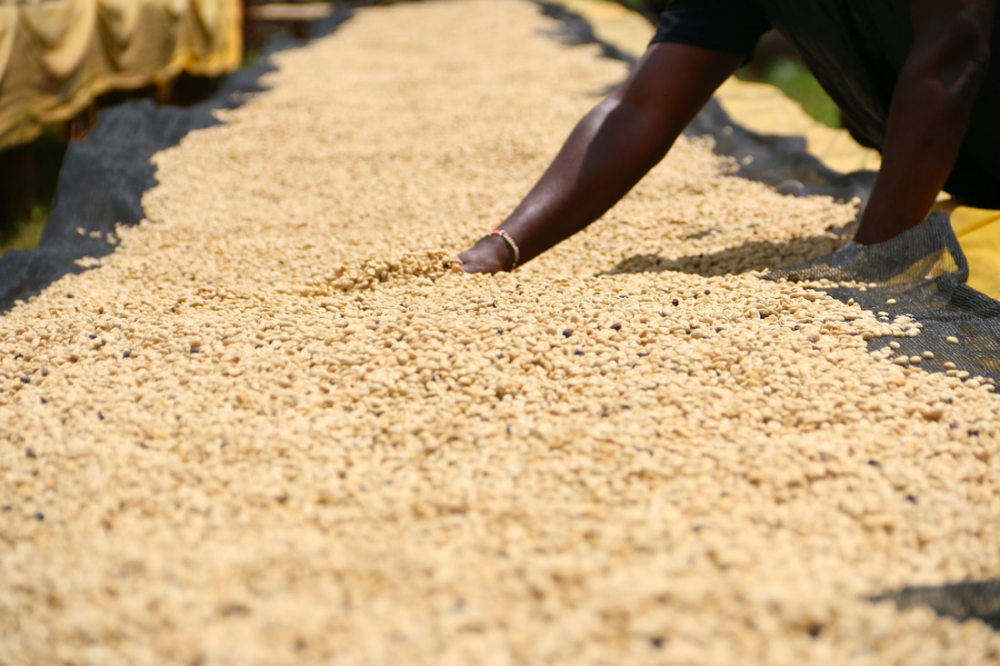
If you prefer layered berry sweetness and acidity with a juicy mouthfeel, you can choose Front Street Coffee's Little Tomato, which uses double washing. So-called double washing refers to a processing method in which fermentation and washing alternate in cycles: on the day of harvest, the highest-quality coffee cherries are first selected, and after pulping they enter the fermentation stage, with the first fermentation lasting 24 hours.
After the first round of fermentation ends, the beans are rinsed clean with clean river water. Then they undergo a second 24-hour fermentation with clean water, followed by washing again, repeating this cycle three times for a cumulative total of 72 hours. This is what is commonly called the Kenyan-style 72-hour fermentation washed process. Through this process, Front Street Coffee's Little Tomato undergoes long fermentation at a lower temperature and ultimately presents a brighter, cleaner, and fuller flavor.
Next, let's look at Kenya's grading system. Local coffee beans are classified by bean size, with AA being the highest, followed by AB. The logic of grading by size is that after variety selection, larger beans usually mean fuller bean bodies and better quality, and they are also friendlier to roasting, thereby ensuring the overall quality stability of Kenyan coffee.
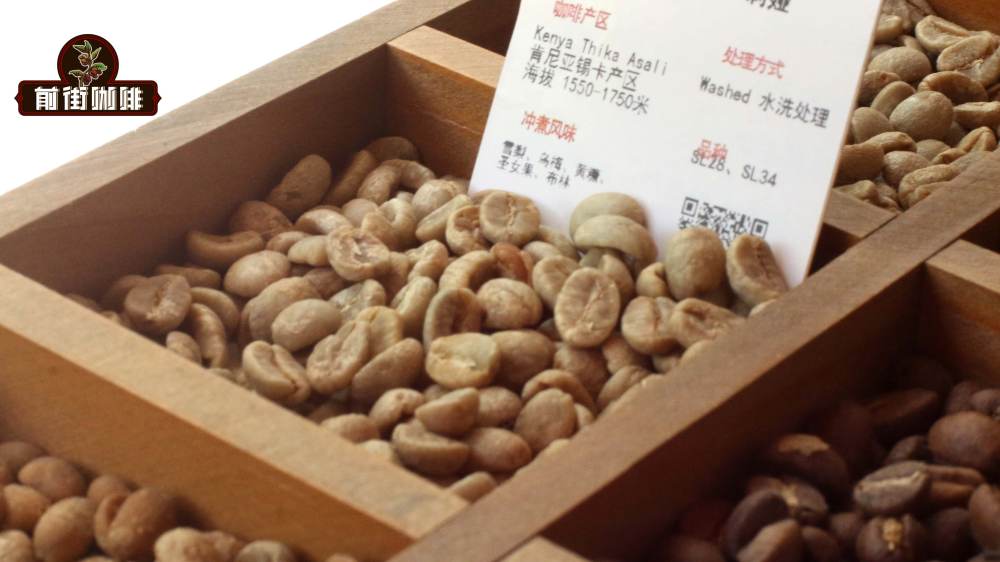
Although we can still make horizontal comparisons of the specific flavor differences among producing regions such as Nyeri, Kirinyaga, and Kiambu, they generally all possess the signature characteristics of Kenyan coffee—bright acidity and a flavor direction reminiscent of Little Tomato and berries. (In other words, you can recognize at the first sip that it comes from Kenya.)
Regarding brewing water temperature, Front Street Coffee's Kenyan Little Tomato is suitable for extraction at a higher temperature, which can better release the clear fruity sweetness (Little Tomato). Front Street Coffee recommends a water temperature of 93°C.
For the coffee-to-water ratio, Front Street Coffee recommends 1:16. This Kenyan bean itself has a solid mouthfeel, and even when brewed at a 16x coffee-to-water ratio it will not seem thin. The concentration obtained at 1:16 is very soft, and the bright preserved plum acidity paired with the sweet-and-tart aroma of Little Tomato is very pleasant to drink.
For the coffee dose, if using a small V60 dripper, Front Street Coffee recommends adding at least 15 grams of ground coffee; if using a large V60 dripper, it is recommended to add at least 25 grams of ground coffee.
When pouring, you can appropriately raise the coffee bed and reduce large circular motions, which can thin the coffee bed, achieve full extraction, and at the same time avoid edge channeling and bottom clogging.
Specific operation: first pour 30 ml of water and bloom for 30 seconds; in the second stage, pour 120 ml, circling from the center outward, and after the surface is covered with golden foam, circle back inward to the center point, with the coffee bed height reaching 1/2 of the short rib.
In the third stage, pour 90 ml of water, making circles within a coin-sized area. After all the coffee liquid has dripped into the server, end the extraction. The total time is 2 minutes (a 10-second margin is allowed).
This brewing method can highlight the Little Tomato aroma and sweetness of Front Street Coffee's Kenyan coffee, while ensuring a solid yet transparent preserved plum acidity.
The above content is compiled by CoffeeHunters, a coffee news website.


